Welcome to our free TOEFL practice test guide, where you can take a free TOEFL mock test online and get your scores right away. Our 50 full-length TOEFL iBT practice tests simulate the official TOEFL test. Each TOEFL Practice test includes free AI scores for the speaking and writing sections.
In this guide, you will take a TOEFL sample test, prepare with TOEFL practice questions for each section, and learn how to successfully study with our 3 step study guide. All our tips, tricks, and strategies on this page is based on 223,000 practice tests taken by our students.
If you're looking for a free TOEFL practice test, then click the button below to take a full 2-hour free TOEFL sample test.
play_circle_outline Start Free TOEFL Sample Test 1The TOEFL Sample Test 1 is free, but you need a free account to see your scores and keep your results. However, you can practice individual questions without an account, any time you like. Our Premium members get all 50 TOEFL practice tests, listed in the TOEFL practice tests section below.
Do I Need an Account for the Free TOEFL Sample Test?
You can start the free TOEFL sample test without an account, but you need a free account to see your score report and keep your results. You can take a TOEFL practice test free as many times as you like with Sample Test 1; premium members get all 50 tests.
Create a Free AccountAll 50 TOEFL Practice Tests
Table of Contents
- What Is in the TOEFL Test?
- TOEFL Test Example Questions for Each Section
- Our 3 Step TOEFL Study Guide Based on 223,000 Practice Tests
WATCH VIDEO: 3-Step Study Guide play_circle_filled - Helpful Insights from 223,000 TOEFL Practice Tests
- Our 50 Full-Length TOEFL Practice Tests
- Free TOEFL Practice Resources for Every Section
- What Students Are Saying About BestMyTest
What Is in the TOEFL Test?
The TOEFL iBT test has four sections: Reading, Listening, Writing, and Speaking. Altogether you’ll answer 120 questions in about 90 minutes of test time. Reading and Listening are split into two stages and adapt to your performance, so how well you do in stage 1 decides how challenging stage 2 will be. Each section gets a band from 1 to 6, and your total score is the average of the four bands.
Section |
Questions |
Time |
What you do |
|---|---|---|---|
Reading |
50 |
About 30 minutes |
Three task types: Complete the Words, Read in Daily Life, and Read an Academic Passage. One timer runs for the whole section. Two adaptive stages. |
Listening |
47 |
About 29 minutes |
Four tasks: Listen and Choose a Response, Conversations, Announcements, and Academic Talks. Every recording plays once, and each question has its own timer of 20 or 30 seconds. Two adaptive stages. |
Writing |
12 |
About 23 minutes |
Three tasks: Build a Sentence (10 questions in about 6 minutes), Write an Email (7 minutes), and Write for an Academic Discussion (10 minutes). |
Speaking |
11 |
About 8 minutes |
Two parts: Listen and Repeat (7 sentences) and the Speaking Interview (4 questions, 45 seconds each, no preparation time). |
120 questions, about 90 minutes of test time |
|||
Since January 21, 2026, the TOEFL test has used this format. The texts and recordings are short, and they come from university life and everyday situations. That means the test measures how well you use English, not what you know about a subject. Once you add the instructions and the start of each section, plan for about two hours in total. You can take the test at a test center or at home with an online proctor.
Each section band runs from 1 to 6 in half-band steps, and the bands line up with the CEFR levels B1, B2, and C1. Your total score is the average of your four section bands, rounded to the nearest half band. Until 2028, ETS will also report the old 0 to 120 score next to your band, so universities can compare the two. A TOEFL iBT practice test on BestMyTest gives you the same band for each section, so you’ll know your level before test day.
Each section has its own guide with the task types, sample questions with answers, and tips: the TOEFL reading practice guide, the TOEFL listening practice guide, the TOEFL writing practice guide, and the TOEFL speaking practice guide.
TOEFL Test Example Questions for Each Section
Here is one TOEFL test example question for each of the four sections, with the answers, so you see exactly what the questions look like before you take a full test. Each section also has a dedicated guide with every task type, more sample questions, and tips.
TOEFL Reading Example Questions
This TOEFL reading example question is a Complete the Words task from our practice tests. A short academic paragraph has words with missing letters, and you type the letters that complete each word. Try to fill in the missing letters for each word first, then check your answers. Before you start, did you know that Complete the Words is harder with a timer? Our students got 65% of the gaps right in timed practice tests and 75% in untimed practice.
Interested in learning more about the TOEFL reading section? Go to our TOEFL Reading Practice Test Guide

-
spellcheck Answers1. tists (Scientists)
2. kness (thickness)
3. face (surface)
4. stand (understand)
5. iers (glaciers)
6. ation (variation)
7. erve (preserve)
8. ence (evidence)
9. leys (valleys)
10. ying (carrying)

Complete the Words
Learn how to answer this question in a step-by-step interactive exercise
Complete the Words
In a Complete-the-words question type you are given a paragraph with gaps. A gap is a word that is missing half its letters. Your job is to fill in all 10 gaps.
Preview the question, then click next to continue.
Preview the Question
Question 1: Choose the correct grammar category. After choosing the correct category, you will fill in the missing letters.
Complete the Word Scien_____
How to decide
You do not need to know every difficult word to solve these gaps. Grammar gives you a reliable starting point, and the visible letters confirm your choice. Also, use the first sentence of the paragraph, which has no missing words, as your foundation. This sentence establishes the topic and context for the entire paragraph. Read it carefully to understand what the passage will discuss.
- Start with the first sentence. The beginning of the paragraph has no missing words. Read it carefully to understand the topic and context of the passage.
- Use grammatical knowledge. Look at the words before and after each incomplete word. Determine what part of speech is needed (noun, verb, adjective, etc.) and what grammatical form is required (plural, verb tense, comparative, etc.).
- Look for context clues. Consider the meaning of the sentence and the surrounding ideas. Pay attention to logical connections between sentences. Ask yourself: “What word would make sense here?”
- Use visible letters and word patterns. Look at the given letters, common prefixes, suffixes, and word roots to identify possible words. Check that your answer fits both the grammar and meaning of the sentence.
The experiment produced a surprising
result: a noun after an adjective.Scientists the samples daily
observed: a verb after the subject.The change affect the climate
might: a modal verb before a base verb.The team used a method
reliable: an adjective before a noun.Researchers recorded the data
carefully: an adverb describing how they recorded it.The samples remained the cabinet
inside: a preposition showing place.As a , the trial was repeated
result: a noun completing a transition phrase.studies reached the same conclusion
Several: a determiner introducing a noun.Skip the words you don't know. Filling in the words you know can help you figure out the words you don't know.
Noun (S/O)
A noun names a person, place, thing, or idea. In a sentence, it often performs one of two jobs: the subject doing the action or the object receiving it.
Look for strong clues: a, an, the, this, or that before the gap; an adjective directly before it; or a verb/preposition that needs an object after it.
ExamplesThe changed medicine
discovery: subject noun.Researchers measured the
temperature: object noun.a useful
method: noun after an adjective.If the gap answers “who?” or “what?”, a noun is an excellent prediction.
Noun (transition)
Some nouns live inside fixed transition phrases that connect ideas. Learn the whole phrase as one useful unit: for example, in fact, and as a result.
Examplesfor
example: part of the phrase for example.in
fact: part of the phrase in fact.As a
result: part of the phrase as a result.Many test-takers expect an academic passage to test only complex vocabulary such as photosynthesis or archaeological. In reality, this task removes letters from regularly spaced words, so a simple structural word inside a connector can easily become a gap.
When you see commas or the beginning of a familiar connector, complete the phrase you already know. The answer may be much simpler than the topic.
Verb
A verb expresses an action or state. It must fit its subject and the sentence time. A verb may also appear as a participle ending in -ing or -ed.
ExamplesPlants sunlight
require: a verb after the subject.The evidence a change
suggests: a verb after the subject.The river is rapidly
flowing: a verb after a helping verb.Clues: find the subject, then ask what it does or what state it is in. Check nearby helping verbs such as is, was, has, or can.
Once you locate the subject, the missing verb form is often strongly constrained.
Modal verb
A modal verb is a special helping verb that expresses possibility, ability, permission, advice, prediction, or necessity. Common modals include can, could, may, might, must, should, will, and would.
ExamplesThe change affect the climate
might: a modal verb before a base verb.This process explain the pattern
could: a modal verb before a base verb.Researchers compare both samples
should: a modal verb before a base verb.The strongest clue is the word after the gap: a modal is normally followed by the base form of a verb, without to. For example: might occur, could explain, and should compare.
When a short missing word comes before a plain base verb, test a modal. These small structural verbs are common and highly predictable.
Adjective
An adjective describes a noun. It usually appears immediately before that noun or after a linking verb such as be, seem, or become.
Examplesa source
reliable: an adjective before a noun.the known fossil
oldest: an adjective before a noun.The surface became
rough: an adjective after a linking verb.Clues: look right after the gap for a noun, or look left for a linking verb. More, most, -er, and -est also point toward an adjective.
If the gap tells you “what kind?” or “which one?” about a noun, predict an adjective.
Adverb
An adverb modifies a verb, an adjective, or another adverb. It can tell you how, when, where, or to what degree something happens.
Examplesly
only: an adverb before -ly.The team moved
quickly: an adverb ending in -ly.The result was significant
highly: an adverb modifying an adjective.The -ly ending is a powerful clue, although not every adverb ends in -ly and not every -ly word is an adverb. Confirm the word’s job in the sentence.
If the gap changes the strength or manner of another word, an adverb is likely.
Preposition
A preposition is a short structural word that shows a relationship: place, time, direction, source, or means. Common examples include in, on, at, by, with, through, and between.
ExamplesResearchers worked the sample
with: a preposition showing means.The border lies two regions
between: a preposition showing place.Water passed the membrane
through: a preposition showing direction.Many test-takers expect an academic passage to test only complex vocabulary such as photosynthesis or archaeological. In reality, this task removes letters from regularly spaced words, so very simple structural words are often chopped up too.
Do not reject an easy answer because the passage sounds difficult. Check which relationship the sentence needs.
Determiner
A determiner introduces or limits a noun phrase. It tells us which one, how many, or whose. Examples include a, an, the, this, these, each, every, several, and many.
Examplesparticipant
each: a determiner introducing a noun.experiments
several: a determiner introducing a noun.results
these: a determiner introducing a noun.Many test-takers expect an academic passage to test only complex vocabulary such as photosynthesis or archaeological. In reality, this task removes letters from regularly spaced words, so small grammar words that introduce nouns are frequent possibilities.
If an adjective or noun follows immediately and the phrase needs an introducer, try a determiner. Simple words can be correct answers.
Question 2: Choose the correct grammar category. After choosing the correct category, you will fill in the missing letters.
Complete the Word thic_____
How to decide
You do not need to know every difficult word to solve these gaps. Grammar gives you a reliable starting point, and the visible letters confirm your choice. Also, use the first sentence of the paragraph, which has no missing words, as your foundation. This sentence establishes the topic and context for the entire paragraph. Read it carefully to understand what the passage will discuss.
- Start with the first sentence. The beginning of the paragraph has no missing words. Read it carefully to understand the topic and context of the passage.
- Use grammatical knowledge. Look at the words before and after each incomplete word. Determine what part of speech is needed (noun, verb, adjective, etc.) and what grammatical form is required (plural, verb tense, comparative, etc.).
- Look for context clues. Consider the meaning of the sentence and the surrounding ideas. Pay attention to logical connections between sentences. Ask yourself: “What word would make sense here?”
- Use visible letters and word patterns. Look at the given letters, common prefixes, suffixes, and word roots to identify possible words. Check that your answer fits both the grammar and meaning of the sentence.
The experiment produced a surprising
result: a noun after an adjective.Scientists the samples daily
observed: a verb after the subject.The change affect the climate
might: a modal verb before a base verb.The team used a method
reliable: an adjective before a noun.Researchers recorded the data
carefully: an adverb describing how they recorded it.The samples remained the cabinet
inside: a preposition showing place.As a , the trial was repeated
result: a noun completing a transition phrase.studies reached the same conclusion
Several: a determiner introducing a noun.Skip the words you don't know. Filling in the words you know can help you figure out the words you don't know.
Noun (S/O)
A noun names a person, place, thing, or idea. In a sentence, it often performs one of two jobs: the subject doing the action or the object receiving it.
Look for strong clues: a, an, the, this, or that before the gap; an adjective directly before it; or a verb/preposition that needs an object after it.
ExamplesThe changed medicine
discovery: subject noun.Researchers measured the
temperature: object noun.a useful
method: noun after an adjective.If the gap answers “who?” or “what?”, a noun is an excellent prediction.
Noun (transition)
Some nouns live inside fixed transition phrases that connect ideas. Learn the whole phrase as one useful unit: for example, in fact, and as a result.
Examplesfor
example: part of the phrase for example.in
fact: part of the phrase in fact.As a
result: part of the phrase as a result.Many test-takers expect an academic passage to test only complex vocabulary such as photosynthesis or archaeological. In reality, this task removes letters from regularly spaced words, so a simple structural word inside a connector can easily become a gap.
When you see commas or the beginning of a familiar connector, complete the phrase you already know. The answer may be much simpler than the topic.
Verb
A verb expresses an action or state. It must fit its subject and the sentence time. A verb may also appear as a participle ending in -ing or -ed.
ExamplesPlants sunlight
require: a verb after the subject.The evidence a change
suggests: a verb after the subject.The river is rapidly
flowing: a verb after a helping verb.Clues: find the subject, then ask what it does or what state it is in. Check nearby helping verbs such as is, was, has, or can.
Once you locate the subject, the missing verb form is often strongly constrained.
Modal verb
A modal verb is a special helping verb that expresses possibility, ability, permission, advice, prediction, or necessity. Common modals include can, could, may, might, must, should, will, and would.
ExamplesThe change affect the climate
might: a modal verb before a base verb.This process explain the pattern
could: a modal verb before a base verb.Researchers compare both samples
should: a modal verb before a base verb.The strongest clue is the word after the gap: a modal is normally followed by the base form of a verb, without to. For example: might occur, could explain, and should compare.
When a short missing word comes before a plain base verb, test a modal. These small structural verbs are common and highly predictable.
Adjective
An adjective describes a noun. It usually appears immediately before that noun or after a linking verb such as be, seem, or become.
Examplesa source
reliable: an adjective before a noun.the known fossil
oldest: an adjective before a noun.The surface became
rough: an adjective after a linking verb.Clues: look right after the gap for a noun, or look left for a linking verb. More, most, -er, and -est also point toward an adjective.
If the gap tells you “what kind?” or “which one?” about a noun, predict an adjective.
Adverb
An adverb modifies a verb, an adjective, or another adverb. It can tell you how, when, where, or to what degree something happens.
Examplesly
only: an adverb before -ly.The team moved
quickly: an adverb ending in -ly.The result was significant
highly: an adverb modifying an adjective.The -ly ending is a powerful clue, although not every adverb ends in -ly and not every -ly word is an adverb. Confirm the word’s job in the sentence.
If the gap changes the strength or manner of another word, an adverb is likely.
Preposition
A preposition is a short structural word that shows a relationship: place, time, direction, source, or means. Common examples include in, on, at, by, with, through, and between.
ExamplesResearchers worked the sample
with: a preposition showing means.The border lies two regions
between: a preposition showing place.Water passed the membrane
through: a preposition showing direction.Many test-takers expect an academic passage to test only complex vocabulary such as photosynthesis or archaeological. In reality, this task removes letters from regularly spaced words, so very simple structural words are often chopped up too.
Do not reject an easy answer because the passage sounds difficult. Check which relationship the sentence needs.
Determiner
A determiner introduces or limits a noun phrase. It tells us which one, how many, or whose. Examples include a, an, the, this, these, each, every, several, and many.
Examplesparticipant
each: a determiner introducing a noun.experiments
several: a determiner introducing a noun.results
these: a determiner introducing a noun.Many test-takers expect an academic passage to test only complex vocabulary such as photosynthesis or archaeological. In reality, this task removes letters from regularly spaced words, so small grammar words that introduce nouns are frequent possibilities.
If an adjective or noun follows immediately and the phrase needs an introducer, try a determiner. Simple words can be correct answers.
Question 3: Choose the correct grammar category. After choosing the correct category, you will fill in the missing letters.
Complete the Word sur____
How to decide
You do not need to know every difficult word to solve these gaps. Grammar gives you a reliable starting point, and the visible letters confirm your choice. Also, use the first sentence of the paragraph, which has no missing words, as your foundation. This sentence establishes the topic and context for the entire paragraph. Read it carefully to understand what the passage will discuss.
- Start with the first sentence. The beginning of the paragraph has no missing words. Read it carefully to understand the topic and context of the passage.
- Use grammatical knowledge. Look at the words before and after each incomplete word. Determine what part of speech is needed (noun, verb, adjective, etc.) and what grammatical form is required (plural, verb tense, comparative, etc.).
- Look for context clues. Consider the meaning of the sentence and the surrounding ideas. Pay attention to logical connections between sentences. Ask yourself: “What word would make sense here?”
- Use visible letters and word patterns. Look at the given letters, common prefixes, suffixes, and word roots to identify possible words. Check that your answer fits both the grammar and meaning of the sentence.
The experiment produced a surprising
result: a noun after an adjective.Scientists the samples daily
observed: a verb after the subject.The change affect the climate
might: a modal verb before a base verb.The team used a method
reliable: an adjective before a noun.Researchers recorded the data
carefully: an adverb describing how they recorded it.The samples remained the cabinet
inside: a preposition showing place.As a , the trial was repeated
result: a noun completing a transition phrase.studies reached the same conclusion
Several: a determiner introducing a noun.Skip the words you don't know. Filling in the words you know can help you figure out the words you don't know.
Noun (S/O)
A noun names a person, place, thing, or idea. In a sentence, it often performs one of two jobs: the subject doing the action or the object receiving it.
Look for strong clues: a, an, the, this, or that before the gap; an adjective directly before it; or a verb/preposition that needs an object after it.
ExamplesThe changed medicine
discovery: subject noun.Researchers measured the
temperature: object noun.a useful
method: noun after an adjective.If the gap answers “who?” or “what?”, a noun is an excellent prediction.
Noun (transition)
Some nouns live inside fixed transition phrases that connect ideas. Learn the whole phrase as one useful unit: for example, in fact, and as a result.
Examplesfor
example: part of the phrase for example.in
fact: part of the phrase in fact.As a
result: part of the phrase as a result.Many test-takers expect an academic passage to test only complex vocabulary such as photosynthesis or archaeological. In reality, this task removes letters from regularly spaced words, so a simple structural word inside a connector can easily become a gap.
When you see commas or the beginning of a familiar connector, complete the phrase you already know. The answer may be much simpler than the topic.
Verb
A verb expresses an action or state. It must fit its subject and the sentence time. A verb may also appear as a participle ending in -ing or -ed.
ExamplesPlants sunlight
require: a verb after the subject.The evidence a change
suggests: a verb after the subject.The river is rapidly
flowing: a verb after a helping verb.Clues: find the subject, then ask what it does or what state it is in. Check nearby helping verbs such as is, was, has, or can.
Once you locate the subject, the missing verb form is often strongly constrained.
Modal verb
A modal verb is a special helping verb that expresses possibility, ability, permission, advice, prediction, or necessity. Common modals include can, could, may, might, must, should, will, and would.
ExamplesThe change affect the climate
might: a modal verb before a base verb.This process explain the pattern
could: a modal verb before a base verb.Researchers compare both samples
should: a modal verb before a base verb.The strongest clue is the word after the gap: a modal is normally followed by the base form of a verb, without to. For example: might occur, could explain, and should compare.
When a short missing word comes before a plain base verb, test a modal. These small structural verbs are common and highly predictable.
Adjective
An adjective describes a noun. It usually appears immediately before that noun or after a linking verb such as be, seem, or become.
Examplesa source
reliable: an adjective before a noun.the known fossil
oldest: an adjective before a noun.The surface became
rough: an adjective after a linking verb.Clues: look right after the gap for a noun, or look left for a linking verb. More, most, -er, and -est also point toward an adjective.
If the gap tells you “what kind?” or “which one?” about a noun, predict an adjective.
Adverb
An adverb modifies a verb, an adjective, or another adverb. It can tell you how, when, where, or to what degree something happens.
Examplesly
only: an adverb before -ly.The team moved
quickly: an adverb ending in -ly.The result was significant
highly: an adverb modifying an adjective.The -ly ending is a powerful clue, although not every adverb ends in -ly and not every -ly word is an adverb. Confirm the word’s job in the sentence.
If the gap changes the strength or manner of another word, an adverb is likely.
Preposition
A preposition is a short structural word that shows a relationship: place, time, direction, source, or means. Common examples include in, on, at, by, with, through, and between.
ExamplesResearchers worked the sample
with: a preposition showing means.The border lies two regions
between: a preposition showing place.Water passed the membrane
through: a preposition showing direction.Many test-takers expect an academic passage to test only complex vocabulary such as photosynthesis or archaeological. In reality, this task removes letters from regularly spaced words, so very simple structural words are often chopped up too.
Do not reject an easy answer because the passage sounds difficult. Check which relationship the sentence needs.
Determiner
A determiner introduces or limits a noun phrase. It tells us which one, how many, or whose. Examples include a, an, the, this, these, each, every, several, and many.
Examplesparticipant
each: a determiner introducing a noun.experiments
several: a determiner introducing a noun.results
these: a determiner introducing a noun.Many test-takers expect an academic passage to test only complex vocabulary such as photosynthesis or archaeological. In reality, this task removes letters from regularly spaced words, so small grammar words that introduce nouns are frequent possibilities.
If an adjective or noun follows immediately and the phrase needs an introducer, try a determiner. Simple words can be correct answers.
Question 4: Choose the correct grammar category. After choosing the correct category, you will fill in the missing letters.
Complete the Word under_____
How to decide
You do not need to know every difficult word to solve these gaps. Grammar gives you a reliable starting point, and the visible letters confirm your choice. Also, use the first sentence of the paragraph, which has no missing words, as your foundation. This sentence establishes the topic and context for the entire paragraph. Read it carefully to understand what the passage will discuss.
- Start with the first sentence. The beginning of the paragraph has no missing words. Read it carefully to understand the topic and context of the passage.
- Use grammatical knowledge. Look at the words before and after each incomplete word. Determine what part of speech is needed (noun, verb, adjective, etc.) and what grammatical form is required (plural, verb tense, comparative, etc.).
- Look for context clues. Consider the meaning of the sentence and the surrounding ideas. Pay attention to logical connections between sentences. Ask yourself: “What word would make sense here?”
- Use visible letters and word patterns. Look at the given letters, common prefixes, suffixes, and word roots to identify possible words. Check that your answer fits both the grammar and meaning of the sentence.
The experiment produced a surprising
result: a noun after an adjective.Scientists the samples daily
observed: a verb after the subject.The change affect the climate
might: a modal verb before a base verb.The team used a method
reliable: an adjective before a noun.Researchers recorded the data
carefully: an adverb describing how they recorded it.The samples remained the cabinet
inside: a preposition showing place.As a , the trial was repeated
result: a noun completing a transition phrase.studies reached the same conclusion
Several: a determiner introducing a noun.Skip the words you don't know. Filling in the words you know can help you figure out the words you don't know.
Noun (S/O)
A noun names a person, place, thing, or idea. In a sentence, it often performs one of two jobs: the subject doing the action or the object receiving it.
Look for strong clues: a, an, the, this, or that before the gap; an adjective directly before it; or a verb/preposition that needs an object after it.
ExamplesThe changed medicine
discovery: subject noun.Researchers measured the
temperature: object noun.a useful
method: noun after an adjective.If the gap answers “who?” or “what?”, a noun is an excellent prediction.
Noun (transition)
Some nouns live inside fixed transition phrases that connect ideas. Learn the whole phrase as one useful unit: for example, in fact, and as a result.
Examplesfor
example: part of the phrase for example.in
fact: part of the phrase in fact.As a
result: part of the phrase as a result.Many test-takers expect an academic passage to test only complex vocabulary such as photosynthesis or archaeological. In reality, this task removes letters from regularly spaced words, so a simple structural word inside a connector can easily become a gap.
When you see commas or the beginning of a familiar connector, complete the phrase you already know. The answer may be much simpler than the topic.
Verb
A verb expresses an action or state. It must fit its subject and the sentence time. A verb may also appear as a participle ending in -ing or -ed.
ExamplesPlants sunlight
require: a verb after the subject.The evidence a change
suggests: a verb after the subject.The river is rapidly
flowing: a verb after a helping verb.Clues: find the subject, then ask what it does or what state it is in. Check nearby helping verbs such as is, was, has, or can.
Once you locate the subject, the missing verb form is often strongly constrained.
Modal verb
A modal verb is a special helping verb that expresses possibility, ability, permission, advice, prediction, or necessity. Common modals include can, could, may, might, must, should, will, and would.
ExamplesThe change affect the climate
might: a modal verb before a base verb.This process explain the pattern
could: a modal verb before a base verb.Researchers compare both samples
should: a modal verb before a base verb.The strongest clue is the word after the gap: a modal is normally followed by the base form of a verb, without to. For example: might occur, could explain, and should compare.
When a short missing word comes before a plain base verb, test a modal. These small structural verbs are common and highly predictable.
Adjective
An adjective describes a noun. It usually appears immediately before that noun or after a linking verb such as be, seem, or become.
Examplesa source
reliable: an adjective before a noun.the known fossil
oldest: an adjective before a noun.The surface became
rough: an adjective after a linking verb.Clues: look right after the gap for a noun, or look left for a linking verb. More, most, -er, and -est also point toward an adjective.
If the gap tells you “what kind?” or “which one?” about a noun, predict an adjective.
Adverb
An adverb modifies a verb, an adjective, or another adverb. It can tell you how, when, where, or to what degree something happens.
Examplesly
only: an adverb before -ly.The team moved
quickly: an adverb ending in -ly.The result was significant
highly: an adverb modifying an adjective.The -ly ending is a powerful clue, although not every adverb ends in -ly and not every -ly word is an adverb. Confirm the word’s job in the sentence.
If the gap changes the strength or manner of another word, an adverb is likely.
Preposition
A preposition is a short structural word that shows a relationship: place, time, direction, source, or means. Common examples include in, on, at, by, with, through, and between.
ExamplesResearchers worked the sample
with: a preposition showing means.The border lies two regions
between: a preposition showing place.Water passed the membrane
through: a preposition showing direction.Many test-takers expect an academic passage to test only complex vocabulary such as photosynthesis or archaeological. In reality, this task removes letters from regularly spaced words, so very simple structural words are often chopped up too.
Do not reject an easy answer because the passage sounds difficult. Check which relationship the sentence needs.
Determiner
A determiner introduces or limits a noun phrase. It tells us which one, how many, or whose. Examples include a, an, the, this, these, each, every, several, and many.
Examplesparticipant
each: a determiner introducing a noun.experiments
several: a determiner introducing a noun.results
these: a determiner introducing a noun.Many test-takers expect an academic passage to test only complex vocabulary such as photosynthesis or archaeological. In reality, this task removes letters from regularly spaced words, so small grammar words that introduce nouns are frequent possibilities.
If an adjective or noun follows immediately and the phrase needs an introducer, try a determiner. Simple words can be correct answers.
Question 5: Choose the correct grammar category. After choosing the correct category, you will fill in the missing letters.
Complete the Word glac____
How to decide
You do not need to know every difficult word to solve these gaps. Grammar gives you a reliable starting point, and the visible letters confirm your choice. Also, use the first sentence of the paragraph, which has no missing words, as your foundation. This sentence establishes the topic and context for the entire paragraph. Read it carefully to understand what the passage will discuss.
- Start with the first sentence. The beginning of the paragraph has no missing words. Read it carefully to understand the topic and context of the passage.
- Use grammatical knowledge. Look at the words before and after each incomplete word. Determine what part of speech is needed (noun, verb, adjective, etc.) and what grammatical form is required (plural, verb tense, comparative, etc.).
- Look for context clues. Consider the meaning of the sentence and the surrounding ideas. Pay attention to logical connections between sentences. Ask yourself: “What word would make sense here?”
- Use visible letters and word patterns. Look at the given letters, common prefixes, suffixes, and word roots to identify possible words. Check that your answer fits both the grammar and meaning of the sentence.
The experiment produced a surprising
result: a noun after an adjective.Scientists the samples daily
observed: a verb after the subject.The change affect the climate
might: a modal verb before a base verb.The team used a method
reliable: an adjective before a noun.Researchers recorded the data
carefully: an adverb describing how they recorded it.The samples remained the cabinet
inside: a preposition showing place.As a , the trial was repeated
result: a noun completing a transition phrase.studies reached the same conclusion
Several: a determiner introducing a noun.Skip the words you don't know. Filling in the words you know can help you figure out the words you don't know.
Noun (S/O)
A noun names a person, place, thing, or idea. In a sentence, it often performs one of two jobs: the subject doing the action or the object receiving it.
Look for strong clues: a, an, the, this, or that before the gap; an adjective directly before it; or a verb/preposition that needs an object after it.
ExamplesThe changed medicine
discovery: subject noun.Researchers measured the
temperature: object noun.a useful
method: noun after an adjective.If the gap answers “who?” or “what?”, a noun is an excellent prediction.
Noun (transition)
Some nouns live inside fixed transition phrases that connect ideas. Learn the whole phrase as one useful unit: for example, in fact, and as a result.
Examplesfor
example: part of the phrase for example.in
fact: part of the phrase in fact.As a
result: part of the phrase as a result.Many test-takers expect an academic passage to test only complex vocabulary such as photosynthesis or archaeological. In reality, this task removes letters from regularly spaced words, so a simple structural word inside a connector can easily become a gap.
When you see commas or the beginning of a familiar connector, complete the phrase you already know. The answer may be much simpler than the topic.
Verb
A verb expresses an action or state. It must fit its subject and the sentence time. A verb may also appear as a participle ending in -ing or -ed.
ExamplesPlants sunlight
require: a verb after the subject.The evidence a change
suggests: a verb after the subject.The river is rapidly
flowing: a verb after a helping verb.Clues: find the subject, then ask what it does or what state it is in. Check nearby helping verbs such as is, was, has, or can.
Once you locate the subject, the missing verb form is often strongly constrained.
Modal verb
A modal verb is a special helping verb that expresses possibility, ability, permission, advice, prediction, or necessity. Common modals include can, could, may, might, must, should, will, and would.
ExamplesThe change affect the climate
might: a modal verb before a base verb.This process explain the pattern
could: a modal verb before a base verb.Researchers compare both samples
should: a modal verb before a base verb.The strongest clue is the word after the gap: a modal is normally followed by the base form of a verb, without to. For example: might occur, could explain, and should compare.
When a short missing word comes before a plain base verb, test a modal. These small structural verbs are common and highly predictable.
Adjective
An adjective describes a noun. It usually appears immediately before that noun or after a linking verb such as be, seem, or become.
Examplesa source
reliable: an adjective before a noun.the known fossil
oldest: an adjective before a noun.The surface became
rough: an adjective after a linking verb.Clues: look right after the gap for a noun, or look left for a linking verb. More, most, -er, and -est also point toward an adjective.
If the gap tells you “what kind?” or “which one?” about a noun, predict an adjective.
Adverb
An adverb modifies a verb, an adjective, or another adverb. It can tell you how, when, where, or to what degree something happens.
Examplesly
only: an adverb before -ly.The team moved
quickly: an adverb ending in -ly.The result was significant
highly: an adverb modifying an adjective.The -ly ending is a powerful clue, although not every adverb ends in -ly and not every -ly word is an adverb. Confirm the word’s job in the sentence.
If the gap changes the strength or manner of another word, an adverb is likely.
Preposition
A preposition is a short structural word that shows a relationship: place, time, direction, source, or means. Common examples include in, on, at, by, with, through, and between.
ExamplesResearchers worked the sample
with: a preposition showing means.The border lies two regions
between: a preposition showing place.Water passed the membrane
through: a preposition showing direction.Many test-takers expect an academic passage to test only complex vocabulary such as photosynthesis or archaeological. In reality, this task removes letters from regularly spaced words, so very simple structural words are often chopped up too.
Do not reject an easy answer because the passage sounds difficult. Check which relationship the sentence needs.
Determiner
A determiner introduces or limits a noun phrase. It tells us which one, how many, or whose. Examples include a, an, the, this, these, each, every, several, and many.
Examplesparticipant
each: a determiner introducing a noun.experiments
several: a determiner introducing a noun.results
these: a determiner introducing a noun.Many test-takers expect an academic passage to test only complex vocabulary such as photosynthesis or archaeological. In reality, this task removes letters from regularly spaced words, so small grammar words that introduce nouns are frequent possibilities.
If an adjective or noun follows immediately and the phrase needs an introducer, try a determiner. Simple words can be correct answers.
Question 6: Choose the correct grammar category. After choosing the correct category, you will fill in the missing letters.
Complete the Word vari_____
How to decide
You do not need to know every difficult word to solve these gaps. Grammar gives you a reliable starting point, and the visible letters confirm your choice. Also, use the first sentence of the paragraph, which has no missing words, as your foundation. This sentence establishes the topic and context for the entire paragraph. Read it carefully to understand what the passage will discuss.
- Start with the first sentence. The beginning of the paragraph has no missing words. Read it carefully to understand the topic and context of the passage.
- Use grammatical knowledge. Look at the words before and after each incomplete word. Determine what part of speech is needed (noun, verb, adjective, etc.) and what grammatical form is required (plural, verb tense, comparative, etc.).
- Look for context clues. Consider the meaning of the sentence and the surrounding ideas. Pay attention to logical connections between sentences. Ask yourself: “What word would make sense here?”
- Use visible letters and word patterns. Look at the given letters, common prefixes, suffixes, and word roots to identify possible words. Check that your answer fits both the grammar and meaning of the sentence.
The experiment produced a surprising
result: a noun after an adjective.Scientists the samples daily
observed: a verb after the subject.The change affect the climate
might: a modal verb before a base verb.The team used a method
reliable: an adjective before a noun.Researchers recorded the data
carefully: an adverb describing how they recorded it.The samples remained the cabinet
inside: a preposition showing place.As a , the trial was repeated
result: a noun completing a transition phrase.studies reached the same conclusion
Several: a determiner introducing a noun.Skip the words you don't know. Filling in the words you know can help you figure out the words you don't know.
Noun (S/O)
A noun names a person, place, thing, or idea. In a sentence, it often performs one of two jobs: the subject doing the action or the object receiving it.
Look for strong clues: a, an, the, this, or that before the gap; an adjective directly before it; or a verb/preposition that needs an object after it.
ExamplesThe changed medicine
discovery: subject noun.Researchers measured the
temperature: object noun.a useful
method: noun after an adjective.If the gap answers “who?” or “what?”, a noun is an excellent prediction.
Noun (transition)
Some nouns live inside fixed transition phrases that connect ideas. Learn the whole phrase as one useful unit: for example, in fact, and as a result.
Examplesfor
example: part of the phrase for example.in
fact: part of the phrase in fact.As a
result: part of the phrase as a result.Many test-takers expect an academic passage to test only complex vocabulary such as photosynthesis or archaeological. In reality, this task removes letters from regularly spaced words, so a simple structural word inside a connector can easily become a gap.
When you see commas or the beginning of a familiar connector, complete the phrase you already know. The answer may be much simpler than the topic.
Verb
A verb expresses an action or state. It must fit its subject and the sentence time. A verb may also appear as a participle ending in -ing or -ed.
ExamplesPlants sunlight
require: a verb after the subject.The evidence a change
suggests: a verb after the subject.The river is rapidly
flowing: a verb after a helping verb.Clues: find the subject, then ask what it does or what state it is in. Check nearby helping verbs such as is, was, has, or can.
Once you locate the subject, the missing verb form is often strongly constrained.
Modal verb
A modal verb is a special helping verb that expresses possibility, ability, permission, advice, prediction, or necessity. Common modals include can, could, may, might, must, should, will, and would.
ExamplesThe change affect the climate
might: a modal verb before a base verb.This process explain the pattern
could: a modal verb before a base verb.Researchers compare both samples
should: a modal verb before a base verb.The strongest clue is the word after the gap: a modal is normally followed by the base form of a verb, without to. For example: might occur, could explain, and should compare.
When a short missing word comes before a plain base verb, test a modal. These small structural verbs are common and highly predictable.
Adjective
An adjective describes a noun. It usually appears immediately before that noun or after a linking verb such as be, seem, or become.
Examplesa source
reliable: an adjective before a noun.the known fossil
oldest: an adjective before a noun.The surface became
rough: an adjective after a linking verb.Clues: look right after the gap for a noun, or look left for a linking verb. More, most, -er, and -est also point toward an adjective.
If the gap tells you “what kind?” or “which one?” about a noun, predict an adjective.
Adverb
An adverb modifies a verb, an adjective, or another adverb. It can tell you how, when, where, or to what degree something happens.
Examplesly
only: an adverb before -ly.The team moved
quickly: an adverb ending in -ly.The result was significant
highly: an adverb modifying an adjective.The -ly ending is a powerful clue, although not every adverb ends in -ly and not every -ly word is an adverb. Confirm the word’s job in the sentence.
If the gap changes the strength or manner of another word, an adverb is likely.
Preposition
A preposition is a short structural word that shows a relationship: place, time, direction, source, or means. Common examples include in, on, at, by, with, through, and between.
ExamplesResearchers worked the sample
with: a preposition showing means.The border lies two regions
between: a preposition showing place.Water passed the membrane
through: a preposition showing direction.Many test-takers expect an academic passage to test only complex vocabulary such as photosynthesis or archaeological. In reality, this task removes letters from regularly spaced words, so very simple structural words are often chopped up too.
Do not reject an easy answer because the passage sounds difficult. Check which relationship the sentence needs.
Determiner
A determiner introduces or limits a noun phrase. It tells us which one, how many, or whose. Examples include a, an, the, this, these, each, every, several, and many.
Examplesparticipant
each: a determiner introducing a noun.experiments
several: a determiner introducing a noun.results
these: a determiner introducing a noun.Many test-takers expect an academic passage to test only complex vocabulary such as photosynthesis or archaeological. In reality, this task removes letters from regularly spaced words, so small grammar words that introduce nouns are frequent possibilities.
If an adjective or noun follows immediately and the phrase needs an introducer, try a determiner. Simple words can be correct answers.
Question 7: Choose the correct grammar category. After choosing the correct category, you will fill in the missing letters.
Complete the Word pres____
How to decide
You do not need to know every difficult word to solve these gaps. Grammar gives you a reliable starting point, and the visible letters confirm your choice. Also, use the first sentence of the paragraph, which has no missing words, as your foundation. This sentence establishes the topic and context for the entire paragraph. Read it carefully to understand what the passage will discuss.
- Start with the first sentence. The beginning of the paragraph has no missing words. Read it carefully to understand the topic and context of the passage.
- Use grammatical knowledge. Look at the words before and after each incomplete word. Determine what part of speech is needed (noun, verb, adjective, etc.) and what grammatical form is required (plural, verb tense, comparative, etc.).
- Look for context clues. Consider the meaning of the sentence and the surrounding ideas. Pay attention to logical connections between sentences. Ask yourself: “What word would make sense here?”
- Use visible letters and word patterns. Look at the given letters, common prefixes, suffixes, and word roots to identify possible words. Check that your answer fits both the grammar and meaning of the sentence.
The experiment produced a surprising
result: a noun after an adjective.Scientists the samples daily
observed: a verb after the subject.The change affect the climate
might: a modal verb before a base verb.The team used a method
reliable: an adjective before a noun.Researchers recorded the data
carefully: an adverb describing how they recorded it.The samples remained the cabinet
inside: a preposition showing place.As a , the trial was repeated
result: a noun completing a transition phrase.studies reached the same conclusion
Several: a determiner introducing a noun.Skip the words you don't know. Filling in the words you know can help you figure out the words you don't know.
Noun (S/O)
A noun names a person, place, thing, or idea. In a sentence, it often performs one of two jobs: the subject doing the action or the object receiving it.
Look for strong clues: a, an, the, this, or that before the gap; an adjective directly before it; or a verb/preposition that needs an object after it.
ExamplesThe changed medicine
discovery: subject noun.Researchers measured the
temperature: object noun.a useful
method: noun after an adjective.If the gap answers “who?” or “what?”, a noun is an excellent prediction.
Noun (transition)
Some nouns live inside fixed transition phrases that connect ideas. Learn the whole phrase as one useful unit: for example, in fact, and as a result.
Examplesfor
example: part of the phrase for example.in
fact: part of the phrase in fact.As a
result: part of the phrase as a result.Many test-takers expect an academic passage to test only complex vocabulary such as photosynthesis or archaeological. In reality, this task removes letters from regularly spaced words, so a simple structural word inside a connector can easily become a gap.
When you see commas or the beginning of a familiar connector, complete the phrase you already know. The answer may be much simpler than the topic.
Verb
A verb expresses an action or state. It must fit its subject and the sentence time. A verb may also appear as a participle ending in -ing or -ed.
ExamplesPlants sunlight
require: a verb after the subject.The evidence a change
suggests: a verb after the subject.The river is rapidly
flowing: a verb after a helping verb.Clues: find the subject, then ask what it does or what state it is in. Check nearby helping verbs such as is, was, has, or can.
Once you locate the subject, the missing verb form is often strongly constrained.
Modal verb
A modal verb is a special helping verb that expresses possibility, ability, permission, advice, prediction, or necessity. Common modals include can, could, may, might, must, should, will, and would.
ExamplesThe change affect the climate
might: a modal verb before a base verb.This process explain the pattern
could: a modal verb before a base verb.Researchers compare both samples
should: a modal verb before a base verb.The strongest clue is the word after the gap: a modal is normally followed by the base form of a verb, without to. For example: might occur, could explain, and should compare.
When a short missing word comes before a plain base verb, test a modal. These small structural verbs are common and highly predictable.
Adjective
An adjective describes a noun. It usually appears immediately before that noun or after a linking verb such as be, seem, or become.
Examplesa source
reliable: an adjective before a noun.the known fossil
oldest: an adjective before a noun.The surface became
rough: an adjective after a linking verb.Clues: look right after the gap for a noun, or look left for a linking verb. More, most, -er, and -est also point toward an adjective.
If the gap tells you “what kind?” or “which one?” about a noun, predict an adjective.
Adverb
An adverb modifies a verb, an adjective, or another adverb. It can tell you how, when, where, or to what degree something happens.
Examplesly
only: an adverb before -ly.The team moved
quickly: an adverb ending in -ly.The result was significant
highly: an adverb modifying an adjective.The -ly ending is a powerful clue, although not every adverb ends in -ly and not every -ly word is an adverb. Confirm the word’s job in the sentence.
If the gap changes the strength or manner of another word, an adverb is likely.
Preposition
A preposition is a short structural word that shows a relationship: place, time, direction, source, or means. Common examples include in, on, at, by, with, through, and between.
ExamplesResearchers worked the sample
with: a preposition showing means.The border lies two regions
between: a preposition showing place.Water passed the membrane
through: a preposition showing direction.Many test-takers expect an academic passage to test only complex vocabulary such as photosynthesis or archaeological. In reality, this task removes letters from regularly spaced words, so very simple structural words are often chopped up too.
Do not reject an easy answer because the passage sounds difficult. Check which relationship the sentence needs.
Determiner
A determiner introduces or limits a noun phrase. It tells us which one, how many, or whose. Examples include a, an, the, this, these, each, every, several, and many.
Examplesparticipant
each: a determiner introducing a noun.experiments
several: a determiner introducing a noun.results
these: a determiner introducing a noun.Many test-takers expect an academic passage to test only complex vocabulary such as photosynthesis or archaeological. In reality, this task removes letters from regularly spaced words, so small grammar words that introduce nouns are frequent possibilities.
If an adjective or noun follows immediately and the phrase needs an introducer, try a determiner. Simple words can be correct answers.
Question 8: Choose the correct grammar category. After choosing the correct category, you will fill in the missing letters.
Complete the Word evid____
How to decide
You do not need to know every difficult word to solve these gaps. Grammar gives you a reliable starting point, and the visible letters confirm your choice. Also, use the first sentence of the paragraph, which has no missing words, as your foundation. This sentence establishes the topic and context for the entire paragraph. Read it carefully to understand what the passage will discuss.
- Start with the first sentence. The beginning of the paragraph has no missing words. Read it carefully to understand the topic and context of the passage.
- Use grammatical knowledge. Look at the words before and after each incomplete word. Determine what part of speech is needed (noun, verb, adjective, etc.) and what grammatical form is required (plural, verb tense, comparative, etc.).
- Look for context clues. Consider the meaning of the sentence and the surrounding ideas. Pay attention to logical connections between sentences. Ask yourself: “What word would make sense here?”
- Use visible letters and word patterns. Look at the given letters, common prefixes, suffixes, and word roots to identify possible words. Check that your answer fits both the grammar and meaning of the sentence.
The experiment produced a surprising
result: a noun after an adjective.Scientists the samples daily
observed: a verb after the subject.The change affect the climate
might: a modal verb before a base verb.The team used a method
reliable: an adjective before a noun.Researchers recorded the data
carefully: an adverb describing how they recorded it.The samples remained the cabinet
inside: a preposition showing place.As a , the trial was repeated
result: a noun completing a transition phrase.studies reached the same conclusion
Several: a determiner introducing a noun.Skip the words you don't know. Filling in the words you know can help you figure out the words you don't know.
Noun (S/O)
A noun names a person, place, thing, or idea. In a sentence, it often performs one of two jobs: the subject doing the action or the object receiving it.
Look for strong clues: a, an, the, this, or that before the gap; an adjective directly before it; or a verb/preposition that needs an object after it.
ExamplesThe changed medicine
discovery: subject noun.Researchers measured the
temperature: object noun.a useful
method: noun after an adjective.If the gap answers “who?” or “what?”, a noun is an excellent prediction.
Noun (transition)
Some nouns live inside fixed transition phrases that connect ideas. Learn the whole phrase as one useful unit: for example, in fact, and as a result.
Examplesfor
example: part of the phrase for example.in
fact: part of the phrase in fact.As a
result: part of the phrase as a result.Many test-takers expect an academic passage to test only complex vocabulary such as photosynthesis or archaeological. In reality, this task removes letters from regularly spaced words, so a simple structural word inside a connector can easily become a gap.
When you see commas or the beginning of a familiar connector, complete the phrase you already know. The answer may be much simpler than the topic.
Verb
A verb expresses an action or state. It must fit its subject and the sentence time. A verb may also appear as a participle ending in -ing or -ed.
ExamplesPlants sunlight
require: a verb after the subject.The evidence a change
suggests: a verb after the subject.The river is rapidly
flowing: a verb after a helping verb.Clues: find the subject, then ask what it does or what state it is in. Check nearby helping verbs such as is, was, has, or can.
Once you locate the subject, the missing verb form is often strongly constrained.
Modal verb
A modal verb is a special helping verb that expresses possibility, ability, permission, advice, prediction, or necessity. Common modals include can, could, may, might, must, should, will, and would.
ExamplesThe change affect the climate
might: a modal verb before a base verb.This process explain the pattern
could: a modal verb before a base verb.Researchers compare both samples
should: a modal verb before a base verb.The strongest clue is the word after the gap: a modal is normally followed by the base form of a verb, without to. For example: might occur, could explain, and should compare.
When a short missing word comes before a plain base verb, test a modal. These small structural verbs are common and highly predictable.
Adjective
An adjective describes a noun. It usually appears immediately before that noun or after a linking verb such as be, seem, or become.
Examplesa source
reliable: an adjective before a noun.the known fossil
oldest: an adjective before a noun.The surface became
rough: an adjective after a linking verb.Clues: look right after the gap for a noun, or look left for a linking verb. More, most, -er, and -est also point toward an adjective.
If the gap tells you “what kind?” or “which one?” about a noun, predict an adjective.
Adverb
An adverb modifies a verb, an adjective, or another adverb. It can tell you how, when, where, or to what degree something happens.
Examplesly
only: an adverb before -ly.The team moved
quickly: an adverb ending in -ly.The result was significant
highly: an adverb modifying an adjective.The -ly ending is a powerful clue, although not every adverb ends in -ly and not every -ly word is an adverb. Confirm the word’s job in the sentence.
If the gap changes the strength or manner of another word, an adverb is likely.
Preposition
A preposition is a short structural word that shows a relationship: place, time, direction, source, or means. Common examples include in, on, at, by, with, through, and between.
ExamplesResearchers worked the sample
with: a preposition showing means.The border lies two regions
between: a preposition showing place.Water passed the membrane
through: a preposition showing direction.Many test-takers expect an academic passage to test only complex vocabulary such as photosynthesis or archaeological. In reality, this task removes letters from regularly spaced words, so very simple structural words are often chopped up too.
Do not reject an easy answer because the passage sounds difficult. Check which relationship the sentence needs.
Determiner
A determiner introduces or limits a noun phrase. It tells us which one, how many, or whose. Examples include a, an, the, this, these, each, every, several, and many.
Examplesparticipant
each: a determiner introducing a noun.experiments
several: a determiner introducing a noun.results
these: a determiner introducing a noun.Many test-takers expect an academic passage to test only complex vocabulary such as photosynthesis or archaeological. In reality, this task removes letters from regularly spaced words, so small grammar words that introduce nouns are frequent possibilities.
If an adjective or noun follows immediately and the phrase needs an introducer, try a determiner. Simple words can be correct answers.
Question 9: Choose the correct grammar category. After choosing the correct category, you will fill in the missing letters.
Complete the Word val____
How to decide
You do not need to know every difficult word to solve these gaps. Grammar gives you a reliable starting point, and the visible letters confirm your choice. Also, use the first sentence of the paragraph, which has no missing words, as your foundation. This sentence establishes the topic and context for the entire paragraph. Read it carefully to understand what the passage will discuss.
- Start with the first sentence. The beginning of the paragraph has no missing words. Read it carefully to understand the topic and context of the passage.
- Use grammatical knowledge. Look at the words before and after each incomplete word. Determine what part of speech is needed (noun, verb, adjective, etc.) and what grammatical form is required (plural, verb tense, comparative, etc.).
- Look for context clues. Consider the meaning of the sentence and the surrounding ideas. Pay attention to logical connections between sentences. Ask yourself: “What word would make sense here?”
- Use visible letters and word patterns. Look at the given letters, common prefixes, suffixes, and word roots to identify possible words. Check that your answer fits both the grammar and meaning of the sentence.
The experiment produced a surprising
result: a noun after an adjective.Scientists the samples daily
observed: a verb after the subject.The change affect the climate
might: a modal verb before a base verb.The team used a method
reliable: an adjective before a noun.Researchers recorded the data
carefully: an adverb describing how they recorded it.The samples remained the cabinet
inside: a preposition showing place.As a , the trial was repeated
result: a noun completing a transition phrase.studies reached the same conclusion
Several: a determiner introducing a noun.Skip the words you don't know. Filling in the words you know can help you figure out the words you don't know.
Noun (S/O)
A noun names a person, place, thing, or idea. In a sentence, it often performs one of two jobs: the subject doing the action or the object receiving it.
Look for strong clues: a, an, the, this, or that before the gap; an adjective directly before it; or a verb/preposition that needs an object after it.
ExamplesThe changed medicine
discovery: subject noun.Researchers measured the
temperature: object noun.a useful
method: noun after an adjective.If the gap answers “who?” or “what?”, a noun is an excellent prediction.
Noun (transition)
Some nouns live inside fixed transition phrases that connect ideas. Learn the whole phrase as one useful unit: for example, in fact, and as a result.
Examplesfor
example: part of the phrase for example.in
fact: part of the phrase in fact.As a
result: part of the phrase as a result.Many test-takers expect an academic passage to test only complex vocabulary such as photosynthesis or archaeological. In reality, this task removes letters from regularly spaced words, so a simple structural word inside a connector can easily become a gap.
When you see commas or the beginning of a familiar connector, complete the phrase you already know. The answer may be much simpler than the topic.
Verb
A verb expresses an action or state. It must fit its subject and the sentence time. A verb may also appear as a participle ending in -ing or -ed.
ExamplesPlants sunlight
require: a verb after the subject.The evidence a change
suggests: a verb after the subject.The river is rapidly
flowing: a verb after a helping verb.Clues: find the subject, then ask what it does or what state it is in. Check nearby helping verbs such as is, was, has, or can.
Once you locate the subject, the missing verb form is often strongly constrained.
Modal verb
A modal verb is a special helping verb that expresses possibility, ability, permission, advice, prediction, or necessity. Common modals include can, could, may, might, must, should, will, and would.
ExamplesThe change affect the climate
might: a modal verb before a base verb.This process explain the pattern
could: a modal verb before a base verb.Researchers compare both samples
should: a modal verb before a base verb.The strongest clue is the word after the gap: a modal is normally followed by the base form of a verb, without to. For example: might occur, could explain, and should compare.
When a short missing word comes before a plain base verb, test a modal. These small structural verbs are common and highly predictable.
Adjective
An adjective describes a noun. It usually appears immediately before that noun or after a linking verb such as be, seem, or become.
Examplesa source
reliable: an adjective before a noun.the known fossil
oldest: an adjective before a noun.The surface became
rough: an adjective after a linking verb.Clues: look right after the gap for a noun, or look left for a linking verb. More, most, -er, and -est also point toward an adjective.
If the gap tells you “what kind?” or “which one?” about a noun, predict an adjective.
Adverb
An adverb modifies a verb, an adjective, or another adverb. It can tell you how, when, where, or to what degree something happens.
Examplesly
only: an adverb before -ly.The team moved
quickly: an adverb ending in -ly.The result was significant
highly: an adverb modifying an adjective.The -ly ending is a powerful clue, although not every adverb ends in -ly and not every -ly word is an adverb. Confirm the word’s job in the sentence.
If the gap changes the strength or manner of another word, an adverb is likely.
Preposition
A preposition is a short structural word that shows a relationship: place, time, direction, source, or means. Common examples include in, on, at, by, with, through, and between.
ExamplesResearchers worked the sample
with: a preposition showing means.The border lies two regions
between: a preposition showing place.Water passed the membrane
through: a preposition showing direction.Many test-takers expect an academic passage to test only complex vocabulary such as photosynthesis or archaeological. In reality, this task removes letters from regularly spaced words, so very simple structural words are often chopped up too.
Do not reject an easy answer because the passage sounds difficult. Check which relationship the sentence needs.
Determiner
A determiner introduces or limits a noun phrase. It tells us which one, how many, or whose. Examples include a, an, the, this, these, each, every, several, and many.
Examplesparticipant
each: a determiner introducing a noun.experiments
several: a determiner introducing a noun.results
these: a determiner introducing a noun.Many test-takers expect an academic passage to test only complex vocabulary such as photosynthesis or archaeological. In reality, this task removes letters from regularly spaced words, so small grammar words that introduce nouns are frequent possibilities.
If an adjective or noun follows immediately and the phrase needs an introducer, try a determiner. Simple words can be correct answers.
Question 10: Choose the correct grammar category. After choosing the correct category, you will fill in the missing letters.
Complete the Word carr____
How to decide
You do not need to know every difficult word to solve these gaps. Grammar gives you a reliable starting point, and the visible letters confirm your choice. Also, use the first sentence of the paragraph, which has no missing words, as your foundation. This sentence establishes the topic and context for the entire paragraph. Read it carefully to understand what the passage will discuss.
- Start with the first sentence. The beginning of the paragraph has no missing words. Read it carefully to understand the topic and context of the passage.
- Use grammatical knowledge. Look at the words before and after each incomplete word. Determine what part of speech is needed (noun, verb, adjective, etc.) and what grammatical form is required (plural, verb tense, comparative, etc.).
- Look for context clues. Consider the meaning of the sentence and the surrounding ideas. Pay attention to logical connections between sentences. Ask yourself: “What word would make sense here?”
- Use visible letters and word patterns. Look at the given letters, common prefixes, suffixes, and word roots to identify possible words. Check that your answer fits both the grammar and meaning of the sentence.
The experiment produced a surprising
result: a noun after an adjective.Scientists the samples daily
observed: a verb after the subject.The change affect the climate
might: a modal verb before a base verb.The team used a method
reliable: an adjective before a noun.Researchers recorded the data
carefully: an adverb describing how they recorded it.The samples remained the cabinet
inside: a preposition showing place.As a , the trial was repeated
result: a noun completing a transition phrase.studies reached the same conclusion
Several: a determiner introducing a noun.Skip the words you don't know. Filling in the words you know can help you figure out the words you don't know.
Noun (S/O)
A noun names a person, place, thing, or idea. In a sentence, it often performs one of two jobs: the subject doing the action or the object receiving it.
Look for strong clues: a, an, the, this, or that before the gap; an adjective directly before it; or a verb/preposition that needs an object after it.
ExamplesThe changed medicine
discovery: subject noun.Researchers measured the
temperature: object noun.a useful
method: noun after an adjective.If the gap answers “who?” or “what?”, a noun is an excellent prediction.
Noun (transition)
Some nouns live inside fixed transition phrases that connect ideas. Learn the whole phrase as one useful unit: for example, in fact, and as a result.
Examplesfor
example: part of the phrase for example.in
fact: part of the phrase in fact.As a
result: part of the phrase as a result.Many test-takers expect an academic passage to test only complex vocabulary such as photosynthesis or archaeological. In reality, this task removes letters from regularly spaced words, so a simple structural word inside a connector can easily become a gap.
When you see commas or the beginning of a familiar connector, complete the phrase you already know. The answer may be much simpler than the topic.
Verb
A verb expresses an action or state. It must fit its subject and the sentence time. A verb may also appear as a participle ending in -ing or -ed.
ExamplesPlants sunlight
require: a verb after the subject.The evidence a change
suggests: a verb after the subject.The river is rapidly
flowing: a verb after a helping verb.Clues: find the subject, then ask what it does or what state it is in. Check nearby helping verbs such as is, was, has, or can.
Once you locate the subject, the missing verb form is often strongly constrained.
Modal verb
A modal verb is a special helping verb that expresses possibility, ability, permission, advice, prediction, or necessity. Common modals include can, could, may, might, must, should, will, and would.
ExamplesThe change affect the climate
might: a modal verb before a base verb.This process explain the pattern
could: a modal verb before a base verb.Researchers compare both samples
should: a modal verb before a base verb.The strongest clue is the word after the gap: a modal is normally followed by the base form of a verb, without to. For example: might occur, could explain, and should compare.
When a short missing word comes before a plain base verb, test a modal. These small structural verbs are common and highly predictable.
Adjective
An adjective describes a noun. It usually appears immediately before that noun or after a linking verb such as be, seem, or become.
Examplesa source
reliable: an adjective before a noun.the known fossil
oldest: an adjective before a noun.The surface became
rough: an adjective after a linking verb.Clues: look right after the gap for a noun, or look left for a linking verb. More, most, -er, and -est also point toward an adjective.
If the gap tells you “what kind?” or “which one?” about a noun, predict an adjective.
Adverb
An adverb modifies a verb, an adjective, or another adverb. It can tell you how, when, where, or to what degree something happens.
Examplesly
only: an adverb before -ly.The team moved
quickly: an adverb ending in -ly.The result was significant
highly: an adverb modifying an adjective.The -ly ending is a powerful clue, although not every adverb ends in -ly and not every -ly word is an adverb. Confirm the word’s job in the sentence.
If the gap changes the strength or manner of another word, an adverb is likely.
Preposition
A preposition is a short structural word that shows a relationship: place, time, direction, source, or means. Common examples include in, on, at, by, with, through, and between.
ExamplesResearchers worked the sample
with: a preposition showing means.The border lies two regions
between: a preposition showing place.Water passed the membrane
through: a preposition showing direction.Many test-takers expect an academic passage to test only complex vocabulary such as photosynthesis or archaeological. In reality, this task removes letters from regularly spaced words, so very simple structural words are often chopped up too.
Do not reject an easy answer because the passage sounds difficult. Check which relationship the sentence needs.
Determiner
A determiner introduces or limits a noun phrase. It tells us which one, how many, or whose. Examples include a, an, the, this, these, each, every, several, and many.
Examplesparticipant
each: a determiner introducing a noun.experiments
several: a determiner introducing a noun.results
these: a determiner introducing a noun.Many test-takers expect an academic passage to test only complex vocabulary such as photosynthesis or archaeological. In reality, this task removes letters from regularly spaced words, so small grammar words that introduce nouns are frequent possibilities.
If an adjective or noun follows immediately and the phrase needs an introducer, try a determiner. Simple words can be correct answers.
TOEFL Listening Example Questions
This TOEFL listening example question is an Inference question from our practice tests. Play the recording once, as on the real test, and then choose your answer. Before you start, did you know that Inference is the hardest TOEFL listening question type? Our students answered it correctly 60% of the time in 162,901 answers.
Interested in learning more about the TOEFL listening section? Go to our TOEFL Listening Practice Test Guide

In the Listen to an Academic Talk task, you'll listen to a short academic talk and answer 4 questions.

- They are actively supporting reusable product initiatives
- They are contributing to the massive plastic waste problem the speaker describes
- They always purchase the most environmentally friendly options available
- They carefully research each product's environmental impact first
-
spellcheck Answers
1. Answer: B
(B) The correct answer is They are contributing to the massive plastic waste problem the speaker describes. The convenience model depends on single-use and disposal, generating massive waste.
(A) is incorrect because discarding plastics supports the opposite. (C) is incorrect because environmental friendliness isn't implied. (D) is incorrect because impact research isn't suggested.
Transcript
Listen to a talk in a class about plastic waste.
The single-use plastics industry operates on what you might call a convenience-at-all-costs model. Manufacturers produce enormous quantities of plastic bags, bottles, utensils, and packaging designed to be used once and thrown away. A typical example is plastic water bottles—petroleum is refined into plastic pellets, the bottles are molded and filled, consumers drink the water, and within minutes the bottle is discarded. It's estimated that humans produce over three hundred million tons of plastic waste every year, and less than ten percent is actually recycled.
The reusable alternatives movement pushes back against this by encouraging consumers to switch to durable, multi-use products. One strategy is designing attractive, functional reusable items—stainless steel water bottles, silicone food bags, beeswax wraps—that make the switch feel like an upgrade rather than a sacrifice. Companies are making these products stylish and convenient so consumers actually want to use them repeatedly.
Another approach focuses on infrastructure changes. Programs that install water refill stations in public spaces, eliminate plastic bags at checkout through fees or bans, and incentivize businesses to use compostable packaging are gaining traction in cities around the world. Take reusable cup programs at coffee chains—some shops now offer discounts for bringing your own cup, and, uh, a few have even switched to a deposit-and-return model where customers borrow a reusable cup and return it for cleaning. It's not a perfect system yet, but it's keeping tons of disposable cups out of landfills.

Inference
Learn how to answer this question in a step-by-step interactive exercise
Inference
Sometimes the conclusion depends on what the speakers do not say. A list that leaves one item out, a service that is unavailable, or a suggestion offered in place of a rule can all imply the answer.
Ask yourself what must probably be true, given everything you heard. Then keep the choice the evidence supports and reject the choice that goes further than the evidence.
Click play to listen to the audio
TOEFL Writing Example Questions
This TOEFL writing example question is a Write an Email task from our practice tests. You read a short situation and write an email that covers every point in the task. Write your own email first, then compare it with the sample email. Before you start, did you know that the most common mistake in our students' emails is "i" instead of "I"? We found it in the emails of 420 learners.
Interested in learning more about the TOEFL writing section? Go to our TOEFL Writing Practice Test Guide

Write an email to Maya. In your email, do the following:
- Explain why you need her help with planning.
- Describe the tasks you want her to help with.
- Suggest a date and time to meet and discuss details.
Write as much as you can and complete the sentences.
Dear Maya,
I hope you are doing well. I am organizing a farewell party for our class mentor before graduation, and I would really appreciate your help. My coursework and internship hours are heavy this month, so handling all preparation alone will be difficult.
There are several tasks I need help with, including reserving a room, coordinating invitations, and preparing simple decorations. I also want to create a short appreciation segment, so I need help collecting messages from classmates in advance.
Would you be available to meet this Friday at 5:30 p.m. at the campus cafe to discuss the plan? One focused planning session would help us organize everything smoothly.
Thanks so much for considering it.
Best,
Jordan

Task Fulfillment — Email
Learn how to answer this question in a step-by-step interactive exercise
Task Fulfillment — Email
An email task gives you a situation, a reader, and a numbered list of points that your message must cover. Covering every point matters more than writing at length.
Count the required points before you plan anything. A short email that answers all of them is stronger than a long email that leaves one out.
Preview the task, then click next to continue.
Preview the Question
Write an email to Maya. In your email, do the following:
1. Explain why you need her help with planning.
2. Describe the tasks you want her to help with.
3. Suggest a date and time to meet and discuss details.
Before you write, answer three planning questions: who the reader is, why you are writing, and what the task requires you to include.
The reader decides how formal your language has to be, and the numbered points decide what has to appear in the body. The prompt already contains all three answers, so none of this is a guess.
Match each planning question to the part of the prompt that answers it by clicking the prompt part then clicking the area under the matching question.
Understand the Task
Match each planning question to the part of the prompt that answers it.Match each planning question to the part of the prompt that answers it by clicking the prompt part then clicking the area under the matching question.
The greeting and the closing show the reader how formal your message is, so keep them at the same level as each other.
This task names a classmate or another peer, so a warm greeting with a first name and a relaxed sign-off such as "Best," or "See you soon," are the right choice. A formal title here sounds cold and distant, and it costs marks for tone just as a casual opening would in a formal email.
Choose a greeting and a closing that fit the reader.
Choose Greeting and Closing
Choose a greeting
- Dear Maya,
- Hi Maya,
- Dear Ms. Maya,
- To whom it may concern,
- Yo Maya,
Choose a closing
- Best,
- See you soon,
- Respectfully yours,
- Yours faithfully,
Build the body one required point at a time, in the order the prompt lists them. Start with the first required point.
A sentence starter opens the sentence in a friendly, natural voice, and you finish the thought yourself. Contractions such as "I'm" and "can't" are fine, but write complete sentences, not text-message fragments. Add one detail of your own so the sentence answers the point instead of repeating it.
Choose a starter for the first required point, then finish the sentence in your own words.
Write Required Point 1
Explain why you need her help
Move to the second required point and give it a sentence of its own. Keep the friendly tone you set in the greeting.
You can ask directly, as you would in a message to a friend, but stay clear about what you want, because the reader still has to be able to answer.
Choose a starter for the second required point, then finish the sentence in your own words.
Write Required Point 2
Describe the tasks
Finish the body with the last required point. Once every point has a sentence, the task is complete and you do not need to add more.
Read the numbered list in the prompt one more time before you leave this step. A missing point costs more than a short answer.
Choose a starter for the last required point, then finish the sentence in your own words.
Write Required Point 3
Suggest a time to meet
Your sentences from each step now appear together as one email. Read the whole message and check the three things this task measures: every required point is answered, the tone fits the reader, and the greeting and closing frame the message.
Then compare your wording with the sample. The sample is one good answer, not the only one.
Read your complete email, then compare it with the sample.
Review Your Complete Email
How to write it
An email task gives you a situation, a reader, and a numbered list of points that your message must cover. The graders check whether every point is answered and whether your language fits the reader.
Work in a fixed order so that no required point is left out.
- Understand the Task. Decide who the reader is, why you are writing, and what the prompt requires you to include.
- Choose Greeting and Closing. Pick an opening and a sign-off that match how formal the reader is.
- Write Each Required Point. Give every point in the list its own sentence, in the order the prompt uses, and add a detail of your own.
- Review Your Complete Email. Read the message as a whole and check that every point is answered.
Count the required points before you write. A short email that answers every point scores better than a long email that misses one, because a missing point is the first thing a grader notices.
Plan
Three questions plan the email: who the reader is, why you are writing, and what the prompt requires you to include. The reader sets the level of formality, and the numbered points set the content of the body.
Tone
The greeting and the closing show the reader how formal the message is, so keep them at the same level. Read who the reader is first. A professor, a dean, or an office needs a title and a formal sign-off, with no contractions. An advisor, a teaching assistant, or a coordinator needs a polite, professional tone with the person's name. A classmate or a teammate needs a first name and a relaxed sign-off. The wrong level in either direction costs marks for tone.
Required points
Answer the points in the order the prompt lists them and give each one its own sentence. Finish every sentence with a detail of your own, because a sentence that only repeats the point does not answer it.
TOEFL Speaking Example Questions
This TOEFL speaking example question is a Listen and Repeat task with seven sentences from our practice tests. Play each sentence, then say it back exactly as you heard it. The task checks how clearly and correctly you repeat what you hear. Before you start, did you know that Listen and Repeat scores higher than the Interview? Our students scored 63% on average in 47,868 attempts, against 59% on the Interview.
Interested in learning more about the TOEFL speaking section? Go to our TOEFL Speaking Practice Test Guide

You are using an interactive city guide to plan a trip. Listen to your guide and repeat what she says. Repeat only once.
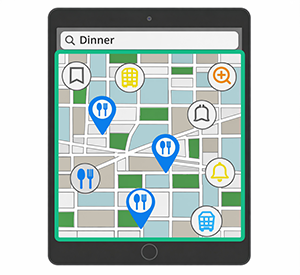
-
spellcheck AnswerWelcome to this digital guide for the city.
Listen to the audio, then click to record what you just heard.
Practice speaking questions in our app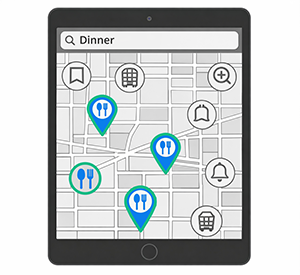
-
spellcheck AnswerCheck local dining spots for regional meals.
Listen to the audio, then click to record what you just heard.
Practice speaking questions in our app
-
spellcheck AnswerUse the transit symbol to locate places to explore.
Listen to the audio, then click to record what you just heard.
Practice speaking questions in our app
-
spellcheck AnswerUse this button to look for available hotel rooms.
Listen to the audio, then click to record what you just heard.
Practice speaking questions in our app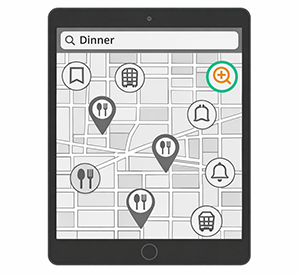
-
spellcheck AnswerMagnify the map for a closer look at each area.
Listen to the audio, then click to record what you just heard.
Practice speaking questions in our app
-
spellcheck AnswerSave places you like so you can return to them easily later.
Listen to the audio, then click to record what you just heard.
Practice speaking questions in our app
-
spellcheck AnswerYou can also check updated hours and current traffic conditions there.
Listen to the audio, then click to record what you just heard.
Practice speaking questions in our appHelpful Insights from 223,000 TOEFL Practice Tests
Over the past 10 years, we've helped a lot of people just like you achieve their target TOEFL score. During that time, we've analyzed around 223,191 TOEFL practice tests taken by our members, and those tests revealed many interesting facts. Some of these facts you've already seen in the TOEFL example question sections above. However, there are several more fun facts we would like to share with you, though they may not help your preparation much, we found them quite interesting.
TOEFL Speaking and Writing Are the Hardest Sections for Our Students
Here’s how our students scored in each section. In 95,190 Listening sections from 55,750 learners, the average band was 4.8, and 62% reached band 5. In 117,593 Reading sections from 69,392 learners, the average was 4.2, with 29% reaching band 5.
Writing and Speaking tell a different story. Academic Discussion posts averaged band 3.6 across 31,000 AI reviews, and emails averaged band 3.8 across 14,410. In 10,408 tutor-scored Speaking sections, the average was band 3.5, and 5% reached band 5. With both writing tasks counted together, the four sections from lowest to highest are Speaking (band 3.5), Writing (band 3.6), Reading (band 4.2), and Listening (band 4.8). Because the two sections you can’t score yourself are exactly the ones where our students lose the most points, it's critical to get these sections scored during your preparation.

Grammar Is the Weakest Skill in Both TOEFL Writing and Speaking
Grammar was the lowest score in 84% of 30,982 AI-reviewed discussion posts and in 92% of 9,981 tutor-scored emails. The same skill comes up in speaking. In 2,995 Speaking Interview answers from full tests reviewed by our tutors, grammar was the lowest score 92% of the time, while pronunciation and intonation got the highest average score. In other words, most students are understood well. What holds their score back is the grammar.

Support and Development Is Where TOEFL Speaking Interview Answers Lose the Most Points
In 17,604 AI-scored Interview answers, Support and Development was the lowest score 67% of the time. The problem is usually simple: students give their answer, but they don’t explain why or add an example. A clear reason and one short example will make your answer feel complete.

Our Students Struggle with Academic Passage and Academic Talk Questions
Learners answered 62% of Reading Academic Passage questions correctly, and one passage with its questions took about 8 minutes, 27% of the Reading section’s time. Compare that with Read in Daily Life questions, which were answered 83.4% correctly. Listening shows a smaller gap: Listen and Choose a Response scored 85%, while Academic Talk scored 75%. In both sections, the academic tasks are where the points go.

The Hardest TOEFL Reading Questions Ask for What Is Not Stated
In Reading, learners got Select in Passage questions right 47% of the time, and Insert a Sentence questions 48%. Compare that with Gist Purpose questions, which ask why the author wrote the text: those were answered 82% correctly. The questions that ask you to work out what the passage doesn’t say directly are the ones that cost the most points.

People Make the Same Small Mistakes in TOEFL Writing and Longer Posts Score Higher
Spelling makes up 23% of all email corrections, and 78% of emails had at least one misspelled word. Length is part of the picture too. Posts with an AI score of 1 had 107 words on average, and posts with a score of 5 had 154 words. Higher-scoring students make fewer mistakes, and they also develop their ideas further.

Our 3 Step TOEFL Study Guide Based on 223,000 Practice Tests
Here’s the plan: take one practice test first, then use the score report to find your weakest section and question types. Study those with lessons and practice questions, and then take the next test to measure the change. This 3 step study guide comes from the 223,191 scored practice-test sections in the next section. The score report shows which section is pulling your total down, which is why the plan starts with a test, not with a book.
- Step 1: Take a TOEFL practice test and get it scored. Take Sample Test 1 free. Get your speaking and writing answers scored, because those two sections are where our learners score lowest. The score report shows your band for each section and your result by question type.
- Step 2: Learn the skills you missed. Open the lessons for your weakest section and question types. Each lesson teaches one skill, for example inference questions in Listening or the Speaking Interview answer structure.
- Step 3: Practice the new skills, then take the next test. Do the practice questions for those skills for 5 to 7 days, then take a new practice test and compare the two score reports. Repeat the three steps until you score above your target band.
The six tips below give you one finding from our data for each part of the plan, what it means, and what to do.
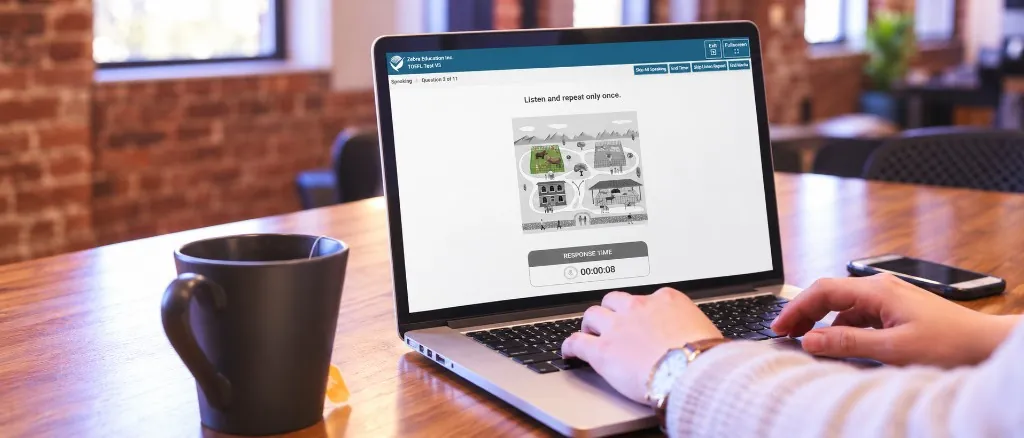
TOEFL Test Tip 1: Take a TOEFL Practice Test Before Creating Your Study Plan
Before you start preparing for the TOEFL, ask yourself an important question: Do you know which skills are holding back your score? Many students spend hours practicing all four TOEFL sections equally, without realizing that some sections need much more attention than others. In fact, our students average band 4.8 in Listening but band 3.5 in Speaking. That is a gap of 1.3 bands, and it shows why studying everything equally may not be the fastest way to improve your score.
The best way to find out where you stand is to take our free Sample Test 1. Your score report will show more than just your overall performance. You will see your band score for each section, which question types you struggle with, and how much time you spend answering each question. This information helps you identify exactly where you are losing points.
For example, imagine you score band 5 in Listening but only band 3.5 in Speaking. Spending another ten hours practicing Listening may do little to improve your overall score. Instead, you could use that time to work on your Speaking Interview responses, learn how to develop stronger answers, and practice the skills that are keeping your score low.
Don't spend too much valuable study time practicing what you already do well. Take a practice test first, discover your weaknesses, and build a study plan that gives you the best opportunity to improve your TOEFL score.
TOEFL Test Tip 2: Get Feedback on Your Speaking and Writing Answers
You can practice TOEFL Speaking and Writing every day, but how do you know if your answers are actually getting better? One of the biggest challenges with Speaking and Writing is that many students cannot recognize their own mistakes. You might think your answer is clear and well-developed, but an examiner may notice grammar errors, weak explanations, or ideas that lack sufficient support.
Our student data reveals how common these problems are. Grammar was the lowest-scoring criterion in 84% of Academic Discussion responses and 92% of emails. In Speaking Interview responses, Support and Development was the weakest criterion in 67% of answers. Without feedback, you could keep making these same mistakes without realizing what is preventing you from reaching a higher score.
That's why you should get every Speaking and Writing answer evaluated. Our AI scoring system provides free feedback on your responses in every practice test, showing you what you did well and what needs improvement. You can also request a tutor review to receive personalized comments on your ideas, organization, and tone.
For example, if your Speaking Interview answers consistently receive low scores for Support and Development, you may need to explain your opinions more clearly or include specific examples. If your Writing score is being held back by grammar mistakes, you can focus on the sentence structures that cause you the most trouble.
Our TOEFL writing rubric and TOEFL speaking rubric guides explain how your answers are evaluated and what separates lower-scoring responses from stronger ones.
The key is not simply to practice more, but to practice with a clear understanding of what you need to improve. Every answer you complete should teach you something that makes your next answer better.
TOEFL Test Tip 3: Practice with the Real TOEFL Format and Time Limits
Knowing how to answer TOEFL questions is only part of the challenge. You also need to answer them accurately within the time allowed. Time pressure can make even familiar questions more challenging. For example, in our practice tests, an academic Reading passage and its questions take approximately 8 minutes, 27% of the Reading section's 30 minutes. In Listening, you may have only 20 or 30 seconds to answer an individual question, and you get to hear the recording just once.
This is why practicing without a timer can give you a false sense of confidence. You might perform well when you have unlimited time, only to struggle when you face the pace of the real TOEFL. Make sure you practice with realistic time limits from the beginning.
In Reading, learn to identify the main idea quickly, scan for relevant information, and eliminate incorrect choices. If you are spending too long on one question, select your best answer and move forward. You can return to previous questions within the same stage, but not after that stage is complete.
In Listening, practice identifying the main ideas, important details, and connections between ideas as you listen. You can take brief notes if you find them helpful, but don't let note-taking distract you from understanding the recording. Since you cannot replay the audio, your priority should be to follow what the speaker is saying and remember the information needed to answer the questions.
In Speaking, practice giving clear, direct answers without long pauses or unnecessary details. For Listen and Repeat, focus on repeating each sentence accurately at a natural pace.
In Writing, quickly identify what each task requires before you begin. Focus on completing your answer within the time limit, and leave a little time to check for grammar mistakes and missing information.
Our TOEFL practice tests follow the adaptive test format and include the time limits you need to become familiar with. The more you practice under realistic conditions, the more confidently you can manage your time when it matters most.
TOEFL Test Tip 4: Review Your Incorrect Answers by Question Type
After finishing a TOEFL practice test, it's tempting to check your score, look at the correct answers, and move on. But if you don't understand why you got a question wrong, you're likely to make the same mistake again. Not all TOEFL questions test the same skills, and some question types are considerably harder than others. Our student data shows that Select in Passage Reading questions were answered correctly 47% of the time, and Inference Listening questions 60%. In comparison, Choose a Response Listening questions were answered correctly 85% of the time.
Why such a big difference? Some questions ask you to recognize information that is directly stated, while others require you to connect ideas, recognize relationships, or understand information that is implied but not stated.
For example, if you frequently miss Listening Inference questions, listening to more recordings without changing your approach may not solve the problem. You need to learn how to identify clues in what the speaker says and use those clues to draw a logical conclusion.
After every practice test, review your incorrect answers by question type. Your score report helps you identify the types you struggle with most. Start with your weakest type, study the strategy for answering it, and then practice with similar questions until you can apply the strategy confidently.
When reviewing a mistake, don't just read the correct answer. Ask yourself: What information supports this answer? Why are the other choices incorrect? What clue did I miss?
Our TOEFL reading question types and TOEFL listening question types guides explain the different question types and provide examples with answer explanations. The better you understand your mistakes, the more effectively you can prevent them from happening again.
TOEFL Test Tip 5: Plan When to Take Your TOEFL Practice Tests
Is taking more TOEFL practice tests always the best way to improve your score? Not necessarily. What matters is what you do between tests.
Some students take one practice test after another, hoping their scores will gradually improve. But if they keep making the same mistakes and never spend time fixing them, their progress may be limited. Practice tests are most useful when you combine them with focused lessons and targeted exercises.
Start with one full-length practice test to measure your current level. Then use your score report to identify the sections and question types that need the most work. Instead of immediately taking another test, spend time improving those specific skills.
How many tests should you take? This depends on your starting level, target score, and available preparation time. Many learners may need 3 to 6 months to prepare. As a general guideline, if you have more than three months, aim to complete at least six full-length practice tests. If you have less than three months, try to complete at least four.
Between tests, spend approximately 5 to 7 days reviewing lessons and practicing your weakest question types. Then take another test and compare your results. Are you answering more questions correctly? Has your weakest section improved? Are you managing your time more effectively?
For example, if your first test shows that you struggle with Reading Inference questions, spend the next several study sessions learning how to recognize implied information and practicing those questions. Your next practice test will help you determine whether the strategy is working.
During the final two weeks before your TOEFL exam, aim to complete one full-length practice test each week under realistic conditions. This will help you build the concentration and stamina needed to perform consistently across all four sections.
Think of each practice test as a progress check, not just another assignment. Take a test, identify your weaknesses, work on them, and then test again to measure your improvement.
TOEFL Test Tip 6: Combine Full-Length Practice Tests with Individual Section Tests
Do you really need to spend two hours taking a full-length TOEFL practice test every time you want to study? No. In fact, focusing on one section at a time can sometimes be a better use of your study time.
Full-length practice tests are important because they prepare you for the complete TOEFL experience. You need to maintain your concentration, manage your time, and perform across all four sections in one sitting. But taking a full-length test every day is not always practical, especially if you have school, work, or other responsibilities.
This is where individual section tests become useful. A full-length TOEFL mock test takes approximately 90 minutes, while a single-section test may take only 8 to 30 minutes. That means you can fit meaningful TOEFL practice into a busy schedule without committing to the entire exam.
Use full-length tests to measure your overall performance and individual section tests to improve your weakest skills.
For example, imagine you score band 5 in Reading and Listening but only band 3.5 in Speaking. Taking another full-length test means spending much of your time on sections where you already perform well. Instead, you could complete several Speaking section tests throughout the week, review your AI feedback, and work directly on the skills that are holding back your score.
You should still take full-length practice tests regularly to measure your progress and prepare for test-day conditions. Individual section tests simply allow you to make better use of the time between them.
On our TOEFL practice test dashboard, you can choose between taking a full-length test and practicing a single section, making it easy to adjust your preparation to your needs.
You don't always need more study time to improve your TOEFL score. You need to use your study time more effectively. By combining full-length tests with focused section practice, you can strengthen your weaknesses while continuing to build the confidence and stamina needed for test day.
Our 50 Full-Length TOEFL Practice Tests
BestMyTest has 50 full-length TOEFL practice tests built on the adaptive format. Each TOEFL iBT practice test includes all four sections, the same task types, the adaptive two-stage Reading and Listening, and the same allotted time frames. Every test ends with a score report. Sample Test 1 is free, and premium members get all 50 tests and can also take any section on its own.
TOEFL Reading Simulation Test
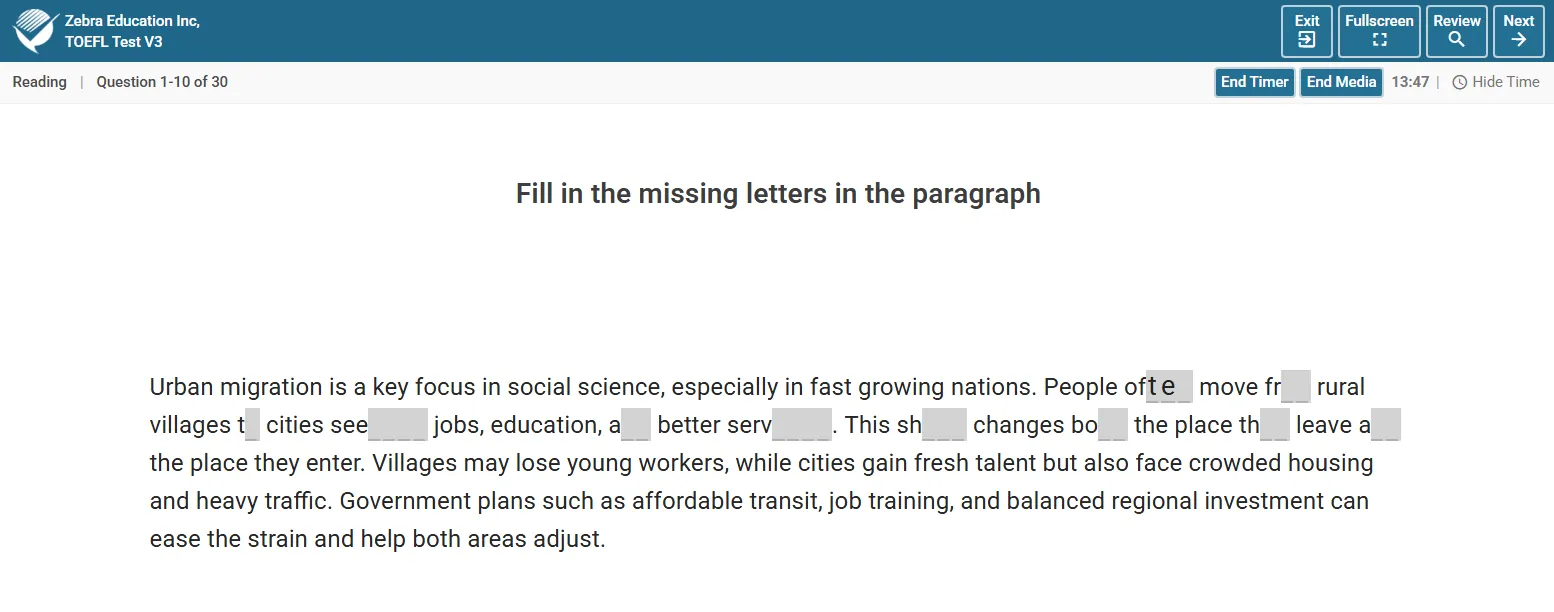
play_circle_outline Start TOEFL Reading Practice Test
TOEFL Listening Simulation Test
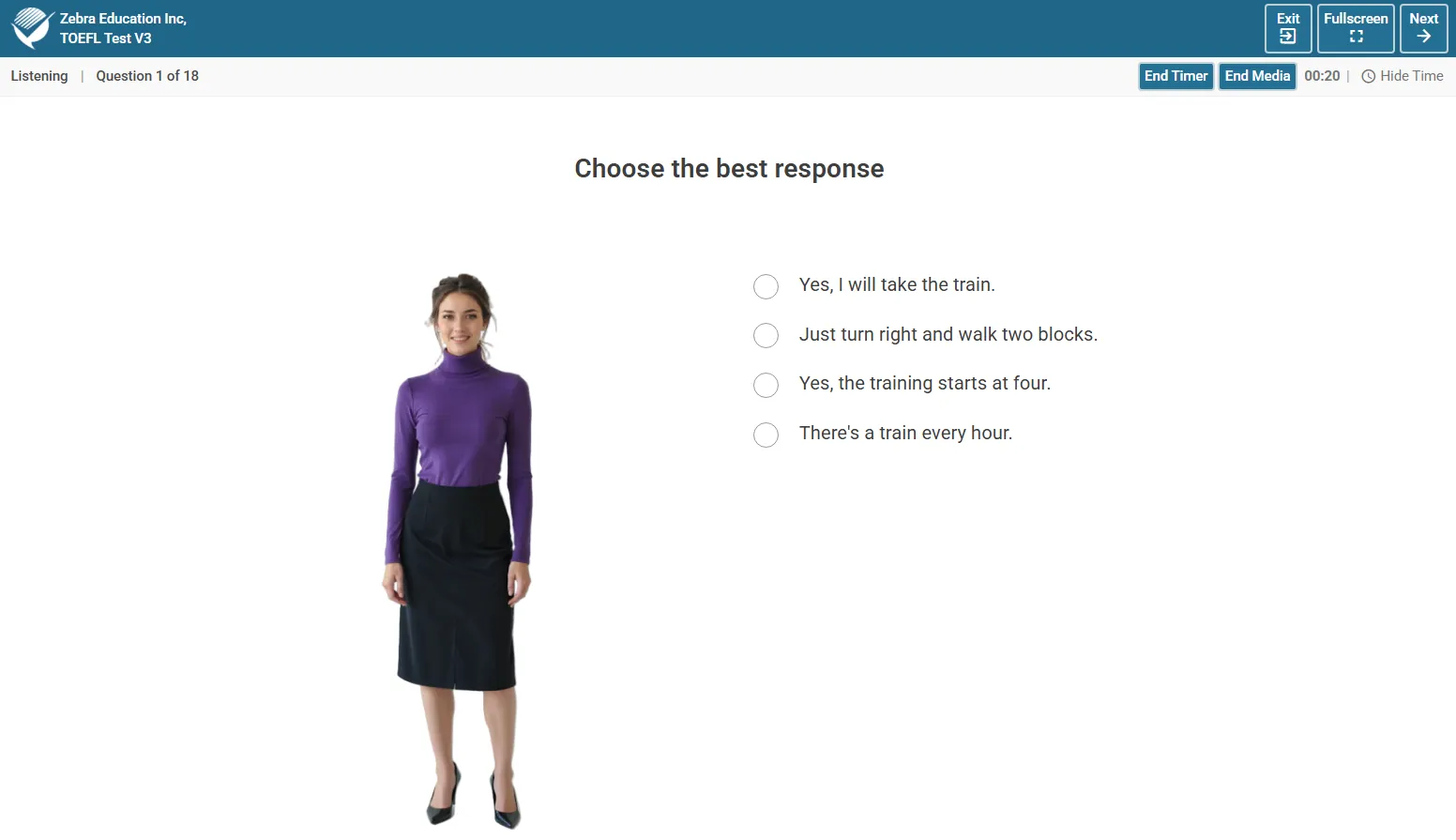
play_circle_outline Start TOEFL Listening Practice Test
TOEFL Writing Simulation Test
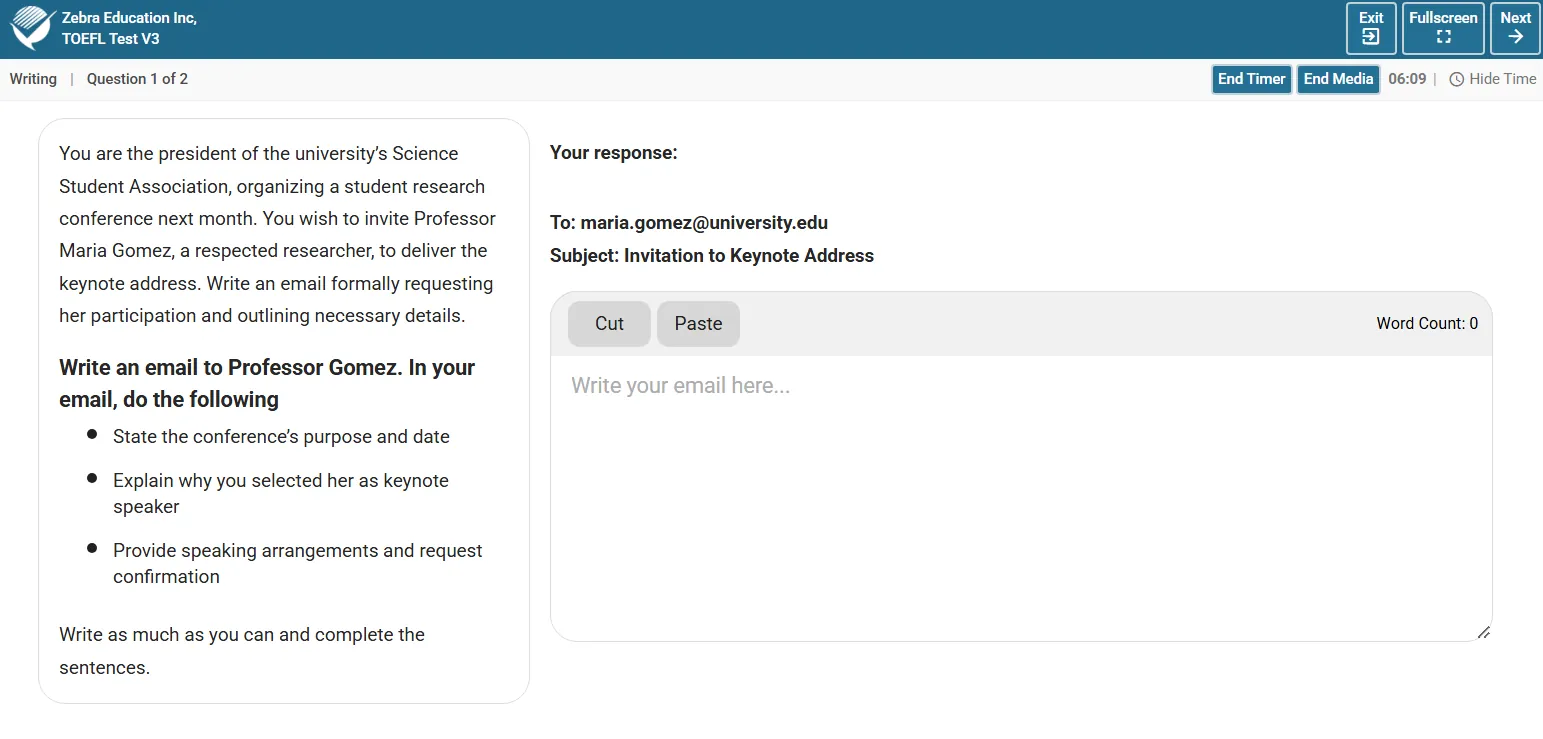
play_circle_outline Start TOEFL Writing Practice Test
TOEFL Speaking Simulation Test
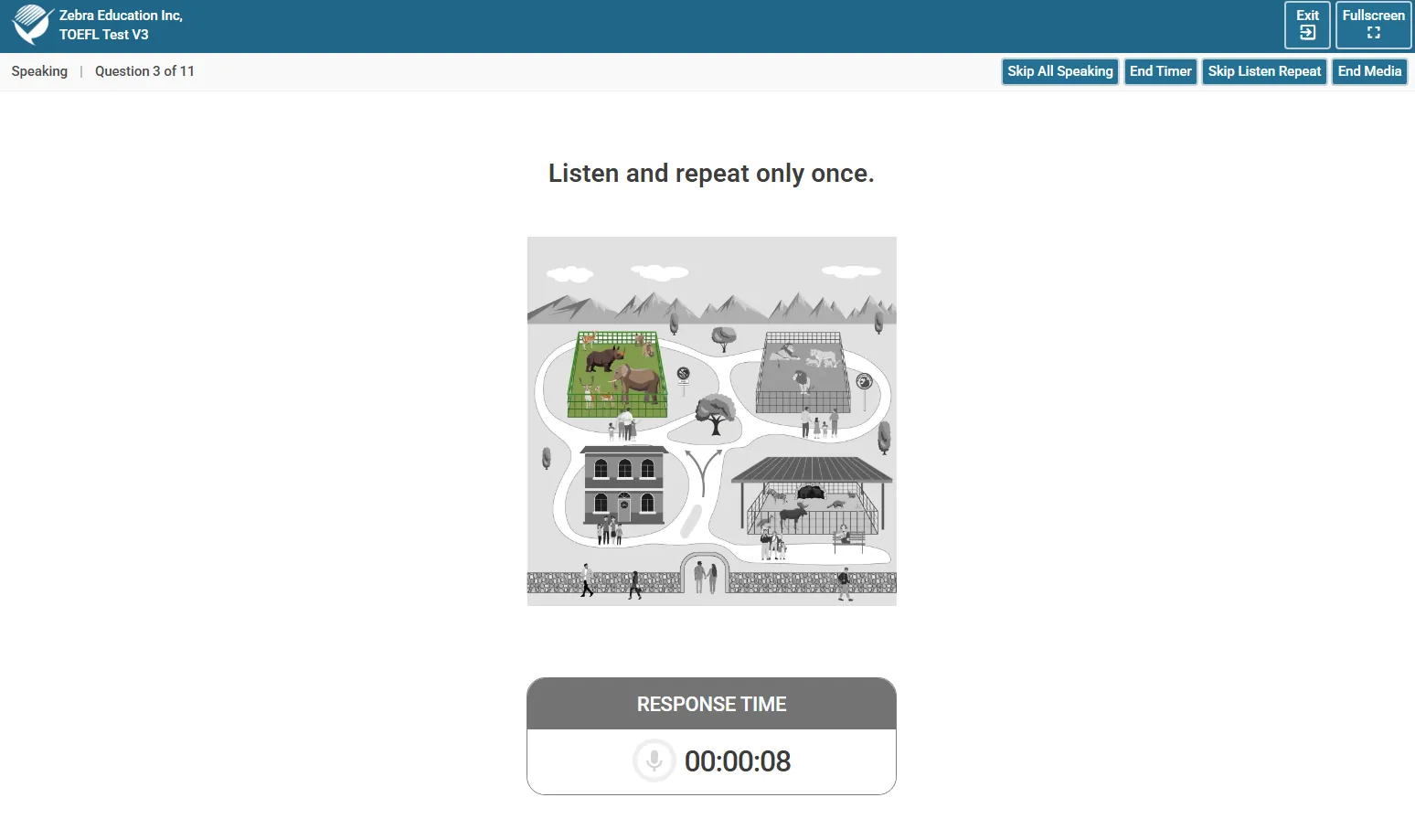
play_circle_outline Start TOEFL Speaking Practice Test
Our TOEFL practice tests look and feel like the official TOEFL test. The passages, recordings, and tasks match the official test in length, difficulty, and style, and the layout and timers are the same, so you’ll practice in a real test situation. Every question comes with an answer explanation. After each test, your score report shows:
- A band from 1 to 6 for each section and your total band, with the same lookup table as the official scale.
- Your result by question type, so you see which types to study next.
- Your time per question, so you see where you slow down.
- AI scores for your speaking and writing answers, with every correction marked. Premium members can also send answers to a tutor for a review with comments.
Free TOEFL Practice Resources for Every Section
Everything below is free TOEFL practice made for the current test. Start with the guide for your weakest section, then use its sample questions and lessons between your practice tests.
- Sample Test 1: a free full-length TOEFL mock test with a band score for every section.
- Adaptive TOEFL practice: how to use adaptive practice tests between test days, with results for every Reading and Listening task.
- TOEFL reading practice guide: the three task types, sample questions with answers, and six tips.
- TOEFL listening practice guide: the four tasks, sample questions with audio and answers, and seven tips.
- TOEFL writing practice guide: the three tasks, sample questions with answers, and six tips.
- TOEFL speaking practice guide: the two parts, sample questions with audio and answers, and six tips.
- TOEFL reading question types and TOEFL listening question types: every type with a sample and its answer.
- TOEFL speaking templates and TOEFL writing templates: answer structures with sample answers.
- TOEFL writing rubric and TOEFL speaking rubric: what each score means and where learners lose points.
- TOEFL reading practice PDF and TOEFL listening PDF with answers: printable practice sets with answer keys, free with a free account.
- TOEFL vocabulary lists, TOEFL vocabulary flashcards, and TOEFL vocabulary training: the words you meet in the test, with a mini-lesson for each.
- TOEFL Tutor App: all our TOEFL practice questions and lessons by section, with the AI Tutor that finds your weak question types.
What Students Are Saying About BestMyTest
It’s the best platform to practice for the toefl test, there is a lot of useful excercises that helps you improve the section that you struggle the most. Definitelly, I recommend using bestmytest as it is a practical way to prepare for the exam.
The Vocabulary lessons were absolutely amazing. I can vividly remember that I was struggling with new word across different topics, and those lessons assisted me to learn the needed vocabulary for the TOEFL test in a short matter of time, thanks to Ms., Sonya. I appreciate the efforts made by the best my test as a whole.
This application is easy, fun, and very helpful for anyone who wants to learn or practice for the TOEFL exam. The questions are well designed and make studying more enjoyable. I definitely recommend it for TOEFL preparation!
I scored a 5/6 in TOEFL with the help of Best My Test. Their wide range of material helped me practice, kept me consistent, and eventually improved my score. I would really appreciate if they would provide more writing and speaking reviews since their reviews are great and accurate as well. Lastly, I haven’t found so many materials for TOEFL on any other prep course website. Really grateful and highly recommended.
Very good site for Toefl Practice sessions
BestMyTest provided exceptional support during the internet shutdown in Iran by renewing my account for free. This showed real understanding and integrity. Beyond that, their TOEFL preparation platform is extremely effective—the lessons are well structured, the practice questions closely match the real TOEFL exam, and the explanations help you understand your mistakes clearly. I highly recommend BestMyTest both for their high-quality service and their strong ethical values.
BestMyTest is an absolutely fantastic platform. The service is excellent and very professional. The practice tests are high quality, very close to the real exam, and extremely helpful for building confidence. The explanations are clear, detailed, and easy to understand. Customer support is fast, friendly, and truly supportive. I highly recommend BestMyTest to anyone preparing for the TOEFL. An outstanding experience from start to finish
It's a really helpful website. With TOEFL practice sessions, you can improve your general reading and listening skills while also working towards the TOEFL. There are so many examples, you don't need to buy any additional reference books or anything else. By simply studying on this site, you can achieve excellent TOEFL scores by applying both your general English skills and exam-specific tactics.
With their help, I easily achieved a TOEFL score of 107. They helped me overcome the barriers.
This is the best website that I practiced TOEFL materials.
I find this website very useful. I believe it is one of the best online TOEFL preparation on the internet. One of the thing I like is it mimic test condition. If you are struggle with time management, it will help you a lot. After practicing with the BestMyTest, I saw a significant improvement in my TOEFL scores. My score increased by 8 points. However, I needed more time to study because pharmacy certification has different requirements, and due to unforeseen circumstances I had to take break. I would recommend this website to anyone to use it. You have everything you need to pass you test in one place.
After practicing with the BestMyTest app, I saw a noticeable improvement in my TOEFL scores. The practice questions helped me significantly enhance my reading and listening skills. As a result, my score increased by 6 points. The focused practice through BestMyTest played a key role in my progress.
Excellent I recommend to study for the toefl from there it has everything you need 💙
I highly recommend BestMyTest for TOEFL preparation. The platform offers comprehensive practice tests, detailed feedback, and excellent study resources. It significantly improved my skills and boosted my confidence. An invaluable tool for anyone aiming to achieve a high TOEFL score.
i have received my scores and i am glad😁 81: R18, L21, S22, W20! I already enrolled in the college and I will go to the US this fall! you helped me with the fulfillment of my childhood dream 🥰 i absolutely recommend BestMyTest for all students who want to pass TOEFL exam with the best grades!
The best website out there to learn about TOEFL! I'll always recommend it to my friends. Thanks so much for your effort to make such an amazing TOEFL platform.
I highly recommend bestmytest_toefl. I haven’t met my desired score yet, but i am working on it and obviously, I can tell, I have improvements.
The best ! I prepared for 8 days and scored 91, for me it’s amazing! I didn’t expect that. I highly recommend it !
I just prepared for few days and was able to score 103 on my TOEFL-iBT test, I am glad I made the right purchase, thankyou!
Best app for toefl practicer. Easy to access, gives so many instructions and reviews which can help to update my score. They are so humble and kind. I am still practicing from it....
The best platform available for TOEFL preparation. It saved my time by providing all materials I needed.
The number of tests is good and the the application resembles the actual toefl test app too.
I highly recommend BestMyTest for TOEFL preparation. The website offers fantastic resources that are comprehensive and user-friendly. The practice materials are top-notch, providing valuable insights into exam patterns. What sets BestMyTest apart is their exceptional customer service. The team is not only kind and understanding but also incredibly helpful. They genuinely care about your success and go the extra mile to assist you in your preparation journey. If you're looking for a reliable platform with excellent resources and a supportive team, BestMyTest is the way to go. They have made a significant difference in my preparation, and I am truly grateful for their guidance.
Great website to score 100+ in toefl 👏🏻
Great platform for TOEFL practice, I definitely recommend this platform to everyone. The staff is also very helpful with everything you need.
It's a great platform with everything someone will ever need to prepare for the TOEFL. Highly recommend.
Best my test have best course for TOEFL...... Helped me a lot to score good
Bestmytest has everything you need to prepare for toefl. As a non-english speaking person who lives in french-speaking country, it was almost impossible to defeat toefl. Nevertheless, because of this site, I learned and got what I needed. I highly recommend everyone who wants to pass their toefl exam to use this site. It is very cheap and easy to use. I practiced and learned strategies there for 3 months and got my toefl score. My dream score was 66(17 for each reading and writing, 16 for each listening and speaking) but I got 89(20 R, 23 W, 25 S and 21 L) on actual exam and the reviews I got from Bestmytest were almost the same. For you to succeed, you would just need to study carefully their lessons and follow their advices. Thank you Bestmytest for helping me defeat this dreadful english exam.
The customer service is responsive, also every time I have a question regarding a section for TOEFL, they explain it properly. The speaking and writing reviews are also effective in improving my score. Moreover, they also constructive feedback when they need to improve something on their website or content.
BestMyTest has been the best platform in my preparation process for the TOEFL. They have what appears to be the largest question bank of all websites. Plus, by doing the Simulation Tests, I have greatly improved my english overall. Their support is agile and effective as well.
It is the best website for studying TOEFL. Their questions are very similar to TOEFL format and not only questions, also the experience is very similar to TOEFL exam. Also, they are very thoughtful and helpful.
I just recently took my TOEFL test and managed to score 114/120 thanks to this course! :) Reading 30 / Listening 30 / Speaking 24 / Writing 30 The course especially helps getting into the "exam mode" and to get accustomed to the type of questions that aren't your everyday type of task (--> especially the speaking part). While I didn't do a lot of the learning modules, some of them really helped me to work on specific issues I had (e.g. a certain type of question in the reading part that I always messed up). Based on your right/wrong results, BestMyTest suggests you modules that may help to improve in that certain aspect. I primarily focused on these lectures + structure lectures for writing/speaking as well as practice to minimize the amount of time spent learning (I'd say I invested about 50h max preparing for the TOEFL). However, I found the grading done by BestMyTest tutors to be a little more strict than the actual results (at least that's what I believe as I never scored as high as I did in my actual exam). That's not a bad thing though as it motivates you to push even harder. Last, but not least ;) ... BestMyTest has great customer support. I reached out with an issue and they got back to me within under 24h + were able to help out. Twice. It's rare to have such great customer service nowadays :) Overall, I'd recommend everyone to get the course as it's really worth the money
It contains huge number of exercises and is probably the best way to prepare for TOEFL.
Bestmytest is the best way to study Toefl. They have a lot of lessons and practice questions. I recommend using this platform if you want to reach your goal. Also, they have great customer service.
Best website to improve and learn. I have tried multiple websites for Toefl but this is helping for sure.I am yet in the process of taking my test and will review once I get my expected scores. But I will certainly say that the customer service and the content of the study is awesome.
Since I have never took TOEFL before, best my test really helped with the introduction and tips and trick. The contents are precise and focused, with tactics and gradings that help us in greatly improving our scores.The structured video lessons, the practice resources and the full length tests helped me immensely.I absolutely love their chat support and how they resolve all your doubts. I wish I started sooner with best my test and also did all exercises. Thank you,Best my test! I definitely recommend it to everyone :)
This is by far the best website I used to prepare for the toefl. The speaking and the writing reviews helped me focus on my weaknesses. I ended up scoring 28/30 S and 29/30 W. I struggled while I was trying to find someone to accurately evaluate my speaking and writings. Furthermore, the practice test that the Toefl ibt offers on their website will give you a score without explanation or corrections so it was not that helpful. And most of the tutors I contacted charged 3 times more what the review costs here. I also appreciate that you can record your voice and take as many mock tests as you'd like. I absolutely recommend this for any student who is preparing for the toefl.
This is the good site to practice TOEFL I came across this site there features I like it -Flexible pricing according to need -Real time simulation similar to exam simulation -practice test are of similar level real exam
Bestmytest is actually the best website you can can ever find to help you prepare for TOEFL. They have ample number of tests and practice questions which is hard to find anywhere else, additionally, the tests are on a par with actual TOEFL test. No matter how much research you do, you will not find any platform better than this for TOEFL, take my word to the bank. I definitely recommend this to all those preparing for TOEFL exam. Prices are very much affordable, moreover the whole team of bestmytest is very kind and genuine, they always get back to you with their wonderful service if you are stuck somewhere. I had an amazing experience preparing with this platform. I wish bestmytest to continue helping students as they are in future. Thank you BESTMYTEST. You really are the best!
Frankly, the best platform to prepare for TOEFL. I would recommend it to everyone.
I would recommend best my test to each and every student preparing for TOEFL. It is the bestest portal I have ever used.
BestMyTest.com was my personal tutor in studying for my TOEFL exam. The platform is very user-friendly and navigation is easy. The practice and simulated tests really prepared me for the TOEFL in a way I could face the actual exam with ease. The feedback on the Writing and Speaking sections that were given by instructors was pointing out exactly where I had to focus and these gave me a pretty good indication about what I was doing wrong as well as getting right. I loved the learning experience and the many templates that are there in the lessons section were totally awesome! Those really gave me a guideline I could stick with and helped me organize my answers. I did not go to any physical classes. Instead, I followed the advice I was given and focused 1 month on my studies using this eLearning site and did really well in the TOEFL. Thank you so much! I highly recommend BestMyTest.com to anyone who wishes to do their TOEFL studies.
"Hello all, I am super happy with the pricing and rates from the company. Specifically I like the speaking parts. They have provided many practice tests to choose from. I took 7 day access and upon my request, they extended for 2 more days untill my real TOEFL test. It helped me a lot. Thanks "
I got my TOEFL scores today and I am so happy with that. Due to financial constraints, I could not take purchase any of your courses, but your free materials helped me a lot. This mail is a thanking mail to you. I want to express my gratitude towards you through this email. I would definitely recommend your website if anyone asks me for a TOEFL preparation recommendation.
This site is extremely helpful for TOEFL preparation. I haven't passed the exam yet but I do exercises much better than before. What is good about this site? 1)Reading, Listening Besides many available TOEFL questions, special lessons do help you. The system recommends the most relevant lessons based on your progress and mistakes. 2)Speaking, Writing Bestmytest is way ahead of competitors. As far as I'm concerned, it's the only popular TOEFL preparation site that has a large enough number of professional reviews of your work 3)Nice design, really responsive team Ideas for further improvement: developing a phone app; sending notifications
I started studying for Toefl in March, I didn't have much time and didn't know where to start. I searched on the internet for free materials, it was very confusing. Then I found the Bestmytest website, I studied all the free materials, but I needed more. Because of the banking system in my country, I couldn't purchase any of their plans. So I emailed them and promised to pay as soon as I moved to my destination country, surprisingly they accepted and gave me access to their platform for two months. It was AMAZING. My score improved from 87 to 98! I am grateful to them, not only for their number one platform but also for their kindness.
They have lots of questions to practice which helped me improve my basics and score well in TOEFL.
Helped me to improve my score by 12 points just in one month! Super useful strategies and clear explanations.
I used your app for my TOEFL exam, and I got the score I needed. It was extremely useful, so thank you very much. In one month, more or less, I improved 9 points.
I payed the 3-month subscription and it worked beautifully. I honestly feel like I “bested my test” (pun intended). I scored 9 points above the average calculated by the website. The more you practice, the best the website will work for you. The video lessons are very well organized. Recommended 10/10
This is so far the best course out there for TOEFL preparation. I found it extremely helpful, I am sure you will too.
I think bestmytest is the best way to study Toefl. They have tons of practice tests and everything for the Toefl preparation. Especially, their review system helped me a lot to improve my writing and speaking skills. Thank you so much bestmytest.
BESTMYTEST is extremely useful service. I love that there are a lot of theory and practice. Everyone can find the answers on their questions. Definitely recommend!
Best my test is the best TOEFL preparation! It’s very useful and helped me improved my score! On the first attempt, I study by myself and the results is not good enough then I decided to give best my test a chance for my second time. And it turns out great! I took a test today and so far I improved my reading part by 8 points and listening part by 5 points which made me happy. Also, the website and very easy to use! I love it.
It is the best app to practice for TOEFL!!! I really recommend Bestmytest!
Bestmytest is by far the best toefl preparation service ever. I was really amazed with their prep materials and their practice tests. Its so close to the actual Toefl test. Keep up the good work
It is the best app to practice for TOEFL. It has a lot of exercises in each of the four sections and also provides you a lot of useful tips to increase your score! I highly recommend it! It has helped me a lot... Thank you so much for your services.
Bestmytest helped me so much with my studying, it was extremely useful and efficient, thank you very much ! I deeply recommand Bestmytest for your TOEFL prep!
Best my test is a platform that helps you to clearly understand the objectives of each section and provide you with the best study tips on how to tackle each section. The tips provided are invaluable and the adequate practice questions help you gain the mastery over that section. I got a 94 in TOEFL without BMT, but with Best My test, I got a 117. I would 100% recommend this to anyone looking to improve their TOEFL score
Excellent experience. Very well organized. Same as Toefl.
Very helpful! Most questions provided by the BESTMYTEST service are similar to those of the actual TOEFL test. It helped me find my weaknesses and supplement those parts successfully. Subscribing the BESTMYTEST would be one of excellent ways to prepare for the TOEFL test considering the cost-effectiveness.
The best online preparation Toefl course, I recommend this course for all test taker for several reasons: - Very organized - Highly experienced touters - thousands of practices question. - Analytical dashboard which helps you to identify your weaknesses and strong point. - Quick response from touters when you ask for an essay writing and speaking review. Overall, I highly recommend every test taker to try this comprehensive preparation course.
This is the Best site for TOEFL preparation. Their detailed reviews on the speaking and writing section were very helpful. And the simulated tests were very accurate to the actual test. Would recommend BestMyTest to anyone who is preparing for TOEFL.
My experience with BestMyTest institute is very satisfying. The Mock-tests and the study materials are of very high quality. The teachers are really very helpful and co-operative. They always clear my doubts whenever I ask them. This is one of the best online coaching institutes for TOEFL preparation. I would definitely recommend to other students to Join BestMyTest for preparation of TOEFL exam.
Thank you BestMyTest! BestMyTest makes me successfully head to Stanford University to implement my research work in 4-month preparation. I am a Taiwanese student. Listening has always been my short. In Taiwan, probably because these TOEFL online learning websites are full English, a limited number of people would use websites. As a result, most people spend a great amount of money on going to cram schools since teachers there would share feedbacks and techniques on how to get high scores, especially in speaking and writing section. However, the teaching materials of cram schools are not sufficient, which makes students need to buy extra reference books or download exercises from the internet. Couple years ago, I spent nearly 100 USD on a famous cram school in Taiwan. To be honest, cram school is not a miraculous cure if you do not spend plenty of time in practice; as a result, I got only a 75. I found complete courses with YouTube videos included of how to use these logics (techniques of getting high scores) where I can achieve the same effect by cram school, and BestMyTest also provides speaking and writing reviews. The abundant simulated exercises perhaps value this website the most, an amount equal to buying 10 more reference books. In addition, the simulated exercises in BestMyTest is a bit more difficult than official TOEFL tests, which renders me to feel easier and less tense when I took the official TOEFL exam. Lastly, a long-term advantage, not the instant advantage for Taiwanese students-BestMyTest is a full English website, but I think it is a good start to adapt in English earlier for any student who wants to go abroad. To conclude, BestMyTest integrates accomplished courses and rich simulated exercises. Nevertheless, the cost is only one-fifth of going to a cram school. For those who want to get high scores or to immerse yourself in English, I sincerely recommend BestMyTest.
BestMyTest is a website that offers an online course that every candidate should consider when preparing for the TOEFL exam. This website meets all my personal needs. Of course, just following the course cannot replace other general sources of English learning such as conversing with English speakers, reading English books and articles, watching English TV shows and movies and so on. On the other hand, BestMyTest can be used as a primary source or guide, if you like, on your way to test preparation. To make it short, I can list several reasons why I liked this source. The main one I was looking for was the opportunity to practice as much as possible. In fact, the practice materials, in my opinion, correspond to the level of difficulty of this exam, if not more. Hence, this almost unlimited ability to practice and then reinforce all the skills by studying sample answers is crucial. Next, TOEFL is a test in which timing is everything, and therefore BestMyTest adequately solves this problem. Each candidate can start developing time-related skills from the very beginning on the way in ones preparation. In addition, anyone interested in building their own set of new academic vocabulary can find many useful lessons and materials in this regard. The site structure is very easy to navigate. Since BestMyTest offers a 7-day free trial, one can utilize this option effectively and learn how to navigate the website. Last but not least, my interaction with customer support has always been very productive. The service is organized professionally. I received all the answers to my inquiries in a timely and concise manner. As a final thought, I believe BestMyTest is a great all-round source when it comes to TOEFL preparation, and it works great when paired with polishing your general English as I mentioned above.
Bestmytest is a reliable online course preparation to enhance confidence for TOEFL exam. There are plenty of exercises, vocabulary lessons, simulations with a diagnostic overview, and really interesting statistics to understand how your training is. The writing and listening reviews are amazing to improve you grade in the test. Definitely, I recommend this course!
This is an absolutely great website. I have almost practiced all the exercises available on the website and I have noticed that all major and minute details are handled with so much effort and determination. If I will be unable to get a good score in TOEFL then I will own the whole blame as not for achieving a score even after getting myself prepared from the remarkable website.
It is really same with Toefl exam. I feel lucky to find you. Your practices are really helpful to prepare my exam 🌟
I think that Bestmytest is the best TOEFL preparation program. It's practice tests are of same level as original test. Also, the wide varieties of practice questions help you to improve English. The reviews from Bestmytest are really helpful to get better score. I really recommend others to use this program.
I started preparing for my TOEFL test one month ahead. Bestmytest gave me a plenty of possibilities to learn grammar, words, templates and gave me tips on how to prepare. However, best was a huge amount of practice exercises. I practised a lot and with the optional review on your writing and speaking bestmytest is great. I could improve from a score of less than 90 to 108 in four weeks.
The Practice tests are a good exercise for the TOEFL test preparation. Ask an instructor is an useful tool for tips and Q&A
If you need to take the TOEFL exam and you want to study on your own, you won't succeed. I thought I was doing great while studying on my own but I started the 1 month program and realized that you NEED this website to reach your goals. Feel free to try your 7 days free trial and you will realize that you need to keep using this website. I improved from 80 to 92 in only one month. And I am not the best at writing and speaking, but the templates provided for both section helped me a lot. I would recommend taking at least 1 month program 100%. THANKS!!
Great program. It helped me a lot with my TOEFL preparations. I would definitely suggest to many other people :)
If you are looking for a high TOEFL score you are at the perfect place. I would definitely recommend Bestmytest on my good experience with them.
I am preparing for TOEFL as a student studying in Korea. Bestmytest has been really helping me with the preparation for TOEFL. Without the need to purchase other materials, Bestmytest provides different packages all-in-one. 1. First, it allows us to set our goals for TOEFL scores and help us to track how we are doing. Tons of practice questions for all 4 sections are organized really well. A 7-day free trial is there, so you can always check out how they are before you pay for a subscription. 2. Moreover, Bestmytest provides lessons with a lot of tips for each section. Especially, at first, I faced problems in the speaking and writing section as I did not know to deal with the questions. However, with Bestmytest, I learned many strategies that I can apply to the questions. 3. Lastly, the best part of Bestmytest is that it has a review service for the speaking and writing section. It is really difficult to judge the performance of myself even with the rubrics, so reviews from the professional really help to know how well you are prepared for the test. I really suggest Bestmytest to people who are struggling with TOEFL for the above reasons! The price is really reasonable compared to the services they provide. I really thank Bestmytest for helping me with the study. :)
Very good course, helped me to get from 89 to 97 in 2 weeks. I will study for one more month though. Aiming to pass 100! Thank you to everyone who made bestmytest possible. My little suggestion is that speaking reviews seem to be very expensive :( And with a 1-month plan which does not cost a little, you only get 1 whole speaking task review, anyway I won't cut off stars, as this course absolutely helped me to improve my score significantly.
I think this website is one of the best to prepare for the TOEFL exam. It offers lessons, vocabulary, and tips/tricks for each section, a wide range of well-made tests (which imitate exactly how the exam goes) and it is also up to date. The price is very affordable and you can benefit from their free trial period as well. Another important thing to keep in mind is that the samples they offer (for speaking and writing) are almost perfect, professional. But normally nobody can provide such an accurate answer, so no need to worry. They are only for guidance. You can obtain a really good score with more natural responses (which can include pauses, stuttering or less fancy words).
I definitely recommend ''BEST MY TEST''. You will not get this helpful source and helpful , professional tutor service from anywhere. The way they created is not only amazing but also make your expert in toefl. You absolutely achieve your target score. thank you so much.
It is a wonderful site which helps you to achieve such a fabulous score on your toefl exam. I strictly recommend this site to everyone who is going to attend to TOEFL.
They are the best team on your TOEFL preparation. All of their practise tests are equal to real one. I personally increased my score by 15 points. This is awesome. I want to say thanks to. BestMyTest team. Wish you best
Best platform to prepare for TOEFl exam. You will see 100% improvement in your score.
As I have checked and used most of the online TOEFL preparation tools, I can definitly tell that Bestmytest is the top online tool on the market. Mert Cetin
First of all, I have been using Bestmytest for 2 months. This is the best program for Toefl. There are very good practices test. Moreover, my favorite section is grammar correction. Secondly, Bestmytest has excellent team. When i had a question, they responsed with big patient and quickly. Even if questions are weird. :) Thank you very my BESTMYTEST team. ☺️☺️☺️
I can't thank you enough for the perfect training your website has provided!! Received my scores today: achieved 119/120. I felt pretty confident at the test center due to the exercises I have done on your page - however I did not expect such a great result. Keep on doing what you are doing - this really is a great opportunitity for students to prepare at a price which is affordable for everyone.
I took my TOEFL test recently and recieved a score of 106. I think this was possible only because of the materials and preparation guides provided by bestmytest team. The prep materials were really good and I would surely recommend bestmytest to my friends or juniors. The company provided me with a one week free extension service when I requested which I think most of the companies would hesitate. I am very thankful for this deed. Once again thanks a lot bestmytest team. Keep continuing this work!
This is PERFECT! I normally don't prefer to give review. However, I would love to do it today because I am very happy that I got high score in TOEFL. Thanks to Bestmytest. Can't believe I did it :) I would Highly recommend Bestmytest. As name says: Bestmytest is best.... Really worth it.
After trying a different course, I can say that Best my test course is very professional and recommended. They have very good lessons and multiple ways to practice and strength both foundations and skills. Their practice tests are very similar to the actual TOFEL test and reflecting the real test level. Their online speaking and writing reviews are accurate and eventually reflected my score. Thanks to best my test I achieved my target score.
I got my TOEFL test score back today and I scored 108. This was my first try and I'm very happy with my score :) I just wanted to say thanks for taking the time to answer all my questions and also giving me the advice I needed. I hope many students will score high through this program. Thanks again! :D
I just got my Toefl score yesterday- 114/120, and I owe a massive part of that achievement to Bestmytest. The reason I went for Bestmytest is for access to experts to provide feedback on the speaking and writing areas in particular as I felt that self study won't enable me to see my mistakes. I got 30/30 in both these sections! Below are the benefits I experienced: 1. The home screen provides information on my progress: what my current score is and what I require, what percentage of each section I have completed and which question types, reading in particular, I am struggling with. I found the gist content and insert sentences questions to be particularly challenging so I sought further expert help in those areas. 2. For the few IT related queries I needed help with, Jane was really helpful and swiftly guided me. Overall, the program is sophisticated and user friendly. 3. The experts who reviewed my submissions gave really constructive feedback. The response was speedy too. I personally found their bank of questions to be harder, and the scores of submitted work to be non-lenient, which challenged me to work harder. 4. Practice makes perfect. Bestmytest have a universe of questions which was exactly what I needed. 5. They have helpful videos and templates on how to approach questions too. I am glad that I supplemented my revision with this excellent learning program. I would highly recommend it! I'm a very anxious exam taker and Bestmytest helped me build within myself, that confidence, which guided me to success.
Their 20 tests are almost identical to the actual TOEFL test. The writing and speaking feedback is very helpful as well. I spent two weeks using the website and I improved from 93 to 105. From a guy who spent nine months fighting against the toefl test, I can tell that there is no platform better than Bestmytest to prepare for the toefl test.
I prepared for 12 days(approximately 30hrs) on bestmytest and got 113/120 on TOEFL. I'm extremely happy that I got this score and I would say that bestmytest helped me a lot! I experienced the following advantages preparing from bestmytest: 1- Excellent speaking and writing reviews(I got the exact same score on speaking-29 and almost the same score on writing-28 on the actual TOEFL exam) 2- Excellent high level practice questions: I felt that the practice questions on bestmytest reading and listening section were of a higher level than tested on the actual TOEFL exam. But, that was a big plus, as I felt at ease during the TOEFL exam. 3- Excellent sample essays and speaking sample answers. One must go through 50% of these to get well prepared! 4- Excellent structure explained in videos for speaking and writing section. Make sure you go thorough all the videos on TOEFL guides for speaking and writing section, given on best my test. I followed the exact same structure for responses on speaking and writing section, and got 29 in speaking and 28 in writing. 5- Excellent questions and software for speaking and writing section. In fact, for all the sections :) The good thing is that you can record your responses on the speaking section and check for the errors. In conclusion, I would say that even if you have less time(about 10-20 days) to prepare for the TOEFL exam, you should take services of bestmytest. Good luck with your TOEFL prep! Regards, Shahzil
First of all, I am greatly appreciated to Bestmytest team! You guys are the best of the best in terms of the Toefl tutoring. I have struggled to get my required score for looong time. I finally got Improved my score from 77 to 90 with each section of R20, L24, W24, S22 for only 3 weeks of intense study. I have taken TOEFL for 3 times before, and never passed 80 each time. My first trial was 72 and 77, last one was 75. I was about to give up my studying and felt exhausted. I have studied by myself with official TOEFL books and youtube videos or other free resources whole this time. Out of four section, my listening and reading skills were the worst than other two, and I have tried many times, still, couldn’t improve them significantly. I think entire this time, I was just waisting my time and doing it wrong way over and over again. So I realized that I need tutoring but I couldnt afford personal tutoring, and I searched internet hoping that I would find some solution. Eventually, I found you guys very practical and affordable, and decided to give a shot after 7 weeks of free trial. It was the best decision of my life. I think everything on the website is super useful and handy. I realized that because of lack of my academic vacabulary knowledge, caused my L and R score low, after studying with Bestmytest, I felt much more familiar with the academic topics, and It helped me Improve a lot in my understanding of those sections. To be honest, I only utilized around 50% of what bestmytest offer and If I completed it fully, I feel like I could improve my score even higher than 90. Impossibilty became possible with you guys! I really didnt expect today that I would get this score. I was surprised and get emotionaly same time thanked for God that helped me find you guys! I would definetely recommend you guys to everyone who is not only taking Toefl but also wants to improve their english generally! Finally, I truly wish everyone in your team good luck at what you are doing and best of all from my heart! :)
I`d like to share my wonderful experience whit all who are looking for a great TOEFL prep plan , I am super satisfied with bestmytest and recommend it to all ,,,,
Fantastic website for students looking to study TOEFL. Very good interface and content. Can surely help you boost your scores.
A big thanks to BestMyTest. It played a major role in improving my skills in English. Especially in speaking, there were lots of practice questions and tests which is in the same kind of TOEFL speaking questions. It helped me to get familiar with the pattern. After practicing those questions I was able to face all the speaking questions without any anxiety. I felt vocabulary exercises and academic videos are useful because no other websites have this clarity in teaching academic words that are mostly used by ETS TOEFL exams. I found those vocabulary sessions are interesting since it has pictures and definitions with the word that you can easily relate the word with real-world situations. After going through these sessions, I was able to understand reading and listening sections easily. You can find plenty of resources for TOEFL online, but it is tough to find efficient TOEFL resources like BestMyTest. I am glad that I found them before taking my TOEFL exam.
I found bestmytest useful for studying for the TOEFL tests. Lessons and practice tests are diverse and helpful. I was able to get 98 on my TOEFL test after studying on BestMyTest for three months. I would recommend my anyone who want to pass the TOEFL exam to get a bestmytest TOEFL online course.
I strongly recommend bestmytest TOEFL preparation program. I scored 114 mainly thanks to the effective practice tests which includes very similar speaking tasks which was my main weakness.
Downsides - A - subscription is pricey B - I can't buy access only to the section I am interested in. Upsides - A - their question database is huge and the quality is impressive B - simulated tests are pretty realistic C - ideal for people who already speak english (like myself) but only need a specific TOEFL training thanks
TOEFL is a tough examination and I was finding it tough to crack on my own. It was at that time that I came across Best my test. The guidance they provide in the TOEFL examination is absolutely the best and it was they who helped me to crack the examination. Their special method of TOEFL practice test was very helpful, especially in building my confident approach towards the exam.
Amazing plateform and very helpful service after purchase. The UX is seamless, and allows you to progress and visualize your weaknesses and areas of improvement. I honestly wish I discovered it sooner, best investment made!
This app is not only great for their services but also for their gestures. I asked them to extend my service for 2 days and they did it unquestionably. Highly recommended to all tier of students.
I found this website awesome! organized lessons, reviews and techniques. customer service responds fast and greatly serve the customer. the only negative thing in my opinion is that the paid packages are limited with time not with a quantity. I have a suggestion for that. accessing the materials should be unlimited time but maybe taking reviews from real teachers can be limited with a certain time. I give it 5 start because for me the pros are more than cons. and it's specially for the customer service which I miss in so many services in Europe.
Very good services provided by the bestmytest team!!!
For a long time I was looking for a program that would help me to prepare for the exam. My best score is a program that really helped me in my study process to get the most out of everything and get my maximum score.
I have improved a lot in my english skills. There are many exercises to practice.
Amazing platform! Super helpful individuals! Really liked the fact that you could get free writing and speaking reviews with your plan! Anyways I can't thank them enough!
Amazing experience... Effective course material, test, questions and lessons all helped me to improve my English.. Thanks Best my test
This is a great platform for a beginner to learn from scratch. Best my test tool helps you to improve your scores and you can reach your target score easily with the materials and lessons provided by them.
Every resource on the bestmytest website was easy to understand and navigate, making it one of the best websites I've ever seen.
Best my test really helps me to reach my goal. And their customer service is really great.
It’s great platform. I recommend to everyone who wants to prepare themselves for toefl or ielts.
Go-to website for mock tests. After a lot of web searching I zeroed in on this website. Excellent content. After taking a free test, I decided it was worth it. The quality of test papers are really good. Especially the listening tests are very helpful.
I strongly recommend this course. By far is the best one and the staff always reply you in a short time. There is a lot of material to study and it is very interactive. Enjoy it!
Bmt helped me a lot while I was preparing for the exam. Actually I have 10 more days to take the test but, I have to say that they improved me a lot. I am so thankful to them. I recommend everyone because there are plenty of tests and questions.
They have many questions for practice which could be really helpful.
Very good website and service!
BestMyTest has a wide variety of training modules and tools, which are difficult to obtain from other sources. For me the BestMyTest speaking modules are especially important. They are well designed and convenient to use. I could not find anything similar by effectiveness from other sites.
Your study plan is very helpful and affordable. I'll highly recommend it to my friends.
I am happy with BestMyTest.
I started using this BestMyTest and it has been very helpful for my learning. From the lessons to the numerous practice questions. I definitely recommend.
I used this for my speaking and writing review. It is a very good resource and the team is very supportive.
This is the best platform where you will find lots of practice sets and you can get assistance any time you needed in any of the sections. This helped me strengthened all my weak sections especially writing section.
A lot of questions for preparation and helpful customer service.
Highly recommended Amazing content Quick support
Great material, variety of tests. Great customer service! They were keen to help on any question we had. Highly recommended.
The support is very helpful and gives a response quickly. Besides, the content is so well explaining, and there are many valuable tests and exercises.
Great costumer service! Great organized website, but you need to look at harder listening exercises.
They offer a great materia that completely close to the real test
The content is great.
I find this program great because it is comprehensive. It has well structured lessons, vocabulary cards and most importantly a lot of practice with sample answers. The package also includes thorough speaking and writing reviews as well as questions to ask to an instructor. In addition, requests are answered in a timely fashion.
The materials as well as services are excellent at a reasonable cost. I strongly recommend everyone.
This is currently the most comprehensive preparation for TOEFL and IELTS. What is included here? -Clear and useful lessons on exam preparation strategies -A lot of practical material. I have never seen so many tasks! -A great system for speaking exercises with the ability to record your answer many times -The packages include assessment of your oral and written answers by professional English-speaking teachers -11 complete real-time practice tests. -4 complete verification tests that emulate the conditions of a real exam -7 days of full trial access -Low cost compared to all other sites -All tasks are accompanied by explanations of errors.
I was searching for a course to help me with my IELTS exam. I would like to say that I found Bestmytest a great place in order to study. In the beginning, I took the custom study plan in Bestmyest for 1 month, I found the course with excellent resources, a lot of simulations, and good reviews of my speaking and writing from their teachers. I started getting in the reading part at 4.5 grade, and low scores in the other skills but thanks to the lesson on Bestmytest, now I got 6.5 in simulations. So, I decided to buy the premium package because I wanted to continue practicing for my IELTS exam (the first time that I paid for an online course, but I consider this course is the best investment that I did). In addition to that, the team supporters are ready to reply to you when you have any doubts. I am happy with Bestmytest due to I am improving my reading, speaking, writing, and listening. I consider this course is the best if someone wants to get a good score in IELTS.
Bestmytest is a great tool to prepare for IELTS. The lessons are structured in a clear format and quite detailed while the practice tests are very useful and well written aside for a few typos. I would recommend it to everyone who wants to get ready for any of the tests they offer.
I strongly recommend this platform for IELTS preparation. It has everything needed for the test
I recommend this to everyone preparing for an IELTS test! All material and instructors are super helpful. I really liked the amount of examples for speaking, listening etc. You even get grades and feedback for your practise if you pay for the service. I prepared for 2 months with this page only and got an overall 8.5
I am from India securing high IELTS band score (equivalence in CEFR C1 - Proficient user) in my IELTS examination investing few hours of preparation everyday for a couple of months with BestMyTest systematically. " The course offered by BestMyTest contains meticulous information on strategizing, practicing and weighing my potential. The module structure is segmented into chunks enabling quick preparation and easy representation in the practice tests. The listening and reading sections are tuned for complex tough question patterns. The speaking and writing techniques are greatly helpful. The base course price provides true value and custom add-on packages are handy for last minute preparations. The support provided by the team is tremendous in answering questions providing examples and reference links that nullifies the absence of a live session. I definitely recommend BestMyTest providing good service that enabled me to achieve success."
It is an excellent website, with a structure of costumer support which you can solve your problem as fast as possible. Besides that, the content is very objective and help me out a lot on my Ielts preparation. Thank you! I really recommend them.
I love bestmytest so much. There are lots of helpful lessons and practice test. My favourite part: ability to receive reviews of your work from professionals. Customer support team is also adorable! These guys are aware and ready for help.
I researched a lot regarding best IELTS preparation material. Finally, I settled on Bestmytest. They have the best IELTS preparation material and also offered the most competitive price. I took my initial mock test of IELTS and get it checked from verified teachers of BestmyTest. I scored... Listening 6.5 Reading 5.5 Writing 6.0 Speaking 6.0 Overall (Band 6.0) Afterwards, I went through intense practice. I found out that the Reading Articles and Listening sections both are of a bit higher level then original exams. Due to this fact, I was already practicing at a different level. Both writing and speaking material are thoroughly described, with some exceptional tips. So finally in my IELTS exam, I was expecting to score a Band 6.5 or Band 7 maximum. But my actual results were completely mind blowing. I managed to score Writing 7 Speaking 7 Reading 8.5 Listening 8.5 Overall (Band 8) This drastic change is because on exam day I found that the original questions were bit easier in comparison to what I was practiced on Bestmytest. All in all, I'm glad to study with their resources. Outstanding support team, state-of-the-art exam oriented resources and teachers. Thanks for helping me achieve an exceptional IELTS result.
The perfect website if you need to study for the IELTS, by far. I spent a month studying there, every comment is accurate, their database is incredibly wide, instructors are really helpful and Don't be afraid to pay for reviews (speaking and listening), it may be sharp sometimes, but it's actually what you need at the moment. Overall they helped me gain more than 1 point in each band. I am very thankful.
I would like to thank bestmytest team for their great support and study material, I would strongly recommend anyone who wants to pass IELTS exam to sign up with this great team.
In the beginning, when i started to study, my total score was around 5-5.5 but now I can easily get overall 6.5 and it is important progress for me. If you want to improve your exam score anything you need is BestMyTest which has lots of text and examples
Firstly, I want to thank you so much for your great service. I am seeing the improvement.I’m preparing for the Ielts exam and I’ve always had this problem with different sections of Ielts listening but your great website has solved it for me. Things I love about your website is that it gives you the required feedback and an estimated score which I think is necessary so that I can evaluate myself.The audio-scripts let me check my mistakes and I’ll go back to the recording and can get some great tips on how to not make those mistakes again. This feature of course goes for other sections of the test such as reading, speaking and writing. It is so thorough and it feels like an actual test. I couldn’t be more satisfied. Thank you so much.
To prepare for my Ielts exam I wanted a resource that could help me prepare at a level of the exam or higher. Plus, I wanted the tests to be in exactly the same format so that i dont have any surprises on the exam day. Bestmytest provided me exactly that. Lastly, they also have have exceptional customer service which is beneficial if you run into any problems.
I like this course because it cover all the basic concepts , help in developing new skill and easy to use both in mobile and laptop. Overall this course helps in improving the bands.
I did enroll myself with 2 other IELTS Coaches before BESTMYTEST. However, I am so pleased to inform to fellow IELTS aspirants that the BESTMYTEST platform is extremely helpful, and undoubtedly carrying the correct content and following structure formats with their sample papers. Practice material, their mock tests, their samples of WRITING MODULES are precise and provide you innumerable ideas to write and think. I am getting great academic support from this website. Highly recommended.... Good Luck IELTS fellow Aspirants.
The platform is quite user-friendly and the IELTS prep materials are great!
As many know, there are tens of IELTS education websites, I can easily say that BESTMYTEST is the easiest one to use and benefit from. the quality of questions and answers is impressive. I'm targeting 8, and I think with enough practice it is easy to get.
Bestmytest is the best tool for IELTS prep. I was able to increase my overall score 1 point higher by following some guidelines. This time I will practice more on this app to get my dream score.
There are lot of websites providing the IELTS training but trust me , The "Bestmytest" is giving you the most realistic training for IELTS. I would recommend this to you all. Other than best study material they are also very helpful in providing the support. Once again thanks Team.
With several websites available for the IELTS preparation, I can assure you will never repent your investment in BestMyTest. There website and its contents are flawless with some excellent practice exams and exercises. They value clients/ students and responds any query quickly. A real genuine partner whom we can trust. I wish them luck and more success in their business.
There are many valuable tests and exercises for the IELTS exam preparation. All the website is well-organized, and the costumer service helps so quickly which is great!! I highly recommend BESTMYTEST!!
Very helpful and quick response to any problem. BestMyTest trains you very well for the IELTS exam. Fully recommended website for home practice.
*****Highly highly recommonded***** Bestmytest is the best detailed course I have ever taken for sure I think that the wide varieties of practice questions help you to improve your general English plus learn best techniques for answering IELTS questions.Great customer service.Great team I'm so much confident now to pass my test with a high score thank you very much.
This is best IELTS preparation platform… I chose this almost 1 month before my IELTS exam and turned out to be best IELTS preparation platform available till now. It’s very easy to use and you can customise your study plan. Thanks to bestmytest team for developing this website.
BestMyTest is an excellent tool for IELTS exam! Specially Whey it regardes to classes about IELTS questions, which guides us to understand better about the exam and improve scores.
This is best IELTS preparation platform available till now. It’s very easy to use and you can customise your study plan. Thanks to bestmytest team for developing this website.
One of the best platforms for IELTS preparation. I would highly recommend everyone to make the maximum use of this site.
I struggled with the TOEFL exam for many years because I need it for pharmacy certification. I usually passed most sections but always missed one. When I retook the test, my score would drop in another section. There was never a time when I passed all four sections in the same exam. After ETS changed the exam format, I found that BestMyTest had a lot of helpful study materials. I decided to focus on this website because I had practiced with it before the exam format changed, so I was already familiar with it. The website is very user-friendly. If you put in the time to practice, it really helps you improve. I especially like that they explain both the correct and incorrect answers, which helped me understand my mistakes. There are also plenty of practice materials, so you will never run out of questions. The difficulty level is very similar to the actual ETS exam. Finally, I passed all four sections in one attempt. My scores were Reading: 5, Listening: 5, Writing: 5, and Speaking: 5. I would definitely recommend BestMyTest to anyone who is struggling with the TOEFL exam.
The figures on this page come from the BestMyTest TOEFL learner performance data, our records of TOEFL practice on BestMyTest up to October 2026. That page explains how we measure each figure. Last updated 15 October 2026.