இந்தக் கட்டுரையில், essential words level 9 தலைப்புடன் தொடர்புடைய 52 IELTS சொற்களஞ்சியச் சொற்களைப் பற்றி நீங்கள் கற்றுக்கொள்வீர்கள். IELTS-ன் அனைத்து பகுதிகளிலும் சிறப்பாக மதிப்பெண் பெற ஆங்கிலச் சொற்களஞ்சியத்தில் நல்ல புலமை மிகவும் முக்கியமானது. IELTS தேர்விற்குத் தயாராக இந்தச் சொற்களஞ்சியச் சொற்களை நீங்கள் படிக்க வேண்டும் என்று நாங்கள் வலியுறுத்துகிறோம். சொற்களைப் படிக்கும் போது, அவற்றை ஒரு நோட்டுப் புத்தகத்தில் எழுதவும், சொற்களையும் வாக்கியங்களையும் பலமுறை சொல்லவும், அந்தச் சொற்களைப் பயன்படுத்தி உங்கள் சொந்த வாக்கியங்களை உருவாக்க முயற்சிக்கவும் வேண்டும்.
different
/dif-fer-ent/ [d.ih1.f.er0.ah0.n.t] play_circle_filled"Different from" v.s "Different than"
“Different from” typically requires a noun or noun form to complete the expression. For example,
His car is different from mine.
These shoes are different from the ones I bought last year.
“Different than” is followed by a clause. For example,
This experience was different than he thought it would be.
My birthday this year was different than it was last year.
differ
/dif-fer/ [d.ih1.f.er0] /ˈdɪfɚ/ play_circle_filledThe verb "differ" means to be unlike or distinct in nature, form, or characteristics. The following usages are common:
(1) A + differ from B
(2) A + differ from + place to place
(3) A + differ in
(1) A + differ from B
English differs from Spanish in that it is not pronounced as it is written.
Korean cuisine differs from English cuisine because it is much spicier.
(2) A + differ from + place to place
Textbooks differ from school to school.
Laws on pollution differ widely from country to country.
(3) A + differ in
Although they are similar in many respects, bonobos and chimpanzees differ greatly in social and sexual behaviors.
Their opinions differ greatly on the subject of climate change.
distinguish
/dis-tin-guish/ [d.ih0.s.t.ih1.ng.g.w.ih0.sh] play_circle_filledTo distinguish means to tell apart. Here is an example
- Twins are often difficult to distinguish because they look so similar.
You often see the following two patterns with the word "distinguish".
distinguish (the difference) between A and B
distinguish A from B
Here are example sentences:
I have trouble distinguishing the difference between the two of them.
You should be able to distinguish fact from fantasy.
If you win the lottery, you’re going to need to learn to distinguish between people who really like you and people who like your money.
To distinguish also means to make (someone or something) different or special in some way. Here are examples:
The singer's voice is what distinguishes the band.
The recipe is distinguished by its simplicity.
Our excellent customer service distinguishes us from our competitors.
If someone distinguishes oneself, he or she does something very well or in a way that deserves special recognition. For example,
- She has distinguished herself as a leader in the community.
diverse
/di-verse/ [d.ay0.v.er1.s] play_circle_filledDefinition: many and different
Example senences:
- Diverse, multicultural schools and communities can help children become familiar with people of other races, religions and cultures.
dominate
/dom-i-nate/ [d.aa1.m.ah0.n.ey2.t] play_circle_filled"Dominate" and "predominate" can be used interchangeably in some sentences, normally dominate is used to mean “to have or exert power or influence over sth./sb.” "Predominate" on the other hand is mostly used as “to be the most common”. However, "dominate" can mean “to be the most common” as well and this is where it gets confusing. But more on this later. Let's talk about dominate in the sense of “to rule or control sth.” first.
Dominate here is almost always used as with an object. We often see it used in business and sports. Let's have a look at some examples:
- The Chicago Bulls dominated the NBA in 1996.
- Our company dominates the market for operating systems.
- Google and Facebook dominate the fast-growing market for online advertising.
You may encounter the word "dominate" in your history or politics class as well. Like in the following textbook sample:
The Han Dynasty of China has dominated much of ancient East Asia for a long time.
As said before, dominate can mean 'to be the most common” as well' This usage appears quite often in TOEFL academic lectures or passages. So, let's look at some TOEFL academic style example sentences:
Invertebrates dominate deep sea regions = Invertebrates are the most common species in deep sea regions. Invertebrates are animals without a backbone.
Mars' atmosphere is dominated by carbon dioxide. = Carbon dioxide is the most abundant gas in Mars' atmosphere.
Okay! Since here the meaning of dominate is “to be the most common”, we can actually use predominate to convey the same meaning. For instance, we could say “Invertebrates predominate in deep sea regions.” instead of “invertebrates dominate deep sea regions.” I will explain why we have to use "in” here in a bit.
Remember we cannot always replace dominate with predominate. Take this sentence here for example: "Our company dominates the market for operating systems." Here dominate means have power and influence over the market. If we use the verb predominate, the sentence becomes "Our company predominates in the market for operating systems. (! awkward )". That's not completely wrong, but native speakers wouldn't normally write or say it like that. This is because “predominate” is not often used in the sense of “control or rule sth” while dominate is. Let me give you a better example using predominate:
It appears that oak trees predominate in this forest. (Here it means oak trees are the most common trees in this forest)
Okay! There is another difference between dominate and predominate. The verb “predominate” is an intransitive verb, meaning it doesn't take an object, whereas dominate is a transitive verb, meaning it does take objects. This is why we used “in” with predominate before. Let's look at the following example sentence using “dominate”
Carbon dioxide dominates Mars' atmosphere.
As you can see, the verb “dominates” takes the object, which is “Mars' atmosphere. We can change this sentence using predominate because dominate here means being the most common. But we cannot simply exchange the two words. We have to write it like this:
Carbon dioxide predominates in Mars' atmosphere.
So we have to use the preposition “in” here, since “predominate” doesn't take a direct object.
Okay! Let's look at more example sentences of the verb “predominate” where the same applies: :
- Cottages predominate along the beach. (This means most of the buildings along the beach are cottages)
- Rain predominates in the tropical regions. (This means that there is a great deal of rain in the tropical regions)
- Older people predominate in this neighborhood.
The word predominate is sometimes used with the preposition “over”. So when “A predominates over B” means “A is more common than B”. Let's look at the following examples:
- In the surface soil, oxygen generally predominates over carbon dioxide.
- In this area, immigrants predominate over local people.
- Pine trees predominate over oak trees in this park.
You should make sure that you understand the difference between “dominate” and "predominate" as this is crucial to understand the differences between the following words: dominance and predominance and dominant and predominant later.
To help you, we have summarized the differences for you here. As a rule of thumb, you should use dominate when you want to express the meaning of “control or power” and when you have an object. You should use predominate when you refer to something being the most common or being widespread in a certain area. Use dominate when you speak about the influence of sth. and predominate when you talk about numbers.
domination
/dom-i-na-tion/ [d.aa2.m.ah0.n.ey1.sh.ah0.n] play_circle_filledThe noun “domination” is different from “dominance”. Dominance means “the condition of being dominant”, which basically means “have power or influence over others”.
The noun domination is the "act of dominating sb/sth or the condition of being dominated”.
Did you notice the difference? Let's look at some examples using domination.
- It wasn't until the First World War that the U.S began to seriously challenge the British domination of South Africa.
- European domination of India led to a rise in Indian nationalism.
So why do we use domination here? Because here we want to emphasize the act of dominating sth. For instance, in “European domination of India” we are implying that Europe actually exerts its power over India by military and economic means.
The terms “political domination”,“market domination”, “economic domination” and “military domination” are often used. Here are example sentences:
- The most effective method for market domination is to create a niche market.
- You're more likely to succeed at market domination if your business faces little or no competition.
- Political domination is a crucial aspect of colonialism.
prospect
/prospect/ [p.r.aa1.s.p.eh0.k.t] /ˈprɒspɛkt/ play_circle_filledA prospect is the possibility that something fabulous will happen. After you graduate top of your class at Harvard, for example, your job prospects look great. Example sentences:
- You should apply for jobs that have good prospects for the future. The first job is important in your career development.
- I think people who graduate from prestigious universities such as Stanford and Harvard have excellent job prospects.
- My company has been making a lot of sales recently. The future prospect is looking very positive.
- The long-term financial prospects of the company are looking excellent.
Prospect can also mean a person who might be choosen. Example sentences:
- He is considered a top 50 prospect for this year's NBA draft.
- We'll be interviewing four more prospects for the jobs this afternoon.
Prospect can also just mean "possibility". Example sentences:
- Is there any prospect of the weather improving?
- There is little prospect that he will be offered a job at Google. There is just too much competition.
prospective
/prospec-tive/ [p.r.ah0.s.p.eh1.k.t.ih0.v] /prəˈspɛktɪv/ play_circle_filledProspective indicates that something is expected or likely to happen. Avoid the common mistake of confusing prospective with perspective. Perspective, which can mean “a reasonable point of view,” is important when one wants to accurately assess prospective opportunities. If it's prospective, it hasn't happened yet. Prospective students are students who might attend a school in the future. If you visit any campus, you'll see prospective students checking out the library, the dorms, and the snack bar.
Here are more example sentences:
- For companies looking to gain a more competitive edge, they should look for prospective employees who have professional drives and lofty career aspirations. Those kinds of employees tend to be more engaged in their careers and are likely to stay with the company longer.
- Experienced real estate agents generally arrange initial in-person meetings with prospective buyers to find out how committed they are to buying a home. Meeting prospective buyers in person also helps them get a feel for whether the buyers have the financial ability to purchase the property.
variation
/vari-a-tion/ [v.eh2.r.iy0.ey1.sh.ah0.n] play_circle_filledVariation means a change or slight difference in condition, amount, or level. If we talk about variations from accepted standards, we often talk about important or critical things that need our attention. The word variation is used with the preposition ‘in’. For example,
- A variation in a heartbeat pattern can tell a doctor that a heart attack might be imminent.
- The variation in weather temperatures from what is expected indicates that our climate is changing due to global warming.
- The more genes you look at, the more variation you’ll find,
- Some scientists estimate height is influenced by as many as 93,000 genetic variations.
varied
/var-ied/ [v.eh1.r.iy0.d] play_circle_filled"Varied" is an adjective. Think of "varied" as describing something that has many altered forms or sth. that has been changed often. For example,
- There are many varied ideas on how to improve the economy.
- The artist has painted in varied styles as his interests have changed over the years.
- A varied workout routine will keep you from getting bored.
Also, we can say something is varied when it covers a wide range of things. For example,
- We try to eat a more varied diet.
- She has varied [=diverse, various] interests.
variety
/va-ri-ety/ [v.er0.ay1.ah0.t.iy0] play_circle_filledVariety is a noun that is a category of things distinguished by some common characteristic or quality. For example, if you got a variety pack of chocolates, you would get a pack of chocolates that has milk chocolate, dark chocolate, almond chocolate, etc.
The phrase ‘a variety of’ or ‘a great/wide variety of’ is often used. Here are example sentences:
- This shopping center offers a variety of leisure activities
- Our national park is home to a variety of wildlife including birds and types of bats.
- Students are offered a wide variety of courses in this department.
- People attend college for a variety of reasons.
Variety can also describe different things that are classified under one category or type. For example,
- There are fifty varieties of fish.
- 7,500 varieties of apples are grown throughout the world.
- It is important for farmers to understand what varieties of crops can grow in different seasons.
Finally, you might have heard the word ”a variety show”. A variety show is an entertainment that includes a number of different and unrelated acts, like fire eaters, string bands, comedians, lounge singers, and spoon players.
various
/var-i-ous/ [v.eh1.r.iy0.ah0.s] play_circle_filledVarious is an adjective that describes several different kinds of things, like a candy shop that is home to various sweets, from lollipops to chocolate fudge.
Or if you have various interests, you might love hip hop, movies from the 1940s, fixing cars, and reading fashion magazines.
Various can convey the meaning of “numerous” or “many”, like when you say, "Various people want to get involved with the park clean-up." This means a lot of people want to help.
vary
/vary/ [v.eh1.r.iy0] /ˈvɛr.i/ play_circle_filledThe verb "vary" means to be unlike or distinct in nature, form, or characteristics. The following usages are common:
(1) A + vary
(2) A + vary from + place to place
(3) A + vary in
(1) A + vary
The menu varies every day at the cafeteria.
The quality of products varies greatly across different manufacturers.
(2) A + vary from + place to place
Prices can vary significantly from store to store.
Cultural norms vary significantly from country to country.
(3) A + vary in
The tasks vary in complexity from simple to very challenging.
Symptoms of the disease can vary in severity.
varying
/vary-ing/ [v.eh1.r.iy0.ih0.ng] play_circle_filledOkay! A lot of people are confused about the difference between various and varying.
"Various" means "different" in the idea of more than one kind of thing.
On the other hand, "varying" means "different aspects or features" of the same kind of thing.
Here are examples using the word varying,
- Dress in layers so that you will be comfortable in varying room temperatures.
- Clients may have varying experience. There is a spectrum ranging from inexperienced, first time clients to highly experienced, seasoned clients.
abundant
/abun-dant/ [ah0.b.ah1.n.d.ah0.n.t] play_circle_filledUse abundant to describe something that exists in large amounts that are more than what's needed. On Halloween, you can find candy in abundant supply. Near synonyms are plentiful, emphasizing "large amounts," and ample, emphasizing "more than enough." The adjective abundant is commonly followed by the prepositions "in", to mean "filled with or rich in something":
Example sentences:
- Rainfall is abundant in summer.
- It is the most abundant bird in the forest.
- Fish are abundant in the lake.
- This region is abundant in natural resources
accumulate
/ac-cu-mu-late/ [ah0.k.y.uw1.m.y.ah0.l.ey2.t] play_circle_filledTo accumulate means to gather or acquire (something) gradually as time passes
Example sentences:
- Households accumulate wealth across a broad spectrum of assets.
- Lead can accumulate in the body until toxic levels are reached.
- El Nino, the periodic abnormal warming of the sea surface off Peru, is a phenomenon in which changes in the ocean and atmosphere combine to allow the warm water that has accumulated in the western Pacific to flow back to the east.
- The accumulation of gas continues for several million years although planets like Jupiter- and Saturn-are considered to have accumulated their mass over only 10,000 years
accumulative
/ac-cu-mu-la-tive/ [ah0.k.y.uw1.m.y.ah0.l.ey2.t.ih0.v] play_circle_filledAccumulative is the adjective form of the word. It can describe anything that is increasing and growing over time.
Example sentences:
- The consensus is that risk factors have an accumulative effect.
- The accumulative effect of his injuries forced him to retire.
- Here in Alaska, our communities are facing health impacts from some of the worst air pollution in the nation and persistent accumulative toxic chemicals that concentrate in our food web.
- Mirex, an insecticide, was banned by the EPA in 1976 because it was both highly toxic and accumulative in food webs.
degradation
/degra-da-tion/ [d.eh2.g.r.ah0.d.ey1.sh.ah0.n] play_circle_filledDefinition: The condition or process of degrading or being degraded
Example sentences:
- This riveting drama speaks to our souls with its incessant probes into the importance of human choice and the degradation brought on by self-destructiveness.
degrade
/de-grade/ [d.ih0.g.r.ey1.d] play_circle_filledDefinition: Lower the character or quality of
Example sentences:
- Decades of harmful land use practices have degraded water quality in much of the species' historic habitat, leaving only a few remnant populations.
differentiate
/dif-fer-en-ti-ate/ [d.ih2.f.er0.eh1.n.sh.iy0.ey2.t] [ˌdɪfəˈrenʃieɪt] play_circle_filledThe verb "differentiate" means to recognize or ascertain what makes someone or something different. The following usages are common:
(1) differentiate between A and B
(2) C differentiate A from B
(1) differentiate between A and B
Joe is color-blind and cannot differentiate between red and green.
It's important to differentiate between symptoms and causes
The camouflage of octopuses makes it difficult for their predators to differentiate between them and rocks.
(2) C differentiate A from B
The company is trying to differentiate its product from that of competitors.
The ability to speak differentiates humans from other animals.
Although both whales and sharks are aquatic animals, the fact that whales are mammals differentiates whales from sharks.
differentiation
/dif-fer-en-ti-a-tion/ [d.ih0.f.er0.eh2.n.sh.iy0.ey1.sh.ah0.n] play_circle_filledThe noun form of ‘differentiate’ is differentiation. The noun 'differentiation' means the action or process of differentiating or distinguishing between two or more things or people.
So the pattern of ‘differentiate between A and B’ can be paraphrased to “make a differentiation between A and B ”. For example,
Joe is color-blind and cannot differentiate between red and green = Joe is color-blind and cannot make a differentiation between red and green.
Other example sentences of the word ‘differentiation’ are as follows:
- Product differentiation is an important aspect of a business.
- Companies should work hard to achieve differentiation in products.
discernible
/dis-cernible/ [d.ih0.s.er1.n.ah0.b.ah0.l] play_circle_filledDefinition: noticeable; easily seen
Example sentences:
- The lack of any discernible weakness may be his greatest strength.
- You are taking a whole lot of risk for no discernible reason.
- As for Hong Kong’s role as a global business and financial centre, last year’s sit-ins had even less discernible impact.
distinct
/dis-tinct/ [d.ih0.s.t.ih1.ng.k.t] play_circle_filledWhen something is distinct, it is easily identifiable or set apart from others of its kind. Here are examples
- The license number of the getaway car was more distinct [=identifiable] once I cleaned my glasses.
- He speaks with a distinct [=identifiable] Southern accent.
- The two plants are quite distinct (from one another).
- Each herb has its own distinct flavor.
The word distinct comes from “to distinguish,” which is when a person or thing is set apart from the pack. Here is an example sentence:
- The research that she did was distinct in its attention to detail.
The adjective 'distinct' is often used with the word 'advantage'. Here is an example sentence:
- An eighth-grader who is six feet tall has a distinct advantage over the other kids on the basketball court.
distinctive
/dis-tinc-tive/ [d.ih0.s.t.ih1.ng.k.t.ih0.v] play_circle_filledDistinctive is used to say that one person or thing has a quality that makes this person/thing noticeably different from others. It carries a meaning of "special". Here are examples:
- He had a distinctive walk.
- This wine has a more distinctive flavor than that one.
- This cooking style is distinctive [=characteristic] of this region
Someone with distinctive features has features that set them "apart" from others. For example,
- Her big eyes and plump lips are distinctive features that make her a great model.
You often use distinctive to describe things that are amazing and that you would never forget. For example,
- I always remember her distinctive blue eyes.
distinctly
/dis-tinct-ly/ [d.ih0.s.t.ih1.ng.k.t.l.iy0] play_circle_filledDefinition: (Used for emphasis) in a way that is very noticeable or apparent; decidedly:
Example sentences:
- The film taken at face value leaves a distinctly bad taste in the mouth. two distinctly different cultures
dominance
/dom-i-nance/ [d.aa1.m.ah0.n.ah0.n.s] play_circle_filledSimilar to the verbs, the noun “dominance” means power and influence over others. And “predominance” means the state or condition of being most common. Let's look an example:
The ongoing and increasing dominance of English in world culture and commerce will continue to provide many advantages to Britain in many areas.
Here we imply “There is a greater influence of English over other languages in world culture”.
If we replace “dominance” with “predominance” like the following sentence
The ongoing and increasing predominance of English in world culture and commerce will continue to provide many advantages to Britain in many areas.
We imply “There is a greater commonness of English over other languages in world culture”
So we can change dominance to predominance in this sentence but it changes the meaning slightly from “English being influential” to “English being widespread”.
Let's look at another example using predominance
There is a predominance of older people in the neighborhood. (This means there is a greater number of older people in the neighborhood)
Please note that the noun “dominance” isn't really used for the state or condition of being the most common. So, the following sentence is incorrect
There is a dominance of older people in the neighborhood. (incorrect)
However, since the verb “dominate” can be used in the sense of “to be common”, you could use the verb ”dominate” here,
- Older people dominate this neighborhood.
Alright! Here are more examples using “predominance”:
- Despite the predominance of female teachers in school, administrative positions are held mostly by men. = Despite most of the teachers in school being women, administrative positions are held mostly by men.
- The predominance of individualist feminism in English-speaking countries is a historical phenomenon.
- There is an overwhelming predominance of female images in prehistoric art.
Okay! As we know that “”dominance” means the power and influence over others, so the phrase “gain dominance” is often used. For example:
- Hollywood continues to gain dominance in the international film market. = Hollywood's dominance in the international film market continuously increases.
erratic
/er-rat-ic/ [ih0.r.ae1.t.ih0.k] play_circle_filledDefinition: Not even or regular in pattern or movement; unpredictable
Example sentences:
- Of course, if that kind of erratic weather pattern appeared during winter, then I guessed that a blizzard would appear.
fluctuate
/fluc-tu-ate/ [f.l.ah1.k.ch.ah0.w.ey2.t] play_circle_filledDefinition: Rise and fall irregularly in number or amount; as adjective( fluctuating)
Example sentences:
- They stare into an infinite chasm that opens up in the face of using a limited amount of notes that fluctuate from serene moments to bawling noise storms.
indifferent
/in-dif-fer-ent/ [ih2.n.d.ih1.f.r.ah0.n.t] play_circle_filledDefinition: showing no care or concern in attitude or action
Example sentences:
- The research founds out that people can feel compelled to analyse old memories or get new information, meaning staying indifferent can actually require effort.
- People fear task and results-driven organizations that are indifferent to the human costs of their actions.
intermittent
/in-ter-mit-tent/ [ih2.n.t.er0.m.ih1.t.ah0.n.t] play_circle_filledDefinition: Occurring at irregular intervals; not continuous or steady
Example sentences:
- A geyser is a spring characterized by intermittent discharge of water ejected turbulently and accompanied by a vapor phase which is steam.
interpretation
/ˌɪn.tɚ.prɪˈteɪ.ʃən/ play_circle_filledThe noun "interpretation" means the action of explaining the meaning of something.
His interpretation of the data was questioned by other experts.
The director's interpretation of the play received mixed reviews.
Each scholar has his own interpretation of the ancient texts.
invariable
/in-vari-able/ [ih2.n.v.eh1.r.iy0.ah0.b.ah0.l] play_circle_filledDefinition: Never changing:
Example sentences:
- The invariable result is always supposed to be mass unemployment, industry collapse, and economic meltdown - until someone points out reality.
invariably
/in-vari-ably/ [ih2.n.v.eh1.r.iy0.ah0.b.l.iy0] play_circle_filledDefinition: In every case or on every occasion; always
Example sentences:
- Depression moods lead, almost invariably, to accidents. But, when they occur, our mood changes again, since the accident shows we can draw the world in our wake, and that we still retain some degree of power even when our spirits are low.
irregular
/ir-reg-u-lar/ [ih2.r.eh1.g.y.ah0.l.er0] play_circle_filledDefinition: Occurring at uneven or varying rates or intervals
Example sentences:
- Income can be withdrawn at irregular intervals to suit individual circumstances as long as the payments are in accordance with the above limits.
- The rhythm is irregular, and the rate can vary or become sinus bradycardia because of the long pauses.
onset
/on-set/ [aa1.n.s.eh2.t] play_circle_filledDefinition: The beginning of something, especially something unpleasant:
Example sentences:
- The onset of winter appears to have been delayed, throwing many plants into confusion.
perceive
/per-ceive/ [p.er0.s.iy1.v] play_circle_filledWhen we perceive something by using our senses of sight, hearing, and smell we become aware of or notice it. The preposition “as”, is often used with the words perceive. For example:
- Humans perceive sound as a result of vibrations affecting hair cells within the inner ear. When the hair cells are stimulated, they send signals through nerves to the brain.
If we perceive someone or something as doing or being a particular thing using our mind, it is our opinion that they do this thing or that they are that thing. The phrase "commonly/generally/widely perceived" is often used. For example:
- Stress is widely perceived as contributing to coronary heart disease.
- Fluorescent light is generally perceived as harsher than incandescent light.
We can also perceive a person or thing as having certain qualities. For example:
- Do you perceive yourself as a good student?
- He is perceived as one of the best players in baseball.
perceptible
/per-cep-ti-ble/ [p.er0.s.eh1.p.t.ah0.b.ah0.l] play_circle_filledSomething perceptible is noticeable, even if just slightly. For example:
- A perceptible noise can be heard.
- There was a perceptible change in the audience's mood.
You perceive through your senses, and things that are perceptible can be perceived; you can sense them. For example:
- A flavor is perceptible if you can taste it.
- A sound is perceptible if you can hear it.
The opposite of perceptible is imperceptible, for things that can't be noticed or detected. If you notice a sound, sight, or change, then it must be perceptible. For example:
- The sour taste in the milk was barely perceptible.
perception
/per-cep-tion/ [p.er0.s.eh1.p.sh.ah0.n] play_circle_filledPerception refers to the way you take in the world through your senses.
Example sentences:
- Have you ever thought a stair was bigger than it really was so your step was too heavy? Your depth perception was off.
The noun also means the opinions and beliefs you've formed about something.
Example sentences:
- People's perceptions of this town have changed radically.
- Retail leaders have found that greeting customers within 10 feet or 10 seconds significantly enhances a customer's perception of the overall experience.
- We need to gain a clearer perception of how young people feel about the problem.
- Each generation has a different perception — view, idea or understanding — of what is cool.
- These developments hardly affected the public perception of the crisis.
perceptive
/per-cep-tive/ [p.er0.s.eh1.p.t.ih0.v] play_circle_filledPerceptive is a word to describe someone who is good at seeing. A perceptive person is good at gathering information and using her senses to take in the world. If you are upset but trying to hide it, a perceptive person is the one who will notice. If someone calls you perceptive, they mean you are good at understanding things or figuring things out.
Perceptive people are insightful, intelligent, and able to see what others cannot. Used in a sentence, “My student was very perceptive for only being six years old.”
Example sentences:
- In the past decade, developmental psychologists have shown that babies are remarkably perceptive about the social world around them.
- He is a very perceptive young man.
- He was a perceptive and sophisticated man who was sensitive to other people's weaknesses.
pervasive
/per-va-sive/ [p.er0.v.ey1.s.ih0.v] play_circle_filledIf you're sick of seeing something because you're seeing it again and again, it must be pervasive.
If there is a certain trend that you don't like and it seems to spread all over the place, it is pervasive. For example, when something like a hairstyle is super-common, it's pervasive.
Let's look at some examples:
- Playing video games is pervasive among kids.
- While school is highly important and should be the foremost concern for young people, it should not be so pervasive as to be a part of their daily life outside of class time.
- Talking about the weather is pervasive among adults.
- Cram schools are so pervasive in Japan and China.
predominance
/pre-dom-i-nance/ [p.r.ih0.d.aa1.m.ah0.n.ah0.n.s] play_circle_filledSimilar to the verbs, the noun “dominance” means power and influence over others. And “predominance” means the state or condition of being most common. Let's look an example:
The ongoing and increasing dominance of English in world culture and commerce will continue to provide many advantages to Britain in many areas.
Here we imply “There is a greater influence of English over other languages in world culture”. If we replace “dominance” with “predominance” like the following sentence:
The ongoing and increasing predominance of English in world culture and commerce will continue to provide many advantages to Britain in many areas.
We imply “There is a greater commonness of English over other languages in world culture." So we can change dominance to predominance in this sentence but it changes the meaning slightly from “English being influential” to “English being widespread”.
Let's look at another example using predominance
There is a predominance of older people in the neighborhood. (This means there is a greater number of older people in the neighborhood)
Please note that the noun “dominance” isn't really used for the state or condition of being the most common. So, the following sentence is incorrect:
There is a dominance of older people in the neighborhood. (incorrect)
However, since the verb “dominate” can be used in the sense of “to be common”, you could use the verb ”dominate” here,
- Older people dominate this neighborhood.
Alright! Here are more examples using “predominance”:
- Despite the predominance of female teachers in school, administrative positions are held mostly by men. = Despite most of the teachers in school being women, administrative positions are held mostly by men.
- The predominance of individualist feminism in English-speaking countries is a historical phenomenon.
- There is an overwhelming predominance of female images in prehistoric art.
Okay! As we know that “”dominance” means the power and influence over others, so the phrase “gain dominance” is often used. For example:
- Hollywood continues to gain dominance in the international film market.
predominant
/pre-dom-i-nant/ [p.r.ih0.d.aa1.m.ah0.n.ah0.n.t] play_circle_filledThe adjective "dominant" means most influential, having the greatest importance. The word “predominant” also means most influential, having the greatest importance, but native speakers wouldn't normally write or say it like that. Let's look at the following sentences where the two words are used interchangeably in the same context:
- Newspapers play a dominant role in shaping public opinion.
- Newspapers play a predominant role in shaping public opinion.
Both sentences are correct, but the first sentence is recommended. Why? Because we want to talk about the influence newspapers have, so we should use dominant. Here the meaning of dominant is “influential”.
Dominant also means most common. Like the word “dominant”, the word “predominant” also means 'most frequent' or 'most common'. Let's look at the following sentence where the two words are used interchangeably in the same context:
- The most predominant color in this room is beige. (However, you could also say the dominant color in this room is beige).
What we want to say is that beige is the color mostly used in the room. However, here many people use dominant as well, especially when we mean that the beige color gives the room an overall atmosphere.
So you could also say “the dominant color in this room is beige”.
However, in genetics, Only the adjective dominant can describe characteristics which are heritable even if only one parent carries the genes for those characteristics. For example:
(Correct!) Brown hair is a dominant trait. (This means brown hair is dominant)
(Incorrect!) Brown hair is a predominant trait.
predominantly
/pre-dom-i-nant-ly/ [p.r.ih2.d.aa1.m.ah0.n.ah0.n.t.l.iy2] play_circle_filled"Predominantly" basically means "mostly" or the phrase "for the most part". For example:
- An actor who is predominantly in films appears mostly in movies, but might sometimes do live theater or TV.
- A neighborhood that is predominantly Indian has mostly Indian people living there, but maybe other groups too, in smaller numbers.
- When the weather forecast says the day will be predominantly sunny, that means it will be mostly sunny.
Let's look at more example sentences using predominantly:
- The speech was predominantly (meaning mainly, primarily, mostly) about tax cuts.
- The light scattered down to the earth at a large angle with respect to the direction of the sun's light is predominantly in the blue end of the spectrum.
- Evidence indicates that people have always been predominantly right-handed.
- An Aurora, a natural light display in the sky seen predominantly in the high latitudes, is formed when charged particles emitted from the sun during a solar flare penetrate the earth's magnetic shield and collide with atoms and molecules in Earth's atmosphere.
Note:
The adverb dominantly doesn't mean "mostly".
predominate
/pre-dom-i-nate/ [p.r.ih0.d.aa1.m.ah0.n.ey2.t] play_circle_filled"Dominate" and "predominate" can be used interchangeably in some sentences, normally dominate is used to mean “to have or exert power or influence over sth./sb.” "Predominate" on the other hand is mostly used as “to be the most common”. However, "dominate" can mean “to be the most common” as well and this is where it gets confusing. But more on this later. Let's talk about dominate in the sense of “to rule or control sth.” first.
Dominate here is almost always used as with an object. We often see it used in business and sports. Let's have a look at some examples:
- The Chicago Bulls dominated the NBA in 1996.
- Our company dominates the market for operating systems.
- Google and Facebook dominate the fast-growing market for online advertising.
You may encounter the word "dominate" in your history or politics class as well. Like in the following textbook sample:
The Han Dynasty of China has dominated much of ancient East Asia for a long time.
As said before, dominate can mean 'to be the most common” as well' This usage appears quite often in TOEFL academic lectures or passages. So, let's look at some TOEFL academic style example sentences:
Invertebrates dominate deep sea regions = Invertebrates are the most common species in deep sea regions. Invertebrates are animals without a backbone.
Mars' atmosphere is dominated by carbon dioxide. = Carbon dioxide is the most abundant gas in Mars' atmosphere.
Okay! Since here the meaning of dominate is “to be the most common”, we can actually use predominate to convey the same meaning. For instance, we could say “Invertebrates predominate in deep sea regions.” instead of “invertebrates dominate deep sea regions.” I will explain why we have to use "in” here in a bit.
Remember we cannot always replace dominate with predominate. Take this sentence here for example: "Our company dominates the market for operating systems." Here dominate means have power and influence over the market. If we use the verb predominate, the sentence becomes "Our company predominates in the market for operating systems. (! awkward )". That's not completely wrong, but native speakers wouldn't normally write or say it like that. This is because “predominate” is not often used in the sense of “control or rule sth” while dominate is. Let me give you a better example using predominate:
It appears that oak trees predominate in this forest. (Here it means oak trees are the most common trees in this forest)
Okay! There is another difference between dominate and predominate. The verb “predominate” is an intransitive verb, meaning it doesn't take an object, whereas dominate is a transitive verb, meaning it does take objects. This is why we used “in” with predominate before. Let's look at the following example sentence using “dominate”
Carbon dioxide dominates Mars' atmosphere.
As you can see, the verb “dominates” takes the object, which is “Mars' atmosphere. We can change this sentence using predominate because dominate here means being the most common. But we cannot simply exchange the two words. We have to write it like this:
Carbon dioxide predominates in Mars' atmosphere.
So we have to use the preposition “in” here, since “predominate” doesn't take a direct object.
Okay! Let's look at more example sentences of the verb “predominate” where the same applies: :
- Cottages predominate along the beach. (This means most of the buildings along the beach are cottages)
- Rain predominates in the tropical regions. (This means that there is a great deal of rain in the tropical regions)
- Older people predominate in this neighborhood.
The word predominate is sometimes used with the preposition “over”. So when “A predominates over B” means “A is more common than B”. Let's look at the following examples:
- In the surface soil, oxygen generally predominates over carbon dioxide.
- In this area, immigrants predominate over local people.
- Pine trees predominate over oak trees in this park.
You should make sure that you understand the difference between “dominate” and "predominate" as this is crucial to understand the differences between the following words: dominance and predominance and dominant and predominant later.
To help you, we have summarized the differences for you here. As a rule of thumb, you should use dominate when you want to express the meaning of “control or power” and when you have an object. You should use predominate when you refer to something being the most common or being widespread in a certain area. Use dominate when you speak about the influence of sth. and predominate when you talk about numbers.
prevail
/pre-vail/ [p.r.ih0.v.ey1.l] play_circle_filledTo prevail means to defeat an opponent especially in a long or difficult contest. The phrase "prevail over/against" is often used. For example:
- Our soccer team prevailed [=won] despite the bad weather.
- He prevailed against/over last year's champion.
- She prevailed in a lawsuit against her doctor. [=she won a lawsuit against her doctor]
To prevail can also mean to be usual, common, or popular. For example:
The house was built in the style that prevailed in the 1980s.
To prevail can also mean to be or continue to be in use. For example:
The tribal custom still prevails [=persists] after hundreds of years.
The law still prevails in some states.
Finally,the phrase "prevail upon someone to do something" means succeeding in persuading them to do it.
They prevailed on/upon me to play a few tunes on the piano.
Do you think she could be prevailed upon to do those things?
prevailing
/pre-vail-ing/ [p.r.ih0.v.ey1.l.ih0.ng] play_circle_filledThe adjective "prevailing' means common or popular. The collocation "prevailing notion/idea/view = mainstream view" is often used. Here are example sentences
- She disagrees with prevailing ideas/notions about raising children.
- The prevailing view seems to be that they will find her guilty.
- The prevailing notion was that consumers would overwhelmingly replace their laptops and desktops with the hand-held touch-screen devices.
The prevailing wind in an area is the type of wind that blows over that area most of the time. For example:
- The prevailing wind in this region is from the east. [=the wind in this region usually comes from the east]
recurrent
/re-cur-rent/ [r.ih0.k.er1.ah0.n.t] play_circle_filledDefinition: Occurring often or repeatedly:
Example sentences:
- She had a recurrent dream about falling.
repetitive
/repet-i-tive/ [r.ih0.p.eh1.t.ih0.t.ih0.v] play_circle_filledDefinition: Containing or characterized by repetition, especially when unnecessary or tiresome
Example sentences:
- a repetitive task
supplement
/sup-ple-ment/ [s.ah1.p.l.ah0.m.ah0.n.t] play_circle_filledDefinition: Add an extra element or amount to:
Example sentences:
- But the point that many museums are devoted to or supplementing their holdings with popular arts is exciting because it opens a window on unique ideas for audiences who might not have known them before.
ubiquitous
/ubiq-ui-tous/ [y.uw0.b.ih1.k.w.ih0.t.ah0.s] play_circle_filledThe adjective "ubiquitous" describes something seeming to be seen everywhere.For example:
- Sugar is ubiquitous in the diet.
- In the U.S., the camcorder has become ubiquitous.
- Coffee shops are ubiquitous these days.
- The wi-fi in Korea is ubiquitous.
- Smartphones have become globally ubiquitous.
- Fast food has become ubiquitous in the American diet, with over 25% of Americans eating fast food two or more times a week.
ubiquity
/ubiq-ui-ty/ [y.uw0.b.ih1.k.w.ih0.t.iy0] play_circle_filledUbiquity is the state of being everywhere all the time. Like a pop song that plays every place you go, or the ubiquity of mosquitoes in the summer or pollen in the spring.
Example sentences:
- With the ubiquity of the Internet, we are almost constantly connected to large amounts of information.
- The iPod's ubiquity and the migration of most music online permanently altered our listening habits.
- The ubiquity of the mosquitoes makes camping unbearable.
widespread
/wide-spread/ [w.ay1.d.s.p.r.eh1.d] play_circle_filledSomething is widespread is common over a wide area or among many people. The preposition “among”, “throughout” and “in” are often used after the word widespread. Here are example sentences:
- Illiteracy is widespread among the poor.
- The view that Obama is a Muslim is more widespread among his political opponents than among his backers.
- Growth will be widespread throughout several occupations in this group.
Collocations
widespread popularity
- A person such as Oprah, or Gandhi, or Michael Jackson, who has widespread popularity, is loved by many far and wide.
- The piano blues and jazz of the 1910s and 1920s didn't find its way into print during the years of its first creation, so it never gained the widespread popularity among amateur and mainstream professional musicians.
widespread disease
- A widespread disease is one that many people have––the flu epidemic of 1919 was deadly and widespread, killing between 50 and 100 million people in every corner of the world.
widespread opposition
- There was widespread opposition to the plan.
widespread public interest
- There is widespread public interest in the election.
IELTS சொற்களஞ்சிய பயிற்சி
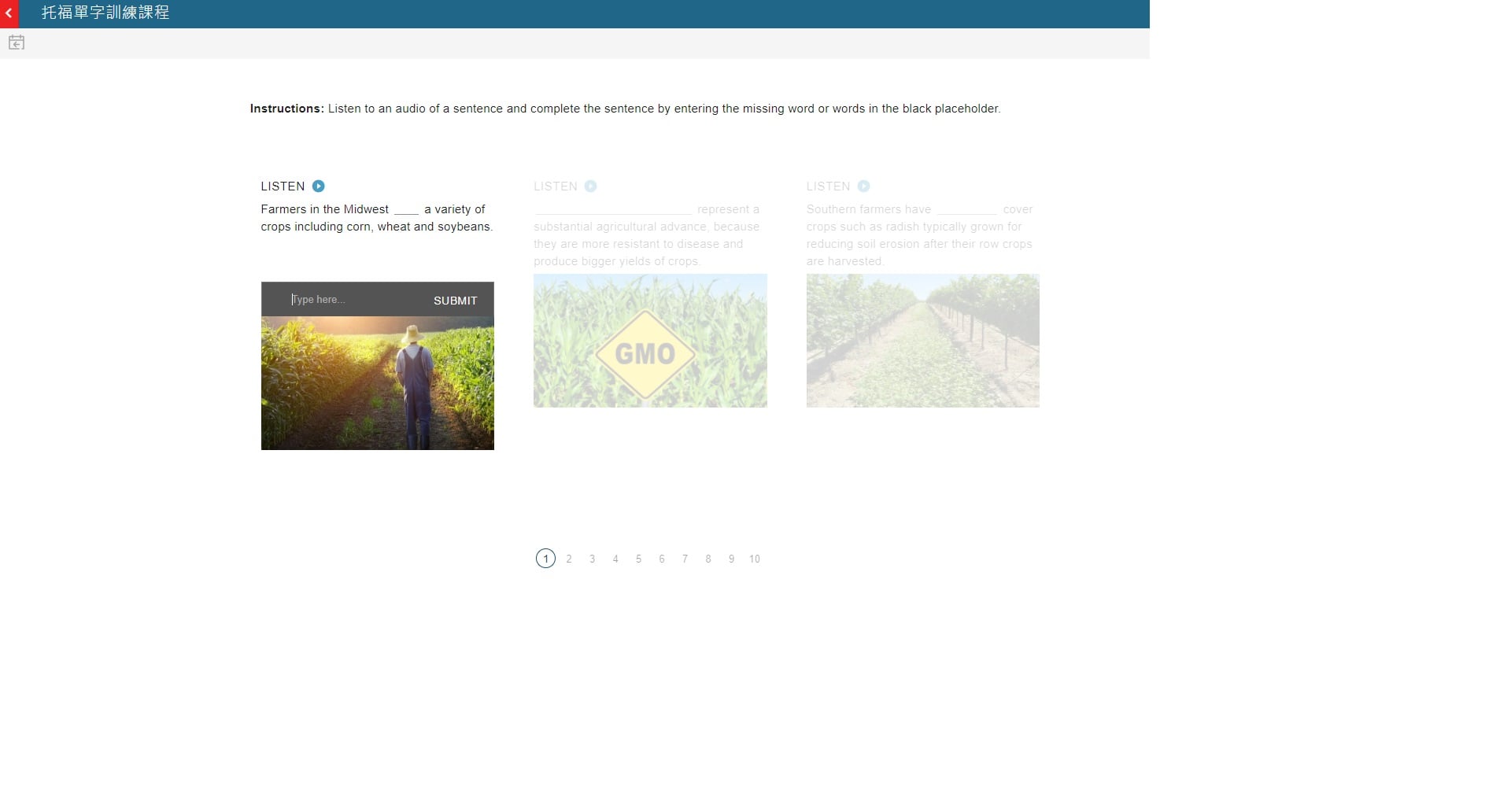
மேலே உள்ள சொற்களையும் அவற்றின் பயன்பாட்டையும் நீங்கள் கற்றுக்கொண்ட பிறகு, உங்கள் கற்றலின் விளைவைச் சோதிக்க விரும்புவீர்கள். அதற்காகவே உங்கள் listening மற்றும் typing திறனைச் சோதிக்க vocabulary training course-ஐ உருவாக்கியுள்ளோம். இதில், ஆங்கில வாக்கியங்களை கேட்டு துல்லியமாக type செய்வதே உங்கள் பணி. இப்படியான listening பயிற்சி, சொற்களை நினைவில் பதியச் செய்வதோடு, உங்கள் speaking மற்றும் writing திறன்களையும் பயனுள்ளதாக மேம்படுத்தும். இதனால் தேர்வுகளிலும் உண்மையான பயன்பாட்டிலும் நீங்கள் அதிக நம்பிக்கையுடன் இருப்பீர்கள்.
play_circle_outline பயிற்சி திட்டத்திற்குச் செல்லவும்