欢迎来到我们的免费 TOEFL 阅读模拟考试指南。在这里,你可以做一套免费的 TOEFL 阅读样题测试,附有答案和详细解析。我们的阅读测试采用和官方 TOEFL 阅读考试相同的自适应形式。你还可以用我们的阅读练习题来练习,获得备考技巧,并了解我们从学员完成的 636,000 次 TOEFL 阅读模拟考试中学到了什么。
点下方连结即可使用免费的托福阅读测验,还可获得专业的成绩分析与量身打造的学习计划。
play_circle_outline 开始托福阅读测验下方列出我们完整的 TOEFL 阅读题库与答案。你可以随时免费练习。
TOEFL 阅读测验题库 - 词语填空 1 - 224
TOEFL 阅读测验题库 - 日常生活阅读 1 - 232
TOEFL 阅读测验题库 - 学术文本阅读 1 - 163
目录
TOEFL 阅读考试考什么?
TOEFL 阅读考试共有 50 道题,分为三种题目类型:Complete the Words、Read in Daily Life 和 Read an Academic Passage。时间大约是 30 分钟。这个部分分两个阶段进行自适应,所以你在第 1 阶段的答题情况决定第 2 阶段的难度。阅读成绩是 1 到 6 的分数段。
题目类型 |
你要做什么 |
长度 |
|---|---|---|
Complete the Words |
你阅读一篇简短的学术文章。其中十个单词缺少后半部分字母。你要输入缺少的字母。 |
大约 80 个词,10 个空格 |
Read in Daily Life |
你阅读一篇日常文本,例如电子邮件、通知、消息或网络帖子。然后回答关于它的选择题。 |
50 到 170 个词,通常 2 道题 |
Read an Academic Passage |
你阅读一篇类似大学一年级课程中的短文。然后回答关于它的选择题和在文中点击的题目。 |
150 到 400 个词,通常 5 道题 |
共 50 道题,总共大约 30 分钟 |
||
从 2026 年 1 月起,TOEFL 阅读考试使用这三种题目类型。文章都很短,所有答案都在文章里,所以你不需要任何背景知识。整个部分只有一个计时器,而不是每道题一个。这样每道题大约有 36 秒。在同一个阶段内,你可以跳过一道题,之后再回来做。完成第 1 阶段后,你就不能再回到第 1 阶段。
难度从日常英语到大学入门课程的英语。如果你在第 1 阶段表现好,第 2 阶段会更难,而更难的第 2 阶段可以带来更高的分数段。
TOEFL 阅读样题
这里有三道免费的 TOEFL 阅读样题,每种题目类型一道:一篇 Complete the Words 短文、一篇 Read in Daily Life 文本和一篇 Read an Academic Passage。先自己试着做,然后打开答案核对。我们的 TOEFL Complete the Words 指南讲解了八种缺失单词。
-
spellcheck Answers1. gists (Biologists)
2. nted (jointed)
3. sory (sensory)
4. stand (understand)
5. cupy (occupy)
6. tats (habitats)
7. ders (spiders)
8. ong (belong)
9. oad (broad)
10. oup (group)

Complete the Words
Learn how to answer this question in a step-by-step interactive exercise
Complete the Words
在补全单词 (Complete the Words)题型中,你会看到一段有空格的文字。每个空格都是一个缺了一半字母的单词。你的任务是填完全部 10 个空格。
先预览题目,然后点击“下一步”继续。
预览题目
第 1 题:选出正确的语法类别。选对之后,再补全缺失的字母。
Complete the Word Biolo_____
如何判断
你不需要认识每个难词也能填出这些空格。语法给你一个可靠的起点,已显示的字母再帮你确认答案。
- 先暂时忽略已显示的字母。
- 读空格两边的词,问自己:缺的这个词必须起什么作用?
- 预测词类:名词、动词、情态动词、形容词、副词、介词还是限定词。
- 确定词类之后,再利用已显示的字母和句意。
The experiment produced a surprising
result:形容词后面的名词。Scientists the samples daily
observed:主语后面的动词。The change affect the climate
might:动词原形前面的情态动词。The team used a method
reliable:名词前面的形容词。Researchers recorded the data
carefully:描述他们如何记录的副词。The samples remained the cabinet
inside:表示位置的介词。As a , the trial was repeated
result:补全过渡短语的名词。studies reached the same conclusion
Several:引出名词的限定词。先跳过你不认识的词。先填出你认识的词,能帮你推出不认识的词。
名词(主语/宾语)
名词用来指人、地点、事物或概念。在句子里,它通常承担两种作用之一:做动作的主语,或承受动作的宾语。
留意这些明显的线索:空格前有 a、an、the、this 或 that;空格前紧挨着一个形容词;或者前面的动词或介词后面需要接宾语。
示例The changed medicine
discovery:作主语的名词。Researchers measured the
temperature:作宾语的名词。a useful
method:形容词后面的名词。如果空格回答的是“谁?”或“什么?”,预测为名词基本不会错。
名词(过渡)
有些名词固定出现在连接观点的过渡短语里。把整个短语当作一个整体来记,例如 for example、in fact 和 as a result。
示例for
example:短语 for example 的一部分。in
fact:短语 in fact 的一部分。As a
result:短语 as a result 的一部分。很多考生以为学术文章只会考 photosynthesis 或 archaeological 这类复杂词汇。实际上,这个题型是按固定间隔挖掉单词里的字母,所以连接短语里简单的结构词也很容易变成空格。
看到逗号或一个熟悉的连接短语的开头时,直接补全你已经会的短语。答案可能比文章话题简单得多。
动词
动词表示动作或状态。它必须和主语以及句子的时间相符。动词也可能以 -ing 或 -ed 结尾的分词形式出现。
示例Plants sunlight
require:主语后面的动词。The evidence a change
suggests:主语后面的动词。The river is rapidly
flowing:助动词后面的动词。线索:先找到主语,再问它做了什么或处于什么状态。留意附近的助动词,比如 is、was、has 或 can。
一旦找到主语,缺失的动词形式通常就基本确定了。
情态动词
情态动词是一种特殊的助动词,表示可能、能力、许可、建议、预测或必要。常见的情态动词有 can、could、may、might、must、should、will 和 would。
示例The change affect the climate
might:动词原形前面的情态动词。This process explain the pattern
could:动词原形前面的情态动词。Researchers compare both samples
should:动词原形前面的情态动词。最有力的线索是空格后面的词:情态动词后面通常接不带 to 的动词原形。例如:might occur、could explain 和 should compare。
如果缺失的短词后面是一个动词原形,就试试情态动词。这些起结构作用的小动词很常见,也很好预测。
形容词
形容词用来描述名词。它通常紧挨在名词前面,或者出现在“be”“seem”“become”这类系动词后面。
示例a source
reliable:名词前的形容词。the known fossil
oldest:名词前的形容词。The surface became
rough:系动词后的形容词。线索:看空格右边是否紧跟一个名词,或者看左边是否有系动词。“more”“most”“-er”和“-est”也提示这里是形容词。
如果空格说明的是名词“什么样的”或“哪一个”,就预测这里是形容词。
副词
副词用来修饰动词、形容词或另一个副词。它可以说明某件事如何发生、何时发生、在哪里发生,或者发生到什么程度。
示例ly
only:-ly 前面的副词。The team moved
quickly:以 -ly 结尾的副词。The result was significant
highly:修饰形容词的副词。“-ly”结尾是一个很有力的线索,不过并不是每个副词都以“-ly”结尾,也不是每个以“-ly”结尾的词都是副词。要确认这个词在句子中的作用。
如果空格改变的是另一个词的程度或方式,那它很可能是副词。
介词
介词是表示关系的短小结构词,可以表示地点、时间、方向、来源或方式。常见的有 in、on、at、by、with、through 和 between。
示例Researchers worked the sample
with:表示方式的介词。The border lies two regions
between:表示位置的介词。Water passed the membrane
through:表示方向的介词。很多考生以为学术文章只会考 photosynthesis 或 archaeological 这类复杂词汇。实际上,这个题型是按固定间隔挖掉单词里的字母,所以非常简单的结构词也经常被截掉一半。
不要因为文章听起来很难,就排除一个简单的答案。看看句子需要的是哪种关系。
限定词
限定词用来引出或限定一个名词短语,说明是哪一个、有多少或属于谁。例如 a、an、the、this、these、each、every、several 和 many。
示例participant
each:引出名词的限定词。experiments
several:引出名词的限定词。results
these:引出名词的限定词。很多考生以为学术文章只会考 photosynthesis 或 archaeological 这类复杂词汇。实际上,这个题型是按固定间隔挖掉单词里的字母,所以引出名词的语法小词也经常会被考到。
如果空格后面紧跟着形容词或名词,而这个短语又需要一个引导词,就试试限定词。简单的词也可能是正确答案。
第 2 题:选出正确的语法类别。选对之后,再补全缺失的字母。
Complete the Word joi____
如何判断
你不需要认识每个难词也能填出这些空格。语法给你一个可靠的起点,已显示的字母再帮你确认答案。
- 先暂时忽略已显示的字母。
- 读空格两边的词,问自己:缺的这个词必须起什么作用?
- 预测词类:名词、动词、情态动词、形容词、副词、介词还是限定词。
- 确定词类之后,再利用已显示的字母和句意。
The experiment produced a surprising
result:形容词后面的名词。Scientists the samples daily
observed:主语后面的动词。The change affect the climate
might:动词原形前面的情态动词。The team used a method
reliable:名词前面的形容词。Researchers recorded the data
carefully:描述他们如何记录的副词。The samples remained the cabinet
inside:表示位置的介词。As a , the trial was repeated
result:补全过渡短语的名词。studies reached the same conclusion
Several:引出名词的限定词。先跳过你不认识的词。先填出你认识的词,能帮你推出不认识的词。
名词(主语/宾语)
名词用来指人、地点、事物或概念。在句子里,它通常承担两种作用之一:做动作的主语,或承受动作的宾语。
留意这些明显的线索:空格前有 a、an、the、this 或 that;空格前紧挨着一个形容词;或者前面的动词或介词后面需要接宾语。
示例The changed medicine
discovery:作主语的名词。Researchers measured the
temperature:作宾语的名词。a useful
method:形容词后面的名词。如果空格回答的是“谁?”或“什么?”,预测为名词基本不会错。
名词(过渡)
有些名词固定出现在连接观点的过渡短语里。把整个短语当作一个整体来记,例如 for example、in fact 和 as a result。
示例for
example:短语 for example 的一部分。in
fact:短语 in fact 的一部分。As a
result:短语 as a result 的一部分。很多考生以为学术文章只会考 photosynthesis 或 archaeological 这类复杂词汇。实际上,这个题型是按固定间隔挖掉单词里的字母,所以连接短语里简单的结构词也很容易变成空格。
看到逗号或一个熟悉的连接短语的开头时,直接补全你已经会的短语。答案可能比文章话题简单得多。
动词
动词表示动作或状态。它必须和主语以及句子的时间相符。动词也可能以 -ing 或 -ed 结尾的分词形式出现。
示例Plants sunlight
require:主语后面的动词。The evidence a change
suggests:主语后面的动词。The river is rapidly
flowing:助动词后面的动词。线索:先找到主语,再问它做了什么或处于什么状态。留意附近的助动词,比如 is、was、has 或 can。
一旦找到主语,缺失的动词形式通常就基本确定了。
情态动词
情态动词是一种特殊的助动词,表示可能、能力、许可、建议、预测或必要。常见的情态动词有 can、could、may、might、must、should、will 和 would。
示例The change affect the climate
might:动词原形前面的情态动词。This process explain the pattern
could:动词原形前面的情态动词。Researchers compare both samples
should:动词原形前面的情态动词。最有力的线索是空格后面的词:情态动词后面通常接不带 to 的动词原形。例如:might occur、could explain 和 should compare。
如果缺失的短词后面是一个动词原形,就试试情态动词。这些起结构作用的小动词很常见,也很好预测。
形容词
形容词用来描述名词。它通常紧挨在名词前面,或者出现在“be”“seem”“become”这类系动词后面。
示例a source
reliable:名词前的形容词。the known fossil
oldest:名词前的形容词。The surface became
rough:系动词后的形容词。线索:看空格右边是否紧跟一个名词,或者看左边是否有系动词。“more”“most”“-er”和“-est”也提示这里是形容词。
如果空格说明的是名词“什么样的”或“哪一个”,就预测这里是形容词。
副词
副词用来修饰动词、形容词或另一个副词。它可以说明某件事如何发生、何时发生、在哪里发生,或者发生到什么程度。
示例ly
only:-ly 前面的副词。The team moved
quickly:以 -ly 结尾的副词。The result was significant
highly:修饰形容词的副词。“-ly”结尾是一个很有力的线索,不过并不是每个副词都以“-ly”结尾,也不是每个以“-ly”结尾的词都是副词。要确认这个词在句子中的作用。
如果空格改变的是另一个词的程度或方式,那它很可能是副词。
介词
介词是表示关系的短小结构词,可以表示地点、时间、方向、来源或方式。常见的有 in、on、at、by、with、through 和 between。
示例Researchers worked the sample
with:表示方式的介词。The border lies two regions
between:表示位置的介词。Water passed the membrane
through:表示方向的介词。很多考生以为学术文章只会考 photosynthesis 或 archaeological 这类复杂词汇。实际上,这个题型是按固定间隔挖掉单词里的字母,所以非常简单的结构词也经常被截掉一半。
不要因为文章听起来很难,就排除一个简单的答案。看看句子需要的是哪种关系。
限定词
限定词用来引出或限定一个名词短语,说明是哪一个、有多少或属于谁。例如 a、an、the、this、these、each、every、several 和 many。
示例participant
each:引出名词的限定词。experiments
several:引出名词的限定词。results
these:引出名词的限定词。很多考生以为学术文章只会考 photosynthesis 或 archaeological 这类复杂词汇。实际上,这个题型是按固定间隔挖掉单词里的字母,所以引出名词的语法小词也经常会被考到。
如果空格后面紧跟着形容词或名词,而这个短语又需要一个引导词,就试试限定词。简单的词也可能是正确答案。
第 3 题:选出正确的语法类别。选对之后,再补全缺失的字母。
Complete the Word sen____
如何判断
你不需要认识每个难词也能填出这些空格。语法给你一个可靠的起点,已显示的字母再帮你确认答案。
- 先暂时忽略已显示的字母。
- 读空格两边的词,问自己:缺的这个词必须起什么作用?
- 预测词类:名词、动词、情态动词、形容词、副词、介词还是限定词。
- 确定词类之后,再利用已显示的字母和句意。
The experiment produced a surprising
result:形容词后面的名词。Scientists the samples daily
observed:主语后面的动词。The change affect the climate
might:动词原形前面的情态动词。The team used a method
reliable:名词前面的形容词。Researchers recorded the data
carefully:描述他们如何记录的副词。The samples remained the cabinet
inside:表示位置的介词。As a , the trial was repeated
result:补全过渡短语的名词。studies reached the same conclusion
Several:引出名词的限定词。先跳过你不认识的词。先填出你认识的词,能帮你推出不认识的词。
名词(主语/宾语)
名词用来指人、地点、事物或概念。在句子里,它通常承担两种作用之一:做动作的主语,或承受动作的宾语。
留意这些明显的线索:空格前有 a、an、the、this 或 that;空格前紧挨着一个形容词;或者前面的动词或介词后面需要接宾语。
示例The changed medicine
discovery:作主语的名词。Researchers measured the
temperature:作宾语的名词。a useful
method:形容词后面的名词。如果空格回答的是“谁?”或“什么?”,预测为名词基本不会错。
名词(过渡)
有些名词固定出现在连接观点的过渡短语里。把整个短语当作一个整体来记,例如 for example、in fact 和 as a result。
示例for
example:短语 for example 的一部分。in
fact:短语 in fact 的一部分。As a
result:短语 as a result 的一部分。很多考生以为学术文章只会考 photosynthesis 或 archaeological 这类复杂词汇。实际上,这个题型是按固定间隔挖掉单词里的字母,所以连接短语里简单的结构词也很容易变成空格。
看到逗号或一个熟悉的连接短语的开头时,直接补全你已经会的短语。答案可能比文章话题简单得多。
动词
动词表示动作或状态。它必须和主语以及句子的时间相符。动词也可能以 -ing 或 -ed 结尾的分词形式出现。
示例Plants sunlight
require:主语后面的动词。The evidence a change
suggests:主语后面的动词。The river is rapidly
flowing:助动词后面的动词。线索:先找到主语,再问它做了什么或处于什么状态。留意附近的助动词,比如 is、was、has 或 can。
一旦找到主语,缺失的动词形式通常就基本确定了。
情态动词
情态动词是一种特殊的助动词,表示可能、能力、许可、建议、预测或必要。常见的情态动词有 can、could、may、might、must、should、will 和 would。
示例The change affect the climate
might:动词原形前面的情态动词。This process explain the pattern
could:动词原形前面的情态动词。Researchers compare both samples
should:动词原形前面的情态动词。最有力的线索是空格后面的词:情态动词后面通常接不带 to 的动词原形。例如:might occur、could explain 和 should compare。
如果缺失的短词后面是一个动词原形,就试试情态动词。这些起结构作用的小动词很常见,也很好预测。
形容词
形容词用来描述名词。它通常紧挨在名词前面,或者出现在“be”“seem”“become”这类系动词后面。
示例a source
reliable:名词前的形容词。the known fossil
oldest:名词前的形容词。The surface became
rough:系动词后的形容词。线索:看空格右边是否紧跟一个名词,或者看左边是否有系动词。“more”“most”“-er”和“-est”也提示这里是形容词。
如果空格说明的是名词“什么样的”或“哪一个”,就预测这里是形容词。
副词
副词用来修饰动词、形容词或另一个副词。它可以说明某件事如何发生、何时发生、在哪里发生,或者发生到什么程度。
示例ly
only:-ly 前面的副词。The team moved
quickly:以 -ly 结尾的副词。The result was significant
highly:修饰形容词的副词。“-ly”结尾是一个很有力的线索,不过并不是每个副词都以“-ly”结尾,也不是每个以“-ly”结尾的词都是副词。要确认这个词在句子中的作用。
如果空格改变的是另一个词的程度或方式,那它很可能是副词。
介词
介词是表示关系的短小结构词,可以表示地点、时间、方向、来源或方式。常见的有 in、on、at、by、with、through 和 between。
示例Researchers worked the sample
with:表示方式的介词。The border lies two regions
between:表示位置的介词。Water passed the membrane
through:表示方向的介词。很多考生以为学术文章只会考 photosynthesis 或 archaeological 这类复杂词汇。实际上,这个题型是按固定间隔挖掉单词里的字母,所以非常简单的结构词也经常被截掉一半。
不要因为文章听起来很难,就排除一个简单的答案。看看句子需要的是哪种关系。
限定词
限定词用来引出或限定一个名词短语,说明是哪一个、有多少或属于谁。例如 a、an、the、this、these、each、every、several 和 many。
示例participant
each:引出名词的限定词。experiments
several:引出名词的限定词。results
these:引出名词的限定词。很多考生以为学术文章只会考 photosynthesis 或 archaeological 这类复杂词汇。实际上,这个题型是按固定间隔挖掉单词里的字母,所以引出名词的语法小词也经常会被考到。
如果空格后面紧跟着形容词或名词,而这个短语又需要一个引导词,就试试限定词。简单的词也可能是正确答案。
第 4 题:选出正确的语法类别。选对之后,再补全缺失的字母。
Complete the Word under_____
如何判断
你不需要认识每个难词也能填出这些空格。语法给你一个可靠的起点,已显示的字母再帮你确认答案。
- 先暂时忽略已显示的字母。
- 读空格两边的词,问自己:缺的这个词必须起什么作用?
- 预测词类:名词、动词、情态动词、形容词、副词、介词还是限定词。
- 确定词类之后,再利用已显示的字母和句意。
The experiment produced a surprising
result:形容词后面的名词。Scientists the samples daily
observed:主语后面的动词。The change affect the climate
might:动词原形前面的情态动词。The team used a method
reliable:名词前面的形容词。Researchers recorded the data
carefully:描述他们如何记录的副词。The samples remained the cabinet
inside:表示位置的介词。As a , the trial was repeated
result:补全过渡短语的名词。studies reached the same conclusion
Several:引出名词的限定词。先跳过你不认识的词。先填出你认识的词,能帮你推出不认识的词。
名词(主语/宾语)
名词用来指人、地点、事物或概念。在句子里,它通常承担两种作用之一:做动作的主语,或承受动作的宾语。
留意这些明显的线索:空格前有 a、an、the、this 或 that;空格前紧挨着一个形容词;或者前面的动词或介词后面需要接宾语。
示例The changed medicine
discovery:作主语的名词。Researchers measured the
temperature:作宾语的名词。a useful
method:形容词后面的名词。如果空格回答的是“谁?”或“什么?”,预测为名词基本不会错。
名词(过渡)
有些名词固定出现在连接观点的过渡短语里。把整个短语当作一个整体来记,例如 for example、in fact 和 as a result。
示例for
example:短语 for example 的一部分。in
fact:短语 in fact 的一部分。As a
result:短语 as a result 的一部分。很多考生以为学术文章只会考 photosynthesis 或 archaeological 这类复杂词汇。实际上,这个题型是按固定间隔挖掉单词里的字母,所以连接短语里简单的结构词也很容易变成空格。
看到逗号或一个熟悉的连接短语的开头时,直接补全你已经会的短语。答案可能比文章话题简单得多。
动词
动词表示动作或状态。它必须和主语以及句子的时间相符。动词也可能以 -ing 或 -ed 结尾的分词形式出现。
示例Plants sunlight
require:主语后面的动词。The evidence a change
suggests:主语后面的动词。The river is rapidly
flowing:助动词后面的动词。线索:先找到主语,再问它做了什么或处于什么状态。留意附近的助动词,比如 is、was、has 或 can。
一旦找到主语,缺失的动词形式通常就基本确定了。
情态动词
情态动词是一种特殊的助动词,表示可能、能力、许可、建议、预测或必要。常见的情态动词有 can、could、may、might、must、should、will 和 would。
示例The change affect the climate
might:动词原形前面的情态动词。This process explain the pattern
could:动词原形前面的情态动词。Researchers compare both samples
should:动词原形前面的情态动词。最有力的线索是空格后面的词:情态动词后面通常接不带 to 的动词原形。例如:might occur、could explain 和 should compare。
如果缺失的短词后面是一个动词原形,就试试情态动词。这些起结构作用的小动词很常见,也很好预测。
形容词
形容词用来描述名词。它通常紧挨在名词前面,或者出现在“be”“seem”“become”这类系动词后面。
示例a source
reliable:名词前的形容词。the known fossil
oldest:名词前的形容词。The surface became
rough:系动词后的形容词。线索:看空格右边是否紧跟一个名词,或者看左边是否有系动词。“more”“most”“-er”和“-est”也提示这里是形容词。
如果空格说明的是名词“什么样的”或“哪一个”,就预测这里是形容词。
副词
副词用来修饰动词、形容词或另一个副词。它可以说明某件事如何发生、何时发生、在哪里发生,或者发生到什么程度。
示例ly
only:-ly 前面的副词。The team moved
quickly:以 -ly 结尾的副词。The result was significant
highly:修饰形容词的副词。“-ly”结尾是一个很有力的线索,不过并不是每个副词都以“-ly”结尾,也不是每个以“-ly”结尾的词都是副词。要确认这个词在句子中的作用。
如果空格改变的是另一个词的程度或方式,那它很可能是副词。
介词
介词是表示关系的短小结构词,可以表示地点、时间、方向、来源或方式。常见的有 in、on、at、by、with、through 和 between。
示例Researchers worked the sample
with:表示方式的介词。The border lies two regions
between:表示位置的介词。Water passed the membrane
through:表示方向的介词。很多考生以为学术文章只会考 photosynthesis 或 archaeological 这类复杂词汇。实际上,这个题型是按固定间隔挖掉单词里的字母,所以非常简单的结构词也经常被截掉一半。
不要因为文章听起来很难,就排除一个简单的答案。看看句子需要的是哪种关系。
限定词
限定词用来引出或限定一个名词短语,说明是哪一个、有多少或属于谁。例如 a、an、the、this、these、each、every、several 和 many。
示例participant
each:引出名词的限定词。experiments
several:引出名词的限定词。results
these:引出名词的限定词。很多考生以为学术文章只会考 photosynthesis 或 archaeological 这类复杂词汇。实际上,这个题型是按固定间隔挖掉单词里的字母,所以引出名词的语法小词也经常会被考到。
如果空格后面紧跟着形容词或名词,而这个短语又需要一个引导词,就试试限定词。简单的词也可能是正确答案。
第 5 题:选出正确的语法类别。选对之后,再补全缺失的字母。
Complete the Word oc____
如何判断
你不需要认识每个难词也能填出这些空格。语法给你一个可靠的起点,已显示的字母再帮你确认答案。
- 先暂时忽略已显示的字母。
- 读空格两边的词,问自己:缺的这个词必须起什么作用?
- 预测词类:名词、动词、情态动词、形容词、副词、介词还是限定词。
- 确定词类之后,再利用已显示的字母和句意。
The experiment produced a surprising
result:形容词后面的名词。Scientists the samples daily
observed:主语后面的动词。The change affect the climate
might:动词原形前面的情态动词。The team used a method
reliable:名词前面的形容词。Researchers recorded the data
carefully:描述他们如何记录的副词。The samples remained the cabinet
inside:表示位置的介词。As a , the trial was repeated
result:补全过渡短语的名词。studies reached the same conclusion
Several:引出名词的限定词。先跳过你不认识的词。先填出你认识的词,能帮你推出不认识的词。
名词(主语/宾语)
名词用来指人、地点、事物或概念。在句子里,它通常承担两种作用之一:做动作的主语,或承受动作的宾语。
留意这些明显的线索:空格前有 a、an、the、this 或 that;空格前紧挨着一个形容词;或者前面的动词或介词后面需要接宾语。
示例The changed medicine
discovery:作主语的名词。Researchers measured the
temperature:作宾语的名词。a useful
method:形容词后面的名词。如果空格回答的是“谁?”或“什么?”,预测为名词基本不会错。
名词(过渡)
有些名词固定出现在连接观点的过渡短语里。把整个短语当作一个整体来记,例如 for example、in fact 和 as a result。
示例for
example:短语 for example 的一部分。in
fact:短语 in fact 的一部分。As a
result:短语 as a result 的一部分。很多考生以为学术文章只会考 photosynthesis 或 archaeological 这类复杂词汇。实际上,这个题型是按固定间隔挖掉单词里的字母,所以连接短语里简单的结构词也很容易变成空格。
看到逗号或一个熟悉的连接短语的开头时,直接补全你已经会的短语。答案可能比文章话题简单得多。
动词
动词表示动作或状态。它必须和主语以及句子的时间相符。动词也可能以 -ing 或 -ed 结尾的分词形式出现。
示例Plants sunlight
require:主语后面的动词。The evidence a change
suggests:主语后面的动词。The river is rapidly
flowing:助动词后面的动词。线索:先找到主语,再问它做了什么或处于什么状态。留意附近的助动词,比如 is、was、has 或 can。
一旦找到主语,缺失的动词形式通常就基本确定了。
情态动词
情态动词是一种特殊的助动词,表示可能、能力、许可、建议、预测或必要。常见的情态动词有 can、could、may、might、must、should、will 和 would。
示例The change affect the climate
might:动词原形前面的情态动词。This process explain the pattern
could:动词原形前面的情态动词。Researchers compare both samples
should:动词原形前面的情态动词。最有力的线索是空格后面的词:情态动词后面通常接不带 to 的动词原形。例如:might occur、could explain 和 should compare。
如果缺失的短词后面是一个动词原形,就试试情态动词。这些起结构作用的小动词很常见,也很好预测。
形容词
形容词用来描述名词。它通常紧挨在名词前面,或者出现在“be”“seem”“become”这类系动词后面。
示例a source
reliable:名词前的形容词。the known fossil
oldest:名词前的形容词。The surface became
rough:系动词后的形容词。线索:看空格右边是否紧跟一个名词,或者看左边是否有系动词。“more”“most”“-er”和“-est”也提示这里是形容词。
如果空格说明的是名词“什么样的”或“哪一个”,就预测这里是形容词。
副词
副词用来修饰动词、形容词或另一个副词。它可以说明某件事如何发生、何时发生、在哪里发生,或者发生到什么程度。
示例ly
only:-ly 前面的副词。The team moved
quickly:以 -ly 结尾的副词。The result was significant
highly:修饰形容词的副词。“-ly”结尾是一个很有力的线索,不过并不是每个副词都以“-ly”结尾,也不是每个以“-ly”结尾的词都是副词。要确认这个词在句子中的作用。
如果空格改变的是另一个词的程度或方式,那它很可能是副词。
介词
介词是表示关系的短小结构词,可以表示地点、时间、方向、来源或方式。常见的有 in、on、at、by、with、through 和 between。
示例Researchers worked the sample
with:表示方式的介词。The border lies two regions
between:表示位置的介词。Water passed the membrane
through:表示方向的介词。很多考生以为学术文章只会考 photosynthesis 或 archaeological 这类复杂词汇。实际上,这个题型是按固定间隔挖掉单词里的字母,所以非常简单的结构词也经常被截掉一半。
不要因为文章听起来很难,就排除一个简单的答案。看看句子需要的是哪种关系。
限定词
限定词用来引出或限定一个名词短语,说明是哪一个、有多少或属于谁。例如 a、an、the、this、these、each、every、several 和 many。
示例participant
each:引出名词的限定词。experiments
several:引出名词的限定词。results
these:引出名词的限定词。很多考生以为学术文章只会考 photosynthesis 或 archaeological 这类复杂词汇。实际上,这个题型是按固定间隔挖掉单词里的字母,所以引出名词的语法小词也经常会被考到。
如果空格后面紧跟着形容词或名词,而这个短语又需要一个引导词,就试试限定词。简单的词也可能是正确答案。
第 6 题:选出正确的语法类别。选对之后,再补全缺失的字母。
Complete the Word habi____
如何判断
你不需要认识每个难词也能填出这些空格。语法给你一个可靠的起点,已显示的字母再帮你确认答案。
- 先暂时忽略已显示的字母。
- 读空格两边的词,问自己:缺的这个词必须起什么作用?
- 预测词类:名词、动词、情态动词、形容词、副词、介词还是限定词。
- 确定词类之后,再利用已显示的字母和句意。
The experiment produced a surprising
result:形容词后面的名词。Scientists the samples daily
observed:主语后面的动词。The change affect the climate
might:动词原形前面的情态动词。The team used a method
reliable:名词前面的形容词。Researchers recorded the data
carefully:描述他们如何记录的副词。The samples remained the cabinet
inside:表示位置的介词。As a , the trial was repeated
result:补全过渡短语的名词。studies reached the same conclusion
Several:引出名词的限定词。先跳过你不认识的词。先填出你认识的词,能帮你推出不认识的词。
名词(主语/宾语)
名词用来指人、地点、事物或概念。在句子里,它通常承担两种作用之一:做动作的主语,或承受动作的宾语。
留意这些明显的线索:空格前有 a、an、the、this 或 that;空格前紧挨着一个形容词;或者前面的动词或介词后面需要接宾语。
示例The changed medicine
discovery:作主语的名词。Researchers measured the
temperature:作宾语的名词。a useful
method:形容词后面的名词。如果空格回答的是“谁?”或“什么?”,预测为名词基本不会错。
名词(过渡)
有些名词固定出现在连接观点的过渡短语里。把整个短语当作一个整体来记,例如 for example、in fact 和 as a result。
示例for
example:短语 for example 的一部分。in
fact:短语 in fact 的一部分。As a
result:短语 as a result 的一部分。很多考生以为学术文章只会考 photosynthesis 或 archaeological 这类复杂词汇。实际上,这个题型是按固定间隔挖掉单词里的字母,所以连接短语里简单的结构词也很容易变成空格。
看到逗号或一个熟悉的连接短语的开头时,直接补全你已经会的短语。答案可能比文章话题简单得多。
动词
动词表示动作或状态。它必须和主语以及句子的时间相符。动词也可能以 -ing 或 -ed 结尾的分词形式出现。
示例Plants sunlight
require:主语后面的动词。The evidence a change
suggests:主语后面的动词。The river is rapidly
flowing:助动词后面的动词。线索:先找到主语,再问它做了什么或处于什么状态。留意附近的助动词,比如 is、was、has 或 can。
一旦找到主语,缺失的动词形式通常就基本确定了。
情态动词
情态动词是一种特殊的助动词,表示可能、能力、许可、建议、预测或必要。常见的情态动词有 can、could、may、might、must、should、will 和 would。
示例The change affect the climate
might:动词原形前面的情态动词。This process explain the pattern
could:动词原形前面的情态动词。Researchers compare both samples
should:动词原形前面的情态动词。最有力的线索是空格后面的词:情态动词后面通常接不带 to 的动词原形。例如:might occur、could explain 和 should compare。
如果缺失的短词后面是一个动词原形,就试试情态动词。这些起结构作用的小动词很常见,也很好预测。
形容词
形容词用来描述名词。它通常紧挨在名词前面,或者出现在“be”“seem”“become”这类系动词后面。
示例a source
reliable:名词前的形容词。the known fossil
oldest:名词前的形容词。The surface became
rough:系动词后的形容词。线索:看空格右边是否紧跟一个名词,或者看左边是否有系动词。“more”“most”“-er”和“-est”也提示这里是形容词。
如果空格说明的是名词“什么样的”或“哪一个”,就预测这里是形容词。
副词
副词用来修饰动词、形容词或另一个副词。它可以说明某件事如何发生、何时发生、在哪里发生,或者发生到什么程度。
示例ly
only:-ly 前面的副词。The team moved
quickly:以 -ly 结尾的副词。The result was significant
highly:修饰形容词的副词。“-ly”结尾是一个很有力的线索,不过并不是每个副词都以“-ly”结尾,也不是每个以“-ly”结尾的词都是副词。要确认这个词在句子中的作用。
如果空格改变的是另一个词的程度或方式,那它很可能是副词。
介词
介词是表示关系的短小结构词,可以表示地点、时间、方向、来源或方式。常见的有 in、on、at、by、with、through 和 between。
示例Researchers worked the sample
with:表示方式的介词。The border lies two regions
between:表示位置的介词。Water passed the membrane
through:表示方向的介词。很多考生以为学术文章只会考 photosynthesis 或 archaeological 这类复杂词汇。实际上,这个题型是按固定间隔挖掉单词里的字母,所以非常简单的结构词也经常被截掉一半。
不要因为文章听起来很难,就排除一个简单的答案。看看句子需要的是哪种关系。
限定词
限定词用来引出或限定一个名词短语,说明是哪一个、有多少或属于谁。例如 a、an、the、this、these、each、every、several 和 many。
示例participant
each:引出名词的限定词。experiments
several:引出名词的限定词。results
these:引出名词的限定词。很多考生以为学术文章只会考 photosynthesis 或 archaeological 这类复杂词汇。实际上,这个题型是按固定间隔挖掉单词里的字母,所以引出名词的语法小词也经常会被考到。
如果空格后面紧跟着形容词或名词,而这个短语又需要一个引导词,就试试限定词。简单的词也可能是正确答案。
第 7 题:选出正确的语法类别。选对之后,再补全缺失的字母。
Complete the Word spi____
如何判断
你不需要认识每个难词也能填出这些空格。语法给你一个可靠的起点,已显示的字母再帮你确认答案。
- 先暂时忽略已显示的字母。
- 读空格两边的词,问自己:缺的这个词必须起什么作用?
- 预测词类:名词、动词、情态动词、形容词、副词、介词还是限定词。
- 确定词类之后,再利用已显示的字母和句意。
The experiment produced a surprising
result:形容词后面的名词。Scientists the samples daily
observed:主语后面的动词。The change affect the climate
might:动词原形前面的情态动词。The team used a method
reliable:名词前面的形容词。Researchers recorded the data
carefully:描述他们如何记录的副词。The samples remained the cabinet
inside:表示位置的介词。As a , the trial was repeated
result:补全过渡短语的名词。studies reached the same conclusion
Several:引出名词的限定词。先跳过你不认识的词。先填出你认识的词,能帮你推出不认识的词。
名词(主语/宾语)
名词用来指人、地点、事物或概念。在句子里,它通常承担两种作用之一:做动作的主语,或承受动作的宾语。
留意这些明显的线索:空格前有 a、an、the、this 或 that;空格前紧挨着一个形容词;或者前面的动词或介词后面需要接宾语。
示例The changed medicine
discovery:作主语的名词。Researchers measured the
temperature:作宾语的名词。a useful
method:形容词后面的名词。如果空格回答的是“谁?”或“什么?”,预测为名词基本不会错。
名词(过渡)
有些名词固定出现在连接观点的过渡短语里。把整个短语当作一个整体来记,例如 for example、in fact 和 as a result。
示例for
example:短语 for example 的一部分。in
fact:短语 in fact 的一部分。As a
result:短语 as a result 的一部分。很多考生以为学术文章只会考 photosynthesis 或 archaeological 这类复杂词汇。实际上,这个题型是按固定间隔挖掉单词里的字母,所以连接短语里简单的结构词也很容易变成空格。
看到逗号或一个熟悉的连接短语的开头时,直接补全你已经会的短语。答案可能比文章话题简单得多。
动词
动词表示动作或状态。它必须和主语以及句子的时间相符。动词也可能以 -ing 或 -ed 结尾的分词形式出现。
示例Plants sunlight
require:主语后面的动词。The evidence a change
suggests:主语后面的动词。The river is rapidly
flowing:助动词后面的动词。线索:先找到主语,再问它做了什么或处于什么状态。留意附近的助动词,比如 is、was、has 或 can。
一旦找到主语,缺失的动词形式通常就基本确定了。
情态动词
情态动词是一种特殊的助动词,表示可能、能力、许可、建议、预测或必要。常见的情态动词有 can、could、may、might、must、should、will 和 would。
示例The change affect the climate
might:动词原形前面的情态动词。This process explain the pattern
could:动词原形前面的情态动词。Researchers compare both samples
should:动词原形前面的情态动词。最有力的线索是空格后面的词:情态动词后面通常接不带 to 的动词原形。例如:might occur、could explain 和 should compare。
如果缺失的短词后面是一个动词原形,就试试情态动词。这些起结构作用的小动词很常见,也很好预测。
形容词
形容词用来描述名词。它通常紧挨在名词前面,或者出现在“be”“seem”“become”这类系动词后面。
示例a source
reliable:名词前的形容词。the known fossil
oldest:名词前的形容词。The surface became
rough:系动词后的形容词。线索:看空格右边是否紧跟一个名词,或者看左边是否有系动词。“more”“most”“-er”和“-est”也提示这里是形容词。
如果空格说明的是名词“什么样的”或“哪一个”,就预测这里是形容词。
副词
副词用来修饰动词、形容词或另一个副词。它可以说明某件事如何发生、何时发生、在哪里发生,或者发生到什么程度。
示例ly
only:-ly 前面的副词。The team moved
quickly:以 -ly 结尾的副词。The result was significant
highly:修饰形容词的副词。“-ly”结尾是一个很有力的线索,不过并不是每个副词都以“-ly”结尾,也不是每个以“-ly”结尾的词都是副词。要确认这个词在句子中的作用。
如果空格改变的是另一个词的程度或方式,那它很可能是副词。
介词
介词是表示关系的短小结构词,可以表示地点、时间、方向、来源或方式。常见的有 in、on、at、by、with、through 和 between。
示例Researchers worked the sample
with:表示方式的介词。The border lies two regions
between:表示位置的介词。Water passed the membrane
through:表示方向的介词。很多考生以为学术文章只会考 photosynthesis 或 archaeological 这类复杂词汇。实际上,这个题型是按固定间隔挖掉单词里的字母,所以非常简单的结构词也经常被截掉一半。
不要因为文章听起来很难,就排除一个简单的答案。看看句子需要的是哪种关系。
限定词
限定词用来引出或限定一个名词短语,说明是哪一个、有多少或属于谁。例如 a、an、the、this、these、each、every、several 和 many。
示例participant
each:引出名词的限定词。experiments
several:引出名词的限定词。results
these:引出名词的限定词。很多考生以为学术文章只会考 photosynthesis 或 archaeological 这类复杂词汇。实际上,这个题型是按固定间隔挖掉单词里的字母,所以引出名词的语法小词也经常会被考到。
如果空格后面紧跟着形容词或名词,而这个短语又需要一个引导词,就试试限定词。简单的词也可能是正确答案。
第 8 题:选择正确的语法类别。选好类别后,你要填写缺失的字母。
Complete the Word bel___
如何判断
你不需要认识每个难词也能填出这些空格。语法给你一个可靠的起点,已显示的字母再帮你确认答案。
- 先暂时忽略已显示的字母。
- 读空格两边的词,问自己:缺的这个词必须起什么作用?
- 预测词类:名词、动词、情态动词、形容词、副词、介词还是限定词。
- 确定词类之后,再利用已显示的字母和句意。
The experiment produced a surprising
result:形容词后面的名词。Scientists the samples daily
observed:主语后面的动词。The change affect the climate
might:动词原形前面的情态动词。The team used a method
reliable:名词前面的形容词。Researchers recorded the data
carefully:描述他们如何记录的副词。The samples remained the cabinet
inside:表示位置的介词。As a , the trial was repeated
result:补全过渡短语的名词。studies reached the same conclusion
Several:引出名词的限定词。先跳过你不认识的词。先填出你认识的词,能帮你推出不认识的词。
名词(主语/宾语)
名词用来指人、地点、事物或概念。在句子里,它通常承担两种作用之一:做动作的主语,或承受动作的宾语。
留意这些明显的线索:空格前有 a、an、the、this 或 that;空格前紧挨着一个形容词;或者前面的动词或介词后面需要接宾语。
示例The changed medicine
discovery:作主语的名词。Researchers measured the
temperature:作宾语的名词。a useful
method:形容词后面的名词。如果空格回答的是“谁?”或“什么?”,预测为名词基本不会错。
名词(过渡)
有些名词固定出现在连接观点的过渡短语里。把整个短语当作一个整体来记,例如 for example、in fact 和 as a result。
示例for
example:短语 for example 的一部分。in
fact:短语 in fact 的一部分。As a
result:短语 as a result 的一部分。很多考生以为学术文章只会考 photosynthesis 或 archaeological 这类复杂词汇。实际上,这个题型是按固定间隔挖掉单词里的字母,所以连接短语里简单的结构词也很容易变成空格。
看到逗号或一个熟悉的连接短语的开头时,直接补全你已经会的短语。答案可能比文章话题简单得多。
动词
动词表示动作或状态。它必须和主语以及句子的时间相符。动词也可能以 -ing 或 -ed 结尾的分词形式出现。
示例Plants sunlight
require:主语后面的动词。The evidence a change
suggests:主语后面的动词。The river is rapidly
flowing:助动词后面的动词。线索:先找到主语,再问它做了什么或处于什么状态。留意附近的助动词,比如 is、was、has 或 can。
一旦找到主语,缺失的动词形式通常就基本确定了。
情态动词
情态动词是一种特殊的助动词,表示可能、能力、许可、建议、预测或必要。常见的情态动词有 can、could、may、might、must、should、will 和 would。
示例The change affect the climate
might:动词原形前面的情态动词。This process explain the pattern
could:动词原形前面的情态动词。Researchers compare both samples
should:动词原形前面的情态动词。最有力的线索是空格后面的词:情态动词后面通常接不带 to 的动词原形。例如:might occur、could explain 和 should compare。
如果缺失的短词后面是一个动词原形,就试试情态动词。这些起结构作用的小动词很常见,也很好预测。
形容词
形容词用来描述名词。它通常紧挨在名词前面,或者出现在“be”“seem”“become”这类系动词后面。
示例a source
reliable:名词前的形容词。the known fossil
oldest:名词前的形容词。The surface became
rough:系动词后的形容词。线索:看空格右边是否紧跟一个名词,或者看左边是否有系动词。“more”“most”“-er”和“-est”也提示这里是形容词。
如果空格说明的是名词“什么样的”或“哪一个”,就预测这里是形容词。
副词
副词用来修饰动词、形容词或另一个副词。它可以说明某件事如何发生、何时发生、在哪里发生,或者发生到什么程度。
示例ly
only:-ly 前面的副词。The team moved
quickly:以 -ly 结尾的副词。The result was significant
highly:修饰形容词的副词。“-ly”结尾是一个很有力的线索,不过并不是每个副词都以“-ly”结尾,也不是每个以“-ly”结尾的词都是副词。要确认这个词在句子中的作用。
如果空格改变的是另一个词的程度或方式,那它很可能是副词。
介词
介词是表示关系的短小结构词,可以表示地点、时间、方向、来源或方式。常见的有 in、on、at、by、with、through 和 between。
示例Researchers worked the sample
with:表示方式的介词。The border lies two regions
between:表示位置的介词。Water passed the membrane
through:表示方向的介词。很多考生以为学术文章只会考 photosynthesis 或 archaeological 这类复杂词汇。实际上,这个题型是按固定间隔挖掉单词里的字母,所以非常简单的结构词也经常被截掉一半。
不要因为文章听起来很难,就排除一个简单的答案。看看句子需要的是哪种关系。
限定词
限定词用来引出或限定一个名词短语,说明是哪一个、有多少或属于谁。例如 a、an、the、this、these、each、every、several 和 many。
示例participant
each:引出名词的限定词。experiments
several:引出名词的限定词。results
these:引出名词的限定词。很多考生以为学术文章只会考 photosynthesis 或 archaeological 这类复杂词汇。实际上,这个题型是按固定间隔挖掉单词里的字母,所以引出名词的语法小词也经常会被考到。
如果空格后面紧跟着形容词或名词,而这个短语又需要一个引导词,就试试限定词。简单的词也可能是正确答案。
第 9 题:选择正确的语法类别。选好类别后,你要填写缺失的字母。
Complete the Word br___
如何判断
你不需要认识每个难词也能填出这些空格。语法给你一个可靠的起点,已显示的字母再帮你确认答案。
- 先暂时忽略已显示的字母。
- 读空格两边的词,问自己:缺的这个词必须起什么作用?
- 预测词类:名词、动词、情态动词、形容词、副词、介词还是限定词。
- 确定词类之后,再利用已显示的字母和句意。
The experiment produced a surprising
result:形容词后面的名词。Scientists the samples daily
observed:主语后面的动词。The change affect the climate
might:动词原形前面的情态动词。The team used a method
reliable:名词前面的形容词。Researchers recorded the data
carefully:描述他们如何记录的副词。The samples remained the cabinet
inside:表示位置的介词。As a , the trial was repeated
result:补全过渡短语的名词。studies reached the same conclusion
Several:引出名词的限定词。先跳过你不认识的词。先填出你认识的词,能帮你推出不认识的词。
名词(主语/宾语)
名词用来指人、地点、事物或概念。在句子里,它通常承担两种作用之一:做动作的主语,或承受动作的宾语。
留意这些明显的线索:空格前有 a、an、the、this 或 that;空格前紧挨着一个形容词;或者前面的动词或介词后面需要接宾语。
示例The changed medicine
discovery:作主语的名词。Researchers measured the
temperature:作宾语的名词。a useful
method:形容词后面的名词。如果空格回答的是“谁?”或“什么?”,预测为名词基本不会错。
名词(过渡)
有些名词固定出现在连接观点的过渡短语里。把整个短语当作一个整体来记,例如 for example、in fact 和 as a result。
示例for
example:短语 for example 的一部分。in
fact:短语 in fact 的一部分。As a
result:短语 as a result 的一部分。很多考生以为学术文章只会考 photosynthesis 或 archaeological 这类复杂词汇。实际上,这个题型是按固定间隔挖掉单词里的字母,所以连接短语里简单的结构词也很容易变成空格。
看到逗号或一个熟悉的连接短语的开头时,直接补全你已经会的短语。答案可能比文章话题简单得多。
动词
动词表示动作或状态。它必须和主语以及句子的时间相符。动词也可能以 -ing 或 -ed 结尾的分词形式出现。
示例Plants sunlight
require:主语后面的动词。The evidence a change
suggests:主语后面的动词。The river is rapidly
flowing:助动词后面的动词。线索:先找到主语,再问它做了什么或处于什么状态。留意附近的助动词,比如 is、was、has 或 can。
一旦找到主语,缺失的动词形式通常就基本确定了。
情态动词
情态动词是一种特殊的助动词,表示可能、能力、许可、建议、预测或必要。常见的情态动词有 can、could、may、might、must、should、will 和 would。
示例The change affect the climate
might:动词原形前面的情态动词。This process explain the pattern
could:动词原形前面的情态动词。Researchers compare both samples
should:动词原形前面的情态动词。最有力的线索是空格后面的词:情态动词后面通常接不带 to 的动词原形。例如:might occur、could explain 和 should compare。
如果缺失的短词后面是一个动词原形,就试试情态动词。这些起结构作用的小动词很常见,也很好预测。
形容词
形容词用来描述名词。它通常紧挨在名词前面,或者出现在“be”“seem”“become”这类系动词后面。
示例a source
reliable:名词前的形容词。the known fossil
oldest:名词前的形容词。The surface became
rough:系动词后的形容词。线索:看空格右边是否紧跟一个名词,或者看左边是否有系动词。“more”“most”“-er”和“-est”也提示这里是形容词。
如果空格说明的是名词“什么样的”或“哪一个”,就预测这里是形容词。
副词
副词用来修饰动词、形容词或另一个副词。它可以说明某件事如何发生、何时发生、在哪里发生,或者发生到什么程度。
示例ly
only:-ly 前面的副词。The team moved
quickly:以 -ly 结尾的副词。The result was significant
highly:修饰形容词的副词。“-ly”结尾是一个很有力的线索,不过并不是每个副词都以“-ly”结尾,也不是每个以“-ly”结尾的词都是副词。要确认这个词在句子中的作用。
如果空格改变的是另一个词的程度或方式,那它很可能是副词。
介词
介词是表示关系的短小结构词,可以表示地点、时间、方向、来源或方式。常见的有 in、on、at、by、with、through 和 between。
示例Researchers worked the sample
with:表示方式的介词。The border lies two regions
between:表示位置的介词。Water passed the membrane
through:表示方向的介词。很多考生以为学术文章只会考 photosynthesis 或 archaeological 这类复杂词汇。实际上,这个题型是按固定间隔挖掉单词里的字母,所以非常简单的结构词也经常被截掉一半。
不要因为文章听起来很难,就排除一个简单的答案。看看句子需要的是哪种关系。
限定词
限定词用来引出或限定一个名词短语,说明是哪一个、有多少或属于谁。例如 a、an、the、this、these、each、every、several 和 many。
示例participant
each:引出名词的限定词。experiments
several:引出名词的限定词。results
these:引出名词的限定词。很多考生以为学术文章只会考 photosynthesis 或 archaeological 这类复杂词汇。实际上,这个题型是按固定间隔挖掉单词里的字母,所以引出名词的语法小词也经常会被考到。
如果空格后面紧跟着形容词或名词,而这个短语又需要一个引导词,就试试限定词。简单的词也可能是正确答案。
第 10 题:选择正确的语法类别。选好类别后,你要填写缺失的字母。
Complete the Word gr___
如何判断
你不需要认识每个难词也能填出这些空格。语法给你一个可靠的起点,已显示的字母再帮你确认答案。
- 先暂时忽略已显示的字母。
- 读空格两边的词,问自己:缺的这个词必须起什么作用?
- 预测词类:名词、动词、情态动词、形容词、副词、介词还是限定词。
- 确定词类之后,再利用已显示的字母和句意。
The experiment produced a surprising
result:形容词后面的名词。Scientists the samples daily
observed:主语后面的动词。The change affect the climate
might:动词原形前面的情态动词。The team used a method
reliable:名词前面的形容词。Researchers recorded the data
carefully:描述他们如何记录的副词。The samples remained the cabinet
inside:表示位置的介词。As a , the trial was repeated
result:补全过渡短语的名词。studies reached the same conclusion
Several:引出名词的限定词。先跳过你不认识的词。先填出你认识的词,能帮你推出不认识的词。
名词(主语/宾语)
名词用来指人、地点、事物或概念。在句子里,它通常承担两种作用之一:做动作的主语,或承受动作的宾语。
留意这些明显的线索:空格前有 a、an、the、this 或 that;空格前紧挨着一个形容词;或者前面的动词或介词后面需要接宾语。
示例The changed medicine
discovery:作主语的名词。Researchers measured the
temperature:作宾语的名词。a useful
method:形容词后面的名词。如果空格回答的是“谁?”或“什么?”,预测为名词基本不会错。
名词(过渡)
有些名词固定出现在连接观点的过渡短语里。把整个短语当作一个整体来记,例如 for example、in fact 和 as a result。
示例for
example:短语 for example 的一部分。in
fact:短语 in fact 的一部分。As a
result:短语 as a result 的一部分。很多考生以为学术文章只会考 photosynthesis 或 archaeological 这类复杂词汇。实际上,这个题型是按固定间隔挖掉单词里的字母,所以连接短语里简单的结构词也很容易变成空格。
看到逗号或一个熟悉的连接短语的开头时,直接补全你已经会的短语。答案可能比文章话题简单得多。
动词
动词表示动作或状态。它必须和主语以及句子的时间相符。动词也可能以 -ing 或 -ed 结尾的分词形式出现。
示例Plants sunlight
require:主语后面的动词。The evidence a change
suggests:主语后面的动词。The river is rapidly
flowing:助动词后面的动词。线索:先找到主语,再问它做了什么或处于什么状态。留意附近的助动词,比如 is、was、has 或 can。
一旦找到主语,缺失的动词形式通常就基本确定了。
情态动词
情态动词是一种特殊的助动词,表示可能、能力、许可、建议、预测或必要。常见的情态动词有 can、could、may、might、must、should、will 和 would。
示例The change affect the climate
might:动词原形前面的情态动词。This process explain the pattern
could:动词原形前面的情态动词。Researchers compare both samples
should:动词原形前面的情态动词。最有力的线索是空格后面的词:情态动词后面通常接不带 to 的动词原形。例如:might occur、could explain 和 should compare。
如果缺失的短词后面是一个动词原形,就试试情态动词。这些起结构作用的小动词很常见,也很好预测。
形容词
形容词用来描述名词。它通常紧挨在名词前面,或者出现在“be”“seem”“become”这类系动词后面。
示例a source
reliable:名词前的形容词。the known fossil
oldest:名词前的形容词。The surface became
rough:系动词后的形容词。线索:看空格右边是否紧跟一个名词,或者看左边是否有系动词。“more”“most”“-er”和“-est”也提示这里是形容词。
如果空格说明的是名词“什么样的”或“哪一个”,就预测这里是形容词。
副词
副词用来修饰动词、形容词或另一个副词。它可以说明某件事如何发生、何时发生、在哪里发生,或者发生到什么程度。
示例ly
only:-ly 前面的副词。The team moved
quickly:以 -ly 结尾的副词。The result was significant
highly:修饰形容词的副词。“-ly”结尾是一个很有力的线索,不过并不是每个副词都以“-ly”结尾,也不是每个以“-ly”结尾的词都是副词。要确认这个词在句子中的作用。
如果空格改变的是另一个词的程度或方式,那它很可能是副词。
介词
介词是表示关系的短小结构词,可以表示地点、时间、方向、来源或方式。常见的有 in、on、at、by、with、through 和 between。
示例Researchers worked the sample
with:表示方式的介词。The border lies two regions
between:表示位置的介词。Water passed the membrane
through:表示方向的介词。很多考生以为学术文章只会考 photosynthesis 或 archaeological 这类复杂词汇。实际上,这个题型是按固定间隔挖掉单词里的字母,所以非常简单的结构词也经常被截掉一半。
不要因为文章听起来很难,就排除一个简单的答案。看看句子需要的是哪种关系。
限定词
限定词用来引出或限定一个名词短语,说明是哪一个、有多少或属于谁。例如 a、an、the、this、these、each、every、several 和 many。
示例participant
each:引出名词的限定词。experiments
several:引出名词的限定词。results
these:引出名词的限定词。很多考生以为学术文章只会考 photosynthesis 或 archaeological 这类复杂词汇。实际上,这个题型是按固定间隔挖掉单词里的字母,所以引出名词的语法小词也经常会被考到。
如果空格后面紧跟着形容词或名词,而这个短语又需要一个引导词,就试试限定词。简单的词也可能是正确答案。
Upcoming Billing Cycle and Payment Reminders
Important Dates for July 2025 Billing Cycle
The monthly billing cycle for all SecureBank credit accounts will close on July 24, 2025, with automatic payments processed on July 25, 2025 for enrolled customers. To avoid payment failure or late fees, make sure sufficient funds are available in your linked account by 5:00 P.M. on July 24. Customers not enrolled in automatic payments are encouraged to submit their payment manually through our online banking platform, mobile app, or at any branch before the due date.
To review your billing statement, sign in at www.securebank.com. For questions or updates to your payment settings, contact us at billing@securebank.com or call (800) 555-0123.
Thank you for choosing SecureBank.
- To announce a new account policy
- To remind all customers of the upcoming billing cycle
- To confirm individual payments
- To promote mobile banking features
- Update their credit limit
- Disable payment alerts
- Ensure funds are available by July 24
- Close their accounts
-
spellcheck Answers
1. Answer: B
(B) The correct answer is to remind all customers of the upcoming billing cycle. In paragraph 1 and the heading, "Upcoming Billing Cycle and Payment Reminders," the notice explains that "The monthly billing cycle for all SecureBank credit accounts will close on July 24, 2025, with automatic payments processed on July 25, 2025" and provides instructions about avoiding late fees. These details confirm that the notice’s main purpose is to alert every customer about the upcoming billing cycle and associated payment dates.
(A) "To announce a new account policy" is incorrect since no new or revised policies are introduced; the text only reiterates existing billing dates and procedures.
(C) "To confirm individual payments" is incorrect because the notice does not acknowledge receipt of any specific payment; instead, it speaks prospectively about what customers should do before the billing cycle ends.
(D) "To promote mobile banking features" is incorrect; although the notice mentions the mobile app as one payment option, the document’s focus is not marketing the app but reminding customers of billing deadlines.
2. Answer: C
(C) The correct answer is ensure funds are available by July 24. In paragraph 1, the notice states, "To avoid payment failure or late fees, make sure sufficient funds are available in your linked account by 5:00 P.M. on July 24." This directive is specifically aimed at customers whose automatic payments will be processed the next day, indicating the recommended action.
(A) "Update their credit limit" is incorrect because the notice never advises changing credit limits; it only addresses payment timing and fund availability.
(B) "Disable payment alerts" is incorrect as the notice does not mention disabling alerts; instead, it emphasizes keeping automatic payments active and funded.
(D) "Close their accounts" is incorrect since the text nowhere suggests that customers should close their accounts; it focuses on maintaining payments.

Gist Purpose
Learn how to answer question 1 in a step-by-step interactive exercise
Gist Purpose
主旨目的题问的是通知、公告或邮件中作者的主要目的,而不是文中后面某个小细节。你需要从 A、B、C、D 中选出一个字母。
先预览题目,然后点击“下一步”继续。
预览题目
- To announce a new account policy
- To remind all customers of the upcoming billing cycle
- To confirm individual payments
- To promote mobile banking features
回答主旨目的题,首先要把握文本的主旨。在通知、公告和邮件中,作者会开门见山地说出要点,所以开头几句通常就包含了主旨。这些开头句会点明这篇文字的用途,并给出最初的支撑细节。后面的句子一般补充的是正确但太小、不足以作为目的的信息。
选出揭示主要目的的句子。
开头几句(开篇点题)
选出揭示主要目的的句子。
Important Dates for July 2025 Billing Cycle
The monthly billing cycle for all SecureBank credit accounts will close on July 24, 2025, with automatic payments processed on July 25, 2025 for enrolled customers. To avoid payment failure or late fees, make sure sufficient funds are available in your linked account by 5:00 P.M. on July 24. Customers not enrolled in automatic payments are encouraged to submit their payment manually through our online banking platform, mobile app, or at any branch before the due date.
To review your billing statement, sign in at www.securebank.com. For questions or updates to your payment settings, contact us at billing@securebank.com or call (800) 555-0123.
在比较剩下的选项之前,先划掉明显错误的选项。明显错误的选项,要么与原文内容矛盾,要么提到了文中根本没有提到的东西。如果某个选项说的是文中真实存在的细节,那它不算明显错误,先保留。
记住,只有在卡住时才用排除法。通常你在思考过程中就能找到答案,或者自然而然地排除错误选项。只有在难以确定正确答案时,才专门去排除选项。
至少划掉一个明显错误的选项。
排除法(选做)
Important Dates for July 2025 Billing Cycle
The monthly billing cycle for all SecureBank credit accounts will close on July 24, 2025, with automatic payments processed on July 25, 2025 for enrolled customers. To avoid payment failure or late fees, make sure sufficient funds are available in your linked account by 5:00 P.M. on July 24. Customers not enrolled in automatic payments are encouraged to submit their payment manually through our online banking platform, mobile app, or at any branch before the due date.
To review your billing statement, sign in at www.securebank.com. For questions or updates to your payment settings, contact us at billing@securebank.com or call (800) 555-0123.
至少划掉一个明显错误的选项。
- To announce a new account policy
- To remind all customers of the upcoming billing cycle
- To confirm individual payments
- To promote mobile banking features
你已经有了开头的句子,选项也缩小了范围。正确答案很少照搬原文的措辞,而是用同义词或不同的说法重述目的,所以不要只因为某个选项含有你在文中见过的词就选它。
选出重述了主要目的的字母。
Important Dates for July 2025 Billing Cycle
The monthly billing cycle for all SecureBank credit accounts will close on July 24, 2025, with automatic payments processed on July 25, 2025 for enrolled customers. To avoid payment failure or late fees, make sure sufficient funds are available in your linked account by 5:00 P.M. on July 24. Customers not enrolled in automatic payments are encouraged to submit their payment manually through our online banking platform, mobile app, or at any branch before the due date.
To review your billing statement, sign in at www.securebank.com. For questions or updates to your payment settings, contact us at billing@securebank.com or call (800) 555-0123.
回答问题
- To announce a new account policy
- To remind all customers of the upcoming billing cycle
- To confirm individual payments
- To promote mobile banking features
The development of windmills marked an important step in the history of mechanical power. Historical evidence suggests that early wind-driven machines were used for grinding grain, pumping water, and supporting agricultural communities. These devices were especially valuable in regions where flowing water was limited.
Some of the earliest windmills were simple in design. [A] Builders often used wooden frames and cloth sails to catch moving air. [B] However, not all early windmills remained rudimentary. [C] Over time, engineers developed improved gears and stronger towers that allowed mills to work more reliably. [D] These advances increased the range of tasks windmills could perform.
The shift from simple wind-powered structures to more refined machines suggests advances in design, planning, and local engineering knowledge. Better windmills allowed communities to process food more efficiently and manage water with less labor. Recent discoveries have also shown that windmill technology may have spread between regions in more complex ways than researchers once believed.
- basic
- decorative
- fragile
- imported
- They could help grind grain.
- Some used cloth sails.
- They were always highly complex from the beginning.
- They were valuable where flowing water was limited.
- They made windmills more reliable and useful for more tasks.
- They removed the need for sails entirely.
- They prevented windmills from spreading between regions.
- They made wind power less efficient than before.
- It spread between regions in more complex ways than once believed.
- It was used only for decorative buildings.
- It depended entirely on metal sails.
- It appeared only after steam engines were invented.
There are four locations [▪] in the passage that indicate where the following sentence could be added.
Where would the sentence best fit? Select a location [▪] to add the sentence to the passage.
Some mills could be turned so their sails faced changing wind directions more effectively.
- [A]
- [B]
- [C]
- [D]
-
spellcheck Answers
1. Answer: A
(A) The correct answer is basic. In the passage, "The development of windmills marked an important step in the history of mechanical power." shows that the word is closest in meaning to "basic".
(B) decorative is incorrect because that meaning does not fit the way the word is used in the sentence
(C) fragile is incorrect because that meaning does not fit the way the word is used in the sentence
(D) imported is incorrect because that meaning does not fit the way the word is used in the sentence
2. Answer: C
(C) The correct answer is They were always highly complex from the beginning. This question asks for the choice that is NOT mentioned or supported. The passage gives support for They could help grind grain.; Some used cloth sails.; They were valuable where flowing water was limited., but it does not support "They were always highly complex from the beginning."
(A) They could help grind grain. is incorrect because the passage does mention this point; However, not all early windmills remained rudimentary.
(B) Some used cloth sails. is incorrect because the passage does mention this point; However, not all early windmills remained rudimentary.
(D) They were valuable where flowing water was limited. is incorrect because the passage does mention this point; These devices were especially valuable in regions where flowing water was limited.
3. Answer: A
(A) The correct answer is They made windmills more reliable and useful for more tasks. In the passage, "Some of the earliest windmills were simple in design." supports the inference that "They made windmills more reliable and useful for more tasks."
(B) They removed the need for sails entirely. is incorrect because it is not supported by what the passage implies
(C) They prevented windmills from spreading between regions. is incorrect because it goes beyond what the passage suggests; the support points instead to Some of the earliest windmills were simple in design.
(D) They made wind power less efficient than before. is incorrect because it is not supported by what the passage implies
4. Answer: A
(A) The correct answer is It spread between regions in more complex ways than once believed. In the passage, "Recent discoveries have also shown that windmill technology may have spread between regions in more complex ways than researchers once believed." directly supports "It spread between regions in more complex ways than once believed."
(B) It was used only for decorative buildings. is incorrect because the passage does not support that detail
(C) It depended entirely on metal sails. is incorrect because the passage does not support that detail
(D) It appeared only after steam engines were invented. is incorrect because the passage does not support that detail
5. Answer: C
(C) The correct answer is Position C. This position follows the sentence “However, not all early windmills remained rudimentary,” which clearly introduces a shift toward technological improvements. The added sentence fits perfectly here as a specific example of that improvement, and it smoothly leads into the next sentence about improved gears and stronger towers. The structure becomes: contrast → example → further developments.
(A) Position A. Too early—this part describes simple windmills. The sentence adds an advanced feature, which contradicts that idea.
(B) Position B. It comes before “However,” which introduces improvement. Adding the sentence here makes the contrast unclear or repetitive.
(D) Position D. Too late—the paragraph is summarizing. Adding a specific detail here breaks the general flow.

Vocabulary
Learn how to answer question 1 in a step-by-step interactive exercise
Vocabulary
在这一步,你将学习同义词线索。同义词线索是附近一个意思相近的词,出现在同一个句子或下一个句子里。
作者不喜欢重复用同一个词。他们常常换一个词再把同一个意思说一遍,可能在同一个句子里,也可能在前一句或后一句。找一找和高亮词并列在一起的词,或者作者换了个新词再次提到同一样东西的地方。
正确选项不是线索词本身,而是另一个意思相同的词。所以要用线索来判断高亮词的意思。
点击线索词,然后选出高亮词的意思。
同义词线索
点击线索词,然后选出高亮词的意思。
Some of the earliest windmills were simple in design. Builders often used wooden frames and cloth sails to catch moving air. However, not all early windmills remained rudimentary. Over time, engineers developed improved gears and stronger towers that allowed mills to work more reliably.
现在选出高亮词的意思。
- basic
- decorative
- fragile
- imported
636,000 组 TOEFL 阅读练习告诉了我们什么
我们的学员已在 BestMyTest 完成 636,975 组 TOEFL 阅读练习,其中包括 117,593 个完整模拟考试的阅读部分和 519,382 道单独的练习题。这些结果显示了学员容易在哪里遇到困难。Academic Passage 题最让学员头疼,正确率为 62.1%;Read in Daily Life 题最容易,正确率为 83.4%。有两种题型特别难,因为学员答对的次数不到一半。
TOEFL 阅读模拟考试的平均分数段是 4.2。在 69,392 名学员完成的 117,593 个阅读部分中,69% 达到 4 分段或以上,28.9% 达到 5 分段或以上,3% 达到 6 分段。

学员在 TOEFL 阅读的 Academic Passage 题上丢分最多。在我们的自适应模拟考试中,从最容易到最难的题目类型,学员的正确率依次为:Read in Daily Life 83.4%、Complete the Words 65.3%、Academic Passage 62.1%。学员读一篇学术文章并回答它的题目,大约要用 8 分钟,占整个阅读部分 30 分钟的 27%。

有两种 TOEFL 阅读题型的正确率低于 50%。学员答对 Select in Passage 题的比例是 46.9%。接下来是 Insert a Sentence(47.6%)、Rhetorical Purpose(55.8%)和 Negative Factual Information(57.7%)。这四种题型的共同点是,你需要理解或运用文章中的信息,而不只是找到一个明确写出的事实。
最容易的题型是 Gist Purpose(82.0%)和 Detail(74.7%)。

TOEFL 阅读 Complete the Words 每个空格大约用 12 秒。在 134 万道 Complete the Words 题中,学员每道题大约用 12 秒,答对 65.3%。缺少的字母可能在学术词汇里,也可能在简短的语法词里,所以输入之前,先读一读每个空格所在的句子。

Vocabulary 是 10 种 TOEFL 阅读题型中第五容易的。在 201,299 道 Vocabulary 题中,学员答对了 62.4%。Inference(60.6%)的得分更低,Organization(63.1%)的得分更高。Vocabulary 题可能和考查文章观点之间联系的题目一样难,所以对高亮单词周围的词也要同样用心。

新考试中 TOEFL 阅读题目有哪些变化
2026 年 1 月,TOEFL 阅读的题型大多没有变,但文章变了。旧的学术文章大约有 700 个词和 10 道题。新的文章有 150 到 400 个词,大约 5 道题。我们比较了两种考试形式中相同的题型。有些题型变得容易很多,有些变得更难。
题型 |
旧文章 |
新文章 |
|---|---|---|
Inference | 47.4% | 71.7% |
Rhetorical Purpose | 46.0% | 63.9% |
Detail | 67.7% | 79.9% |
Vocabulary | 62.8% | 62.1% |
Negative Factual Information | 62.0% | 54.0% |
Insert a Sentence | 48.3% | 40.1% |
TOEFL 阅读 Inference 和 Rhetorical Purpose 题变得容易很多。在旧文章中,学员答对了 47.4% 的 Inference 题,在新文章中答对了 71.7%,所以 Inference 题变得容易很多。Rhetorical Purpose 题也变得容易很多,从 46.0% 变为 63.9%。
原因之一可能是短文章让线索离题目更近。做这两种题时,先读题目指出的那个句子,再读它前后的句子。

TOEFL 阅读 Detail 题也变得容易很多。Detail 题的正确率从旧文章的 67.7% 变为新文章的 79.9%,这让 Detail 成为 10 种 TOEFL 阅读题型中第二容易的一种。最好的策略很简单:先在文章中找到题目中的关键词,然后选择用不同的话表达同一个意思的答案。

TOEFL 阅读 Negative Factual Information 和 Insert a Sentence 题变难了。Negative Factual Information 题变难了,正确率从 62.0% 变为 54.0%;Insert a Sentence 题变难了,从 48.3% 变为 40.1%。这两种题都要求你理解信息在整篇文章中是怎样连在一起的,而不只是找到一个事实。做 Negative Factual Information 题时,先在文中找到三个选项,剩下的那个就是答案。做 Insert a Sentence 题时,在新句子中找一个指回前文的词,比如 "this"、"these" 或 "however"。

新考试中 TOEFL 阅读 Vocabulary 题变难了。学员在旧文章中答对了 62.8% 的 Vocabulary 题,在新文章中答对了 62.1%。文章变短让 Vocabulary 题难了 0.7 个百分点。如果你不认识这个词,周围的文字变少可能也帮不了你,所以积累 TOEFL 词汇和以前一样重要。

新考试中没有四种旧题型。Reference、Essential Information、Complete the Summary 和 Complete the Table 已经取消。Complete the Words、Select in Passage、Organization 和 Gist Purpose 是新题型。旧的 TOEFL 书仍然能帮你练习 Detail、Inference 和 Vocabulary 题,但新的题目类型要用短文章来练习。
10 种 TOEFL 阅读题型
三种题目类型中的题目分为十种 TOEFL 阅读题型。Read in Daily Life 文本主要使用 Detail、Gist Purpose 和 Inference 题。学术文章会用到全部十种。
- Detail:文章中明确写出的一个事实。
- Gist Purpose:作者为什么写这篇文本。
- Rhetorical Purpose:作者为什么加入某一个细节。
- Inference:文章暗示但没有直接说出的内容。
- Negative Factual Information:哪个选项是文章不支持的。
- Vocabulary:文章中一个高亮单词的意思。
- Organization:文章的两个部分是怎样联系起来的。
- Select in Passage:点击回答问题的那一个句子。
- Insert a Sentence:点击新句子应该放入的方框。
- Complete the Words:输入十个单词中缺少的字母。
每种题型都有自己的解题方法,我们的课程会一种一种地教。我们的 TOEFL 阅读题型指南讲解了每种题型,并给出一道样题和答案。
如何准备 TOEFL 阅读考试
提高 TOEFL 阅读成绩,不只是多读英语。关键是了解每种题型考什么,学会怎样找到正确答案,并有效地管理时间。有些 TOEFL 阅读题考你的语法和词汇,有些则要求你找到具体信息、理解作者的目的或把不同的观点联系起来。每种题型需要的策略都略有不同,所以用同一种方法练习所有题型,可能不会给你最好的结果。
下面七个 TOEFL 阅读技巧会帮你认出常见错误,练出更好的答题策略,并把准备重点放在最重要的技能上。
TOEFL 阅读技巧 1:Complete the Words
Complete the Words 看起来简单,但即使是一个小小的语法错误也会让你丢分。在我们的模拟考试中,学员答对了这类题的 65%,每道题平均用 12 秒。空格既可能落在学术词汇上,也同样可能落在介词、冠词或其他语法词上。这说明只认识更多高级词汇,并不一定能提高分数。
关键是在猜缺少的单词之前,先利用句子的语法和意思。读一读空格前后的词。这个句子需要名词、动词、介词,还是其他词类?弄清楚缺的是哪类词后,再用看得见的字母确认你的答案。
如果你卡在一个空格上,不要花太多时间去猜。先做下一个,之后再回来。补全周围的单词后,缺少的那个单词可能更容易认出来。
我们的 TOEFL Complete the Words 指南讲解了八种常见的缺失单词以及如何认出它们。你也可以试做一道免费的 Complete the Words 练习题,运用这个策略并立刻得到反馈。
记住,要答对这类题,你并不总是需要更大的词汇量。你需要更仔细地注意单词在句子中是怎样搭配的。
TOEFL 阅读技巧 2:Read in Daily Life
电子邮件、通知、日程表和其他日常文本可能看起来比学术文章容易,但是你能很快看出作者想让读者知道什么或做什么吗?在 3 种阅读题目类型中,我们的学员在 Read in Daily Life 上的表现最好,平均正确率是 83.4%。大多数题目问具体细节,另一些题考你对文本主要目的的理解,或要求你做出推断。
一个常见错误是,只因为某个选项提到了文中出现的内容就选它。一个选项可以包含真实的细节,但如果它没有回答题目问的问题,仍然是错的。
先找出文本的目的。如果你读的是电子邮件或通知,看看主题行、标题和开头几句,找出它为什么被写出来的线索。然后仔细读题,判断你需要找一个细节、找出整体目的,还是做出合理的推断。
例如,一封电子邮件可能提到会议时间、地点和截止日期。如果题目问这封邮件为什么发出,正确答案可能是提醒某人提交一份文件,而不只是提供会议的细节。
不要把文中提到的信息和写这篇文本的主要原因混在一起。学会认出这个区别,能帮你避开常见的陷阱。
试做一道免费的 Read in Daily Life 练习题,练习找出作者的目的以及回答每道题需要的信息。
TOEFL 阅读技巧 3:Read an Academic Passage
对我们的学员来说,学术阅读文章是 TOEFL 阅读部分 3 种题目类型中最难的一种。在我们的模拟考试中,学员答对了这类题的 62%,每篇文章大约用 8 分钟。但有一点很重要:要答对学术文章的题目,你不需要理解文章中的每一个词。
很多学员会犯这样的错误:在看题目之前,把每个句子都慢慢读一遍,想理解每个细节。这会浪费宝贵的时间,特别是当一道题只需要文章某一部分的信息时。
对于问具体细节的题目,先读题目并找出它的关键词。快速浏览文章,找到相关信息,然后仔细读周围的句子来理解意思。
要特别小心那些重复文章原词的选项。正确答案往往用不同的词表达同一个意思,而错误选项可能用了熟悉的词汇,却改变了一个重要的细节或关系。
不过,并不是每道题都能靠找到一个句子来回答。关于作者目的、段落结构或句子插入位置的题目,要求你理解观点之间是怎样联系的。这些技能需要单独练习。
最难的题型包括 Select in Passage、Insert a Sentence、Rhetorical Purpose 和 Negative Factual Information。为每种题型学习一个具体的策略,可以帮你答得更准确,又不浪费时间。
不要试图把一切都读得完美,而要学会带着目的去读。弄清楚题目在问什么,找到你需要的信息,并检查你的答案是否符合文章的意思。
试做一道免费的 Read an Academic Passage 练习题,练习这些策略,并找出哪些题型需要更多关注。
TOEFL 阅读技巧 4:拆解长句,读得更快
学员在 TOEFL 阅读中遇到困难的最大原因之一,是花太多时间去理解句子中的每一个词。读得更快的秘诀不是让眼睛动得更快,而是学会抓住主要意思,不被不必要的细节分散注意力。学术文章常常有很长的句子,里面有关系从句、描述性短语和额外的信息。这些句子看起来很复杂,但一旦你知道该关注什么,它们的主要意思往往出奇地简单。
关键是找出每个句子的主语、主要动词,以及宾语或补语。这些成分告诉你这个句子说的是谁或什么,以及发生了什么。为了抓住主要意思而阅读时,你可以先跳过不太重要的细节,如果题目需要那些信息,再回来看。
例如,看看这个句子:
The researchers, who had spent several years studying marine ecosystems in the Pacific Ocean, discovered a new species of fish near an underwater volcano.
这个句子看起来很复杂,但它的核心意思很简单:
The researchers(主语)+ discovered(动词)+ a new species of fish(宾语)。
额外的信息描述了研究人员以及发现的地点,但你不需要所有这些细节就能理解主要意思。
先练习找出每个句子的核心意思,再去看它的支持细节。当你越来越熟悉这个方法,你花在反复读复杂句子上的时间会变少,花在理解文章上的时间会变多。
不过,读得更快并不是忽略重要的信息。关于原因、比较、对比和条件的细节,可能对回答某些题目非常重要。目标是先理解主要意思,需要时再看额外的细节。
我们的拆解长句、读得更快指南教你如何简化复杂的句子,并专注于最重要的信息。
你不需要对每个词都投入同样的注意力。先学会认出一个句子的核心意思,你就能读得更有效率,同时不影响理解。
TOEFL 阅读技巧 5:管理你的 TOEFL 阅读时间
你有没有在一道难的阅读题上花了好几分钟,结果最后只能匆忙做完那些比较容易的题?即使你理解了文章,时间管理不好也会让你丢分。在我们的 TOEFL 阅读模拟考试中,学员平均每道题大约有 36 秒。我们的学员做一篇学术文章及其题目大约要用 8 分钟。这超过了按每题 36 秒计算、五道题应得的 3 分钟,所以在一篇文章上花太久,可能会让你没有足够的时间做剩下的题目。
最重要的时间管理技能,是知道什么时候该往下做。如果你在一道题上卡住了,先排除你确定错误的答案,选出你认为最好的选项,然后继续。如果还有时间,你可以回到同一阶段内的前面题目,但完成那个阶段后就不能再回去了。
记住,并不是每道题都值得花同样多的时间。有些题可以很快答完,有些则需要更仔细地阅读。目标是聪明地使用时间,而不是给每道题完全一样的注意力。
按照真实的时间限制练习,而不是总在没有计时器的情况下学习。每次考完后,查看你的成绩报告,看看你在每道题上花了多少时间。找找规律:你是不是在 Inference 题上花了太久?你是不是把学术文章反复读了好几遍?某些题型是不是拖慢了你的速度?
一旦你找出自己在哪里浪费时间,就可以练习更有效率地回答那些题目所需的策略。
一道难题永远不应该让你没有时间去做好几道容易的题。学会什么时候往下做,能给你的阅读表现带来明显的改变。
TOEFL 阅读技巧 6:做一套 TOEFL 阅读模拟考试
你可能对一道一道地做阅读练习题很有信心,但是当你要在时间压力下完成整个阅读部分时,你还能保持同样的正确率吗?这就是为什么做 TOEFL 阅读模拟考试是准备中必不可少的一部分。单项练习帮你培养具体的技能,而一套完整的模拟考试能显示你在真实条件下运用这些技能的能力。
TOEFL 阅读部分采用自适应形式,也就是说你在第一阶段的表现会影响第二阶段的难度。在我们的模拟考试中,你会体验两阶段的自适应结构,完成 50 道题,并练习在整个部分中管理时间。
先做一套阅读模拟考试,了解你现在的水平。你的成绩报告会显示你的阅读分数段、每种题型的正确率,以及你答题所用的时间。用这些结果找出最需要关注的技能。
例如,如果你在 Read in Daily Life 题上表现很好,但在 Academic Passage 题上很吃力,就不要在两者上花同样多的时间练习。把重点放在拉低你分数的学术题型上。
复习相关课程并完成有针对性的练习后,再做一套模拟考试来衡量你的进步。这能帮你看出你的策略是否有效,以及你还有哪些地方需要提高。
你可以免费注册并参加 Sample Test 1,这是一套完整的自适应模拟考试。高级会员还可以使用 50 套模拟考试。如果你想专门练习阅读,可以单独做一套 TOEFL 阅读模拟考试。
不要只用模拟考试来收集分数。用每一套考试来发现你接下来应该学什么。
TOEFL 阅读技巧 7:积累你的 TOEFL 阅读词汇
扎实的词汇量是 TOEFL 阅读最重要的技能之一。你能自动认出的单词越多,你就读得越快,理解学术文章也就越容易。在我们的模拟考试中,学员答对了 62% 的 Vocabulary 题,在 10 种题型中正确率第五高。但词汇影响的不只是这些题目。当你遇到太多不认识的词时,你可能难以理解主要意思、漏掉重要细节,或者花宝贵的时间反复读句子。
关键是在语境中学习词汇,而不是只背定义。遇到不认识的词时,读一读它所在的句子,找出关于它意思的线索。寻找换句话说、例子和相反的观点。像 or、but 和 however 这样的词,可以帮你理解一个不认识的词和句子其他部分的关系。
例如,看看这个句子:
The region experienced an arid climate, with very little rainfall throughout the year.
即使你不认识 arid 这个词,very little rainfall 这个短语也能帮你理解它的意思是非常干燥。
不过,只靠语境线索是不够的。你还需要积累词汇量,让你能快速准确地认出常见的学术词汇。不要背随机的单词表,而要专注于你在 TOEFL 阅读文章中遇到的单词。学习它们的意思,研究它们在句子中的用法,并定期复习,直到你能毫不犹豫地认出它们。
为了帮你更有效地积累词汇,我们提供三种学习工具:
- TOEFL 词汇表:通过讲解每个单词意思和用法的小课程,学习有用的 TOEFL 词汇。
- TOEFL 词汇闪卡:测试你的记忆,记录你已经认识的单词和还需要复习的单词。
- TOEFL 词汇训练:通过互动练习,练习认出并记住词汇。
我们的 TOEFL 阅读练习题
我们的 TOEFL 阅读练习题在外观和使用感受上都和官方 TOEFL 考试一样。题目类型、版面、难度和时间都相同,所以你是在真实的考试环境中练习。每道题都有答案解析,你的成绩会传给 AI Tutor,它会找出你的薄弱题型,并给你针对这些题型的练习。
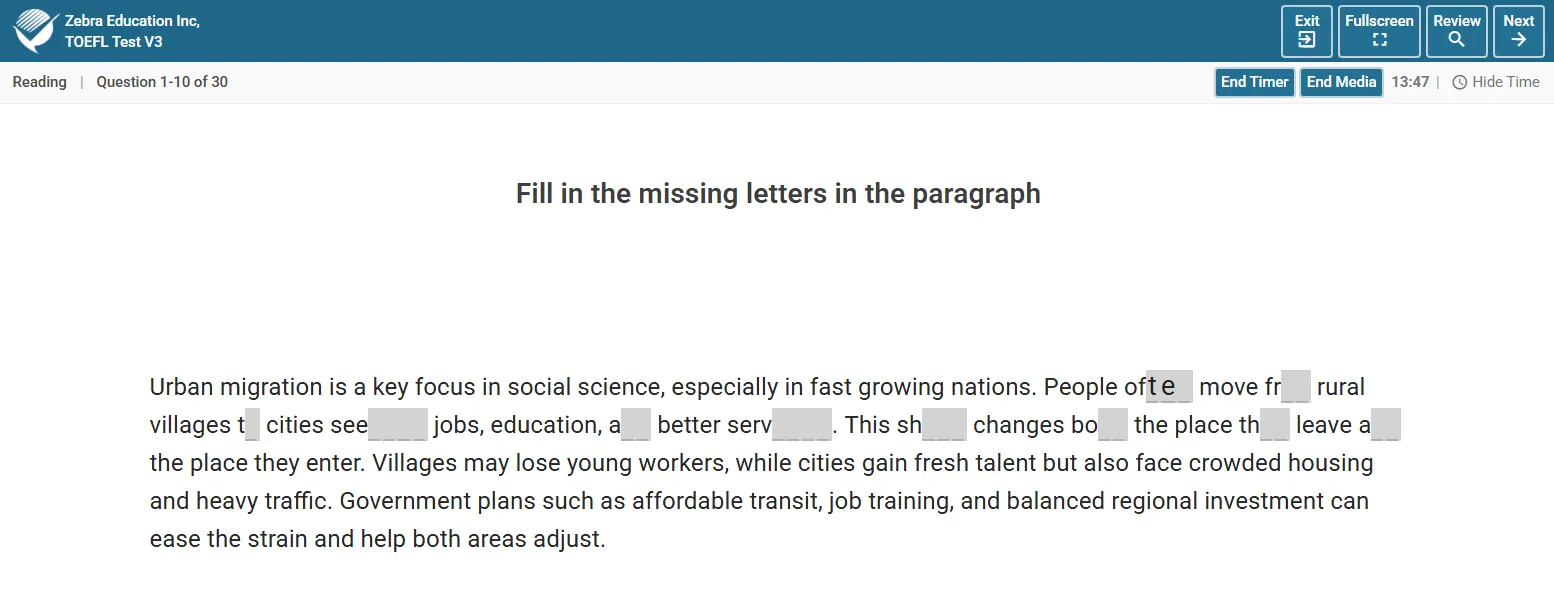
要查看我们所有的 TOEFL 阅读练习题,请打开我们 TOEFL Tutor App 中的 TOEFL 练习菜单。阅读是一种技能。针对薄弱题型的练习能让它不断提高,而你每复习一篇文章,阅读理解能力也会提高。
阅读部分共有 50 道题,分为三种题目类型:
- Complete the Words:每篇文本 10 个空格
- Read in Daily Life:每篇文本通常 2 道题
- Read an Academic Passage:每篇文章通常 5 道题
免费 TOEFL 阅读课程
创建一个免费账号,打开这些 TOEFL 阅读课程,开始提高你的阅读技能:
- TOEFL 阅读入门
- TOEFL 阅读成功策略
- Complete the Words 题
- Detail 题
- Gist Purpose 题
- Rhetorical Purpose 题
- Inference 题
- Negative Factual Information 题
- Vocabulary 题
- Organization 题
- Select in Passage 题
- Sentence Insertion 题
免费 TOEFL 阅读练习资源
下面所有资源都是为现行考试的三种题目类型制作的免费 TOEFL 阅读练习。每道完整练习题都会给你的答案评分并显示解析。
- Complete the Words 完整练习题:一篇有十个空格的学术文章,边输入边评分。
- Read in Daily Life 完整练习题:一封电子邮件,配有题目和解析。
- Read an Academic Passage 完整练习题:一篇文章,配有五道题,每道题都有解析。
- Sample Test 1:一套免费的完整自适应 TOEFL 模拟考试,包含阅读部分和分数段成绩。
- TOEFL 阅读题型:十种题型的指南,每种都有一道样题。
- TOEFL Complete the Words:任务介绍、一篇样文、八种缺失单词,以及应该花多少时间。
- TOEFL 阅读练习 PDF:13 篇文本和 64 道题,附答案,注册免费账号即可免费获取。
本页的数据来自BestMyTest TOEFL 学员表现数据,即截至 2026年10月 在 BestMyTest 上的 TOEFL 练习记录。每个数据的计算方式都在该页说明。最后更新:2026年10月15日。