इस गाइड में, आप एक मुफ्त IELTS स्पीकिंग टेस्ट देंगे और सबसे अधिक उपयोग किए जाने वाले IELTS स्पीकिंग प्रश्न विषयों के उत्तरों के साथ अभ्यास करेंगे। आप हमारे पूरी तरह से जांचे-परखे स्पीकिंग टेम्पलेट का उपयोग करके IELTS स्पीकिंग टेस्ट के पार्ट 1, 2 और 3 के प्रश्नों का उत्तर देना सीखेंगे।
IELTS speaking practice test पूरा करने के बाद मुफ्त IELTS speaking sample answers पाएँ।
play_circle_outline IELTS Speaking practice test शुरू करेंनीचे sample answers सहित हमारे सभी IELTS speaking questions की पूरी सूची दी गई है। ध्यान दें: लाल links हमारे छात्रों द्वारा सबसे लोकप्रिय और अनुशंसित speaking questions हैं, और आप इन्हें कभी भी मुफ्त में अभ्यास कर सकते हैं।
IELTS Speaking प्रश्न भाग 1 1 - 96
Short questions about familiar topics like your home, work, and hobbies
IELTS Speaking प्रश्न भाग 2 1 - 83
Cue cards where you speak for 1 to 2 minutes about one topic
IELTS Speaking प्रश्न भाग 3 1 - 97
Discussion questions linked to the Part 2 topic
IELTS स्पीकिंग सफलता गाइड
आधिकारिक BestMyTest IELTS स्पीकिंग टेस्ट गाइड में आपका स्वागत है। इस गाइड का शेष भाग स्पीकिंग पार्ट 1 - 3 के लिए सबसे अधिक प्रयोग किए जाने वाले IELTS स्पीकिंग विषयों को सीखने, बैंड 9 स्पीकिंग सैंपल उत्तर सुनने, और आपकी सफलता के लिए महत्वपूर्ण IELTS स्पीकिंग टिप्स और संसाधन सीखने पर केंद्रित रहेगा। नीचे दी गई विषय सूची का उपयोग करके आप जो खोज रहे हैं उसे तुरंत ढूँढ़ सकते हैं।
विषय सूची
- IELTS स्पीकिंग टेस्ट परिचय
- पार्ट 1 के लिए IELTS स्पीकिंग विषय
- पार्ट 2 और 3 के लिए IELTS स्पीकिंग विषय
- IELTS स्पीकिंग पार्ट 1 से कैसे निपटें
- IELTS स्पीकिंग पार्ट 2 से कैसे निपटें
- IELTS स्पीकिंग पार्ट 3 से कैसे निपटें
- आपकी सफलता के लिए IELTS स्पीकिंग प्रैक्टिस
- IELTS स्पीकिंग प्रश्नों का स्कोर कैसे होता है
- निःशुल्क IELTS स्पीकिंग टेस्ट संसाधन
IELTS स्पीकिंग टेस्ट
IELTS स्पीकिंग टेस्ट शुरू में थोड़ा भयभीत करने वाला हो सकता है, खासकर इसलिए कि आपकी परीक्षा आपके परीक्षक के सामने लाइव होगी। इस लाइव प्रारूप के कारण, सैंपल उत्तरों के साथ निःशुल्क स्पीकिंग विषय ढूँढ़ना कठिन हो सकता है, लेकिन चिंता मत कीजिए—हमने आपके लिए व्यवस्था कर रखी है। हमारे IELTS स्पीकिंग विषयों के साथ अभ्यास करने से पहले, आइए स्पीकिंग टेस्ट पर एक त्वरित नज़र डालें और देखें कि यह कैसे काम करता है।
स्पीकिंग टेस्ट प्रारूप
स्पीकिंग टेस्ट लगभग 11 - 15 मिनट तक चलता है, जो 3 भागों में होता है। कृपया ध्यान दें कि ग्रीटिंग और पार्ट 1 के लिए स्पीकिंग विषय समान हैं, इसलिए इन्हें केवल 1 भाग ही माना जाता है, लेकिन हमने आपकी सुविधा के लिए इन्हें अलग कर दिया है।
- IELTS स्पीकिंग टेस्ट ग्रीटिंग
- IELTS स्पीकिंग टेस्ट पार्ट 1
- IELTS स्पीकिंग टेस्ट पार्ट 2
- IELTS स्पीकिंग टेस्ट पार्ट 3
ग्रीटिंग
जब आप IELTS स्पीकिंग टेस्ट देते हैं और परीक्षा कक्ष में जाते हैं, तो परीक्षक कठिन IELTS स्पीकिंग प्रश्नों से शुरुआत नहीं करता, बल्कि वे अभिवादन से धीरे-धीरे शुरुआत करते हैं। कृपया ध्यान दें, आपकी अभिवादन क्षमता पर भी आपको अंक मिलेंगे, इसलिए इसके लिए तैयार रहना महत्वपूर्ण है। यह कहने के बाद, आइए एक सरल अभिवादन और उत्तर पर त्वरित नज़र डालें।
- परीक्षक अपना परिचय देंगे और पूछेंगे कि आपका नाम क्या है। आप जवाब देंगे "My name's _______"।
- इसके बाद, आपसे पूछा जाएगा "What can I call you?", जिसमें आप जवाब दे सकते हैं "You can call me_______"। यदि आपके पास अंग्रेजी नाम है तो आप यहाँ उसका उपयोग कर सकते हैं। यह अजीब लग सकता है, लेकिन कुछ लोग अपना खुद का अंग्रेजी नाम नहीं उच्चारण कर सकते। यह स्वीकार्य नहीं है। यदि आप उसे उच्चारण नहीं कर सकते, तो उसका उपयोग न करना ही बेहतर है।
- आपके नाम के बाद, वे पूछेंगे कि आप कहाँ से हैं। बस इतना कहें "I'm from_____"। यह काफी है। इस चरण में आपको अपने उत्तरों के बारे में कोई अतिरिक्त जानकारी देने की आवश्यकता नहीं है।
- अंत में, आपसे पहचान पत्र माँगा जाएगा। उसे दिखाने के बाद, आप टेस्ट शुरू करेंगे।
IELTS स्पीकिंग पार्ट 1
IELTS स्पीकिंग पार्ट 1 4-5 मिनट के बीच चलता है, जिसमें लगभग 8-10 IELTS स्पीकिंग प्रश्न और लगभग 2-3 परिचित IELTS स्पीकिंग विषय होते हैं जैसे आपका काम, आपकी पढ़ाई, आपका परिवार, आपका गृहनगर, आपका आवास, इत्यादि। ये विषय IELTS स्पीकिंग पार्ट 2 के विषयों की तुलना में आसान हैं। नीचे कुछ उदाहरण दिए गए हैं जो आपसे पूछे जा सकते हैं।
Where is your hometown?
What do you like about it?
What do you not like about it?
How important is your hometown to you?
Let's move on to talk about accommodation:
Tell me about the kind of accommodation you live in?
Does the place you live in have many amenities?
Is there anything you would like to change about the place you live in?
Do you plan to live there for a long time?
पार्ट 1 के प्रश्नों को सबसे अच्छी तरह उन प्रश्नों के रूप में वर्णित किया जा सकता है जो दो अजनबियों या परिचितों के बीच हल्की-फुल्की बातचीत की नकल करते हैं। वे बहुत गहन नहीं होते, लेकिन इन प्रश्नों को आपको इस तरह न लेने दें कि आपको इनकी तैयारी की आवश्यकता नहीं है। थोड़ी सी तैयारी बहुत आगे ले जा सकती है और आप हमें इसे करवाने के लिए धन्यवाद देंगे! आपको इस पोस्ट में आगे पार्ट 1 के प्रश्नों की तैयारी करने के तरीके पर कुछ टिप्स भी मिलेंगी।
IELTS स्पीकिंग पार्ट 2
पार्ट 2 में, आप किसी विशेष IELTS स्पीकिंग विषय पर बात करेंगे। विषय आपके लिए चुना जाता है और आपको एक कार्ड (Candidate Task Card) पर दिया जाएगा। फिर आपके पास अपना उत्तर तैयार करने के लिए 1 मिनट और अधिकतम 2 मिनट बोलने का समय होगा। नोट्स बनाने के लिए आपको एक पेंसिल और कागज दिया जाएगा। नीचे एक उदाहरण IELTS स्पीकिंग पार्ट 2 प्रश्न दिया गया है:
Describe a useful electronic device you would like to own.
You should say:
- What it is
- How it would help your life
- If it would be expensive to buy
And explain why you would like it.
एक बार आपका दो मिनट का बोलने का समय खत्म हो जाने पर, यह संभव है कि टेस्ट परीक्षक टेस्ट के इस भाग को आपके पार्ट 2 के उत्तर से संबंधित कुछ सरल प्रश्न पूछकर समाप्त करेंगे।
इन्हें कभी-कभी राउंडिंग ऑफ प्रश्न कहा जाता है,
क्योंकि वे आपकी बातचीत को "पूरा करने" या समाप्त करने में मदद करते हैं। आइए कुछ IELTS स्पीकिंग प्रश्नों पर नज़र डालें जो पूछे जा सकते हैं।
उदाहरण के लिए, मान लें कि पार्ट 2 में आपने जिस IELTS स्पीकिंग विषय पर चर्चा की वह "Describe your favorite form of public transport" था।
परीक्षक यह पूछकर आपकी बातचीत को पूरा कर सकता है:
- Are the buses cheap in your city?
- Did you travel to the test today by bus?
आमतौर पर, ये राउंडिंग ऑफ प्रश्न सरल होते हैं, इसलिए आपके लिए केवल सरल उत्तर देना ही आवश्यक होगा।
यहाँ लंबे, जटिल उत्तरों की आवश्यकता नहीं है, क्योंकि परीक्षक संभवतः पार्ट 3 की ओर बढ़ने के लिए तैयार होगा।
उदाहरण के लिए, आप एक राउंडिंग ऑफ प्रश्न का इस तरह संक्षिप्त उत्तर दे सकते हैं:
- Yes, about 2 dollars for a single journey.
- No, actually I came by taxi.
दूसरी ओर, कुछ ऐसे मामले भी होते हैं जब परीक्षक राउंडिंग ऑफ प्रश्नों को पूरी तरह छोड़ सकता है और इसके बजाय सीधे पार्ट 3 पर जा सकता है। यदि आपके IELTS स्पीकिंग टेस्ट के दौरान ऐसा होता है, तो चिंता न करें; यह दर्शाता है कि आपका स्पीकिंग पार्ट 2 का उत्तर पर्याप्त लंबा था, और पार्ट 2 के लिए आपका 3 मिनट का बोलने का समय पहले ही समाप्त हो चुका है।
IELTS स्पीकिंग पार्ट 3
पार्ट 3 में, आपसे लगभग 4-8 और IELTS स्पीकिंग प्रश्न पूछे जाएँगे जो पार्ट 2 में चर्चा किए गए IELTS स्पीकिंग विषयों से जुड़े होते हैं। परीक्षक आपके उत्तरों के आधार पर कुछ प्रश्न भी पूछेगा, इसलिए पूरा पार्ट 3 परीक्षक के साथ दो-तरफ़ा चर्चा है और 4 - 5 मिनट चलेगा। ऊपर दिए गए IELTS स्पीकिंग पार्ट 2 विषयों के आधार पर यहाँ कुछ सामान्य स्पीकिंग प्रश्न दिए गए हैं जो परीक्षक आपसे पूछ सकता है:
What devices do you think will be popular in the future?
Do you think people spend too much money on electronic devices?
In what ways can electronic devices make our lives harder?
What would the world be like without computers?
Should children be taught to use computers at school?
IELTS स्पीकिंग विषय
अब जब आपको परिचय हो गया है कि IELTS स्पीकिंग टेस्ट कैसे काम करता है, तो आप देख सकते हैं कि कोई भी संख्या में विषय पूछे जा सकते हैं। यह महत्वपूर्ण है कि आप कुछ अधिक प्रयोग किए जाने वाले IELTS स्पीकिंग विषयों से परिचित हो जाएँ। हमने न केवल एक व्यापक सूची बनाई है, बल्कि प्रत्येक में एक IELTS स्पीकिंग सैंपल उत्तर भी शामिल है।
नीचे दिया गया बार चार्ट 2025 और 2026 में IELTS स्पीकिंग पार्ट 2 और 3 की सबसे आम विषय श्रेणियाँ दिखाता है। क्षैतिज अक्ष (x-अक्ष) सात विषय श्रेणियाँ दिखाता है, जबकि ऊर्ध्वाधर अक्ष (y-अक्ष) प्रत्येक श्रेणी में विषयों का प्रतिशत दिखाता है। नीली पट्टियाँ 2025 और नारंगी पट्टियाँ 2026 दर्शाती हैं।
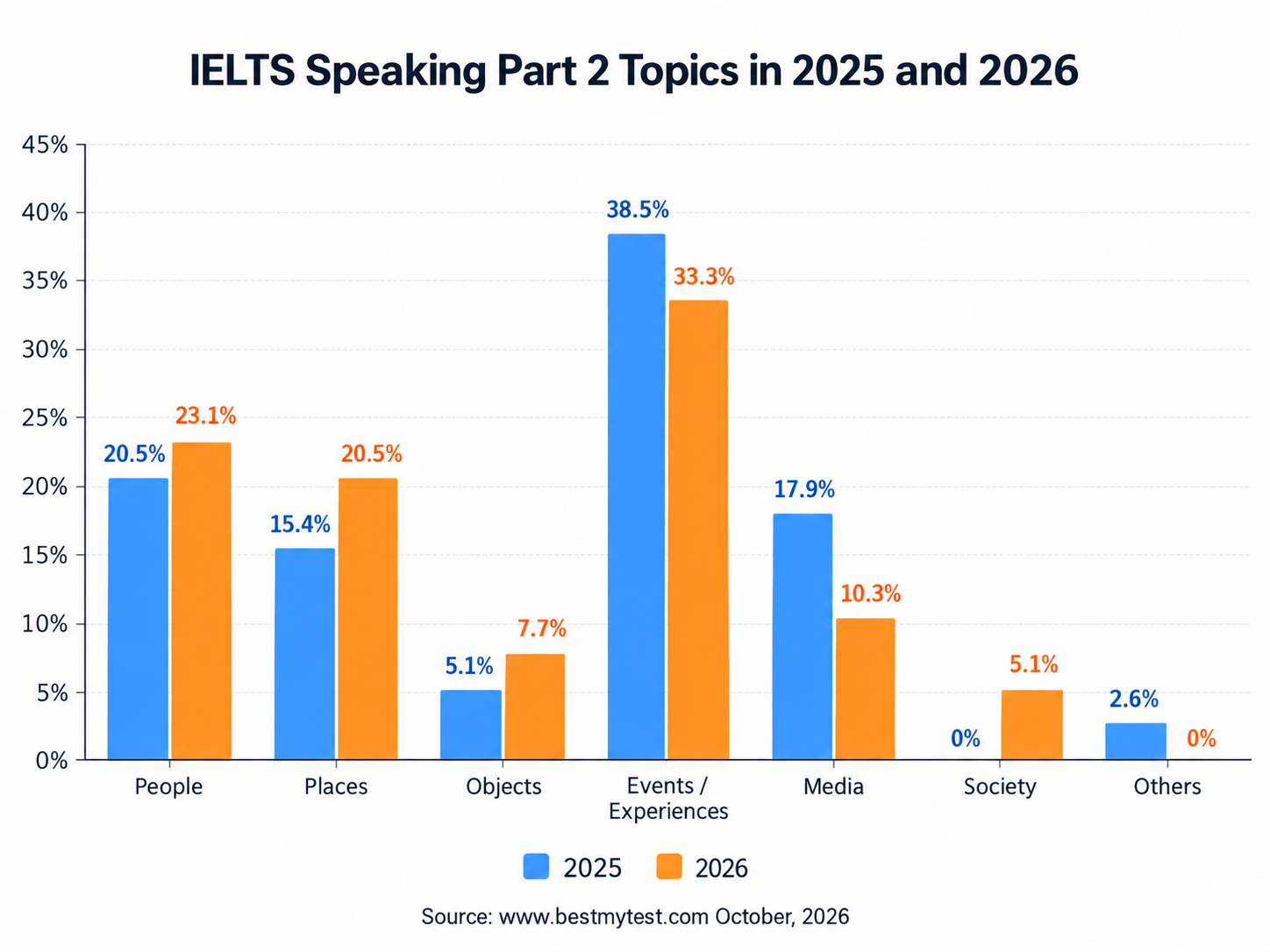
जैसा कि आप देख सकते हैं, घटनाएँ और अनुभव दोनों वर्षों में सबसे बड़ी श्रेणी हैं, जो 2025 में विषयों का 38.5% और 2026 में 33.3% हैं। ये प्रश्न आमतौर पर आपसे कुछ ऐसा वर्णन करने को कहते हैं जो आपने किया हो या अनुभव किया हो, जैसे एक यादगार यात्रा, एक खास उत्सव, या कोई ऐसा समय जब आपने किसी की मदद की।
लोग और स्थान भी महत्वपूर्ण श्रेणियाँ हैं। मिलकर ये 2026 के विषयों का 43.6% हैं। आपसे किसी ऐसे व्यक्ति का वर्णन करने को कहा जा सकता है जिसकी आप प्रशंसा करते हैं, किसी ऐसे व्यक्ति का जिसने आपको प्रभावित किया, किसी ऐसी जगह का जहाँ आप जाना पसंद करते हैं, या किसी ऐसे स्थान का जिसे आप देखना चाहते हैं।
वस्तुएँ, मीडिया और समाज जैसी अन्य श्रेणियाँ इस नमूने में कम दिखाई देती हैं। फिर भी आपको इनका अभ्यास करना चाहिए, क्योंकि IELTS स्पीकिंग के प्रश्न रोज़मर्रा के कई विषयों को कवर कर सकते हैं।
आपकी IELTS तैयारी के लिए इसका क्या अर्थ है? अपने निजी अनुभवों, जिन लोगों को आप जानते हैं, और जिन जगहों पर आप गए हैं, उनसे जुड़े प्रश्नों का अभ्यास करके शुरुआत करें। ये विषय चार्ट के प्रश्नों का बड़ा हिस्सा हैं। पूरे उत्तर याद करने के बजाय कुछ लचीली कहानियाँ और उदाहरण तैयार करें जिन्हें आप अलग-अलग प्रश्नों के अनुसार बदल सकें।
IELTS स्पीकिंग विषय पार्ट 1
नीचे दी गई सूची में केवल प्रश्न ही नहीं हैं, बल्कि यह उन स्पीकिंग विषयों को भी दिखाती है जो परीक्षकों ने लोगों से अतीत में पूछे हैं। एक बेहतरीन सुझाव यह है कि इन IELTS स्पीकिंग पार्ट 1 प्रश्नों का उत्तर आईने में देखकर या किसी मित्र के साथ दें। नीचे दी गई तालिका दिखाती है कि प्रत्येक विषय का उपयोग कितनी बार किया जाता है:
| विषय | आवृत्ति |
|---|---|
| Hometown/Accommodation/Country | उच्च |
| Friends/Family/Housework/Children | उच्च |
| TV/Reading/Music/Newspapers & Magazines/Films | उच्च |
| Technology/Computers/Internet | उच्च |
| Work/Jobs/Career Planning/Volunteer Work | उच्च |
| School majors/High School | मध्यम |
| Sports/Outdoor Activities/Indoor Activities | मध्यम |
| Travel/Lifestyle | मध्यम |
| Season/Rain/Sunny Days/Weather | मध्यम |
| Fashion/Shoes/Bags/Clothes | मध्यम |
| Transportation/Boats/Buses/Taxis | मध्यम |
| Celebrities/Advertisements/Media | मध्यम |
| Photos/Photography/Colors/Art | निम्न |
| Noise/Patience/Politeness | निम्न |
| Mirrors/Gifts | निम्न |
Question 1
-
spellcheck TranscriptDo you enjoy going out in your free time? Why or why not?
-
Sample Response
Yeah, I usually enjoy going out in my free time because it helps me relax and meet new people. Honestly, it’s a great way to take a break from daily routine and clear my mind a little.
Watch the video question, then click to record your answer.
Practice speaking questions in our appQuestion 2
-
spellcheck TranscriptWhat kind of places do you usually go to when you go out?
-
Sample Response
Well, when I go out, I often like to visit cafes or parks. Sometimes, I also enjoy going to the cinema or shopping malls because those places are lively and fun to hang out in, you know.
Watch the video question, then click to record your answer.
Practice speaking questions in our appQuestion 3
-
spellcheck TranscriptWho do you prefer to go out with, friends or family? Why?
-
Sample Response
I think I prefer going out with friends, actually, because we share similar interests. However, sometimes I also enjoy spending time with my family. It really depends on the occasion, to be honest.
Watch the video question, then click to record your answer.
Practice speaking questions in our appQuestion 4
-
spellcheck TranscriptHow often do you go out in the evenings?
-
Sample Response
To be fair, I don’t go out every evening. I guess maybe two or three times a week, depending on my schedule. If I’m tired or busy, I usually just stay at home and relax.
Watch the video question, then click to record your answer.
Practice speaking questions in our appQuestion 5
-
spellcheck TranscriptHas the way you go out changed compared to when you were younger?
-
Sample Response
Yes, the way I go out has definitely changed since I was younger. I used to go out more often and stay out late. Now, I prefer quieter places and I’m a bit more careful with my time.
Watch the video question, then click to record your answer.
Practice speaking questions in our appQuestion 6
-
spellcheck TranscriptLet's move on to talk about goals. Do you have any specific goals for this year?
-
Sample Response
Let’s see, this year my main goal is to improve my English and maybe learn a new skill. I also want to travel to at least one new country if possible, just to experience something different.
Watch the video question, then click to record your answer.
Practice speaking questions in our appQuestion 7
-
spellcheck TranscriptWhy is it important for people to set goals?
-
Sample Response
I believe setting goals is really important because it gives us direction and motivation. Without goals, it’s easy to lose focus and just drift through life without achieving anything meaningful, don’t you think?
Watch the video question, then click to record your answer.
Practice speaking questions in our appQuestion 8
-
spellcheck TranscriptHave you ever achieved a goal that was difficult for you?
-
Sample Response
Actually, yes, I once had a goal to run a half marathon. It was really difficult for me because I’m not a natural runner. But after a lot of training, I finally managed to do it and I felt so proud.
Watch the video question, then click to record your answer.
Practice speaking questions in our appQuestion 9
-
spellcheck TranscriptHow do you keep track of your progress towards your goals?
-
Sample Response
To be honest, I usually write my goals down in a notebook or on my phone. I try to check in regularly, maybe once a week, to see how I’m doing and make any changes if needed.
Watch the video question, then click to record your answer.
Practice speaking questions in our appQuestion 10
-
spellcheck TranscriptDid you have any goals when you were a child?
-
Sample Response
When I was a child, I definitely had some goals, like becoming a teacher or learning to play the piano. Even though I didn’t achieve all of them, some childhood dreams still motivate me today.
Watch the video question, then click to record your answer.
Practice speaking questions in our app
Task Achievement — IELTS Speaking 1
Learn how to answer these questions in a step-by-step interactive exercise
Task Achievement — IELTS Speaking 1
IELTS Speaking Part 1 के प्रश्न का उत्तर देने का पहला चरण है एक सीधा उत्तर देना और फिर उसमें थोड़ा और विवरण जोड़ना।
एक सरल उत्तर-ढाँचा आपको बताता है कि आगे क्या कहना है, इसलिए आप जल्दी उत्तर दे सकते हैं और उत्तर को बहुत लंबा किए बिना स्वाभाविक रूप से बोलते रह सकते हैं। एक छोटे वाक्य के बाद रुक जाने के बजाय, ढाँचे का पालन एक-एक चरण करके करें।
इस चरण में आप सीखेंगे कि IELTS Speaking Part 1 के लिए स्पष्ट और स्वाभाविक उत्तर बनाने में इस ढाँचे का उपयोग कैसे करें।
आइए प्रश्न 1 पर काम करें।
पहले प्रश्न का पैटर्न पहचानें। खुद से पूछें: यह प्रश्न मुझसे क्या करने को कह रहा है? पैटर्न पहचानने के बाद, अपने उत्तर के लिए उससे मेल खाते उत्तर-ढाँचे का उपयोग करें।
इस प्रश्न का पैटर्न Direct Answer है, इसलिए यह ढाँचा अपनाएँ:
Answer + Reason → Example or Detail → Result or Extra Detail
बोलते समय Well, Actually, For example, What I mean by that is और So overall जैसे नियंत्रित फ़िलर इस्तेमाल करें। ये वाक्यांश आपके उत्तर को ज़्यादा सहज बना सकते हैं, और अगर आप एक पल के लिए भूल जाएँ कि आगे क्या कहना है, तो सोचने के लिए थोड़ा अतिरिक्त समय देते हैं। इन्हें स्वाभाविक रूप से इस्तेमाल करें, हर वाक्य में नहीं। नियंत्रित फ़िलर की सूची यह है।
Do you enjoy going out in your free time? Why or why not?
आइए प्रश्न 2 पर काम करें।
पहले प्रश्न का पैटर्न पहचानें। खुद से पूछें: यह प्रश्न मुझसे क्या करने को कह रहा है? पैटर्न पहचानने के बाद, अपने उत्तर के लिए उससे मेल खाते उत्तर-ढाँचे का उपयोग करें।
इस प्रश्न का पैटर्न Direct Answer है, इसलिए यह ढाँचा अपनाएँ:
Answer + Reason → Example or Detail → Result or Extra Detail
बोलते समय Well, Actually, For example, What I mean by that is और So overall जैसे नियंत्रित फ़िलर इस्तेमाल करें। ये वाक्यांश आपके उत्तर को ज़्यादा सहज बना सकते हैं, और अगर आप एक पल के लिए भूल जाएँ कि आगे क्या कहना है, तो सोचने के लिए थोड़ा अतिरिक्त समय देते हैं। इन्हें स्वाभाविक रूप से इस्तेमाल करें, हर वाक्य में नहीं। नियंत्रित फ़िलर की सूची यह है।
What kind of places do you usually go to when you go out?
आइए प्रश्न 3 पर काम करें।
पहले प्रश्न का पैटर्न पहचानें। खुद से पूछें: यह प्रश्न मुझसे क्या करने को कह रहा है? पैटर्न पहचानने के बाद, अपने उत्तर के लिए उससे मेल खाते उत्तर-ढाँचे का उपयोग करें।
इस प्रश्न का पैटर्न Direct Answer है, इसलिए यह ढाँचा अपनाएँ:
Answer + Reason → Example or Detail → Result or Extra Detail
बोलते समय Well, Actually, For example, What I mean by that is और So overall जैसे नियंत्रित फ़िलर इस्तेमाल करें। ये वाक्यांश आपके उत्तर को ज़्यादा सहज बना सकते हैं, और अगर आप एक पल के लिए भूल जाएँ कि आगे क्या कहना है, तो सोचने के लिए थोड़ा अतिरिक्त समय देते हैं। इन्हें स्वाभाविक रूप से इस्तेमाल करें, हर वाक्य में नहीं। नियंत्रित फ़िलर की सूची यह है।
Who do you prefer to go out with, friends or family? Why?
आइए प्रश्न 4 पर काम करें।
पहले प्रश्न का पैटर्न पहचानें। खुद से पूछें: यह प्रश्न मुझसे क्या करने को कह रहा है? पैटर्न पहचानने के बाद, अपने उत्तर के लिए उससे मेल खाते उत्तर-ढाँचे का उपयोग करें।
इस प्रश्न का पैटर्न Direct Answer है, इसलिए यह ढाँचा अपनाएँ:
Answer + Reason → Example or Detail → Result or Extra Detail
बोलते समय Well, Actually, For example, What I mean by that is और So overall जैसे नियंत्रित फ़िलर इस्तेमाल करें। ये वाक्यांश आपके उत्तर को ज़्यादा सहज बना सकते हैं, और अगर आप एक पल के लिए भूल जाएँ कि आगे क्या कहना है, तो सोचने के लिए थोड़ा अतिरिक्त समय देते हैं। इन्हें स्वाभाविक रूप से इस्तेमाल करें, हर वाक्य में नहीं। नियंत्रित फ़िलर की सूची यह है।
How often do you go out in the evenings?
आइए प्रश्न 5 पर काम करें।
पहले प्रश्न का पैटर्न पहचानें। खुद से पूछें: यह प्रश्न मुझसे क्या करने को कह रहा है? पैटर्न पहचानने के बाद, अपने उत्तर के लिए उससे मेल खाते उत्तर-ढाँचे का उपयोग करें।
इस प्रश्न का पैटर्न Direct Answer है, इसलिए यह ढाँचा अपनाएँ:
Answer + Reason → Example or Detail → Result or Extra Detail
बोलते समय Well, Actually, For example, What I mean by that is और So overall जैसे नियंत्रित फ़िलर इस्तेमाल करें। ये वाक्यांश आपके उत्तर को ज़्यादा सहज बना सकते हैं, और अगर आप एक पल के लिए भूल जाएँ कि आगे क्या कहना है, तो सोचने के लिए थोड़ा अतिरिक्त समय देते हैं। इन्हें स्वाभाविक रूप से इस्तेमाल करें, हर वाक्य में नहीं। नियंत्रित फ़िलर की सूची यह है।
Has the way you go out changed compared to when you were younger?
आइए प्रश्न 6 पर काम करें।
पहले प्रश्न का पैटर्न पहचानें। खुद से पूछें: यह प्रश्न मुझसे क्या करने को कह रहा है? पैटर्न पहचानने के बाद, अपने उत्तर के लिए उससे मेल खाते उत्तर-ढाँचे का उपयोग करें।
इस प्रश्न का पैटर्न Direct Answer है, इसलिए यह ढाँचा अपनाएँ:
Answer + Reason → Example or Detail → Result or Extra Detail
बोलते समय Well, Actually, For example, What I mean by that is और So overall जैसे नियंत्रित फ़िलर इस्तेमाल करें। ये वाक्यांश आपके उत्तर को ज़्यादा सहज बना सकते हैं, और अगर आप एक पल के लिए भूल जाएँ कि आगे क्या कहना है, तो सोचने के लिए थोड़ा अतिरिक्त समय देते हैं। इन्हें स्वाभाविक रूप से इस्तेमाल करें, हर वाक्य में नहीं। नियंत्रित फ़िलर की सूची यह है।
Let's move on to talk about goals. Do you have any specific goals for this year?
आइए प्रश्न 7 पर काम करें।
पहले प्रश्न का पैटर्न पहचानें। खुद से पूछें: यह प्रश्न मुझसे क्या करने को कह रहा है? पैटर्न पहचानने के बाद, अपने उत्तर के लिए उससे मेल खाते उत्तर-ढाँचे का उपयोग करें।
इस प्रश्न का पैटर्न Direct Answer है, इसलिए यह ढाँचा अपनाएँ:
Answer + Reason → Example or Detail → Result or Extra Detail
बोलते समय Well, Actually, For example, What I mean by that is और So overall जैसे नियंत्रित फ़िलर इस्तेमाल करें। ये वाक्यांश आपके उत्तर को ज़्यादा सहज बना सकते हैं, और अगर आप एक पल के लिए भूल जाएँ कि आगे क्या कहना है, तो सोचने के लिए थोड़ा अतिरिक्त समय देते हैं। इन्हें स्वाभाविक रूप से इस्तेमाल करें, हर वाक्य में नहीं। नियंत्रित फ़िलर की सूची यह है।
Why is it important for people to set goals?
आइए प्रश्न 8 पर काम करें।
पहले प्रश्न का पैटर्न पहचानें। खुद से पूछें: यह प्रश्न मुझसे क्या करने को कह रहा है? पैटर्न पहचानने के बाद, अपने उत्तर के लिए उससे मेल खाते उत्तर-ढाँचे का उपयोग करें।
इस प्रश्न का पैटर्न Direct Answer है, इसलिए यह ढाँचा अपनाएँ:
Answer + Reason → Example or Detail → Result or Extra Detail
बोलते समय Well, Actually, For example, What I mean by that is और So overall जैसे नियंत्रित फ़िलर इस्तेमाल करें। ये वाक्यांश आपके उत्तर को ज़्यादा सहज बना सकते हैं, और अगर आप एक पल के लिए भूल जाएँ कि आगे क्या कहना है, तो सोचने के लिए थोड़ा अतिरिक्त समय देते हैं। इन्हें स्वाभाविक रूप से इस्तेमाल करें, हर वाक्य में नहीं। नियंत्रित फ़िलर की सूची यह है।
Have you ever achieved a goal that was difficult for you?
आइए प्रश्न 9 पर काम करें।
पहले प्रश्न का पैटर्न पहचानें। खुद से पूछें: यह प्रश्न मुझसे क्या करने को कह रहा है? पैटर्न पहचानने के बाद, अपने उत्तर के लिए उससे मेल खाते उत्तर-ढाँचे का उपयोग करें।
इस प्रश्न का पैटर्न Direct Answer है, इसलिए यह ढाँचा अपनाएँ:
Answer + Reason → Example or Detail → Result or Extra Detail
बोलते समय Well, Actually, For example, What I mean by that is और So overall जैसे नियंत्रित फ़िलर इस्तेमाल करें। ये वाक्यांश आपके उत्तर को ज़्यादा सहज बना सकते हैं, और अगर आप एक पल के लिए भूल जाएँ कि आगे क्या कहना है, तो सोचने के लिए थोड़ा अतिरिक्त समय देते हैं। इन्हें स्वाभाविक रूप से इस्तेमाल करें, हर वाक्य में नहीं। नियंत्रित फ़िलर की सूची यह है।
How do you keep track of your progress towards your goals?
आइए प्रश्न 10 पर काम करें।
पहले प्रश्न का पैटर्न पहचानें। खुद से पूछें: यह प्रश्न मुझसे क्या करने को कह रहा है? पैटर्न पहचानने के बाद, अपने उत्तर के लिए उससे मेल खाते उत्तर-ढाँचे का उपयोग करें।
इस प्रश्न का पैटर्न Direct Answer है, इसलिए यह ढाँचा अपनाएँ:
Answer + Reason → Example or Detail → Result or Extra Detail
बोलते समय Well, Actually, For example, What I mean by that is और So overall जैसे नियंत्रित फ़िलर इस्तेमाल करें। ये वाक्यांश आपके उत्तर को ज़्यादा सहज बना सकते हैं, और अगर आप एक पल के लिए भूल जाएँ कि आगे क्या कहना है, तो सोचने के लिए थोड़ा अतिरिक्त समय देते हैं। इन्हें स्वाभाविक रूप से इस्तेमाल करें, हर वाक्य में नहीं। नियंत्रित फ़िलर की सूची यह है।
Did you have any goals when you were a child?
क्या आप हमारे IELTS स्पीकिंग विषयों की पूरी सूची देखना चाहते हैं? आप उन्हें यहाँ देख सकते हैं: स्पीकिंग विषयों की पूरी सूची देखें
क्या आप उत्तरों के साथ IELTS स्पीकिंग सैंपल खोज रहे हैं? आप नीचे दिए गए बटन पर क्लिक करके अभी निःशुल्क अभ्यास शुरू कर सकते हैं।
निःशुल्क IELTS स्पीकिंग मॉक टेस्ट - पार्ट 1
IELTS स्पीकिंग विषय पार्ट 2 और 3
अब आप स्पीकिंग पार्ट 2 और 3 के कुछ अधिक प्रयोग किए जाने वाले विषयों को सीखेंगे और विषयों से संबंधित कुछ स्पीकिंग प्रश्नों पर जाएँगे (प्रत्येक प्रश्न के साथ एक सैंपल प्रतिक्रिया शामिल है)।
| व्यापक श्रेणी | IELTS स्पीकिंग पार्ट 2 और 3 |
|---|---|
| मीडिया और मनोरंजन | Advertisements/Art/Books/Internet/News/TV |
| वस्तु | Clothing/Electronic Devices/Food/Furniture/Gifts Machine/Money/Musical Instruments/Traditional Products/Vegetables |
| लोग | Teacher/Family/Friends/Influential People/Good Parents |
| स्थान | City/Company/School/Museums/party/Shopping Places |
| कार्यक्रम | A change in life/Decision/Exciting Experiences/Holiday/Illness Experiences Helping People/Memorable Experiences/An Experience of Being Late/Travel Experiences |
| समाज | Environment/Traffic Rule/Society/Transportation |
| अन्य | Leisure Activities/Language/Sports |
स्पीकिंग पार्ट 2 और 3 आपको समान विषयों पर परखेगा, इसलिए नीचे दिए गए work विषय में दोनों भागों के लिए सैंपल प्रश्न और प्रतिक्रियाएँ शामिल होंगी।
candidate task card
Describe your dream job.
You should say:
What kind of things you would do in that job
What the working conditions would be like
What kind of workplace you would work in
And say if you think you will be able to get a job like that or not, and why
-
Sample Response
My dream job is to be a freelance writer, and today I’ll explain a little bit about what it means to be a freelance writer, as well as why it interests me.
If I were a writer, I would use my computer to write things for different clients. A freelance employee does not have to work at an office, or at any specific company. My ideal workplace if I were a freelance writer would be at a home office. I would like to set up a comfortable desk in a quiet space at home for an environment that keeps me focused.
So, as a freelance writer, I would be able to do my writing from any place I choose, while also having some control over my work schedule. However, most writers will need complete assignments by a specific date, so there would still be some time constraints. I would probably have some stress over meeting deadlines on time, but I think I could handle it.
As far as finding a job as freelance writer is concerned, I think it may be possible in the future. First, I’ll need more experience writing, so that reputable companies will want to hire me. And most importantly, I’ll need to be financially stable enough that I can handle working less hours in the beginning.
Becoming a freelance writer would allow me independence, while doing something I enjoy. I believe with skill and patience, my dream of being a freelance writer will come true someday.
Read the cue card, then click to record your answer.
Practice speaking questions in our appTask Achievement — IELTS Speaking 2
Learn how to answer this question in a step-by-step interactive exercise
Task Achievement — IELTS Speaking 2
**IELTS स्पीकिंग Part 2** में, **1–2 मिनट** बोलने से पहले आपके पास **तैयारी के लिए 1 मिनट** होता है। परीक्षक आपको नोट्स के लिए एक **क्यू कार्ड**, एक **पेंसिल** और एक **कागज़** देता है।
तैयारी के इस समय का सोच-समझकर उपयोग करें। अपने उत्तर की योजना बनाने से पहले क्यू कार्ड पढ़ें।
अभी आपको कुछ लिखना या बोलना नहीं है। बस यह पक्का करें कि आप समझते हैं कि हर बिंदु क्या पूछ रहा है। अगले चरण में आप **हर बिंदु के लिए एक छोटा विचार** लिखेंगे।
अब तय करें कि क्यू कार्ड के हर बिंदु के लिए आप क्या कहना चाहते हैं। हर बिंदु के लिए बस **एक छोटा मुख्य विचार** लिखें।
आपका छोटा विचार केवल **कुछ शब्द या एक छोटा वाक्यांश** होना चाहिए, **न कि** **पूरा वाक्य या पूरा स्पीकिंग उत्तर**। हर बिंदु के लिए **एक छोटी पंक्ति** काफ़ी है।
अगले चरणों में आप हर विचार में एक **सहायक विवरण** और एक **निजी प्रतिक्रिया, निर्णय या परिणाम** जोड़कर उसे आगे बढ़ाएँगे।
**क्यू कार्ड के पहले बिंदु** के लिए, जो छोटा विचार आप लिख चुके हैं उसे रखें, और **एक या दो सहायक विवरण** जोड़ें।
जो कुछ आप कहना चाहते हैं, वह सब लिखने की कोशिश **न** करें। 1 मिनट की तैयारी के समय में क्यू कार्ड के बिंदुओं के लिए केवल **4–5 छोटे शब्द या छोटे वाक्यांश** लिखें, उसी क्रम में जिसमें आप उनके बारे में बोलना चाहते हैं।
**दूसरी पंक्ति** में कोई उपयोगी विवरण जोड़ें, जैसे **कौन, क्या, कहाँ, कब, क्यों, कोई उदाहरण, या एक छोटा वर्णन**।
**तीसरी पंक्ति** में कुछ निजी बात जोड़ें, जैसे **आपको कैसा लगा, आपने क्या तय किया, या बाद में क्या हुआ**। इन सबको शामिल करना ज़रूरी नहीं है। जो सबसे अच्छा बैठे, वही चुनें।
अगर शुरू करने में मदद चाहिए, तो दूसरी और तीसरी पंक्ति भरने के लिए **Show an Idea** पर क्लिक करें।
इस चरण के दौरान क्यू कार्ड के बाकी बिंदु बंद रहेंगे।
**क्यू कार्ड के दूसरे बिंदु** के लिए, जो छोटा विचार आप लिख चुके हैं उसे रखें, और **एक या दो सहायक विवरण** जोड़ें।
जो कुछ आप कहना चाहते हैं, वह सब लिखने की कोशिश **न** करें। 1 मिनट की तैयारी के समय में क्यू कार्ड के बिंदुओं के लिए केवल **4–5 छोटे शब्द या छोटे वाक्यांश** लिखें, उसी क्रम में जिसमें आप उनके बारे में बोलना चाहते हैं।
**दूसरी पंक्ति** में कोई उपयोगी विवरण जोड़ें, जैसे **कौन, क्या, कहाँ, कब, क्यों, कोई उदाहरण, या एक छोटा वर्णन**।
**तीसरी पंक्ति** में कुछ निजी बात जोड़ें, जैसे **आपको कैसा लगा, आपने क्या तय किया, या बाद में क्या हुआ**। इन सबको शामिल करना ज़रूरी नहीं है। जो सबसे अच्छा बैठे, वही चुनें।
अगर शुरू करने में मदद चाहिए, तो दूसरी और तीसरी पंक्ति भरने के लिए **Show an Idea** पर क्लिक करें।
इस चरण के दौरान क्यू कार्ड के बाकी बिंदु बंद रहेंगे।
**क्यू कार्ड के तीसरे बिंदु** के लिए, जो छोटा विचार आप लिख चुके हैं उसे रखें, और **एक या दो सहायक विवरण** जोड़ें।
जो कुछ आप कहना चाहते हैं, वह सब लिखने की कोशिश **न** करें। 1 मिनट की तैयारी के समय में क्यू कार्ड के बिंदुओं के लिए केवल **4–5 छोटे शब्द या छोटे वाक्यांश** लिखें, उसी क्रम में जिसमें आप उनके बारे में बोलना चाहते हैं।
**दूसरी पंक्ति** में कोई उपयोगी विवरण जोड़ें, जैसे **कौन, क्या, कहाँ, कब, क्यों, कोई उदाहरण, या एक छोटा वर्णन**।
**तीसरी पंक्ति** में कुछ निजी बात जोड़ें, जैसे **आपको कैसा लगा, आपने क्या तय किया, या बाद में क्या हुआ**। इन सबको शामिल करना ज़रूरी नहीं है। जो सबसे अच्छा बैठे, वही चुनें।
अगर शुरू करने में मदद चाहिए, तो दूसरी और तीसरी पंक्ति भरने के लिए **Show an Idea** पर क्लिक करें।
इस चरण के दौरान क्यू कार्ड के बाकी बिंदु बंद रहेंगे।
**क्यू कार्ड के चौथे बिंदु** के लिए, जो छोटा विचार आप लिख चुके हैं उसे रखें, और **एक या दो सहायक विवरण** जोड़ें।
जो कुछ आप कहना चाहते हैं, वह सब लिखने की कोशिश **न** करें। 1 मिनट की तैयारी के समय में क्यू कार्ड के बिंदुओं के लिए केवल **4–5 छोटे शब्द या छोटे वाक्यांश** लिखें, उसी क्रम में जिसमें आप उनके बारे में बोलना चाहते हैं।
**दूसरी पंक्ति** में कोई उपयोगी विवरण जोड़ें, जैसे **कौन, क्या, कहाँ, कब, क्यों, कोई उदाहरण, या एक छोटा वर्णन**।
**तीसरी पंक्ति** में कुछ निजी बात जोड़ें, जैसे **आपको कैसा लगा, आपने क्या तय किया, या बाद में क्या हुआ**। इन सबको शामिल करना ज़रूरी नहीं है। जो सबसे अच्छा बैठे, वही चुनें।
अगर शुरू करने में मदद चाहिए, तो दूसरी और तीसरी पंक्ति भरने के लिए **Show an Idea** पर क्लिक करें।
इस चरण के दौरान क्यू कार्ड के बाकी बिंदु बंद रहेंगे।
अब अपने नोट्स की मदद से अपना पूरा उत्तर दें। एक से दो मिनट तक बोलें और क्यू कार्ड के हर बिंदु को शामिल करें।
पहले बिंदु से आखिरी बिंदु तक अपने नोट्स के क्रम में चलें। हर बिंदु के लिए विचार, विवरण और निजी प्रतिक्रिया को जोड़कर एक छोटा, लगातार हिस्सा बोलें। शब्दों को याद करने की ज़रूरत नहीं है। चारों बिंदु पूरे होने तक बोलते रहें।
Question 1
-
spellcheck TranscriptDo you think job satisfaction is more important than your salary when choosing a job?
-
Sample Response
Yes, overall I think that job satisfaction outweighs salary in importance when someone chooses a job. Even though the job’s salary is important to survive and pay the bills, with enough money, it becomes more important to be happy at work. After all, most people spend the majority of their time outside of the home working, so they might as well be content, or even excited about their jobs. For people like me, I think being satisfied at work is a more important component when choosing a job than the salary.
Watch the video question, then click to record your answer.
Practice speaking questions in our appQuestion 2
-
spellcheck TranscriptWhat skills do you think are needed to get a good job these days?
-
Sample Response
These days I think having a variety of skills is important in the workplace, but there are a few that are essential to getting a good job. First, most employees today need to be able to communicate effectively with a variety of people. Speaking a second or even third language is one way to communicate well with many others. Another important skill to get a good job is being able to use a computer well, as in, typing, word processing, and using the internet. Without these skills, finding a job will be difficult for most people in today’s world.
Watch the video question, then click to record your answer.
Practice speaking questions in our appQuestion 3
-
spellcheck TranscriptDo you think that women should be able to do the same jobs as men?
-
Sample Response
Yes, as a woman I think that I should be allowed to do the same kind of jobs that men do. In the past, women were limited to very few lines of work, such as nursing and teaching. These days, we see women in all different jobs, and they make important contributions to the fields they work in, such as female scientists, doctors, and lawyers. Even though women and men are different in some ways, they should both still be equally able to find employment in a variety of jobs.
Watch the video question, then click to record your answer.
Practice speaking questions in our appQuestion 4
-
spellcheck TranscriptWhat’s the difference between white collar and blue collar jobs?
-
Sample Response
To me, there are two main differences between white collar and blue collar jobs. The first big difference is work environment. Blue collar workers tend to work on specific job sites, like construction sites, factories, or kitchens, while white collar workers are almost all in offices. Another big difference between these two types of jobs is the level of respect people give them socially. White collar workers tend to be seen as more successful, even if that’s not necessarily true. Blue collar workers are seen as more low-class by many, even if they are highly-skilled. So, those are the two ways I think blue and white collar jobs are different.
Watch the video question, then click to record your answer.
Practice speaking questions in our appQuestion 5
-
spellcheck TranscriptWhat jobs do you think are most valuable to society?
-
Sample Response
That’s a somewhat difficult question, because there are so many important jobs, but I would say that in today’s world, the most important jobs are those that provide us with stability, and those that promote progress. An example of a job that provides stability would be something like an electrician. This type of job keeps our houses and businesses powered, so we can live our lives without inconvenience. On the other hand, a type of job that promotes progress would be something like a scientist, who does research that may help us cure diseases or create new technology. Those are the two types of job I think matter most.
Watch the video question, then click to record your answer.
Practice speaking questions in our appTask Achievement — IELTS Speaking 3
Learn how to answer these questions in a step-by-step interactive exercise
Task Achievement — IELTS Speaking 3
IELTS Speaking Part 3 के प्रश्न का उत्तर देने का पहला चरण है प्रश्न का पैटर्न पहचानना। पैटर्न पहचानते ही आप मन में उससे मेल खाता उत्तर का ढाँचा तुरंत इस्तेमाल कर सकते हैं।
इससे आपको साफ़ पता रहता है कि आगे क्या कहना है, इसलिए आप अपना उत्तर आसानी से आगे बढ़ा सकते हैं और अटकने से बच सकते हैं। बोलने से पहले पूरा उत्तर सोचने की कोशिश करने के बजाय, बस ढाँचे का पालन एक-एक चरण करके करें।
इस चरण में आप IELTS Speaking Part 3 के 8 आम प्रश्न पैटर्न और हर एक के लिए उत्तर का ढाँचा सीखेंगे। हर पैटर्न कैसे काम करता है, यह जानने के लिए उसके टैब पर क्लिक करें।
आइए प्रश्न 1 पर काम करें।
पहले प्रश्न का पैटर्न पहचानें। खुद से पूछें: यह प्रश्न मुझसे क्या करने को कह रहा है? पैटर्न पहचानने के बाद, अपने उत्तर के लिए उससे मेल खाते उत्तर-ढाँचे का उपयोग करें।
इस प्रश्न का पैटर्न Opinion / View है, इसलिए यह ढाँचा अपनाएँ:
Answer → Reason → Explain → Example → Result → Second Point or Contrast → Conclusion
बोलते समय Well, Actually, For example, What I mean by that is और So overall जैसे नियंत्रित फ़िलर इस्तेमाल करें। ये वाक्यांश आपके उत्तर को ज़्यादा सहज बना सकते हैं, और अगर आप एक पल के लिए भूल जाएँ कि आगे क्या कहना है, तो सोचने के लिए थोड़ा अतिरिक्त समय देते हैं। इन्हें स्वाभाविक रूप से इस्तेमाल करें, हर वाक्य में नहीं। नियंत्रित फ़िलर की सूची यह है।
Do you think job satisfaction is more important than your salary when choosing a job?
आइए प्रश्न 2 पर काम करें।
पहले प्रश्न का पैटर्न पहचानें। खुद से पूछें: यह प्रश्न मुझसे क्या करने को कह रहा है? पैटर्न पहचानने के बाद, अपने उत्तर के लिए उससे मेल खाते उत्तर-ढाँचे का उपयोग करें।
इस प्रश्न का पैटर्न Descriptive / Types है, इसलिए यह ढाँचा अपनाएँ:
Main Type → Explain → Example → Second Type → Explain or Compare → Overall View
बोलते समय Well, Actually, For example, What I mean by that is और So overall जैसे नियंत्रित फ़िलर इस्तेमाल करें। ये वाक्यांश आपके उत्तर को ज़्यादा सहज बना सकते हैं, और अगर आप एक पल के लिए भूल जाएँ कि आगे क्या कहना है, तो सोचने के लिए थोड़ा अतिरिक्त समय देते हैं। इन्हें स्वाभाविक रूप से इस्तेमाल करें, हर वाक्य में नहीं। नियंत्रित फ़िलर की सूची यह है।
What skills do you think are needed to get a good job these days?
आइए प्रश्न 3 पर काम करें।
पहले प्रश्न का पैटर्न पहचानें। खुद से पूछें: यह प्रश्न मुझसे क्या करने को कह रहा है? पैटर्न पहचानने के बाद, अपने उत्तर के लिए उससे मेल खाते उत्तर-ढाँचे का उपयोग करें।
इस प्रश्न का पैटर्न Opinion / View है, इसलिए यह ढाँचा अपनाएँ:
Answer → Reason → Explain → Example → Result → Second Point or Contrast → Conclusion
बोलते समय Well, Actually, For example, What I mean by that is और So overall जैसे नियंत्रित फ़िलर इस्तेमाल करें। ये वाक्यांश आपके उत्तर को ज़्यादा सहज बना सकते हैं, और अगर आप एक पल के लिए भूल जाएँ कि आगे क्या कहना है, तो सोचने के लिए थोड़ा अतिरिक्त समय देते हैं। इन्हें स्वाभाविक रूप से इस्तेमाल करें, हर वाक्य में नहीं। नियंत्रित फ़िलर की सूची यह है।
Do you think that women should be able to do the same jobs as men?
आइए प्रश्न 4 पर काम करें।
पहले प्रश्न का पैटर्न पहचानें। खुद से पूछें: यह प्रश्न मुझसे क्या करने को कह रहा है? पैटर्न पहचानने के बाद, अपने उत्तर के लिए उससे मेल खाते उत्तर-ढाँचे का उपयोग करें।
इस प्रश्न का पैटर्न Compare / Contrast है, इसलिए यह ढाँचा अपनाएँ:
Main Difference → Explain → Example → Second Difference → Contrast → Overall Comparison
बोलते समय Well, Actually, For example, What I mean by that is और So overall जैसे नियंत्रित फ़िलर इस्तेमाल करें। ये वाक्यांश आपके उत्तर को ज़्यादा सहज बना सकते हैं, और अगर आप एक पल के लिए भूल जाएँ कि आगे क्या कहना है, तो सोचने के लिए थोड़ा अतिरिक्त समय देते हैं। इन्हें स्वाभाविक रूप से इस्तेमाल करें, हर वाक्य में नहीं। नियंत्रित फ़िलर की सूची यह है।
What’s the difference between white collar and blue collar jobs?
आइए प्रश्न 5 पर काम करें।
पहले प्रश्न का पैटर्न पहचानें। खुद से पूछें: यह प्रश्न मुझसे क्या करने को कह रहा है? पैटर्न पहचानने के बाद, अपने उत्तर के लिए उससे मेल खाते उत्तर-ढाँचे का उपयोग करें।
इस प्रश्न का पैटर्न Descriptive / Types है, इसलिए यह ढाँचा अपनाएँ:
Main Type → Explain → Example → Second Type → Explain or Compare → Overall View
बोलते समय Well, Actually, For example, What I mean by that is और So overall जैसे नियंत्रित फ़िलर इस्तेमाल करें। ये वाक्यांश आपके उत्तर को ज़्यादा सहज बना सकते हैं, और अगर आप एक पल के लिए भूल जाएँ कि आगे क्या कहना है, तो सोचने के लिए थोड़ा अतिरिक्त समय देते हैं। इन्हें स्वाभाविक रूप से इस्तेमाल करें, हर वाक्य में नहीं। नियंत्रित फ़िलर की सूची यह है।
What jobs do you think are most valuable to society?
क्या आप हमारे IELTS स्पीकिंग विषयों की पूरी सूची देखना चाहते हैं? आप उन्हें यहाँ देख सकते हैं: स्पीकिंग विषयों की पूरी सूची देखें
क्या आप उत्तरों के साथ IELTS स्पीकिंग सैंपल खोज रहे हैं? आप नीचे दिए गए बटन पर क्लिक करके अभी निःशुल्क अभ्यास शुरू कर सकते हैं।
निःशुल्क IELTS स्पीकिंग मॉक टेस्ट - पार्ट 2
IELTS स्पीकिंग पार्ट 1 से कैसे निपटें
जैसा कि पहले बताया गया है, IELTS स्पीकिंग टेस्ट पार्ट 1 के प्रश्न देशी वक्ताओं के साथ दैनिक बातचीत की तरह होते हैं। यदि आप किसी देशी अंग्रेजी वक्ता के साथ बुनियादी बातचीत करने में सहज हैं, तो पार्ट 1 बहुत परेशानी नहीं होनी चाहिए, हालाँकि, आपको फिर भी इसके लिए तैयारी करनी चाहिए।
पार्ट 1 के IELTS स्पीकिंग विषयों का उत्तर देते समय, आपका उत्तर न तो बहुत संक्षिप्त होना चाहिए और न ही बहुत लंबा।। उदाहरण के लिए, यदि आपसे पूछा जाए "Do you like sports?" तो "No. I don't like sports." कहना पर्याप्त उत्तर नहीं है। हमेशा याद रखें, आप यह साबित करने यहाँ हैं कि आप अंग्रेजी बोल सकते हैं, इसलिए परीक्षक को आपको अंक देने के लिए लंबे उत्तर देने चाहिए। एक स्वीकार्य प्रतिक्रिया होगी "I understand the benefits of being in sports and the entertainment of watching it, but even as a child, I could never get into sports. I prefer to sit down and read an engaging book."। एक सामान्य नियम के रूप में, पार्ट 1 के उत्तर में लगभग 3-4 वाक्य होने चाहिए।
सौभाग्य से, अपने IELTS स्पीकिंग उत्तरों को स्वाभाविक रूप से बढ़ाने के कुछ सरल तरीके हैं, बिना किसी कठिन या अपरिचित व्याकरण के उपयोग के जोखिम के। यहाँ, आप IELTS स्पीकिंग पार्ट 1 लेते समय अपने उत्तरों को प्रभावी ढंग से बढ़ाने के 5 आसान तरीके उदाहरणों के साथ पा सकते हैं।
| 1. कारण प्रदान करना | |
|---|---|
|
What do you like to do in your spare time? I am really into swimming, so I like to swim in my free time. I suppose this is thanks to the influence of my parents who both like swimming. |
|
|
What kind of programme do you like to watch on TV? My favorite TV programmes are dramas, since I don't have to think too much when I watch them. They're a little over dramatic at times, but that's part of the fun. |
|
|
Do you usually watch films alone or with others? I like watching films with my family and friends, because afterwards we can talk about our favorite parts and figure out what we think the plot was about. |
|
|
Who do you get on best within your family? It's hard to say, since we're all so close. I guess I probably get on best with my mother, as we are the most alike. We're both very chatty and warm people. |
|
| 2. उदाहरण प्रदान करना | |
|---|---|
|
Do you like to keep fit? Yes! I like to keep fit. I am keen on sports! For instance, I play basketball every week and use the gym whenever I have the chance |
|
|
Do you like learning a new language? Yes! I really do! Take learning English as example. I love reading English magazines and listening to English podcasts. |
|
|
Is there anything you would change about your hometown? Well.. my least favorite thing about it is that there aren't too many fun things to do or see. A case in point is that shopping centres and restaurants close too early. |
|
| 3. विवरण प्रदान करना | |
|---|---|
|
Tell me about your hometown? My hometown, Delhi, is the second largest in India. The capital of the country, New Delhi, is also there. There is an international airport in Delhi, so it's easy to travel in and out of the country from there. |
|
|
Tell me about the kind of accommodation you live in? I live in a rented room in a paying guest accommodation. It is a superb building equipped with all the facilities. Round-the-clock security, access to free Wi-Fi, medical room and a common room all are made available to the guests living in the building. Every major part of the city is accessible from our building. |
|
|
Tell me about the favorite shop you often go to? It is a book shop near where I live. It's on the main street. I often go in there to browse and have a look through all the books they have. |
|
| 4. भूत या भविष्य के बारे में बात करना | |
|---|---|
|
Where do you live in your country now? I am currently living in Delhi, which is the second most populated city in India. I've lived there for a couple of years, but I used to live in Bangalore, which is also a big city in southern India. |
|
|
Are you working at the moment? No! Not at the moment. I am unemployed now, but I am planning to apply for some internship positions this summer. Hopefully things will change soon. |
|
|
Have you ever been to a concert before? No. I've never been to a concert before, but I think I will. Concerts are always happening around where I live, so I will try to go check them out when I can. |
|
| 5. अनुमान लगाना | |
|---|---|
|
Do you think you'll ever live in another country? I suppose I'd be happy to leave my country if I was offered a job abroad that was interesting. |
|
|
What would be your ideal holiday destination? Hmm.. I'd doubt whether I'll ever go there, but I'd love to go to Africa to see the wild nature. Right now I don't have money for vacation. If I had more money, I would probably go with my girlfriend. |
|
|
What would be your ideal job? You know..that's a tricky one. It would probably be working as a software engineer in Google if I managed to pass Google's interview. |
|
परीक्षा में बोलते समय, स्वाभाविक लगने का प्रयास करें—बिल्कुल वैसे जैसे आप किसी अच्छे मित्र से बात कर रहे हों। जब आप घबराहट या तनाव महसूस करते हैं, तो नीचे देखना, एकरस आवाज में बोलना, बहुत धीरे बात करना, एक-शब्द के संक्षिप्त उत्तर देना, या भौंहें सिकोड़ना आम बात है। ये आदतें आपकी प्रतिक्रियाओं को कम आत्मविश्वासी बनाती हैं और आपके स्कोर पर नकारात्मक प्रभाव डाल सकती हैं, इसलिए ये ऐसे व्यवहार हैं जिनसे आपको बचना चाहिए।
इसके बजाय, उन चीज़ों पर ध्यान केंद्रित करें जो एक मज़बूत, सकारात्मक छाप बनाती हैं। परीक्षक से प्राकृतिक नज़र मिलाएँ, ऊर्जा और उत्साह के साथ बोलें, और अपनी आवाज़ को इस तरह प्रक्षेपित करें कि सुनना आसान हो। संक्षिप्त उत्तरों के बजाय वर्णनात्मक, विकसित उत्तर दें, और मुस्कुराना याद रखें। एक मित्रवत, आत्मविश्वासी दृष्टिकोण आपकी बातचीत को कहीं अधिक आकर्षक और प्रभावी बनाता है।
IELTS स्पीकिंग पार्ट 2 से कैसे निपटें
IELTS स्पीकिंग पार्ट 2 में आपको 2 मिनट लगातार बोलना होता है और संभावित रूप से किसी अपरिचित विषय पर बात करनी पड़ सकती है। कई IELTS छात्र अपने भाषण के दौरान घबरा जाते हैं और तनावग्रस्त हो जाते हैं, और कहने को कुछ नहीं बचता। आपकी इन समस्याओं को दूर करने में मदद के लिए, हम 4 IELTS स्पीकिंग टिप्स लेकर आए हैं जो आपको अपने भाषण के दौरान आत्मविश्वासी और शांत महसूस करने में मदद कर सकते हैं।
1. IELTS स्पीकिंग पार्ट 2 क्यू कार्ड के हर बिंदु पर बात करें
क्यू कार्ड आपको एक विषय और बात करने के लिए चार बिंदु देता है। हर बिंदु के बारे में उसी क्रम में बात करें जिसमें वे कार्ड पर दिए गए हैं। ये बिंदु आपकी योजना हैं, इसलिए आप हमेशा जानते हैं कि आगे क्या कहना है। अगर कोई बिंदु कठिन है, तो उसके बारे में एक छोटा विचार दें और अगले बिंदु पर चले जाएँ। अपने पूरे उत्तर में कार्ड के विषय पर ही रहें।
2. 1 मिनट की तैयारी के समय में अपने उत्तर की योजना बनाएँ
बात शुरू करने से पहले आपके पास तैयारी के लिए एक मिनट होगा। इस 1 मिनट के दौरान, आपको अपनी स्पीकिंग प्रतिक्रिया की संरचना तैयार करनी चाहिए और कुछ कीवर्ड लिख देने चाहिए जो आपको अपने भाषण के दौरान याद रखने में मदद करेंगे कि आप किस बारे में बात करना चाहते हैं।
3. गलतियाँ करने की चिंता न करें
आखिरी IELTS स्पीकिंग टिप है गलतियाँ करने की चिंता न करना। IELTS स्पीकिंग टेस्ट देने वाला हर व्यक्ति व्याकरण और शब्दावली दोनों में गलतियाँ करता है। परीक्षक वास्तव में अपेक्षा करते हैं कि आप कुछ गलतियाँ करेंगे। महत्वपूर्ण यह है कि संदेश पहुँचा सकें; कुछ छोटी गलतियाँ करना आपके समग्र संदेश को नुकसान नहीं पहुँचाएगा। आपके संदेश को क्या नुकसान पहुँचाएगा वह है गलती के बारे में सोचना क्योंकि आप अपनी विचारधारा खो देंगे और यह बहुत खतरनाक है। यदि आप इसे तुरंत सुधार सकते हैं, तो इसे सुधारना ठीक है, लेकिन यदि आप संघर्ष करते हैं या सुधार सोचने में थोड़ा समय लगता है, तो कृपया उसे भूल जाएँ और आगे बढ़ें।
4. अपने स्पीकिंग उत्तर की योजना बनाने के लिए एक संरचना तैयार करें
इससे बुरा कुछ नहीं है कि आपके दिमाग में एक विचार हो, लेकिन आप उसे साफ़-साफ़ न कह पाएँ। एक संरचना आपको साफ़ बोलने में मदद करती है और परीक्षक को आपकी बात समझने में मदद करती है। यहाँ आपके IELTS स्पीकिंग पार्ट 2 उत्तर के लिए एक संरचना है: क्यू कार्ड के हर बिंदु को तीन छोटी पंक्तियों में बनाएँ।
IELTS स्पीकिंग पार्ट 2 संरचना: एक समय में एक बिंदु
अपने एक मिनट के तैयारी के समय में क्यू कार्ड के हर बिंदु के लिए तीन छोटी पंक्तियाँ लिखें। शब्द और छोटे वाक्यांश लिखें, पूरे वाक्य नहीं।
छोटा विचार:
उस बिंदु के लिए कुछ शब्दों में एक छोटा मुख्य विचार लिखें। उदाहरण के लिए, "what it is" के लिए आप "My HP laptop" लिख सकते हैं।
सहायक विवरण:
विचार के बारे में एक उपयोगी विवरण जोड़ें। "who," "what," "where," "when," या "why," के बारे में सोचें, या एक उदाहरण या छोटा वर्णन दें।
व्यक्तिगत प्रतिक्रिया:
कुछ व्यक्तिगत जोड़ें: आपने कैसा महसूस किया, आपने क्या तय किया, या उसके बाद क्या हुआ। जो सबसे अच्छा फिट हो, उसे चुनें।
अपने नोट्स से बोलें:
जब परीक्षक आपसे शुरू करने को कहे, तो बिंदुओं को क्रम से बोलें। हर बिंदु के लिए विचार, विवरण और प्रतिक्रिया को कुछ वाक्यों में जोड़ें। तब तक बोलते रहें जब तक आप चारों बिंदु पूरे न कर लें। अगर आखिरी बिंदु के बाद भी समय बचा है, तो आप एक वाक्य जोड़ सकते हैं कि आप कुल मिलाकर कैसा महसूस करते हैं, जैसे "Overall, I feel ..."।
You should say:
- what it is
- what you used it for
- how long you have used it
- and describe why it is important to you
What I use it for: Study and entertainment / Notes, songs, Netflix / Faster than notes by hand
How long I have used it: About one year / Old laptop for five years / Wanted the latest software
Why it is important: Essential part of my life / Movies, music, blog, games / Will keep it if broken
-
Sample Response
This is an interesting topic. My immediate thought is that I find much electronic equipment useful, but I am going to talk about the laptop I have.
This is a laptop computer which is manufactured by HP. This laptop has a good configuration and it supports most of the latest software. It came with the Windows 8 operating system and a warranty for three years. I remembered my mom bought it for me as a present. We bought it at BestBuy. I remember it was black friday so the price is discounted.
As for what I used it for, I’d say it is useful in virtually all aspects of my life, including study, and entertainment. For instance, I use my laptop to take notes. I remember I used to take notes by hand in highschool. It was extremely time-consuming. Now with my laptop, I can type my notes directly into a document. It is just much faster and much more flexible. I also use my laptop for entertainment purposes. For example, When I get back home from school, I play songs on the laptop. On weekends, I like watching my favorite TV shows on Netflix. If I didn’t have my laptop, I would have to use my phone to watch videos, and I think the phone’s screen would be too small for me to really enjoy the program.
With regards to how long I have used it, well. I used to have a laptop for more than 5 years but I bought this current one a year ago because this one has the latest software.
Finally, I want to talk about why it is important to me. As I said earlier, this laptop has become an essential piece of equipment for me in every aspect of my life. I use it to watch movies and listen to music. I also use it to take notes. I even use it to write a blog, and play games occasionally.
Overall, I feel I am a bit emotionally attached to this laptop as it has become part of my life. I think in the future, I will continue to use it until it is broken. Even it is broken, I will still keep it and treat it as a valuable item.
Read the cue card, then click to record your answer.
Practice speaking questions in our appTask Achievement — IELTS Speaking 2
Learn how to answer this question in a step-by-step interactive exercise
Task Achievement — IELTS Speaking 2
**IELTS स्पीकिंग Part 2** में, **1–2 मिनट** बोलने से पहले आपके पास **तैयारी के लिए 1 मिनट** होता है। परीक्षक आपको नोट्स के लिए एक **क्यू कार्ड**, एक **पेंसिल** और एक **कागज़** देता है।
तैयारी के इस समय का सोच-समझकर उपयोग करें। अपने उत्तर की योजना बनाने से पहले क्यू कार्ड पढ़ें।
अभी आपको कुछ लिखना या बोलना नहीं है। बस यह पक्का करें कि आप समझते हैं कि हर बिंदु क्या पूछ रहा है। अगले चरण में आप **हर बिंदु के लिए एक छोटा विचार** लिखेंगे।
अब तय करें कि क्यू कार्ड के हर बिंदु के लिए आप क्या कहना चाहते हैं। हर बिंदु के लिए बस **एक छोटा मुख्य विचार** लिखें।
आपका छोटा विचार केवल **कुछ शब्द या एक छोटा वाक्यांश** होना चाहिए, **न कि** **पूरा वाक्य या पूरा स्पीकिंग उत्तर**। हर बिंदु के लिए **एक छोटी पंक्ति** काफ़ी है।
अगले चरणों में आप हर विचार में एक **सहायक विवरण** और एक **निजी प्रतिक्रिया, निर्णय या परिणाम** जोड़कर उसे आगे बढ़ाएँगे।
**क्यू कार्ड के पहले बिंदु** के लिए, जो छोटा विचार आप लिख चुके हैं उसे रखें, और **एक या दो सहायक विवरण** जोड़ें।
जो कुछ आप कहना चाहते हैं, वह सब लिखने की कोशिश **न** करें। 1 मिनट की तैयारी के समय में क्यू कार्ड के बिंदुओं के लिए केवल **4–5 छोटे शब्द या छोटे वाक्यांश** लिखें, उसी क्रम में जिसमें आप उनके बारे में बोलना चाहते हैं।
**दूसरी पंक्ति** में कोई उपयोगी विवरण जोड़ें, जैसे **कौन, क्या, कहाँ, कब, क्यों, कोई उदाहरण, या एक छोटा वर्णन**।
**तीसरी पंक्ति** में कुछ निजी बात जोड़ें, जैसे **आपको कैसा लगा, आपने क्या तय किया, या बाद में क्या हुआ**। इन सबको शामिल करना ज़रूरी नहीं है। जो सबसे अच्छा बैठे, वही चुनें।
अगर शुरू करने में मदद चाहिए, तो दूसरी और तीसरी पंक्ति भरने के लिए **Show an Idea** पर क्लिक करें।
इस चरण के दौरान क्यू कार्ड के बाकी बिंदु बंद रहेंगे।
**क्यू कार्ड के दूसरे बिंदु** के लिए, जो छोटा विचार आप लिख चुके हैं उसे रखें, और **एक या दो सहायक विवरण** जोड़ें।
जो कुछ आप कहना चाहते हैं, वह सब लिखने की कोशिश **न** करें। 1 मिनट की तैयारी के समय में क्यू कार्ड के बिंदुओं के लिए केवल **4–5 छोटे शब्द या छोटे वाक्यांश** लिखें, उसी क्रम में जिसमें आप उनके बारे में बोलना चाहते हैं।
**दूसरी पंक्ति** में कोई उपयोगी विवरण जोड़ें, जैसे **कौन, क्या, कहाँ, कब, क्यों, कोई उदाहरण, या एक छोटा वर्णन**।
**तीसरी पंक्ति** में कुछ निजी बात जोड़ें, जैसे **आपको कैसा लगा, आपने क्या तय किया, या बाद में क्या हुआ**। इन सबको शामिल करना ज़रूरी नहीं है। जो सबसे अच्छा बैठे, वही चुनें।
अगर शुरू करने में मदद चाहिए, तो दूसरी और तीसरी पंक्ति भरने के लिए **Show an Idea** पर क्लिक करें।
इस चरण के दौरान क्यू कार्ड के बाकी बिंदु बंद रहेंगे।
**क्यू कार्ड के तीसरे बिंदु** के लिए, जो छोटा विचार आप लिख चुके हैं उसे रखें, और **एक या दो सहायक विवरण** जोड़ें।
जो कुछ आप कहना चाहते हैं, वह सब लिखने की कोशिश **न** करें। 1 मिनट की तैयारी के समय में क्यू कार्ड के बिंदुओं के लिए केवल **4–5 छोटे शब्द या छोटे वाक्यांश** लिखें, उसी क्रम में जिसमें आप उनके बारे में बोलना चाहते हैं।
**दूसरी पंक्ति** में कोई उपयोगी विवरण जोड़ें, जैसे **कौन, क्या, कहाँ, कब, क्यों, कोई उदाहरण, या एक छोटा वर्णन**।
**तीसरी पंक्ति** में कुछ निजी बात जोड़ें, जैसे **आपको कैसा लगा, आपने क्या तय किया, या बाद में क्या हुआ**। इन सबको शामिल करना ज़रूरी नहीं है। जो सबसे अच्छा बैठे, वही चुनें।
अगर शुरू करने में मदद चाहिए, तो दूसरी और तीसरी पंक्ति भरने के लिए **Show an Idea** पर क्लिक करें।
इस चरण के दौरान क्यू कार्ड के बाकी बिंदु बंद रहेंगे।
**क्यू कार्ड के चौथे बिंदु** के लिए, जो छोटा विचार आप लिख चुके हैं उसे रखें, और **एक या दो सहायक विवरण** जोड़ें।
जो कुछ आप कहना चाहते हैं, वह सब लिखने की कोशिश **न** करें। 1 मिनट की तैयारी के समय में क्यू कार्ड के बिंदुओं के लिए केवल **4–5 छोटे शब्द या छोटे वाक्यांश** लिखें, उसी क्रम में जिसमें आप उनके बारे में बोलना चाहते हैं।
**दूसरी पंक्ति** में कोई उपयोगी विवरण जोड़ें, जैसे **कौन, क्या, कहाँ, कब, क्यों, कोई उदाहरण, या एक छोटा वर्णन**।
**तीसरी पंक्ति** में कुछ निजी बात जोड़ें, जैसे **आपको कैसा लगा, आपने क्या तय किया, या बाद में क्या हुआ**। इन सबको शामिल करना ज़रूरी नहीं है। जो सबसे अच्छा बैठे, वही चुनें।
अगर शुरू करने में मदद चाहिए, तो दूसरी और तीसरी पंक्ति भरने के लिए **Show an Idea** पर क्लिक करें।
इस चरण के दौरान क्यू कार्ड के बाकी बिंदु बंद रहेंगे।
अब अपने नोट्स की मदद से अपना पूरा उत्तर दें। एक से दो मिनट तक बोलें और क्यू कार्ड के हर बिंदु को शामिल करें।
पहले बिंदु से आखिरी बिंदु तक अपने नोट्स के क्रम में चलें। हर बिंदु के लिए विचार, विवरण और निजी प्रतिक्रिया को जोड़कर एक छोटा, लगातार हिस्सा बोलें। शब्दों को याद करने की ज़रूरत नहीं है। चारों बिंदु पूरे होने तक बोलते रहें।
- Who they are
- How you met them
- Why you think they are good parents
- And explain what it requires to be good parents.
How I met them: Through Delilah, at fourteen / Moved from another country / Always chatted with me
Why they are good parents: Respect and attention / Gave us our space / I respect and admire them
What good parents need: Clear rules and some freedom / Their own hobbies and interests / Support a child's interests
-
Sample Response
Although I’ve met many great parents throughout my life, I think some of the people I know who best exemplify good parenting are my best friend from high school’s parents.
My friend Delilah and I met when I was about 14 years old. Her parents moved to the country where I grew up from a different country, so their cultural background was a little different than my family’s. When I would go to her house, her parents would always make a point to have a short conversation with me. They genuinely seemed interested in our lives.
I think the reason why I respect and admire Delilah’s parents so much is that they always treated us with respect, gave us our space, and yet seemed very attentive to us at the same time. With their own daughter Delilah, they had established clear boundaries as far as what was expected from her, but they also gave her quite a bit of freedom. The most important reason why I think they are good examples as parents is that they had their own hobbies and interests, and helped Delilah to do the same. When she expressed interest in something, they gave her as many opportunities as possible to do it.
Read the cue card, then click to record your answer.
Practice speaking questions in our appTask Achievement — IELTS Speaking 2
Learn how to answer this question in a step-by-step interactive exercise
Task Achievement — IELTS Speaking 2
**IELTS स्पीकिंग Part 2** में, **1–2 मिनट** बोलने से पहले आपके पास **तैयारी के लिए 1 मिनट** होता है। परीक्षक आपको नोट्स के लिए एक **क्यू कार्ड**, एक **पेंसिल** और एक **कागज़** देता है।
तैयारी के इस समय का सोच-समझकर उपयोग करें। अपने उत्तर की योजना बनाने से पहले क्यू कार्ड पढ़ें।
अभी आपको कुछ लिखना या बोलना नहीं है। बस यह पक्का करें कि आप समझते हैं कि हर बिंदु क्या पूछ रहा है। अगले चरण में आप **हर बिंदु के लिए एक छोटा विचार** लिखेंगे।
अब तय करें कि क्यू कार्ड के हर बिंदु के लिए आप क्या कहना चाहते हैं। हर बिंदु के लिए बस **एक छोटा मुख्य विचार** लिखें।
आपका छोटा विचार केवल **कुछ शब्द या एक छोटा वाक्यांश** होना चाहिए, **न कि** **पूरा वाक्य या पूरा स्पीकिंग उत्तर**। हर बिंदु के लिए **एक छोटी पंक्ति** काफ़ी है।
अगले चरणों में आप हर विचार में एक **सहायक विवरण** और एक **निजी प्रतिक्रिया, निर्णय या परिणाम** जोड़कर उसे आगे बढ़ाएँगे।
**क्यू कार्ड के पहले बिंदु** के लिए, जो छोटा विचार आप लिख चुके हैं उसे रखें, और **एक या दो सहायक विवरण** जोड़ें।
जो कुछ आप कहना चाहते हैं, वह सब लिखने की कोशिश **न** करें। 1 मिनट की तैयारी के समय में क्यू कार्ड के बिंदुओं के लिए केवल **4–5 छोटे शब्द या छोटे वाक्यांश** लिखें, उसी क्रम में जिसमें आप उनके बारे में बोलना चाहते हैं।
**दूसरी पंक्ति** में कोई उपयोगी विवरण जोड़ें, जैसे **कौन, क्या, कहाँ, कब, क्यों, कोई उदाहरण, या एक छोटा वर्णन**।
**तीसरी पंक्ति** में कुछ निजी बात जोड़ें, जैसे **आपको कैसा लगा, आपने क्या तय किया, या बाद में क्या हुआ**। इन सबको शामिल करना ज़रूरी नहीं है। जो सबसे अच्छा बैठे, वही चुनें।
अगर शुरू करने में मदद चाहिए, तो दूसरी और तीसरी पंक्ति भरने के लिए **Show an Idea** पर क्लिक करें।
इस चरण के दौरान क्यू कार्ड के बाकी बिंदु बंद रहेंगे।
**क्यू कार्ड के दूसरे बिंदु** के लिए, जो छोटा विचार आप लिख चुके हैं उसे रखें, और **एक या दो सहायक विवरण** जोड़ें।
जो कुछ आप कहना चाहते हैं, वह सब लिखने की कोशिश **न** करें। 1 मिनट की तैयारी के समय में क्यू कार्ड के बिंदुओं के लिए केवल **4–5 छोटे शब्द या छोटे वाक्यांश** लिखें, उसी क्रम में जिसमें आप उनके बारे में बोलना चाहते हैं।
**दूसरी पंक्ति** में कोई उपयोगी विवरण जोड़ें, जैसे **कौन, क्या, कहाँ, कब, क्यों, कोई उदाहरण, या एक छोटा वर्णन**।
**तीसरी पंक्ति** में कुछ निजी बात जोड़ें, जैसे **आपको कैसा लगा, आपने क्या तय किया, या बाद में क्या हुआ**। इन सबको शामिल करना ज़रूरी नहीं है। जो सबसे अच्छा बैठे, वही चुनें।
अगर शुरू करने में मदद चाहिए, तो दूसरी और तीसरी पंक्ति भरने के लिए **Show an Idea** पर क्लिक करें।
इस चरण के दौरान क्यू कार्ड के बाकी बिंदु बंद रहेंगे।
**क्यू कार्ड के तीसरे बिंदु** के लिए, जो छोटा विचार आप लिख चुके हैं उसे रखें, और **एक या दो सहायक विवरण** जोड़ें।
जो कुछ आप कहना चाहते हैं, वह सब लिखने की कोशिश **न** करें। 1 मिनट की तैयारी के समय में क्यू कार्ड के बिंदुओं के लिए केवल **4–5 छोटे शब्द या छोटे वाक्यांश** लिखें, उसी क्रम में जिसमें आप उनके बारे में बोलना चाहते हैं।
**दूसरी पंक्ति** में कोई उपयोगी विवरण जोड़ें, जैसे **कौन, क्या, कहाँ, कब, क्यों, कोई उदाहरण, या एक छोटा वर्णन**।
**तीसरी पंक्ति** में कुछ निजी बात जोड़ें, जैसे **आपको कैसा लगा, आपने क्या तय किया, या बाद में क्या हुआ**। इन सबको शामिल करना ज़रूरी नहीं है। जो सबसे अच्छा बैठे, वही चुनें।
अगर शुरू करने में मदद चाहिए, तो दूसरी और तीसरी पंक्ति भरने के लिए **Show an Idea** पर क्लिक करें।
इस चरण के दौरान क्यू कार्ड के बाकी बिंदु बंद रहेंगे।
**क्यू कार्ड के चौथे बिंदु** के लिए, जो छोटा विचार आप लिख चुके हैं उसे रखें, और **एक या दो सहायक विवरण** जोड़ें।
जो कुछ आप कहना चाहते हैं, वह सब लिखने की कोशिश **न** करें। 1 मिनट की तैयारी के समय में क्यू कार्ड के बिंदुओं के लिए केवल **4–5 छोटे शब्द या छोटे वाक्यांश** लिखें, उसी क्रम में जिसमें आप उनके बारे में बोलना चाहते हैं।
**दूसरी पंक्ति** में कोई उपयोगी विवरण जोड़ें, जैसे **कौन, क्या, कहाँ, कब, क्यों, कोई उदाहरण, या एक छोटा वर्णन**।
**तीसरी पंक्ति** में कुछ निजी बात जोड़ें, जैसे **आपको कैसा लगा, आपने क्या तय किया, या बाद में क्या हुआ**। इन सबको शामिल करना ज़रूरी नहीं है। जो सबसे अच्छा बैठे, वही चुनें।
अगर शुरू करने में मदद चाहिए, तो दूसरी और तीसरी पंक्ति भरने के लिए **Show an Idea** पर क्लिक करें।
इस चरण के दौरान क्यू कार्ड के बाकी बिंदु बंद रहेंगे।
अब अपने नोट्स की मदद से अपना पूरा उत्तर दें। एक से दो मिनट तक बोलें और क्यू कार्ड के हर बिंदु को शामिल करें।
पहले बिंदु से आखिरी बिंदु तक अपने नोट्स के क्रम में चलें। हर बिंदु के लिए विचार, विवरण और निजी प्रतिक्रिया को जोड़कर एक छोटा, लगातार हिस्सा बोलें। शब्दों को याद करने की ज़रूरत नहीं है। चारों बिंदु पूरे होने तक बोलते रहें।
IELTS स्पीकिंग पार्ट 3 से कैसे निपटें
IELTS स्पीकिंग टेस्ट के पार्ट 3 में, परीक्षक प्रश्नों की एक व्यापक श्रृंखला पूछेगा जो पार्ट 2 में चर्चा किए गए विषयों पर आधारित होते हैं। ये प्रश्न अधिक सामान्य होते हैं और आपको अपने उत्तर को स्पष्टीकरण और उदाहरणों के साथ आगे विकसित करने की आवश्यकता होती है।
यदि आपने पार्ट 3 के IELTS स्पीकिंग प्रश्नों पर कुछ शोध किया है, तो आपको लग सकता है कि वे अप्रत्याशित हैं, जिससे उनकी तैयारी करना चुनौतीपूर्ण हो जाता है। हालाँकि, यदि आप उन्हें बारीकी से देखें, तो आप प्रश्नों के बीच कुछ पैटर्न देख सकते हैं। सामान्यतः, IELTS स्पीकिंग पार्ट 3 के प्रश्न आपसे यह करने को कहते हैं
- किसी विषय पर अपनी राय दें
- किसी विषय पर अपनी पसंद व्यक्त करें
- दो चीज़ों की तुलना और विरोधाभास करें
- भविष्य की किसी चीज़ का अनुमान लगाएँ
- अतीत से तुलना करें
- काल्पनिक स्थिति के बारे में बात करें
- समाज में लोगों के बारे में अपने विचार बताएँ
- कारण और प्रभाव के बारे में बात करें
- समस्या के समाधान प्रदान करें
| IELTS स्पीकिंग पार्ट 3 प्रश्न प्रकार | |
|---|---|
किसी विषय पर अपनी राय दें
|
|
अपनी पसंद व्यक्त करें
|
|
अपने देश के लोगों या चीज़ों के बारे में बात करें
|
|
कारण और प्रभाव के बारे में बात करें
|
|
दो चीज़ों की तुलना और विरोधाभास करें
|
|
भविष्य की किसी चीज़ का अनुमान लगाएँ
|
|
अतीत से तुलना करें
|
|
काल्पनिक स्थिति के बारे में बात करें
|
|
समस्या के समाधान प्रदान करें
|
|
यदि आप उतने वाक्य बोलने के बारे में चिंतित हैं, तो आप अकेले नहीं हैं। यहाँ तक कि देशी वक्ताओं को भी एक उच्च स्कोरिंग 5-8 वाक्य का उत्तर देने के लिए IELTS स्पीकिंग प्रश्नों के साथ अभ्यास की आवश्यकता होगी। हालाँकि, कुछ IELTS स्पीकिंग सैंपल टेम्पलेट हैं जो आपके जीवन को आसान बना देंगे। जब तक आप पर्याप्त प्रश्नों का अभ्यास करते हैं, हमारे IELTS स्पीकिंग विषयों को सीखते हैं, और हमारी स्पीकिंग संरचना का पालन करते हैं, आप अधिक आत्मविश्वासी महसूस करेंगे और अपने भाषण में सुधार करेंगे।
अब आइए देखें कि IELTS स्पीकिंग प्रश्न शैली के आधार पर अपने उत्तर को कैसे संरचित करें। ध्यान रखें कि उत्तर संरचनाएँ केवल आपको स्पष्ट चित्र देने के लिए हैं कि आप क्या कहना चाहते हैं और आपको व्यवस्थित रहने में मदद के लिए। हालाँकि, जब तक आपका उत्तर विषय पर है और आपकी अंग्रेजी प्रवीणता प्रदर्शित कर सकता है, तब तक आपको उनका पालन करना आवश्यक नहीं है।
आइए देखें कि प्रश्न शैली के आधार पर अपने उत्तर को कैसे बढ़ाएँ और संरचित करें।
| भविष्य की किसी चीज़ का अनुमान लगाएँ | |
|---|---|
| संरचना |
|
| IELTS स्पीकिंग प्रश्न | What do you think cities will be like in 50 years time? |
| मॉडल उत्तर और विश्लेषण: | |
|
Describe the prediction:
I think cities in the future will be more densely populated. At the same time, people will still require transportation, so I think the transportation in future cities will be more modern, fast, and convenient. Describe the current trend and say this trend will probably continue: In fact, I think there is a growing trend across the world of futuristic cities emerging where transportation is becoming more convenient to meet the growing demands of population. This trend will probably continue going forward. Describe how you feel about this prediction: I personally like this trend as more futuristic cities will emerge. A good example of a futuristic city is I think I will say it is Tokyo, where people have access to clean transportation, and live in compact spaces, like high-rises. |
|
| अतीत से तुलना करें | |
|---|---|
| संरचना |
|
| IELTS स्पीकिंग प्रश्न | How has teaching changed in your country over the past few decades? |
| मॉडल उत्तर और विश्लेषण: | |
|
State that there have been changes over the past decade:
In the past few decades, there have definitely been some noticeable changes in education through generations. Describe the first comparison: I mean ..most notably, students today can no longer be punished physically by teachers, while in the past, that was pretty common. Describe the second comparison: Another way that education has changed is teacher student interaction. Today, it’s more normal to see students answering questions and having discussions, while in the past, the teacher simply lectured, and the students listened silently. Describe how you feel about this change: Overall, I think education is making progress in my country. |
|
| दो चीज़ों की तुलना और विरोधाभास करें | |
|---|---|
| संरचना |
|
| IELTS स्पीकिंग प्रश्न | What are the differences between living in the city and the countryside? |
| मॉडल उत्तर और विश्लेषण: | |
|
State that there are a few differences between two things:
For me, there are quite a few differences between life in the city and life in the country. Life in the city and in the country is vastly different. Describe the first comparison: First of all, the way people interact with each other is different. For example, in a small town, people usually wave to say hello, and notice strangers in town. But in a big city, most people ignore each other and try to give each other space in public. Describe the second comparison: Another big difference between the two is the amount of noise, which is higher in cities, and lower in small towns. Give a short conclusion: Overall, life in both places varies. |
|
| समस्या के समाधान प्रदान करें | |
|---|---|
| संरचना |
|
| IELTS स्पीकिंग प्रश्न | How can we stop violence on TV? |
| मॉडल उत्तर और विश्लेषण: | |
|
Briefly talk about the problem:
I think violence on TV is the most problematic for children, but there isn’t really a simple way to make it stop, because there is a demand for action, horror, and excitement on TV. Talk about the first solution: The way I see it, there are two possible ways to deal with violent TV shows. The first is to make policies that actually ban that kind of programming altogether, although that would likely not be popular. Talk about the second solution: The second way could be to educate people on why violent TV shows are problematic, and see if they will stop watching the shows to lower the demand for them. Describe how you feel about the problem and the solutions: I mean either way, I think this problem probably isn’t going to disappear with just one simple solution. |
|
| किसी घटना के कारण या प्रभाव के बारे में बात करें | |
|---|---|
| संरचना |
|
| IELTS स्पीकिंग प्रश्न | What are some of the causes of water pollution? |
| मॉडल उत्तर और विश्लेषण: | |
|
Briefly talk about the phenomenon:
Water pollution definitely has more disastrous effects on our health Point out the cause or effect: From what I understand, water pollution is caused mostly by human activity, so it seems like the likely sources of water pollution would be factories, runoff from farms, and sewage from cities. Provide an example of the cause or effect: For instance, I’ve seen a few studies recently that declared the Australian Great Barrier Reef to be dead due to man-made pollutants and garbage in the water. Describe how you feel about the phenomenon: I think it’s quite sad, as that probably could have been prevented if people paid more attention to the effects big industry has on the environment. |
|
| अपने देश के लोगों या चीज़ों के बारे में बात करें | |
|---|---|
| संरचना |
|
| IELTS स्पीकिंग प्रश्न | How popular is watching television in your country? |
| मॉडल उत्तर और विश्लेषण: | |
|
Answer the IELTS speaking question:
As far as I know, watching TV is probably one of the most popular pastimes for people in my country. Give examples of how most people do things: For example, in the evening, almost every home I pass has the TV in the living room switched on, and families will be sitting around together watching shows. I think most people like watching the news, or watching dramas. Give examples of how you do things: As for me, I also watch quite a bit of TV when I’m at home. For instance, I watch sitcoms on Friday nights after work.I guess other people in my country probably do the same thing as I do. |
|
| किसी विषय पर अपनी राय दें | |
|---|---|
| IELTS स्पीकिंग प्रश्न | Do you think people spend too much money on electronic devices? |
| मॉडल उत्तर और विश्लेषण: | |
|
Answer the question:
If you ask me, yes, I think that some people spend too much money trying to keep up with the latest trends in technology. Explain the reason: However, I can understand why they do it, because these days devices become obsolete almost immediately after they are purchased. Give examples to support your reasons: For example, a new smartphone might have some great new camera today, but tomorrow, another one will appear with an even better camera. Then, everyone will want to upgrade to the new device. As for me, I am satisfied with using a slightly outdated device in order to save money until I really need a new one. |
|
| अपनी पसंद व्यक्त करें | |
|---|---|
| IELTS स्पीकिंग प्रश्न | Do you generally read a lot of books or do you prefer watching T.V? |
| मॉडल उत्तर और विश्लेषण: | |
|
Answer the question:
Even though I love to read, the reality is I spend quite a bit more time watching TV. Explain the reason: I think the main reason I watch more TV is because it’s lazier, which is unfortunate. But at the same time, there are some great shows to choose from. Give examples to support your reasons: For instance, one of my favorite shows is “Dexter”, which has great writing, an interesting plot, and well-developed characters, just like a book. I think in the age we live in now, TV is just going to keep getting better and better, so I am going to probably continue watching more TV. |
|
| काल्पनिक स्थिति के बारे में बात करें | |
|---|---|
| IELTS स्पीकिंग प्रश्न | If you could influence or had the power to change the world with your writings what would you want to change? |
| मॉडल उत्तर और विश्लेषण: | |
|
Answer the question:
If I could change the world with my writings, my biggest priority would probably be to educate people about how and why they need to make changes to what they buy, what they eat, and consume to help save the environment. Explain the reason: The main reason is that people nowadays are using so much disposable plastic and products. This has led to many environmental problems. If my writing could change our consumption habits, that would have a drastic effect on our environmental footprint. Give examples to support your reasons: For example, I’ve seen a few studies recently predicting that, by 2050, the mass of plastic in the world’s oceans will exceed the mass of all the fish that live there. If that happens, the entire food chain will be severely damaged. |
|
आपकी सफलता के लिए IELTS स्पीकिंग प्रैक्टिस
BestMyTest आपकी सुविधा के लिए बनाया गया एक ऑनलाइन IELTS तैयारी कोर्स है। हमारे IELTS स्पीकिंग टेस्ट प्रश्न आधिकारिक IELTS स्पीकिंग टेस्ट जैसे ही दिखने और महसूस होने के लिए डिज़ाइन किए गए हैं (हमने आपके लिए एक साक्षात्कार जैसा परिदृश्य अनुकरण करने का अपना सर्वोत्तम प्रयास किया है)। हमने यह सुनिश्चित किया कि सब कुछ समान हो—कठिनाई, स्वरूपण, और यहाँ तक कि टेस्ट कैसे काम करता है। कृपया ध्यान दें कि हम 4 अनुकरणीय IELTS टेस्ट और एक पूरी तरह से निःशुल्क IELTS स्पीकिंग टेस्ट सैंपल पेश करते हैं जिसमें पहले कभी न देखे गए प्रश्न होते हैं। आप अभी अभ्यास शुरू कर सकते हैं: IELTS स्पीकिंग प्रैक्टिस 1 पार्ट 1
ये IELTS स्पीकिंग विषय सबसे हालिया वर्ष के विषयों के साथ बनाए गए थे, इसलिए हमारे IELTS स्पीकिंग सैंपल आपकी IELTS स्पीकिंग तैयारी के लिए प्रासंगिक हैं! सुनिश्चित करें कि आप उन सभी को पूरा करें और आप एक उच्च IELTS स्पीकिंग बैंड स्कोर प्राप्त करेंगे।
आगे क्या है
हमारे IELTS स्पीकिंग पाठों और प्रश्नों तक पहुँचने के लिए 7 दिनों के निःशुल्क परीक्षण के लिए साइन अप करें और अपनी IELTS तैयारी शुरू करें।
7 दिनों का निःशुल्क परीक्षणIELTS स्पीकिंग प्रश्नों का स्कोर कैसे होता है
IELTS स्पीकिंग की 52,000 रिकॉर्डिंग हमें क्या बताती हैं
2023 से 2026 के बीच BestMyTest ने 2,557 शिक्षार्थियों की 52,043 IELTS स्पीकिंग रिकॉर्डिंग को अंक दिए, और हमारे शिक्षकों ने इसके अलावा 3,600 उत्तरों और पूरे स्पीकिंग टेस्ट की समीक्षा की। हर डेटा सेट में एक ही रुझान दिखता है: व्याकरण सबसे कमज़ोर मानदंड है और उच्चारण (Pronunciation) सबसे मज़बूत।
- व्याकरण बैंड तय करता है। व्याकरणिक विविधता और सटीकता (Grammatical Range and Accuracy) का स्कोर चारों स्कोर में सबसे कम था—Part 1 की 71% रिकॉर्डिंग में, Part 2 की 81% में और Part 3 की 83% में। हमारे शिक्षकों ने जिन उत्तरों की समीक्षा की, उनमें क्रमशः 79%, 85% और 86% में इसी को सबसे कम अंक दिए।
- उच्चारण शायद ही कभी बैंड तय करता है। 4% से भी कम रिकॉर्डिंग में उच्चारण सबसे कम स्कोर वाला मानदंड था। अगर आप बैंड 6 पर हैं, तो आपको आगे बढ़ने से रोकने वाली चीज़ लगभग कभी भी आपका लहजा नहीं होता।
- अलग-अलग उत्तरों के लिए शिक्षकों के दिए औसत स्कोर: Part 1 में व्याकरण 5.2, शब्दावली 5.7, प्रवाह और सुसंगति (Fluency and Coherence) 6.0, उच्चारण 7.1। व्याकरण के लिहाज़ से Part 3 सबसे कठिन है, जिसमें औसत स्कोर 5.0 है।
- बैंडों में अंतर बोलने की गति से पड़ता है, रुकने की संख्या से नहीं। बैंड 5 पाने वाले शिक्षार्थियों ने एक मिनट में 57 सही शब्द बोले और वे 39% समय चुप रहे। बैंड 7 वाले शिक्षार्थियों ने एक मिनट में 107 शब्द बोले और वे 23% समय चुप रहे। हर बैंड में प्रति मिनट रुकने की संख्या लगभग 45 थी, यानी अच्छे वक्ता भी उतनी ही बार रुकते हैं, लेकिन कम समय के लिए।
- कई शिक्षार्थी बोल ही नहीं पाते। Part 2 की 18% रिकॉर्डिंग और Part 3 की 22% रिकॉर्डिंग में ऐसा कोई बोला गया उत्तर नहीं था जिसे अंक दिए जा सकें, जबकि Part 1 में यह आँकड़ा 5% था। टाइमर लगाकर लंबे समय तक बोलने और Part 3 के अमूर्त विषयों वाले प्रश्नों का अभ्यास करना, Part 1 का अभ्यास करने से ज़्यादा मायने रखता है।
- हमारे डेटा के अनुसार उत्तरों की सामान्य लंबाई: Part 1 में 30 सेकंड में लगभग 55 शब्द, Part 3 में 40 सेकंड में लगभग 75 शब्द, Part 2 में 100 सेकंड में लगभग 180 शब्द।
- वे शब्द जिनका उच्चारण हमारे शिक्षार्थी सबसे ज़्यादा गलत करते हैं, TOEFL और IELTS स्पीकिंग अभ्यास में शब्द बोलने के अंक दिए गए 2.16 मिलियन प्रयासों के आधार पर: calm, meals, decisions, offer, energy, wanted, bears, moments, culture और uncomfortable। आम समस्याएँ हैं अंतिम ध्वनियाँ छोड़ देना (-s, -ed), मूक अक्षर (calm) और शब्द के गलत हिस्से पर ज़ोर देना (energy, culture, museum)।
ये आँकड़े अक्टूबर 2026 तक के BestMyTest अभ्यास टेस्ट और समीक्षा डेटा से लिए गए हैं। प्रश्नों के प्रकार के अनुसार दिए गए प्रतिशत सभी प्रयासों में सही उत्तरों की दर दर्शाते हैं; मानदंडों से जुड़े आँकड़े, जैसा दर्शाया गया है, शिक्षकों या AI के दिए स्कोर हैं। अंतिम अपडेट 5 अक्टूबर 2026।
IELTS स्पीकिंग टेस्ट में, आपकी बोलने की क्षमता को चार श्रेणियों के आधार पर अंक दिए जाएँगे। ये हैं Fluency and coherence, Lexical resource, Grammatical range and accuracy, और Pronunciation। इन सभी श्रेणियों से अधिक परिचित होने के अवसर के लिए आगे पढ़ें। अधिक जानकारी के लिए, आप इन बैंड डिस्क्रिप्टर्स को भी देख सकते हैं, जिनका उपयोग IELTS परीक्षक टेस्ट के स्पीकिंग सेक्शन को स्कोर करने के लिए करते हैं। अब, आइए इन चार श्रेणियों को विस्तार से देखें।
धारा प्रवाह और सुसंगति (Fluency & Coherence)
क्या आप अपने विचारों को स्पष्ट, तार्किक तरीके से चर्चा कर सकते हैं? Fluency आपके विचारों को तर्कसंगत रूप से व्यक्त करने की आपकी क्षमता को संदर्भित करता है, और coherence इस सीमा को संदर्भित करता है कि दूसरे आपके विचारों को कितनी अच्छी तरह समझ सकते हैं। Fluency and Coherence श्रेणी में बैंड 9 स्कोर पाने के लिए, आपको शब्दों या व्याकरण को याद करने के लिए रुके बिना लगातार बोलने में सक्षम होना चाहिए, साथ ही IELTS स्पीकिंग प्रश्नों के लिए एक पूर्ण, व्यावहारिक प्रतिक्रिया विकसित करनी चाहिए।
यदि आप बार-बार व्याकरणिक रूप से सही प्रतिक्रिया को एक साथ रखने में हिचकिचाते हैं, तो आपकी fluency पर नकारात्मक प्रभाव पड़ेगा। आपको हर समय अपने संदेश की सामग्री को प्रभावी ढंग से संप्रेषित करने के लिए अंग्रेजी का उपयोग करने पर ध्यान केंद्रित करना चाहिए, न कि सही शब्द ढूँढने पर। coherence के क्षेत्र में अच्छा स्कोर करने के लिए, आपके विचार सुनने वाले के लिए समझदारी से एक साथ बहने चाहिए। आप सुसंगतता सुधारने और अपनी सर्वोत्तम प्रतिक्रिया के बारे में सोचने के लिए थोड़ा अधिक समय खरीदने के लिए transitions और सामान्य discourse markers जैसी cohesive features का उपयोग कर सकते हैं।
शाब्दिक संसाधन (Lexical Resource)
आपका lexical resource आपकी "mental dictionary" या lexicon में प्रभावी ढंग से प्रवेश करने की आपकी क्षमता से संबंधित है। यदि आप एक विशाल, विविध शब्दावली के साथ बोलने की प्रवृत्ति रखते हैं, तो आप निश्चित रूप से lexical resource श्रेणी में अच्छा करेंगे। ध्यान दें कि आपके शब्दावली विकल्पों की उपयुक्तता और सटीकता दोनों यहाँ ध्यान में रखी जाती हैं, इसलिए आपको अपने अर्थ और जिस संदर्भ में यह प्रकट होता है, दोनों के लिए सही शब्द चुनना सुनिश्चित करना चाहिए।
दूसरी ओर, यदि आपकी शब्दावली सीमित है, या कुछ शब्दों के लिए सही संदर्भ ढूँढने में अनुभवहीन हैं, तो आपको इस क्षेत्र में कुछ अतिरिक्त अभ्यास की आवश्यकता हो सकती है। याद रखें, केवल यह जानना कि एक अंग्रेजी शब्द "अर्थ" क्या है, यह सुनिश्चित नहीं करता है कि आप इसका सही ढंग से उपयोग कर रहे हैं, क्योंकि अंग्रेजी शब्दों में अक्सर ऐसे अर्थ होते हैं जो शब्दकोश में नहीं मिलते। वैसे, जैसे-जैसे आप हमारे IELTS स्पीकिंग सैंपल से गुज़रेंगे, आप समझेंगे कि हम क्या बात कर रहे हैं। आगे बढ़ते हुए, उन्हीं शब्दों को दोहराना जिनका उपयोग करने में आप सहज हैं, बचने के लिए एक और आम गलती है, क्योंकि यह परीक्षक को संकेत देगा कि आपके lexical resources सीमित हैं। अंत में, परीक्षक आपसे अपेक्षा करेगा कि आप अपने स्वयं के शब्दों का उपयोग करके प्रश्न दोहराकर IELTS स्पीकिंग प्रश्नों को सही ढंग से पुनः शब्दबद्ध करने में सक्षम होंगे। इसका मतलब है कि सुनना और प्रश्नों की वाक्यांश रचना को समझना भी महत्वपूर्ण है।
व्याकरणिक श्रेणी (Grammatical Range)
अधिकांश लोगों के लिए आश्चर्य की बात नहीं है कि आपका व्याकरण भी आपके IELTS स्पीकिंग स्कोर के भाग के रूप में माना जाएगा। इस श्रेणी में अपना सर्वश्रेष्ठ प्रदर्शन करने के लिए, आपको जितना संभव हो उतने IELTS स्पीकिंग विषयों से परिचित होना चाहिए, ताकि आप अपने व्याकरण पर अधिक ध्यान केंद्रित कर सकें, फिर आप अपनी व्याकरणिक क्षमता और श्रेणी को यथासंभव स्वाभाविक रूप से प्रदर्शित करने का प्रयास कर सकते हैं। इस क्षेत्र में उच्च स्कोर प्राप्त करने के लिए गलतियों से बचना पर्याप्त नहीं होगा, क्योंकि परीक्षक को आपको अधिक जटिल या कठिन व्याकरणिक संरचनाओं और सुविधाओं का उपयोग करते हुए सुनने के पर्याप्त अवसर चाहिए। आपका लक्ष्य विभिन्न वाक्य रचनाओं और क्रिया काल का उपयोग करते हुए सहज दिखाते हुए अपने व्याकरणिक ज्ञान का प्रदर्शन करना होना चाहिए। हमारे ट्यूटरों की समीक्षाओं में यही वह मानदंड है जो बैंड तय करता है: BestMyTest के एक सामान्य शिक्षार्थी के लिए इसका स्कोर उच्चारण के स्कोर से पूरे एक बैंड नीचे होता है।
हालाँकि, जैसा कि कई दूसरी-भाषा बोलने वाले जानते हैं, यह कहना जितना आसान है, करना उतना नहीं। यदि आप कुछ व्याकरण बिंदुओं का उपयोग करने के बारे में भ्रमित हैं, या आप सुनिश्चित नहीं हैं कि आप बोलते समय गलतियाँ कर रहे हैं या नहीं, तो अगली बार IELTS स्पीकिंग टेस्ट प्रश्नों का उत्तर देने का अभ्यास करते समय अपनी बोली गई प्रतिक्रियाओं को रिकॉर्ड करने पर विचार करें। सुनते समय, आप पा सकते हैं कि कुछ गलतियाँ हैं जिनके बारे में आपको पता भी नहीं था कि आप कर रहे हैं। इन्हें खोजने से आप परीक्षक के टेस्ट पर सुनने से पहले बुरी आदतों को तोड़ने का तरीका जान सकते हैं। यदि संभव हो, तो किसी देशी वक्ता, प्रशिक्षक, या अच्छी अंग्रेजी जानने वाले मित्र से अपनी गलतियों को सुधारने और व्याकरण नियमों की व्याख्या करने में मदद लें। साथ ही पीछे जाकर सबसे बुनियादी व्याकरण पाठों की भी समीक्षा करना सुनिश्चित करें।
उच्चारण (Pronunciation)
अंत में, परीक्षक आपके उच्चारण को स्कोर करेंगे। इस श्रेणी में उच्चतम स्कोर वाले लोग शब्दों का उच्चारण इतनी अच्छी तरह करेंगे कि देशी वक्ता उन्हें हर समय पूरी तरह समझ सकें। उच्चारण की समस्याएँ जो बोलते समय आपको समझे जाने की क्षमता को सीमित करती हैं, आपके स्कोर को कम कर देंगी।
यह याद रखना महत्वपूर्ण है कि अंग्रेजी उच्चारण में केवल शब्दों की ध्वनियों से अधिक शामिल है। देशी वक्ता आपके शब्दों के साथ-साथ वाक्यों के भीतर उचित स्वर, बल और प्रवाह को भी सुनेंगे। जब परीक्षार्थी अंग्रेजी के प्राकृतिक लय और स्वर पैटर्न से अपरिचित होते हैं, तो सुधार करने का एकमात्र निश्चित तरीका है पूरे दिन जितना संभव हो उतनी बोली जाने वाली अंग्रेजी सुनना और उपयोग करना। आप यहाँ BestMyTest पर हमारे IELTS स्पीकिंग प्रैक्टिस प्रश्नों के साथ हर दिन अंग्रेजी बोल सकते हैं और अपनी प्रतिक्रिया सुन सकते हैं।
वास्तव में, यह करना हर किसी के लिए संभव नहीं हो सकता है। फिर भी, आप देशी वक्ताओं की रिकॉर्डिंग सुनकर अपने सीमित समय का अधिकतम लाभ उठा सकते हैं। अपने उच्चारण को सुधारने का अभ्यास करने के लिए, आपको अपने अंदर के तोते को सक्रिय करना होगा। रिकॉर्डिंग को रोकने का प्रयास करें और संक्षिप्त भागों को ठीक उसी तरह दोहराएँ जैसे आपने उन्हें कुछ बार सुना। बढ़ते और गिरते स्वर, विराम और यहाँ तक कि वक्ता की भावना को सुनें। ऐसा करने से आप विभिन्न संदर्भों में अपना उच्चारण विकसित कर सकेंगे, साथ ही देशी जैसी अंग्रेजी की वास्तविक ध्वनियों को सुनने और दोहराने के लिए स्वयं को प्रशिक्षित कर सकेंगे।
निःशुल्क IELTS स्पीकिंग टेस्ट संसाधन
निःशुल्क संसाधनों के साथ अपनी बोलने की क्षमता में सुधार करना अन्य तीन IELTS खंडों की तुलना में थोड़ा अधिक चुनौतीपूर्ण है। यह सच है कि अंग्रेजी बोलना आपको सुधारने में मदद कर सकता है, लेकिन जो वास्तव में मदद करता है वह है किसी धाराप्रवाह अंग्रेजी वक्ता के साथ बातचीत करना। कोई जो आपकी गलतियों को सुधारने में मदद कर सकता है। बेशक, एक धाराप्रवाह अंग्रेजी वक्ता हमेशा उपलब्ध नहीं होता, इसलिए हम अगली सबसे अच्छी चीज़ पर जाएँगे। निःशुल्क IELTS स्पीकिंग संसाधन।
IELTS स्पीकिंग प्रश्न
प्रत्येक भाग के लिए IELTS स्पीकिंग टेस्ट कैसा दिखता है, यह जानने के लिए आप नीचे आधिकारिक IELTS YouTube वीडियो पूरी तरह से निःशुल्क देख सकते हैं। उनमें ढेर सारी उपयोगी जानकारी और IELTS स्पीकिंग सैंपल हैं।
- YouTube Video: IELTS Speaking 1 (Kenn, Band 8.5)
- YouTube Video: IELTS Speaking 2 (Tina, Band 5)
- YouTube Video: IELTS Speaking 3 (Kopi, Band 8)
नीचे कुछ अद्भुत निःशुल्क संसाधन हैं जिनका उपयोग आप अपनी IELTS स्पीकिंग क्षमताओं को प्रशिक्षित और बनाए रखने के लिए कर सकते हैं।
1. Google Speech-to-Text
यह स्वयं को अच्छी गति से बोलने और सही उच्चारण करने के लिए सिखाने का एक शानदार उपकरण है। आप देखेंगे कि यदि आप कोई गलती करते हैं, तो Google API यह लिख देगा कि उसे क्या लगता है कि आपने कहा। वास्तव में हमारे IELTS स्पीकिंग प्रश्न अनुभाग में "SAMPLE" टैब के अंतर्गत कुछ ऐसा ही है, लेकिन इसका उपयोग करने के लिए आपको डेस्कटॉप पर Google Chrome की आवश्यकता होगी।
2. YouTube
YouTube पर IELTS स्पीकिंग टेस्ट प्रैक्टिस से संबंधित ढेरों निःशुल्क संसाधन हैं। कुछ वीडियो उत्तर के साथ IELTS स्पीकिंग सैंपल भी प्रदान करते हैं।
3. Google Play Store
Google Play Store में अंग्रेजी बोलने की प्रवीणता के लिए ढेर सारे निःशुल्क ऐप हैं। आप वास्तव में इन निःशुल्क ऐप के साथ कुछ गलत नहीं कर सकते। बस उन्हें डाउनलोड करें और शुरू करें। सही ऐप के साथ, आपको अपनी IELTS स्पीकिंग क्षमताओं में कम से कम थोड़ा सुधार करने में सक्षम होना चाहिए।