The Writing Task 1 of the IELTS Academic test requires you to write a summary of at least 150 words in response to a particular graph (bar, line or pie graph), table, chart, or process (how something works, how something is done).
This task tests your ability to select and report the main features,
to describe and compare data, identify significance and trends in factual information, or describe a process.
- - You should spend about 20 minutes on this task.
- - Write in a formal style
- - Write at least 150 words
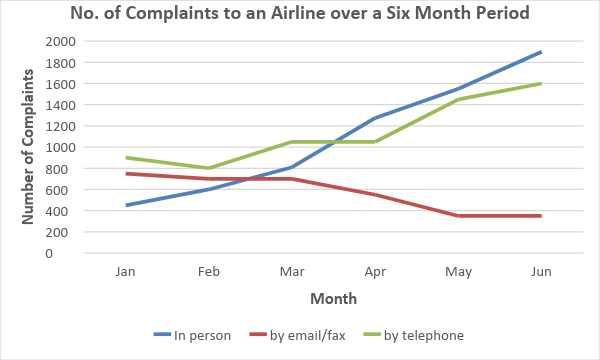
The line graph below shows the number of complaints received by the complaints department of a single airline over a six-month period in 2009.
Summarise the information by selecting and reporting the main features making comparisons where relevant.
Write at least 150 words.
出现在此练习题的单字
相关单字
此练习题没有关联单字
获取作文批改与语法纠错,以及详细分数报告。
assignment
获取高级写作点评
写作批改范例
分数总览
AI 评审
评分标准反馈
优点
- 这篇文章对流程做了清楚的概述。
- 它涵盖了回收循环的主要起点和终点。
- 流程中的大多数关键阶段都写到了。
概述很有帮助,也很容易找到。“Overall, recycling plastic is a six-step process” 这句话清楚地告诉读者共有几个阶段。它还用 “starts from the pick-up of sorted waste and ends with the production of new goods.” 说明了第一个和最后一个阶段。这很符合题目要求,因为流程图报告需要对整张图做一个清楚的总结。
主体段也描述了几个重要阶段。例如,学生提到了收集、运输、储存、分类、检查、清洗、切碎、装运和制造新产品。这些内容说明作者理解了整体流程,没有忽略塑料经过的主要路线。
不足之处- 流程中的一些细节缺失或不够清楚。
- 有几个阶段合并得太快了。
- 有一个补充的观点在图中并没有明确显示。
这篇报告涵盖了主要流程,但有些步骤解释得不够。例如,“it is cleaned with environmentally safe substances and chopped into small particles” 把两个阶段很快地合并在了一起。参考流程显示,先是清洗,然后材料变成塑料碎料,之后再装箱和转售。学生写出了主要意思,但中间的过程写得相当简略。
另一点是,“plastic masses are shipped in boxes” 有点不清楚。图中显示被装箱的是小塑料片或加工过的塑料,所以这个短语没有完全说明运送的是什么。更清楚的写法是:“The chopped and cleaned plastic is then packed in boxes and sent to another factory.”
最后一句写的是:“And that is when the cycle begins again, with used products going to waste.” 这个观点听起来合乎逻辑,但题目并没有明确要求。在描述流程时,只报告图中显示的内容会更稳妥。更好的结尾是:“These new products are then sold on the market.”
改进练习- 练习写一个清楚的概述句,包括第一个阶段、最后一个阶段和步骤的数量。
- 练习把简短的流程阶段扩展成完整的句子。
- 练习把每个句子和图对照检查,删掉图中没有显示的观点。
第一个练习可以用这个范例:“Overall, the process has six stages, beginning with collection and ending with the sale of new plastic products.” 然后为其他图写三个新的版本。
第二个练习,拿一句像 “cleaned and chopped” 这样的短句,把它拆成两个步骤:“Next, the plastic is washed with safe soap and water. After that, it is chopped into tiny pieces.” 这能帮助你更完整地展示每个阶段。
第三个练习,根据图列一个检查清单。写完之后问自己:“Did I mention only visible stages?” 如果某个句子添加了额外的观点,就改写它。对于这道题,把最后一句换成 “The new goods are finally sold to consumers.”
语法多样性及准确性
优点
- 文章对基本句子语法的掌握较好。
- 在描述流程时,被动语态用得很好。
- 句子结构有一定的变化。
无论是简单句还是复杂句,语法通常都很准确。例如,“The waste is then transported by a truck to the factory's warehouse” 是正确的,也适合流程图报告。流程题经常需要用被动语态,而学生在这里用得很自然。
句子结构的搭配也很好。“Once the plastic waste has been thoroughly inspected, it is cleaned with environmentally safe substances and chopped into small particles” 这句话很好地使用了时间状语从句。这让文章显得更有控制力,也表明作者不只会用基本句式。
不足之处- 在词形和造句方面有一些语法错误。
- 有几个短语在语法上不自然。
- 有一个句子的开头造成了本可避免的衔接问题。
开头一句有语法问题:“illustrates the behind the scenes of plastic renewance cycle.” 在 “illustrates,” 后面,这个短语的结构不正确。“The behind the scenes of” 在这里不是自然的结构,而 “renewance cycle” 用了错误的词形。更好的句子是:“The diagram illustrates the plastic recycling process.”
“which starts from the pick-up of sorted waste.” 这里也有一个小的语法问题。在英语中,这个句子用 “starts with” 比 “starts from” 更自然。所以更好的写法是:“which starts with the collection of sorted waste.” 像这样的小语法选择会影响准确性。
最后一段以 “And that is when the cycle begins again.” 开头。在某些文体中可以用 “And” 开头,但在这里,它让句子在 IELTS Task 1 中显得不够正式、不够有控制力。更顺畅的写法是:“The cycle then ends with the sale of these products.”
改进练习- 练习把别扭的短语改写成简单的流程句子。
- 练习为图中的每个阶段写被动语态的句子。
- 练习常见的流程句型,比如 “starts with,” “is then,” 和 “is finally.”
第一个练习,拿错误的短语来改写。例如,把 “the behind the scenes of plastic renewance cycle” 改成 “the process of plastic recycling.” 用你自己文章中的五个短语做这个练习。
第二个练习,为每个步骤写一个被动句。例如:“The plastic is collected.” “It is stored in a warehouse.” “It is chopped into small pieces.” 这能提高你在 Task 1 中的语法准确性。
第三个练习,列一个简短的模板:“The process starts with… Next, … is transported… After that, … is cleaned… Finally, … is sold.” 然后用这个模板描述新的图,直到这些句型用起来很自然。
词汇丰富程度(词汇)
优点
- 学生使用了足够多与回收流程相关的话题词汇。
- 有一些让用词更多样的尝试。
- 有几个用词很适合这道题。
文章中有这个话题的有用词汇,比如 “recycling,” “sorted waste,” “warehouse,” “inspected,” “chopped,” “particles,” “shipped,” 和 “manufacturing.” 这些词帮助清楚地解释了塑料回收的流程,也说明作者有足够的语言来完成这道题。
学生还避免了每次都重复同一个名词。例如,文中用了 “plastic waste,” “stored waste,” 和 “new goods.” 这显示出一定的词汇多样性,在 IELTS Task 1 中很有用。
不足之处- 有些用词不正确或不自然。
- 有几个词让流程变得不够清楚。
- 在简单的词就能表达得更好的地方,有时过多使用了不常见的措辞。
“plastic renewance cycle” 这个短语是用词不当最明显的例子。“Renewance” 在这里不是正确的词。它听起来像是自己编的,或者词形不对。在 IELTS Task 1 中,准确的简单词比不常见的词更好。一个清楚的替换是:“plastic recycling process.”
“behind the scenes” 这个短语也不太适合这篇报告。它更常用于日常口语,而不是用于描述流程。因此,这个句子听起来不够准确。更好的选择是:“The diagram shows how plastic is recycled.”
另一个不清楚的短语是 “plastic masses.” 它没有清楚地描述图中的材料。读者可能不知道它指的是液态塑料、大块塑料还是小碎片。更准确的短语是:“the cleaned plastic pieces” 或 “the plastic grind.”
学生有时会在简单短语更有力的地方使用较长的短语。例如,“environmentally safe substances” 能看懂,但如果图中显示的是肥皂和水,那么 “soap and water” 更准确。在这道题中,准确的词通常比宽泛的词更有帮助。
改进练习- 为常见的流程题建立一个小词汇表。
- 练习把别扭的词换成简单、准确的词。
- 把词和图对应起来,让每个名词都清楚地指明材料或动作。
第一个练习,列一个清单,写上这样的词:collect, transport, store, sort, inspect, wash, chop, pack, manufacture, sell。每个词写一个句子。
第二个练习,改写你报告中的短语。把 “renewance cycle” 改成 “recycling process,” 把 “behind the scenes” 改成 “shows,” 把 “plastic masses” 改成 “plastic pieces.” 这能训练你选择更稳妥的词。
第三个练习,看图中的每个阶段,用一个准确的名词和一个准确的动词来命名它。例如:“warehouse - store,” “machine - chop,” “boxes - pack.” 然后在一篇简短的完整报告中使用这些词。
连贯与衔接
优点
- 这篇报告整体结构清楚。
- 各个阶段大多按正确的顺序呈现。
- 作者使用连接词来引导读者。
这篇文章很容易理解,因为它有引言、概述和主体细节。这对 IELTS Task 1 来说是一个好的结构。读者可以很快明白这张图讲的是什么,然后从头到尾跟着流程走。
观点的顺序也大多很清楚。像 “Everything starts with,” “then,” “When the time comes,” “Once,” 和 “After the following steps” 这样的短语帮助读者一步步了解流程。这些信号词支撑了事件的先后顺序,这在流程图报告中很重要。
不足之处- 有些连接短语不清楚,或者选得不好。
- 有几个阶段被放在一起写,所以整体流程显得仓促。
- 最后一句削弱了报告的结尾。
“After the following steps” 这个短语让人困惑。它没有清楚地告诉读者哪些步骤已经完成。更清楚的衔接是:“After the plastic has been cleaned and chopped, it is shipped in boxes…” 好的衔接需要连接词清楚地指向前一个阶段。
有些阶段被塞进了一个句子里,尤其是在中间部分。例如,检查、清洗和切碎都被放得很近。这让流程显得比图中更快。在 Task 1 中,把重要的阶段分开写通常会有帮助。你可以写:“Next, the plastic is inspected by hand. It is then cleaned. After that, it is chopped into small pieces.”
结尾的效果较弱,因为它补充了 “the cycle begins again, with used products going to waste.” 这偏离了报告的主线,并在结尾改变了重点。更有力的结尾应该停留在图中显示的最后一个阶段:“Finally, the new products are sold to consumers.”
改进练习- 练习为每个阶段使用简单的表示时间顺序的连接词。
- 练习把较长的流程句子拆成更短的、一步一步的句子。
- 练习写一个干净利落的结尾,停在图中的最后一个阶段。
第一个练习,按顺序写出一组连接词:“First,” “Next,” “Then,” “After that,” 和 “Finally.” 用它们改写这篇报告,每个句子只写一个主要动作。
第二个练习,从你的报告中选一个长句,把它拆成三个短句。例如,把关于检查、清洗和切碎的那个句子拆成三个独立的步骤。
第三个练习,写三个只符合图中内容的不同结尾句。例如:“Finally, the recycled plastic is made into new products and sold.” 这能帮助你的报告以清楚、直接的方式结尾。
语法纠错
Overall, recycling plastic is a six-step process, which starts from the pick-up of sorted waste and ends with the production of new goods made out of recycled plastic.
Everything starts with the collection of sorted materials by a company specializing in plastic recycling. The waste is then transported by a truck to the factory's warehouse, in which it is stored until the next stage. When the time comes, stored waste is sent out for final sorting. Once the plastic waste has been thoroughly inspected, it is cleaned with environmentally safe substances and chopped into small particles.
After the following steps, the plastic masses are shipped in boxes to partner companies that use the cut up pieces for manufacturing new products that will later be sold to consumers. And that is when the cycle begins again, with used products going to waste.
Overall, recycling plastic is a six-step process, which starts from with the pick-up of sorted waste and ends with the production of new goods made out of recycled plastic.
Everything starts with the collection of sorted materials by a company specializing in plastic recycling. The waste is then transported by a truck to the factory's warehouse, in which it is stored until the next stage. When the time comes, stored waste is sent out for final sorting. Once the plastic waste has been thoroughly inspected, it is cleaned with environmentally safe substances and chopped into small particles.
After the following steps, the plastic masses are shipped in boxes to partner companies that use the cut up cut-up pieces for manufacturing new products that will later be sold to consumers. And that is when the cycle begins again, with used products going to waste.
改进建议
Overall, plastic recycling plastic is a six-step process, which starts six-stage process that begins with the pick-up collection of sorted waste and ends with the production of new goods made out of from recycled plastic.
Everything The process starts with the collection of when a specialist recycling company collects sorted materials by a company specializing in plastic recycling. waste. The waste is then transported by a truck to the factory's a warehouse, in which where it is stored until the next stage. When processing begins, the time comes, stored waste is sent out for final sorting. Once After the plastic waste has been thoroughly carefully inspected, it is cleaned with environmentally safe substances and then chopped into small particles. pieces.
After In the following steps, the final stage, these plastic masses pieces are shipped in packed into boxes and delivered to partner companies. These companies that use the cut-up pieces for manufacturing recycled material to manufacture new products that will later be products, which are then sold to consumers. And that is when Once these products are used and discarded, the cycle begins again, with used products going to waste. again.


cancel 语法纠正
| 解答 | 解释 |
|---|---|
| behind-the-scenes | 这里应该加连字符,因为它在名词前充当复合形容词('behind-the-scenes of plastic renewance cycle')。 |
cancel 语法纠正
| 解答 | 解释 |
|---|---|
| with | 用 'with' 代替 'from',才能正确引出流程中用到的工具或材料。 |
cancel 语法纠正
| 解答 | 解释 |
|---|---|
| cut-up | 在名词前要用带连字符的复合形容词:"cut-up pieces"。没有名词时,"cut up" 是一个短语动词,但这里它是在描述这些碎片,所以需要连字符。 |
cancel 改进建议
| 解答 | 解释 |
|---|---|
| recycling cycle for plastic. | 这个措辞更自然、更准确。这里不需要 "Behind-the-scenes",而 "renewance" 不是标准英语,所以用 "recycling cycle for plastic" 能清楚地说明所描述的流程。 |
cancel 改进建议
| 解答 | 解释 |
|---|---|
| plastic | 加上 "plastic" 让短语完整,并确保主语清楚。这个句子需要这个词来具体说明讨论的是哪种回收循环。 |
cancel 改进建议
| 解答 | 解释 |
|---|---|
| 删掉这个词是为了避免重复,因为句子的其他部分已经提到了塑料回收。删掉后句子更顺畅,也不那么啰嗦。 |
cancel 改进建议
| 解答 | 解释 |
|---|---|
| six-stage process that begins | "Six-stage process" 是描述流程图中一系列步骤的更正式、更自然的方式。在这个语境中,"That begins" 读起来也比 "which starts" 更顺畅。 |
cancel 改进建议
| 解答 | 解释 |
|---|---|
| collection | 在回收流程中,"Collection" 是表示收集废物的更准确、更正式的名词。它更符合流程描述的文体。 |
cancel 改进建议
| 解答 | 解释 |
|---|---|
| from | 这里 "From" 是正确的介词。在这个句子中描述移动或来源时,它更自然。 |
cancel 改进建议
| 解答 | 解释 |
|---|---|
| The process | "The process" 比含糊的 "Everything." 更具体、更合适。它能更好地引出所描述的步骤顺序。 |
cancel 改进建议
| 解答 | 解释 |
|---|---|
| when a specialist recycling company collects | 这个修改把短语变成了更清楚的主动结构。它说明了是谁执行这个动作,让流程的第一个阶段更容易理解。 |
cancel 改进建议
| 解答 | 解释 |
|---|---|
| 删掉这个短语是因为修改后的措辞已经说明了公司和它的动作,这个短语就多余了。删掉它能让意思更清楚,并避免重复。 |
cancel 改进建议
| 解答 | 解释 |
|---|---|
| waste. | 在回收流程中,"Waste" 是正确且更准确的词。这里只用 "Recycling" 不完整,也不符合句子的意思。 |
cancel 改进建议
| 解答 | 解释 |
|---|---|
| 这里不需要冠词 "a",因为在这个语境中,没有它短语读起来更自然。 |
cancel 改进建议
| 解答 | 解释 |
|---|---|
| a | "The factory's" 在这里太具体,也很别扭;改成 "a" 让短语更笼统,语法上也更顺畅。 |
cancel 改进建议
| 解答 | 解释 |
|---|---|
| where | 指地点时,"Where" 比 "in which" 更清楚、更自然。 |
cancel 改进建议
| 解答 | 解释 |
|---|---|
| processing begins, | 这个短语加上了清楚的过渡,有助于说明流程中下一个阶段的开始。 |
cancel 改进建议
| 解答 | 解释 |
|---|---|
| 这个短语是多余的,可以删掉,让句子更简洁、更直接。 |
cancel 改进建议
| 解答 | 解释 |
|---|---|
| 在这个语境中不需要 "out" 这个词,删掉它会让短语更自然。 |
cancel 改进建议
| 解答 | 解释 |
|---|---|
| After | 这里用 "After" 更合适,因为它更符合流程描述中事件的先后顺序。 |
cancel 改进建议
| 解答 | 解释 |
|---|---|
| 这个词是重复的,可以删掉,以避免啰嗦并让行文更流畅。 |
cancel 改进建议
| 解答 | 解释 |
|---|---|
| carefully | "Carefully" 更合适,因为它描述这个动作的方式更自然、更准确。 |
cancel 改进建议
| 解答 | 解释 |
|---|---|
| then | "Then" 清楚地把一个步骤和顺序中的下一个步骤连接起来,让逻辑更流畅。 |
cancel 改进建议
| 解答 | 解释 |
|---|---|
| pieces. | 对于切碎后的小块塑料,“Pieces” 是更自然、更准确的词,而 “particles” 在这个语境中听起来不太合适。 |
cancel 改进建议
| 解答 | 解释 |
|---|---|
| In | “In” 能更顺畅地过渡到对最后阶段的描述,而 “After” 在这里很别扭。 |
cancel 改进建议
| 解答 | 解释 |
|---|---|
| final stage, these | 这个替换直接指出最后阶段和所涉及的材料,让句子更具体,语法也更清楚。 |
cancel 改进建议
| 解答 | 解释 |
|---|---|
| pieces | 对于切碎的塑料,“Pieces” 更合适,而 “masses” 在这里含糊且不自然。 |
cancel 改进建议
| 解答 | 解释 |
|---|---|
| packed into | “Packed into” 能更好地描述把材料装进箱子以便运输,而 “shipped in.” 不够准确。 |
cancel 改进建议
| 解答 | 解释 |
|---|---|
| and delivered | 这个补充让动作变得完整,说明打包好的材料被送到了另一个地方。 |
cancel 改进建议
| 解答 | 解释 |
|---|---|
| companies. These | 这个补充把装运和合作公司联系起来,并顺畅地引出下一句。 |
cancel 改进建议
| 解答 | 解释 |
|---|---|
| 这个词是多余的,会让句子不够直接,所以删掉它能让意思更清楚。 |
cancel 改进建议
| 解答 | 解释 |
|---|---|
| recycled material to manufacture | “Recycled material” 是描述加工后塑料的更准确、更正式的说法,而 “to manufacture” 让这个短语的语法更好。 |
cancel 改进建议
| 解答 | 解释 |
|---|---|
| products, which are then | 这个修改用定语从句让句子更流畅,避免了别扭地重复使用将来时。 |
cancel 改进建议
| 解答 | 解释 |
|---|---|
| Once these products are used and discarded, | 这个修改清楚地说明了循环何时重新开始,并且用了更自然、更正式的措辞。 |
cancel 改进建议
| 解答 | 解释 |
|---|---|
| again. | 多出来的细节是多余的,所以把它缩短会让结尾更干净、更简洁。 |
评分标准报告
任务完成情况 6/9
• 作出概述,信息选择得当
• 呈现并较为充分地突出关键特征/要点,但细节可能无关、不恰当或不准确
| 分数 | 总体报告 |
|---|---|
| 9 | • 全面回应题目的所有部分 • 针对题目提出充分展开的立场,观点相关、充分扩展且论证有力 |
| 8 | • 充分回应题目的所有部分 • 针对题目作出展开良好的回应,观点相关、有所扩展且有论据支撑 |
| 7 | • 满足题目的要求 • 对主要趋势、差异或阶段作出清楚的概述 • 清楚地呈现并突出关键特征/要点,但还可以更充分地展开 |
| 6 | • 回应了题目的要求 • 作出概述,信息选择得当 • 呈现并较为充分地突出关键特征/要点,但细节可能无关、不恰当或不准确 |
| 5 | • 总体上回应了题目;格式在某些地方可能不恰当 • 机械地罗列细节,没有清楚的概述;描述可能没有数据支撑 • 呈现了关键特征/要点,但涵盖不充分;可能倾向于关注细节 |
| 4 | • 尝试回应题目,但没有涵盖所有关键特征/要点;格式可能不恰当 • 可能把关键特征/要点与细节混淆;部分内容可能不清楚、无关、重复 |
| 3 | • 没有充分回应题目的任何部分 • 没有表达清楚的立场 • 提出的观点很少,而且大多没有展开或 与题目无关 |
| 2 | • 几乎没有回应题目 • 没有表达立场 • 可能尝试提出一两个观点,但没有展开 |
| 1 | • 回答与题目完全无关 |
| 0 | • 缺考 • 完全没有尝试完成题目 • 写的是完全背诵的内容 |
语法多样性及准确性 6/9
• 语法和标点方面有一些错误,但很少影响
交流
| 分数 | 总体报告 |
|---|---|
| 9 | • 使用丰富多样的句子结构,运用完全灵活且准确;极少出现轻微错误,且仅属于 ‘笔误’ |
| 8 | • 使用丰富多样的句子结构 • 大多数句子没有错误 • 只是非常偶尔地出现错误或不恰当之处 |
| 7 | • 使用多种复杂结构 • 经常写出没有错误的句子 • 能很好地掌握语法和标点,但可能出现少量错误 |
| 6 | • 混合使用简单句和复杂句 • 语法和标点方面有一些错误,但很少影响 交流 |
| 5 | • 只使用有限的句子结构 • 尝试使用复杂句,但复杂句往往不如简单句准确 • 可能经常出现语法错误,标点也可能有误;错误会给读者造成一定困难 |
| 4 | • 只使用非常有限的句子结构,很少使用从句 • 有些结构是准确的,但错误占多数,标点也经常出错 |
| 3 | • 尝试使用一些句式,但语法和标点错误占多数,并且歪曲了意思 |
| 2 | • 除了背诵的短语外,无法使用句式 |
| 1 | • 完全无法使用句式 |
| 0 | • 缺考 • 完全没有尝试完成题目 • 写的是完全背诵的内容 |
词汇丰富程度(词汇) 6/9
• 尝试使用不太常见的词汇,但有些不准确
• 在拼写和/或构词方面有一些错误,但这些错误
不妨碍交流
| 分数 | 总体报告 |
|---|---|
| 9 | • 使用丰富的词汇,对词汇特征的掌握非常自然、成熟;极少出现轻微错误,且仅属于 ‘笔误’ |
| 8 | • 使用丰富的词汇 • 流利、灵活地表达准确的含义 • 能熟练使用不常见的词汇,但在用词和搭配上偶尔可能不准确 • 很少出现拼写 和/或构词错误 |
| 7 | • 使用的词汇足够丰富,能表现出一定的灵活性和准确性 • 使用不太常见的词汇,并对文体和搭配有一定意识 • 在用词、拼写和/或构词方面可能偶尔出错 |
| 6 | • 使用的词汇范围足以完成题目 • 尝试使用不太常见的词汇,但有些不准确 • 在拼写和/或构词方面有一些错误,但这些错误 不妨碍交流 |
| 5 | • 使用的词汇范围有限,但基本足以完成题目 • 可能在拼写和/或构词方面出现明显错误,可能给读者造成一定困难 |
| 4 | • 只使用基础词汇,可能重复使用,或者可能不适合题目 • 对构词和/或拼写的掌握有限;错误可能让读者读起来吃力 |
| 3 | • 只使用非常有限的单词和表达,对构词和/或拼写的掌握非常有限 • 错误可能严重歪曲 要表达的信息 |
| 2 | • 使用的词汇极其有限;基本上无法掌握构词和/或拼写 |
| 1 | • 只能使用几个孤立的单词 |
| 0 | • 缺考 • 完全没有尝试完成题目 • 写的是完全背诵的内容 |
连贯与衔接 6/9
• 有效地使用衔接手段,但句内和/或句间的衔接可能有误或显得机械
• 指代可能不总是清楚
或恰当
会分段,但分段不总是
合乎逻辑
| 分数 | 总体报告 |
|---|---|
| 9 | • 衔接自然,不会引起读者注意 • 能熟练地安排段落 |
| 8 | • 按逻辑顺序安排信息和观点 • 能很好地处理衔接的各个方面 • 充分而恰当地分段 |
| 7 | • 有逻辑地组织信息和观点;全文推进清楚 • 恰当地使用多种衔接手段,尽管可能存在 一些使用不足或过度使用的情况;在每个段落中 都呈现清楚的中心话题 |
| 6 | • 连贯地安排信息和观点,整体推进清楚 • 有效地使用衔接手段,但句内和/或句间的衔接可能有误或显得机械 • 指代可能不总是清楚 或恰当 会分段,但分段不总是 合乎逻辑 |
| 5 | • 呈现信息时有一定的组织,但可能缺乏 整体推进 • 衔接手段使用不足、不准确或过度使用 • 由于缺少指代和替换,可能显得重复 • 可能没有分段,或者分段可能不充分 |
| 4 | • 呈现了信息和观点,但没有连贯地组织,而且 回答中没有清楚的推进 • 使用了一些基本的衔接手段,但可能不准确或重复 • 可能没有分段,或者 分段方式可能让人困惑 |
| 3 | • 没有按逻辑组织观点 • 可能只使用非常有限的衔接手段,而且所用的衔接手段可能 无法表明观点之间的逻辑关系 |
| 2 | • 几乎无法掌握组织 结构 |
| 1 | • 无法传达任何信息 |
| 0 | • 缺考 • 完全没有尝试完成题目 • 写的是完全背诵的内容 |
请成立帐号以申请批改。
The line graph below shows the number of complaints received by the complaints department of a single airline over a six-month period in 2009.
Summarise the information by selecting and reporting the main features making comparisons where relevant.
Write at least 150 words.
示例语法批改
The professor explain that the Chevalier rich in assets, but poor in the cash, while he lived in Switzerland and had to occasionally borrow funds while waiting for its assets to selling. Accordingly, to the professor, being low on cash fund is not same as being financially poors. However, in reading someone who borrowing large of amounts of money could not be wealth, therefore the Chevalier must have lied his wealthy life in Switzerland.
The skepticism regards the reliability of the recorded conversations with Voltaire is challenging by the professor as well. She explains that, due to habit of recording each conversation with Voltaire immediately afterward, the Chevalier was able to recall those discussions in detail even after several years had passing.
Finally, the professor refute the idea briber was how the Chevalier got out of prison. She point out that because even the other prisoners who had better resources were unable to successfully bribe their way out of prison it was very unlikely that bribery was how he escaped. Also, she notes the existences of government papers recording repair work done to the Chevalier's prison cell ceiling as strong evidence that his escaping from the prison was accurately recorded.
The professor explain explains that the Chevalier was rich in assets, but poor in the cash, while he lived in Switzerland and had to occasionally borrow funds while waiting for its his assets to selling. Accordingly, sell. According to the professor, being low on cash fund funds is not the same as being financially poors. poor. However, in reading the reading, someone who borrowing borrows large of amounts of money could not be wealth, wealthy, therefore the Chevalier must have lied about his wealthy life in Switzerland.
The skepticism regards regarding the reliability of the recorded conversations with Voltaire is challenging challenged by the professor as well. She explains that, due to the habit of recording each conversation with Voltaire immediately afterward, the Chevalier was able to recall those discussions in detail even after several years had passing. passed.
Finally, the professor refute refutes the idea briber that bribery was how the Chevalier got out of prison. She point points out that because even the other prisoners who had better resources were unable to successfully bribe their way out of prison prison, it was very unlikely that bribery was how he escaped. Also, she notes the existences existence of government papers recording repair work done to the Chevalier's prison cell ceiling as strong evidence that his escaping escape from the prison was accurately recorded.
The professor explains that the Chevalier was rich in assets, but poor in cash, while he lived in Switzerland and had to occasionally borrow funds while waiting for his assets to sell. According to the professor, being low on cash funds is not the same as being financially poor. However, in the reading, someone who borrows large amounts of money could not be wealthy, therefore the Chevalier must have lied about his wealthy life in Switzerland.
The skepticism regarding the reliability of the recorded conversations with Voltaire is challenged by the professor as well. She explains that, due to the habit of recording each conversation with Voltaire immediately afterward, the Chevalier was able to recall those discussions in detail even after several years had passed.
Finally, the professor refutes the idea that bribery was how the Chevalier got out of prison. She points out that because even the other prisoners who had better resources were unable to successfully bribe their way out of prison, it was very unlikely that bribery was how he escaped. Also, she notes the existence of government papers recording repair work done to the Chevalier's prison cell ceiling as strong evidence that his escape from the prison was accurately recorded.
cancel Grammar Correction
| 解答 | 解释 |
|---|---|
| doubts | The plural form 'doubts' is needed here because there are multiple uncertainties being discussed. |
cancel Grammar Correction
| 解答 | 解释 |
|---|---|
| written | The correct past participle of 'write' is 'written'. |
cancel Grammar Correction
| 解答 | 解释 |
|---|---|
| reading, | A comma is needed after 'reading' to separate the two independent clauses. |
cancel Grammar Correction
| 解答 | 解释 |
|---|---|
| clarifies | The third person singular form 'clarifies' is needed to agree with the singular subject 'professor'. |
cancel Grammar Correction
| 解答 | 解释 |
|---|---|
| explains | The third person singular form 'explains' is needed to agree with the singular subject 'professor'. |
cancel Grammar Correction
| 解答 | 解释 |
|---|---|
| was | The verb 'was' is needed to form the past continuous tense. |
cancel Grammar Correction
| 解答 | 解释 |
|---|---|
| The article 'the' is not needed before 'assets'. |
cancel Grammar Correction
| 解答 | 解释 |
|---|---|
| his | The possessive pronoun 'his' is needed to refer back to 'the Chevalier'. |
cancel Grammar Correction
| 解答 | 解释 |
|---|---|
| sell. According | The verb 'sell' is needed here, and 'According' should start a new sentence. |
cancel Grammar Correction
| 解答 | 解释 |
|---|---|
| funds | The plural form 'funds' is needed here because it refers to money in general. |
cancel Grammar Correction
| 解答 | 解释 |
|---|---|
| the | The article 'the' is needed before 'Chevalier'. |
cancel Grammar Correction
| 解答 | 解释 |
|---|---|
| poor. | The correct adjective form is 'poor'. |
cancel Grammar Correction
| 解答 | 解释 |
|---|---|
| the reading, | The article 'the' is needed before 'reading', and a comma is needed to separate the two independent clauses. |
cancel Grammar Correction
| 解答 | 解释 |
|---|---|
| borrows | The present simple tense 'borrows' is needed to describe a general situation. |
cancel Grammar Correction
| 解答 | 解释 |
|---|---|
| The preposition 'of' is not needed here. |
cancel Grammar Correction
| 解答 | 解释 |
|---|---|
| wealthy, | The adjective 'wealthy' is needed to describe 'the Chevalier'. |
cancel Grammar Correction
| 解答 | 解释 |
|---|---|
| about | The preposition 'about' is needed to introduce the topic of the sentence. |
cancel Grammar Correction
| 解答 | 解释 |
|---|---|
| regarding | The preposition 'regarding' is needed to introduce the topic of the sentence. |
cancel Grammar Correction
| 解答 | 解释 |
|---|---|
| challenged | The past participle 'challenged' is needed to form the passive voice. |
cancel Grammar Correction
| 解答 | 解释 |
|---|---|
| the | The article 'the' is needed before 'Chevalier'. |
cancel Grammar Correction
| 解答 | 解释 |
|---|---|
| passed. | The past participle 'passed' is needed to form the past perfect tense. |
cancel Grammar Correction
| 解答 | 解释 |
|---|---|
| refutes | The third person singular form 'refutes' is needed to agree with the singular subject 'professor'. |
cancel Grammar Correction
| 解答 | 解释 |
|---|---|
| that bribery | The noun 'bribery' is needed to refer to the act of giving bribes. |
cancel Grammar Correction
| 解答 | 解释 |
|---|---|
| points | The third person singular form 'points' is needed to agree with the singular subject 'she'. |
cancel Grammar Correction
| 解答 | 解释 |
|---|---|
| prison, | A comma is needed after 'prison' to separate the two independent clauses. |
cancel Grammar Correction
| 解答 | 解释 |
|---|---|
| existence | The singular form 'existence' is needed because it refers to one specific thing. |
cancel Grammar Correction
| 解答 | 解释 |
|---|---|
| escape | The noun 'escape' is needed to refer to the act of escaping. |