
The New TOEFL Format Changes 2026 are the biggest update to the TOEFL iBT® test in years. ETS designed them to modernize the test experience, improve fairness, and better match the English that today's students actually use. The new TOEFL format brings all-new reading, listening, writing, and speaking tasks. Only one task stays from the previous test: the Writing for an Academic Discussion task. The Reading and Listening sections now use a multistage adaptive format, which adjusts question difficulty to your performance, so every test taker gets a fair and accurate measure of their English.
Looking to Prepare for the New TOEFL Format Changes?
Try our New TOEFL Online Preparation Course, where you can practice every new TOEFL question type today. The link opens your TOEFL Tutor dashboard, where you choose the TOEFL test format you want to prepare for.
Table Of Contents
- New TOEFL Format Changes 2026 at a Glance
- TOEFL Reading Changes in 2026
- TOEFL Listening Changes in 2026
- TOEFL Speaking Changes in 2026
- TOEFL Writing Changes in 2026
- What Is the New TOEFL Multistage Adaptive Testing?
- New Simplified TOEFL Scores: 1-6 Band Scale
- ETS to Enhance Fairness and Accessibility
- How to Prepare for the New TOEFL Format
New TOEFL Format Changes 2026 at a Glance
The 2026 TOEFL iBT takes about 90 minutes of actual testing time. With check-in, ID checks, and instructions, plan for a total appointment of about 2 hours at the test center. The sections always come in the same order: Reading, Listening, Writing, and Speaking.
New TOEFL Format 2026 |
|
|---|---|
|
50 questions, about 30 minutes
|
|
|
47 questions, about 29 minutes
|
|
|
12 questions, about 23 minutes
|
|
|
11 questions, about 8 minutes
|
|
120 questions, about 90 minutes of testing time |
|
No Scheduled Breaks Between Sections
You complete all four sections consecutively, with no scheduled breaks between them. The 10-minute break of the older test is gone. Once Reading ends, Listening starts, and Writing and Speaking follow straight after.
For test day, that means two things. First, build the focus to work for 90 minutes without a pause, because Speaking comes last, when you are most tired. Second, practice the sections in the real order, so the switch from one section to the next feels normal and does not cost you time.
TOEFL Reading Changes in 2026
The new Reading section replaces the two long passages of the old test with many short texts. You answer 50 questions in about 30 minutes, with one timer for the whole section, so you decide how to spend your time. The section is adaptive in two stages: how well you do in stage 1 sets the difficulty of stage 2. The texts range from everyday English to the level of a first-year university course, and all answers come from the text itself.
Complete the Words
You see a short academic paragraph of about 80 words in which 10 words are cut in half. You type the missing letters of each word. This task checks spelling, grammar, and how well you follow the meaning of a sentence. Tip: read the whole sentence before you fill a gap, because the word form (plural, past tense, adjective) often depends on the words around it.

-
spellcheck Answers1. gists (Biologists)
2. nted (jointed)
3. sory (sensory)
4. stand (understand)
5. cupy (occupy)
6. tats (habitats)
7. ders (spiders)
8. ong (belong)
9. oad (broad)
10. oup (group)

Complete the Words
Learn how to answer this question in a step-by-step interactive exercise
Complete the Words
在補全單字題型中,你會看到一個有空格的段落。每個空格都是一個少了一半字母的單字。你的任務是填完全部 10 個空格。
先預覽題目,然後點擊「下一步」繼續。
預覽題目
第 1 題:選出正確的詞性。選對詞性之後,你就要填入缺少的字母。
Complete the Word Biolo_____
如何判斷
你不需要認識每個難字,也能解出這些空格。文法給你一個可靠的起點,而看得到的字母可以確認你的選擇。
- 先暫時忽略看得到的字母。
- 讀空格兩邊的字,並問自己:缺少的字必須發揮什麼作用?
- 預測詞性:名詞、動詞、情態動詞、形容詞、副詞、介系詞或限定詞。
- 確定詞性之後,才用看得到的字母和意思來判斷。
The experiment produced a surprising
result:形容詞後的名詞。Scientists the samples daily
observed:主詞後的動詞。The change affect the climate
might:原形動詞前的情態動詞。The team used a method
reliable:名詞前的形容詞。Researchers recorded the data
carefully:說明他們如何記錄的副詞。The samples remained the cabinet
inside:表示地點的介系詞。As a , the trial was repeated
result:完成轉折片語的名詞。studies reached the same conclusion
Several:引出名詞的限定詞。跳過你不認識的字。先填好你認識的字,可以幫助你推敲出不認識的字。
名詞(主詞/受詞)
名詞用來指稱人、地方、事物或概念。在句子中,它通常負責兩種工作之一:做動作的主詞,或接受動作的受詞。
找出明顯的線索:空格前有「a」、「an」、「the」、「this」或「that」;空格正前方有形容詞;或是前面有後面需要接受詞的動詞或介系詞。
範例The changed medicine
discovery:當主詞的名詞。Researchers measured the
temperature:當受詞的名詞。a useful
method:形容詞後的名詞。如果空格回答的是「誰?」或「什麼?」,預測名詞就非常準確。
名詞(轉折)
有些名詞藏在連接概念的固定轉折片語裡。把整個片語當成一個實用的單位來記,例如「for example」、「in fact」和「as a result」。
範例for
example:片語「for example」的一部分。in
fact:片語「in fact」的一部分。As a
result:片語「as a result」的一部分。許多考生以為學術文章只會考「photosynthesis」或「archaeological」這類複雜的詞彙。事實上,這個題型是從間隔固定的單字中拿掉字母,所以連接詞裡一個簡單的結構字也很容易變成空格。
看到逗號或熟悉的連接詞開頭時,就把你已經知道的片語補完。答案可能比文章主題簡單得多。
動詞
動詞表達動作或狀態。它必須和主詞以及句子的時態相符。動詞也可能以 -ing 或 -ed 結尾的分詞形式出現。
範例Plants sunlight
require:主詞後的動詞。The evidence a change
suggests:主詞後的動詞。The river is rapidly
flowing:助動詞後的動詞。線索:找出主詞,然後問它做了什麼,或處於什麼狀態。檢查附近的助動詞,例如「is」、「was」、「has」或「can」。
一旦找到主詞,缺少的動詞能用的形式通常就所剩不多了。
情態動詞
情態動詞是一種特殊的助動詞,用來表達可能性、能力、許可、建議、預測或必要性。常見的情態動詞包括「can」、「could」、「may」、「might」、「must」、「should」、「will」和「would」。
範例The change affect the climate
might:原形動詞前的情態動詞。This process explain the pattern
could:原形動詞前的情態動詞。Researchers compare both samples
should:原形動詞前的情態動詞。最有力的線索是空格後面的字:情態動詞後面通常接原形動詞,不加「to」。例如:「might occur」、「could explain」和「should compare」。
當一個簡短的缺字出現在單純的原形動詞前面時,試試情態動詞。這些小小的結構動詞很常見,也很容易預測。
形容詞
形容詞用來描述名詞。它通常緊接在名詞前面,或出現在「be」、「seem」或「become」等連綴動詞後面。
範例a source
reliable:名詞前的形容詞。the known fossil
oldest:名詞前的形容詞。The surface became
rough:連綴動詞後的形容詞。線索:看空格右邊是否緊接著名詞,或看左邊是否有連綴動詞。「more」、「most」、「-er」和「-est」也都指向形容詞。
如果空格說明的是名詞「是什麼樣的」或「是哪一個」,就預測是形容詞。
副詞
副詞用來修飾動詞、形容詞或其他副詞。它可以說明事情如何、何時、在哪裡發生,或發生到什麼程度。
範例ly
only:-ly 前面的副詞。The team moved
quickly:以 -ly 結尾的副詞。The result was significant
highly:修飾形容詞的副詞。「-ly」字尾是很有力的線索,不過並非每個副詞都以 -ly 結尾,也不是每個以 -ly 結尾的字都是副詞。要確認這個字在句子中的作用。
如果空格改變的是另一個字的強度或方式,很可能就是副詞。
介系詞
介系詞是簡短的結構字,用來表示一種關係:地點、時間、方向、來源或方式。常見的例子包括「in」、「on」、「at」、「by」、「with」、「through」和「between」。
範例Researchers worked the sample
with:表示方式的介系詞。The border lies two regions
between:表示地點的介系詞。Water passed the membrane
through:表示方向的介系詞。許多考生以為學術文章只會考「photosynthesis」或「archaeological」這類複雜的詞彙。事實上,這個題型是從間隔固定的單字中拿掉字母,所以非常簡單的結構字也常常被切掉一部分。
不要因為文章讀起來很難,就排除簡單的答案。確認句子需要的是哪一種關係。
限定詞
限定詞用來引出或限定名詞片語,告訴我們是哪一個、有多少,或屬於誰。例子包括「a」、「an」、「the」、「this」、「these」、「each」、「every」、「several」和「many」。
範例participant
each:引出名詞的限定詞。experiments
several:引出名詞的限定詞。results
these:引出名詞的限定詞。許多考生以為學術文章只會考「photosynthesis」或「archaeological」這類複雜的詞彙。事實上,這個題型是從間隔固定的單字中拿掉字母,所以引出名詞的簡單文法小字也很常成為答案。
如果後面緊接著形容詞或名詞,而這個片語需要一個引導的字,就試試限定詞。簡單的字也可能是正確答案。
第 2 題:選出正確的詞性。選對詞性之後,你就要填入缺少的字母。
Complete the Word joi____
如何判斷
你不需要認識每個難字,也能解出這些空格。文法給你一個可靠的起點,而看得到的字母可以確認你的選擇。
- 先暫時忽略看得到的字母。
- 讀空格兩邊的字,並問自己:缺少的字必須發揮什麼作用?
- 預測詞性:名詞、動詞、情態動詞、形容詞、副詞、介系詞或限定詞。
- 確定詞性之後,才用看得到的字母和意思來判斷。
The experiment produced a surprising
result:形容詞後的名詞。Scientists the samples daily
observed:主詞後的動詞。The change affect the climate
might:原形動詞前的情態動詞。The team used a method
reliable:名詞前的形容詞。Researchers recorded the data
carefully:說明他們如何記錄的副詞。The samples remained the cabinet
inside:表示地點的介系詞。As a , the trial was repeated
result:完成轉折片語的名詞。studies reached the same conclusion
Several:引出名詞的限定詞。跳過你不認識的字。先填好你認識的字,可以幫助你推敲出不認識的字。
名詞(主詞/受詞)
名詞用來指稱人、地方、事物或概念。在句子中,它通常負責兩種工作之一:做動作的主詞,或接受動作的受詞。
找出明顯的線索:空格前有「a」、「an」、「the」、「this」或「that」;空格正前方有形容詞;或是前面有後面需要接受詞的動詞或介系詞。
範例The changed medicine
discovery:當主詞的名詞。Researchers measured the
temperature:當受詞的名詞。a useful
method:形容詞後的名詞。如果空格回答的是「誰?」或「什麼?」,預測名詞就非常準確。
名詞(轉折)
有些名詞藏在連接概念的固定轉折片語裡。把整個片語當成一個實用的單位來記,例如「for example」、「in fact」和「as a result」。
範例for
example:片語「for example」的一部分。in
fact:片語「in fact」的一部分。As a
result:片語「as a result」的一部分。許多考生以為學術文章只會考「photosynthesis」或「archaeological」這類複雜的詞彙。事實上,這個題型是從間隔固定的單字中拿掉字母,所以連接詞裡一個簡單的結構字也很容易變成空格。
看到逗號或熟悉的連接詞開頭時,就把你已經知道的片語補完。答案可能比文章主題簡單得多。
動詞
動詞表達動作或狀態。它必須和主詞以及句子的時態相符。動詞也可能以 -ing 或 -ed 結尾的分詞形式出現。
範例Plants sunlight
require:主詞後的動詞。The evidence a change
suggests:主詞後的動詞。The river is rapidly
flowing:助動詞後的動詞。線索:找出主詞,然後問它做了什麼,或處於什麼狀態。檢查附近的助動詞,例如「is」、「was」、「has」或「can」。
一旦找到主詞,缺少的動詞能用的形式通常就所剩不多了。
情態動詞
情態動詞是一種特殊的助動詞,用來表達可能性、能力、許可、建議、預測或必要性。常見的情態動詞包括「can」、「could」、「may」、「might」、「must」、「should」、「will」和「would」。
範例The change affect the climate
might:原形動詞前的情態動詞。This process explain the pattern
could:原形動詞前的情態動詞。Researchers compare both samples
should:原形動詞前的情態動詞。最有力的線索是空格後面的字:情態動詞後面通常接原形動詞,不加「to」。例如:「might occur」、「could explain」和「should compare」。
當一個簡短的缺字出現在單純的原形動詞前面時,試試情態動詞。這些小小的結構動詞很常見,也很容易預測。
形容詞
形容詞用來描述名詞。它通常緊接在名詞前面,或出現在「be」、「seem」或「become」等連綴動詞後面。
範例a source
reliable:名詞前的形容詞。the known fossil
oldest:名詞前的形容詞。The surface became
rough:連綴動詞後的形容詞。線索:看空格右邊是否緊接著名詞,或看左邊是否有連綴動詞。「more」、「most」、「-er」和「-est」也都指向形容詞。
如果空格說明的是名詞「是什麼樣的」或「是哪一個」,就預測是形容詞。
副詞
副詞用來修飾動詞、形容詞或其他副詞。它可以說明事情如何、何時、在哪裡發生,或發生到什麼程度。
範例ly
only:-ly 前面的副詞。The team moved
quickly:以 -ly 結尾的副詞。The result was significant
highly:修飾形容詞的副詞。「-ly」字尾是很有力的線索,不過並非每個副詞都以 -ly 結尾,也不是每個以 -ly 結尾的字都是副詞。要確認這個字在句子中的作用。
如果空格改變的是另一個字的強度或方式,很可能就是副詞。
介系詞
介系詞是簡短的結構字,用來表示一種關係:地點、時間、方向、來源或方式。常見的例子包括「in」、「on」、「at」、「by」、「with」、「through」和「between」。
範例Researchers worked the sample
with:表示方式的介系詞。The border lies two regions
between:表示地點的介系詞。Water passed the membrane
through:表示方向的介系詞。許多考生以為學術文章只會考「photosynthesis」或「archaeological」這類複雜的詞彙。事實上,這個題型是從間隔固定的單字中拿掉字母,所以非常簡單的結構字也常常被切掉一部分。
不要因為文章讀起來很難,就排除簡單的答案。確認句子需要的是哪一種關係。
限定詞
限定詞用來引出或限定名詞片語,告訴我們是哪一個、有多少,或屬於誰。例子包括「a」、「an」、「the」、「this」、「these」、「each」、「every」、「several」和「many」。
範例participant
each:引出名詞的限定詞。experiments
several:引出名詞的限定詞。results
these:引出名詞的限定詞。許多考生以為學術文章只會考「photosynthesis」或「archaeological」這類複雜的詞彙。事實上,這個題型是從間隔固定的單字中拿掉字母,所以引出名詞的簡單文法小字也很常成為答案。
如果後面緊接著形容詞或名詞,而這個片語需要一個引導的字,就試試限定詞。簡單的字也可能是正確答案。
第 3 題:選出正確的詞性。選對詞性之後,你就要填入缺少的字母。
Complete the Word sen____
如何判斷
你不需要認識每個難字,也能解出這些空格。文法給你一個可靠的起點,而看得到的字母可以確認你的選擇。
- 先暫時忽略看得到的字母。
- 讀空格兩邊的字,並問自己:缺少的字必須發揮什麼作用?
- 預測詞性:名詞、動詞、情態動詞、形容詞、副詞、介系詞或限定詞。
- 確定詞性之後,才用看得到的字母和意思來判斷。
The experiment produced a surprising
result:形容詞後的名詞。Scientists the samples daily
observed:主詞後的動詞。The change affect the climate
might:原形動詞前的情態動詞。The team used a method
reliable:名詞前的形容詞。Researchers recorded the data
carefully:說明他們如何記錄的副詞。The samples remained the cabinet
inside:表示地點的介系詞。As a , the trial was repeated
result:完成轉折片語的名詞。studies reached the same conclusion
Several:引出名詞的限定詞。跳過你不認識的字。先填好你認識的字,可以幫助你推敲出不認識的字。
名詞(主詞/受詞)
名詞用來指稱人、地方、事物或概念。在句子中,它通常負責兩種工作之一:做動作的主詞,或接受動作的受詞。
找出明顯的線索:空格前有「a」、「an」、「the」、「this」或「that」;空格正前方有形容詞;或是前面有後面需要接受詞的動詞或介系詞。
範例The changed medicine
discovery:當主詞的名詞。Researchers measured the
temperature:當受詞的名詞。a useful
method:形容詞後的名詞。如果空格回答的是「誰?」或「什麼?」,預測名詞就非常準確。
名詞(轉折)
有些名詞藏在連接概念的固定轉折片語裡。把整個片語當成一個實用的單位來記,例如「for example」、「in fact」和「as a result」。
範例for
example:片語「for example」的一部分。in
fact:片語「in fact」的一部分。As a
result:片語「as a result」的一部分。許多考生以為學術文章只會考「photosynthesis」或「archaeological」這類複雜的詞彙。事實上,這個題型是從間隔固定的單字中拿掉字母,所以連接詞裡一個簡單的結構字也很容易變成空格。
看到逗號或熟悉的連接詞開頭時,就把你已經知道的片語補完。答案可能比文章主題簡單得多。
動詞
動詞表達動作或狀態。它必須和主詞以及句子的時態相符。動詞也可能以 -ing 或 -ed 結尾的分詞形式出現。
範例Plants sunlight
require:主詞後的動詞。The evidence a change
suggests:主詞後的動詞。The river is rapidly
flowing:助動詞後的動詞。線索:找出主詞,然後問它做了什麼,或處於什麼狀態。檢查附近的助動詞,例如「is」、「was」、「has」或「can」。
一旦找到主詞,缺少的動詞能用的形式通常就所剩不多了。
情態動詞
情態動詞是一種特殊的助動詞,用來表達可能性、能力、許可、建議、預測或必要性。常見的情態動詞包括「can」、「could」、「may」、「might」、「must」、「should」、「will」和「would」。
範例The change affect the climate
might:原形動詞前的情態動詞。This process explain the pattern
could:原形動詞前的情態動詞。Researchers compare both samples
should:原形動詞前的情態動詞。最有力的線索是空格後面的字:情態動詞後面通常接原形動詞,不加「to」。例如:「might occur」、「could explain」和「should compare」。
當一個簡短的缺字出現在單純的原形動詞前面時,試試情態動詞。這些小小的結構動詞很常見,也很容易預測。
形容詞
形容詞用來描述名詞。它通常緊接在名詞前面,或出現在「be」、「seem」或「become」等連綴動詞後面。
範例a source
reliable:名詞前的形容詞。the known fossil
oldest:名詞前的形容詞。The surface became
rough:連綴動詞後的形容詞。線索:看空格右邊是否緊接著名詞,或看左邊是否有連綴動詞。「more」、「most」、「-er」和「-est」也都指向形容詞。
如果空格說明的是名詞「是什麼樣的」或「是哪一個」,就預測是形容詞。
副詞
副詞用來修飾動詞、形容詞或其他副詞。它可以說明事情如何、何時、在哪裡發生,或發生到什麼程度。
範例ly
only:-ly 前面的副詞。The team moved
quickly:以 -ly 結尾的副詞。The result was significant
highly:修飾形容詞的副詞。「-ly」字尾是很有力的線索,不過並非每個副詞都以 -ly 結尾,也不是每個以 -ly 結尾的字都是副詞。要確認這個字在句子中的作用。
如果空格改變的是另一個字的強度或方式,很可能就是副詞。
介系詞
介系詞是簡短的結構字,用來表示一種關係:地點、時間、方向、來源或方式。常見的例子包括「in」、「on」、「at」、「by」、「with」、「through」和「between」。
範例Researchers worked the sample
with:表示方式的介系詞。The border lies two regions
between:表示地點的介系詞。Water passed the membrane
through:表示方向的介系詞。許多考生以為學術文章只會考「photosynthesis」或「archaeological」這類複雜的詞彙。事實上,這個題型是從間隔固定的單字中拿掉字母,所以非常簡單的結構字也常常被切掉一部分。
不要因為文章讀起來很難,就排除簡單的答案。確認句子需要的是哪一種關係。
限定詞
限定詞用來引出或限定名詞片語,告訴我們是哪一個、有多少,或屬於誰。例子包括「a」、「an」、「the」、「this」、「these」、「each」、「every」、「several」和「many」。
範例participant
each:引出名詞的限定詞。experiments
several:引出名詞的限定詞。results
these:引出名詞的限定詞。許多考生以為學術文章只會考「photosynthesis」或「archaeological」這類複雜的詞彙。事實上,這個題型是從間隔固定的單字中拿掉字母,所以引出名詞的簡單文法小字也很常成為答案。
如果後面緊接著形容詞或名詞,而這個片語需要一個引導的字,就試試限定詞。簡單的字也可能是正確答案。
第 4 題:選出正確的詞性。選對詞性之後,你就要填入缺少的字母。
Complete the Word under_____
如何判斷
你不需要認識每個難字,也能解出這些空格。文法給你一個可靠的起點,而看得到的字母可以確認你的選擇。
- 先暫時忽略看得到的字母。
- 讀空格兩邊的字,並問自己:缺少的字必須發揮什麼作用?
- 預測詞性:名詞、動詞、情態動詞、形容詞、副詞、介系詞或限定詞。
- 確定詞性之後,才用看得到的字母和意思來判斷。
The experiment produced a surprising
result:形容詞後的名詞。Scientists the samples daily
observed:主詞後的動詞。The change affect the climate
might:原形動詞前的情態動詞。The team used a method
reliable:名詞前的形容詞。Researchers recorded the data
carefully:說明他們如何記錄的副詞。The samples remained the cabinet
inside:表示地點的介系詞。As a , the trial was repeated
result:完成轉折片語的名詞。studies reached the same conclusion
Several:引出名詞的限定詞。跳過你不認識的字。先填好你認識的字,可以幫助你推敲出不認識的字。
名詞(主詞/受詞)
名詞用來指稱人、地方、事物或概念。在句子中,它通常負責兩種工作之一:做動作的主詞,或接受動作的受詞。
找出明顯的線索:空格前有「a」、「an」、「the」、「this」或「that」;空格正前方有形容詞;或是前面有後面需要接受詞的動詞或介系詞。
範例The changed medicine
discovery:當主詞的名詞。Researchers measured the
temperature:當受詞的名詞。a useful
method:形容詞後的名詞。如果空格回答的是「誰?」或「什麼?」,預測名詞就非常準確。
名詞(轉折)
有些名詞藏在連接概念的固定轉折片語裡。把整個片語當成一個實用的單位來記,例如「for example」、「in fact」和「as a result」。
範例for
example:片語「for example」的一部分。in
fact:片語「in fact」的一部分。As a
result:片語「as a result」的一部分。許多考生以為學術文章只會考「photosynthesis」或「archaeological」這類複雜的詞彙。事實上,這個題型是從間隔固定的單字中拿掉字母,所以連接詞裡一個簡單的結構字也很容易變成空格。
看到逗號或熟悉的連接詞開頭時,就把你已經知道的片語補完。答案可能比文章主題簡單得多。
動詞
動詞表達動作或狀態。它必須和主詞以及句子的時態相符。動詞也可能以 -ing 或 -ed 結尾的分詞形式出現。
範例Plants sunlight
require:主詞後的動詞。The evidence a change
suggests:主詞後的動詞。The river is rapidly
flowing:助動詞後的動詞。線索:找出主詞,然後問它做了什麼,或處於什麼狀態。檢查附近的助動詞,例如「is」、「was」、「has」或「can」。
一旦找到主詞,缺少的動詞能用的形式通常就所剩不多了。
情態動詞
情態動詞是一種特殊的助動詞,用來表達可能性、能力、許可、建議、預測或必要性。常見的情態動詞包括「can」、「could」、「may」、「might」、「must」、「should」、「will」和「would」。
範例The change affect the climate
might:原形動詞前的情態動詞。This process explain the pattern
could:原形動詞前的情態動詞。Researchers compare both samples
should:原形動詞前的情態動詞。最有力的線索是空格後面的字:情態動詞後面通常接原形動詞,不加「to」。例如:「might occur」、「could explain」和「should compare」。
當一個簡短的缺字出現在單純的原形動詞前面時,試試情態動詞。這些小小的結構動詞很常見,也很容易預測。
形容詞
形容詞用來描述名詞。它通常緊接在名詞前面,或出現在「be」、「seem」或「become」等連綴動詞後面。
範例a source
reliable:名詞前的形容詞。the known fossil
oldest:名詞前的形容詞。The surface became
rough:連綴動詞後的形容詞。線索:看空格右邊是否緊接著名詞,或看左邊是否有連綴動詞。「more」、「most」、「-er」和「-est」也都指向形容詞。
如果空格說明的是名詞「是什麼樣的」或「是哪一個」,就預測是形容詞。
副詞
副詞用來修飾動詞、形容詞或其他副詞。它可以說明事情如何、何時、在哪裡發生,或發生到什麼程度。
範例ly
only:-ly 前面的副詞。The team moved
quickly:以 -ly 結尾的副詞。The result was significant
highly:修飾形容詞的副詞。「-ly」字尾是很有力的線索,不過並非每個副詞都以 -ly 結尾,也不是每個以 -ly 結尾的字都是副詞。要確認這個字在句子中的作用。
如果空格改變的是另一個字的強度或方式,很可能就是副詞。
介系詞
介系詞是簡短的結構字,用來表示一種關係:地點、時間、方向、來源或方式。常見的例子包括「in」、「on」、「at」、「by」、「with」、「through」和「between」。
範例Researchers worked the sample
with:表示方式的介系詞。The border lies two regions
between:表示地點的介系詞。Water passed the membrane
through:表示方向的介系詞。許多考生以為學術文章只會考「photosynthesis」或「archaeological」這類複雜的詞彙。事實上,這個題型是從間隔固定的單字中拿掉字母,所以非常簡單的結構字也常常被切掉一部分。
不要因為文章讀起來很難,就排除簡單的答案。確認句子需要的是哪一種關係。
限定詞
限定詞用來引出或限定名詞片語,告訴我們是哪一個、有多少,或屬於誰。例子包括「a」、「an」、「the」、「this」、「these」、「each」、「every」、「several」和「many」。
範例participant
each:引出名詞的限定詞。experiments
several:引出名詞的限定詞。results
these:引出名詞的限定詞。許多考生以為學術文章只會考「photosynthesis」或「archaeological」這類複雜的詞彙。事實上,這個題型是從間隔固定的單字中拿掉字母,所以引出名詞的簡單文法小字也很常成為答案。
如果後面緊接著形容詞或名詞,而這個片語需要一個引導的字,就試試限定詞。簡單的字也可能是正確答案。
第 5 題:選出正確的詞性。選對詞性之後,你就要填入缺少的字母。
Complete the Word oc____
如何判斷
你不需要認識每個難字,也能解出這些空格。文法給你一個可靠的起點,而看得到的字母可以確認你的選擇。
- 先暫時忽略看得到的字母。
- 讀空格兩邊的字,並問自己:缺少的字必須發揮什麼作用?
- 預測詞性:名詞、動詞、情態動詞、形容詞、副詞、介系詞或限定詞。
- 確定詞性之後,才用看得到的字母和意思來判斷。
The experiment produced a surprising
result:形容詞後的名詞。Scientists the samples daily
observed:主詞後的動詞。The change affect the climate
might:原形動詞前的情態動詞。The team used a method
reliable:名詞前的形容詞。Researchers recorded the data
carefully:說明他們如何記錄的副詞。The samples remained the cabinet
inside:表示地點的介系詞。As a , the trial was repeated
result:完成轉折片語的名詞。studies reached the same conclusion
Several:引出名詞的限定詞。跳過你不認識的字。先填好你認識的字,可以幫助你推敲出不認識的字。
名詞(主詞/受詞)
名詞用來指稱人、地方、事物或概念。在句子中,它通常負責兩種工作之一:做動作的主詞,或接受動作的受詞。
找出明顯的線索:空格前有「a」、「an」、「the」、「this」或「that」;空格正前方有形容詞;或是前面有後面需要接受詞的動詞或介系詞。
範例The changed medicine
discovery:當主詞的名詞。Researchers measured the
temperature:當受詞的名詞。a useful
method:形容詞後的名詞。如果空格回答的是「誰?」或「什麼?」,預測名詞就非常準確。
名詞(轉折)
有些名詞藏在連接概念的固定轉折片語裡。把整個片語當成一個實用的單位來記,例如「for example」、「in fact」和「as a result」。
範例for
example:片語「for example」的一部分。in
fact:片語「in fact」的一部分。As a
result:片語「as a result」的一部分。許多考生以為學術文章只會考「photosynthesis」或「archaeological」這類複雜的詞彙。事實上,這個題型是從間隔固定的單字中拿掉字母,所以連接詞裡一個簡單的結構字也很容易變成空格。
看到逗號或熟悉的連接詞開頭時,就把你已經知道的片語補完。答案可能比文章主題簡單得多。
動詞
動詞表達動作或狀態。它必須和主詞以及句子的時態相符。動詞也可能以 -ing 或 -ed 結尾的分詞形式出現。
範例Plants sunlight
require:主詞後的動詞。The evidence a change
suggests:主詞後的動詞。The river is rapidly
flowing:助動詞後的動詞。線索:找出主詞,然後問它做了什麼,或處於什麼狀態。檢查附近的助動詞,例如「is」、「was」、「has」或「can」。
一旦找到主詞,缺少的動詞能用的形式通常就所剩不多了。
情態動詞
情態動詞是一種特殊的助動詞,用來表達可能性、能力、許可、建議、預測或必要性。常見的情態動詞包括「can」、「could」、「may」、「might」、「must」、「should」、「will」和「would」。
範例The change affect the climate
might:原形動詞前的情態動詞。This process explain the pattern
could:原形動詞前的情態動詞。Researchers compare both samples
should:原形動詞前的情態動詞。最有力的線索是空格後面的字:情態動詞後面通常接原形動詞,不加「to」。例如:「might occur」、「could explain」和「should compare」。
當一個簡短的缺字出現在單純的原形動詞前面時,試試情態動詞。這些小小的結構動詞很常見,也很容易預測。
形容詞
形容詞用來描述名詞。它通常緊接在名詞前面,或出現在「be」、「seem」或「become」等連綴動詞後面。
範例a source
reliable:名詞前的形容詞。the known fossil
oldest:名詞前的形容詞。The surface became
rough:連綴動詞後的形容詞。線索:看空格右邊是否緊接著名詞,或看左邊是否有連綴動詞。「more」、「most」、「-er」和「-est」也都指向形容詞。
如果空格說明的是名詞「是什麼樣的」或「是哪一個」,就預測是形容詞。
副詞
副詞用來修飾動詞、形容詞或其他副詞。它可以說明事情如何、何時、在哪裡發生,或發生到什麼程度。
範例ly
only:-ly 前面的副詞。The team moved
quickly:以 -ly 結尾的副詞。The result was significant
highly:修飾形容詞的副詞。「-ly」字尾是很有力的線索,不過並非每個副詞都以 -ly 結尾,也不是每個以 -ly 結尾的字都是副詞。要確認這個字在句子中的作用。
如果空格改變的是另一個字的強度或方式,很可能就是副詞。
介系詞
介系詞是簡短的結構字,用來表示一種關係:地點、時間、方向、來源或方式。常見的例子包括「in」、「on」、「at」、「by」、「with」、「through」和「between」。
範例Researchers worked the sample
with:表示方式的介系詞。The border lies two regions
between:表示地點的介系詞。Water passed the membrane
through:表示方向的介系詞。許多考生以為學術文章只會考「photosynthesis」或「archaeological」這類複雜的詞彙。事實上,這個題型是從間隔固定的單字中拿掉字母,所以非常簡單的結構字也常常被切掉一部分。
不要因為文章讀起來很難,就排除簡單的答案。確認句子需要的是哪一種關係。
限定詞
限定詞用來引出或限定名詞片語,告訴我們是哪一個、有多少,或屬於誰。例子包括「a」、「an」、「the」、「this」、「these」、「each」、「every」、「several」和「many」。
範例participant
each:引出名詞的限定詞。experiments
several:引出名詞的限定詞。results
these:引出名詞的限定詞。許多考生以為學術文章只會考「photosynthesis」或「archaeological」這類複雜的詞彙。事實上,這個題型是從間隔固定的單字中拿掉字母,所以引出名詞的簡單文法小字也很常成為答案。
如果後面緊接著形容詞或名詞,而這個片語需要一個引導的字,就試試限定詞。簡單的字也可能是正確答案。
第 6 題:選出正確的詞性。選對詞性之後,你就要填入缺少的字母。
Complete the Word habi____
如何判斷
你不需要認識每個難字,也能解出這些空格。文法給你一個可靠的起點,而看得到的字母可以確認你的選擇。
- 先暫時忽略看得到的字母。
- 讀空格兩邊的字,並問自己:缺少的字必須發揮什麼作用?
- 預測詞性:名詞、動詞、情態動詞、形容詞、副詞、介系詞或限定詞。
- 確定詞性之後,才用看得到的字母和意思來判斷。
The experiment produced a surprising
result:形容詞後的名詞。Scientists the samples daily
observed:主詞後的動詞。The change affect the climate
might:原形動詞前的情態動詞。The team used a method
reliable:名詞前的形容詞。Researchers recorded the data
carefully:說明他們如何記錄的副詞。The samples remained the cabinet
inside:表示地點的介系詞。As a , the trial was repeated
result:完成轉折片語的名詞。studies reached the same conclusion
Several:引出名詞的限定詞。跳過你不認識的字。先填好你認識的字,可以幫助你推敲出不認識的字。
名詞(主詞/受詞)
名詞用來指稱人、地方、事物或概念。在句子中,它通常負責兩種工作之一:做動作的主詞,或接受動作的受詞。
找出明顯的線索:空格前有「a」、「an」、「the」、「this」或「that」;空格正前方有形容詞;或是前面有後面需要接受詞的動詞或介系詞。
範例The changed medicine
discovery:當主詞的名詞。Researchers measured the
temperature:當受詞的名詞。a useful
method:形容詞後的名詞。如果空格回答的是「誰?」或「什麼?」,預測名詞就非常準確。
名詞(轉折)
有些名詞藏在連接概念的固定轉折片語裡。把整個片語當成一個實用的單位來記,例如「for example」、「in fact」和「as a result」。
範例for
example:片語「for example」的一部分。in
fact:片語「in fact」的一部分。As a
result:片語「as a result」的一部分。許多考生以為學術文章只會考「photosynthesis」或「archaeological」這類複雜的詞彙。事實上,這個題型是從間隔固定的單字中拿掉字母,所以連接詞裡一個簡單的結構字也很容易變成空格。
看到逗號或熟悉的連接詞開頭時,就把你已經知道的片語補完。答案可能比文章主題簡單得多。
動詞
動詞表達動作或狀態。它必須和主詞以及句子的時態相符。動詞也可能以 -ing 或 -ed 結尾的分詞形式出現。
範例Plants sunlight
require:主詞後的動詞。The evidence a change
suggests:主詞後的動詞。The river is rapidly
flowing:助動詞後的動詞。線索:找出主詞,然後問它做了什麼,或處於什麼狀態。檢查附近的助動詞,例如「is」、「was」、「has」或「can」。
一旦找到主詞,缺少的動詞能用的形式通常就所剩不多了。
情態動詞
情態動詞是一種特殊的助動詞,用來表達可能性、能力、許可、建議、預測或必要性。常見的情態動詞包括「can」、「could」、「may」、「might」、「must」、「should」、「will」和「would」。
範例The change affect the climate
might:原形動詞前的情態動詞。This process explain the pattern
could:原形動詞前的情態動詞。Researchers compare both samples
should:原形動詞前的情態動詞。最有力的線索是空格後面的字:情態動詞後面通常接原形動詞,不加「to」。例如:「might occur」、「could explain」和「should compare」。
當一個簡短的缺字出現在單純的原形動詞前面時,試試情態動詞。這些小小的結構動詞很常見,也很容易預測。
形容詞
形容詞用來描述名詞。它通常緊接在名詞前面,或出現在「be」、「seem」或「become」等連綴動詞後面。
範例a source
reliable:名詞前的形容詞。the known fossil
oldest:名詞前的形容詞。The surface became
rough:連綴動詞後的形容詞。線索:看空格右邊是否緊接著名詞,或看左邊是否有連綴動詞。「more」、「most」、「-er」和「-est」也都指向形容詞。
如果空格說明的是名詞「是什麼樣的」或「是哪一個」,就預測是形容詞。
副詞
副詞用來修飾動詞、形容詞或其他副詞。它可以說明事情如何、何時、在哪裡發生,或發生到什麼程度。
範例ly
only:-ly 前面的副詞。The team moved
quickly:以 -ly 結尾的副詞。The result was significant
highly:修飾形容詞的副詞。「-ly」字尾是很有力的線索,不過並非每個副詞都以 -ly 結尾,也不是每個以 -ly 結尾的字都是副詞。要確認這個字在句子中的作用。
如果空格改變的是另一個字的強度或方式,很可能就是副詞。
介系詞
介系詞是簡短的結構字,用來表示一種關係:地點、時間、方向、來源或方式。常見的例子包括「in」、「on」、「at」、「by」、「with」、「through」和「between」。
範例Researchers worked the sample
with:表示方式的介系詞。The border lies two regions
between:表示地點的介系詞。Water passed the membrane
through:表示方向的介系詞。許多考生以為學術文章只會考「photosynthesis」或「archaeological」這類複雜的詞彙。事實上,這個題型是從間隔固定的單字中拿掉字母,所以非常簡單的結構字也常常被切掉一部分。
不要因為文章讀起來很難,就排除簡單的答案。確認句子需要的是哪一種關係。
限定詞
限定詞用來引出或限定名詞片語,告訴我們是哪一個、有多少,或屬於誰。例子包括「a」、「an」、「the」、「this」、「these」、「each」、「every」、「several」和「many」。
範例participant
each:引出名詞的限定詞。experiments
several:引出名詞的限定詞。results
these:引出名詞的限定詞。許多考生以為學術文章只會考「photosynthesis」或「archaeological」這類複雜的詞彙。事實上,這個題型是從間隔固定的單字中拿掉字母,所以引出名詞的簡單文法小字也很常成為答案。
如果後面緊接著形容詞或名詞,而這個片語需要一個引導的字,就試試限定詞。簡單的字也可能是正確答案。
第 7 題:選出正確的詞性。選對詞性之後,你就要填入缺少的字母。
Complete the Word spi____
如何判斷
你不需要認識每個難字,也能解出這些空格。文法給你一個可靠的起點,而看得到的字母可以確認你的選擇。
- 先暫時忽略看得到的字母。
- 讀空格兩邊的字,並問自己:缺少的字必須發揮什麼作用?
- 預測詞性:名詞、動詞、情態動詞、形容詞、副詞、介系詞或限定詞。
- 確定詞性之後,才用看得到的字母和意思來判斷。
The experiment produced a surprising
result:形容詞後的名詞。Scientists the samples daily
observed:主詞後的動詞。The change affect the climate
might:原形動詞前的情態動詞。The team used a method
reliable:名詞前的形容詞。Researchers recorded the data
carefully:說明他們如何記錄的副詞。The samples remained the cabinet
inside:表示地點的介系詞。As a , the trial was repeated
result:完成轉折片語的名詞。studies reached the same conclusion
Several:引出名詞的限定詞。跳過你不認識的字。先填好你認識的字,可以幫助你推敲出不認識的字。
名詞(主詞/受詞)
名詞用來指稱人、地方、事物或概念。在句子中,它通常負責兩種工作之一:做動作的主詞,或接受動作的受詞。
找出明顯的線索:空格前有「a」、「an」、「the」、「this」或「that」;空格正前方有形容詞;或是前面有後面需要接受詞的動詞或介系詞。
範例The changed medicine
discovery:當主詞的名詞。Researchers measured the
temperature:當受詞的名詞。a useful
method:形容詞後的名詞。如果空格回答的是「誰?」或「什麼?」,預測名詞就非常準確。
名詞(轉折)
有些名詞藏在連接概念的固定轉折片語裡。把整個片語當成一個實用的單位來記,例如「for example」、「in fact」和「as a result」。
範例for
example:片語「for example」的一部分。in
fact:片語「in fact」的一部分。As a
result:片語「as a result」的一部分。許多考生以為學術文章只會考「photosynthesis」或「archaeological」這類複雜的詞彙。事實上,這個題型是從間隔固定的單字中拿掉字母,所以連接詞裡一個簡單的結構字也很容易變成空格。
看到逗號或熟悉的連接詞開頭時,就把你已經知道的片語補完。答案可能比文章主題簡單得多。
動詞
動詞表達動作或狀態。它必須和主詞以及句子的時態相符。動詞也可能以 -ing 或 -ed 結尾的分詞形式出現。
範例Plants sunlight
require:主詞後的動詞。The evidence a change
suggests:主詞後的動詞。The river is rapidly
flowing:助動詞後的動詞。線索:找出主詞,然後問它做了什麼,或處於什麼狀態。檢查附近的助動詞,例如「is」、「was」、「has」或「can」。
一旦找到主詞,缺少的動詞能用的形式通常就所剩不多了。
情態動詞
情態動詞是一種特殊的助動詞,用來表達可能性、能力、許可、建議、預測或必要性。常見的情態動詞包括「can」、「could」、「may」、「might」、「must」、「should」、「will」和「would」。
範例The change affect the climate
might:原形動詞前的情態動詞。This process explain the pattern
could:原形動詞前的情態動詞。Researchers compare both samples
should:原形動詞前的情態動詞。最有力的線索是空格後面的字:情態動詞後面通常接原形動詞,不加「to」。例如:「might occur」、「could explain」和「should compare」。
當一個簡短的缺字出現在單純的原形動詞前面時,試試情態動詞。這些小小的結構動詞很常見,也很容易預測。
形容詞
形容詞用來描述名詞。它通常緊接在名詞前面,或出現在「be」、「seem」或「become」等連綴動詞後面。
範例a source
reliable:名詞前的形容詞。the known fossil
oldest:名詞前的形容詞。The surface became
rough:連綴動詞後的形容詞。線索:看空格右邊是否緊接著名詞,或看左邊是否有連綴動詞。「more」、「most」、「-er」和「-est」也都指向形容詞。
如果空格說明的是名詞「是什麼樣的」或「是哪一個」,就預測是形容詞。
副詞
副詞用來修飾動詞、形容詞或其他副詞。它可以說明事情如何、何時、在哪裡發生,或發生到什麼程度。
範例ly
only:-ly 前面的副詞。The team moved
quickly:以 -ly 結尾的副詞。The result was significant
highly:修飾形容詞的副詞。「-ly」字尾是很有力的線索,不過並非每個副詞都以 -ly 結尾,也不是每個以 -ly 結尾的字都是副詞。要確認這個字在句子中的作用。
如果空格改變的是另一個字的強度或方式,很可能就是副詞。
介系詞
介系詞是簡短的結構字,用來表示一種關係:地點、時間、方向、來源或方式。常見的例子包括「in」、「on」、「at」、「by」、「with」、「through」和「between」。
範例Researchers worked the sample
with:表示方式的介系詞。The border lies two regions
between:表示地點的介系詞。Water passed the membrane
through:表示方向的介系詞。許多考生以為學術文章只會考「photosynthesis」或「archaeological」這類複雜的詞彙。事實上,這個題型是從間隔固定的單字中拿掉字母,所以非常簡單的結構字也常常被切掉一部分。
不要因為文章讀起來很難,就排除簡單的答案。確認句子需要的是哪一種關係。
限定詞
限定詞用來引出或限定名詞片語,告訴我們是哪一個、有多少,或屬於誰。例子包括「a」、「an」、「the」、「this」、「these」、「each」、「every」、「several」和「many」。
範例participant
each:引出名詞的限定詞。experiments
several:引出名詞的限定詞。results
these:引出名詞的限定詞。許多考生以為學術文章只會考「photosynthesis」或「archaeological」這類複雜的詞彙。事實上,這個題型是從間隔固定的單字中拿掉字母,所以引出名詞的簡單文法小字也很常成為答案。
如果後面緊接著形容詞或名詞,而這個片語需要一個引導的字,就試試限定詞。簡單的字也可能是正確答案。
第 8 題:選出正確的詞性。選對詞性之後,你就要填入缺少的字母。
Complete the Word bel___
如何判斷
你不需要認識每個難字,也能解出這些空格。文法給你一個可靠的起點,而看得到的字母可以確認你的選擇。
- 先暫時忽略看得到的字母。
- 讀空格兩邊的字,並問自己:缺少的字必須發揮什麼作用?
- 預測詞性:名詞、動詞、情態動詞、形容詞、副詞、介系詞或限定詞。
- 確定詞性之後,才用看得到的字母和意思來判斷。
The experiment produced a surprising
result:形容詞後的名詞。Scientists the samples daily
observed:主詞後的動詞。The change affect the climate
might:原形動詞前的情態動詞。The team used a method
reliable:名詞前的形容詞。Researchers recorded the data
carefully:說明他們如何記錄的副詞。The samples remained the cabinet
inside:表示地點的介系詞。As a , the trial was repeated
result:完成轉折片語的名詞。studies reached the same conclusion
Several:引出名詞的限定詞。跳過你不認識的字。先填好你認識的字,可以幫助你推敲出不認識的字。
名詞(主詞/受詞)
名詞用來指稱人、地方、事物或概念。在句子中,它通常負責兩種工作之一:做動作的主詞,或接受動作的受詞。
找出明顯的線索:空格前有「a」、「an」、「the」、「this」或「that」;空格正前方有形容詞;或是前面有後面需要接受詞的動詞或介系詞。
範例The changed medicine
discovery:當主詞的名詞。Researchers measured the
temperature:當受詞的名詞。a useful
method:形容詞後的名詞。如果空格回答的是「誰?」或「什麼?」,預測名詞就非常準確。
名詞(轉折)
有些名詞藏在連接概念的固定轉折片語裡。把整個片語當成一個實用的單位來記,例如「for example」、「in fact」和「as a result」。
範例for
example:片語「for example」的一部分。in
fact:片語「in fact」的一部分。As a
result:片語「as a result」的一部分。許多考生以為學術文章只會考「photosynthesis」或「archaeological」這類複雜的詞彙。事實上,這個題型是從間隔固定的單字中拿掉字母,所以連接詞裡一個簡單的結構字也很容易變成空格。
看到逗號或熟悉的連接詞開頭時,就把你已經知道的片語補完。答案可能比文章主題簡單得多。
動詞
動詞表達動作或狀態。它必須和主詞以及句子的時態相符。動詞也可能以 -ing 或 -ed 結尾的分詞形式出現。
範例Plants sunlight
require:主詞後的動詞。The evidence a change
suggests:主詞後的動詞。The river is rapidly
flowing:助動詞後的動詞。線索:找出主詞,然後問它做了什麼,或處於什麼狀態。檢查附近的助動詞,例如「is」、「was」、「has」或「can」。
一旦找到主詞,缺少的動詞能用的形式通常就所剩不多了。
情態動詞
情態動詞是一種特殊的助動詞,用來表達可能性、能力、許可、建議、預測或必要性。常見的情態動詞包括「can」、「could」、「may」、「might」、「must」、「should」、「will」和「would」。
範例The change affect the climate
might:原形動詞前的情態動詞。This process explain the pattern
could:原形動詞前的情態動詞。Researchers compare both samples
should:原形動詞前的情態動詞。最有力的線索是空格後面的字:情態動詞後面通常接原形動詞,不加「to」。例如:「might occur」、「could explain」和「should compare」。
當一個簡短的缺字出現在單純的原形動詞前面時,試試情態動詞。這些小小的結構動詞很常見,也很容易預測。
形容詞
形容詞用來描述名詞。它通常緊接在名詞前面,或出現在「be」、「seem」或「become」等連綴動詞後面。
範例a source
reliable:名詞前的形容詞。the known fossil
oldest:名詞前的形容詞。The surface became
rough:連綴動詞後的形容詞。線索:看空格右邊是否緊接著名詞,或看左邊是否有連綴動詞。「more」、「most」、「-er」和「-est」也都指向形容詞。
如果空格說明的是名詞「是什麼樣的」或「是哪一個」,就預測是形容詞。
副詞
副詞用來修飾動詞、形容詞或其他副詞。它可以說明事情如何、何時、在哪裡發生,或發生到什麼程度。
範例ly
only:-ly 前面的副詞。The team moved
quickly:以 -ly 結尾的副詞。The result was significant
highly:修飾形容詞的副詞。「-ly」字尾是很有力的線索,不過並非每個副詞都以 -ly 結尾,也不是每個以 -ly 結尾的字都是副詞。要確認這個字在句子中的作用。
如果空格改變的是另一個字的強度或方式,很可能就是副詞。
介系詞
介系詞是簡短的結構字,用來表示一種關係:地點、時間、方向、來源或方式。常見的例子包括「in」、「on」、「at」、「by」、「with」、「through」和「between」。
範例Researchers worked the sample
with:表示方式的介系詞。The border lies two regions
between:表示地點的介系詞。Water passed the membrane
through:表示方向的介系詞。許多考生以為學術文章只會考「photosynthesis」或「archaeological」這類複雜的詞彙。事實上,這個題型是從間隔固定的單字中拿掉字母,所以非常簡單的結構字也常常被切掉一部分。
不要因為文章讀起來很難,就排除簡單的答案。確認句子需要的是哪一種關係。
限定詞
限定詞用來引出或限定名詞片語,告訴我們是哪一個、有多少,或屬於誰。例子包括「a」、「an」、「the」、「this」、「these」、「each」、「every」、「several」和「many」。
範例participant
each:引出名詞的限定詞。experiments
several:引出名詞的限定詞。results
these:引出名詞的限定詞。許多考生以為學術文章只會考「photosynthesis」或「archaeological」這類複雜的詞彙。事實上,這個題型是從間隔固定的單字中拿掉字母,所以引出名詞的簡單文法小字也很常成為答案。
如果後面緊接著形容詞或名詞,而這個片語需要一個引導的字,就試試限定詞。簡單的字也可能是正確答案。
第 9 題:選出正確的詞性。選對詞性之後,你就要填入缺少的字母。
Complete the Word br___
如何判斷
你不需要認識每個難字,也能解出這些空格。文法給你一個可靠的起點,而看得到的字母可以確認你的選擇。
- 先暫時忽略看得到的字母。
- 讀空格兩邊的字,並問自己:缺少的字必須發揮什麼作用?
- 預測詞性:名詞、動詞、情態動詞、形容詞、副詞、介系詞或限定詞。
- 確定詞性之後,才用看得到的字母和意思來判斷。
The experiment produced a surprising
result:形容詞後的名詞。Scientists the samples daily
observed:主詞後的動詞。The change affect the climate
might:原形動詞前的情態動詞。The team used a method
reliable:名詞前的形容詞。Researchers recorded the data
carefully:說明他們如何記錄的副詞。The samples remained the cabinet
inside:表示地點的介系詞。As a , the trial was repeated
result:完成轉折片語的名詞。studies reached the same conclusion
Several:引出名詞的限定詞。跳過你不認識的字。先填好你認識的字,可以幫助你推敲出不認識的字。
名詞(主詞/受詞)
名詞用來指稱人、地方、事物或概念。在句子中,它通常負責兩種工作之一:做動作的主詞,或接受動作的受詞。
找出明顯的線索:空格前有「a」、「an」、「the」、「this」或「that」;空格正前方有形容詞;或是前面有後面需要接受詞的動詞或介系詞。
範例The changed medicine
discovery:當主詞的名詞。Researchers measured the
temperature:當受詞的名詞。a useful
method:形容詞後的名詞。如果空格回答的是「誰?」或「什麼?」,預測名詞就非常準確。
名詞(轉折)
有些名詞藏在連接概念的固定轉折片語裡。把整個片語當成一個實用的單位來記,例如「for example」、「in fact」和「as a result」。
範例for
example:片語「for example」的一部分。in
fact:片語「in fact」的一部分。As a
result:片語「as a result」的一部分。許多考生以為學術文章只會考「photosynthesis」或「archaeological」這類複雜的詞彙。事實上,這個題型是從間隔固定的單字中拿掉字母,所以連接詞裡一個簡單的結構字也很容易變成空格。
看到逗號或熟悉的連接詞開頭時,就把你已經知道的片語補完。答案可能比文章主題簡單得多。
動詞
動詞表達動作或狀態。它必須和主詞以及句子的時態相符。動詞也可能以 -ing 或 -ed 結尾的分詞形式出現。
範例Plants sunlight
require:主詞後的動詞。The evidence a change
suggests:主詞後的動詞。The river is rapidly
flowing:助動詞後的動詞。線索:找出主詞,然後問它做了什麼,或處於什麼狀態。檢查附近的助動詞,例如「is」、「was」、「has」或「can」。
一旦找到主詞,缺少的動詞能用的形式通常就所剩不多了。
情態動詞
情態動詞是一種特殊的助動詞,用來表達可能性、能力、許可、建議、預測或必要性。常見的情態動詞包括「can」、「could」、「may」、「might」、「must」、「should」、「will」和「would」。
範例The change affect the climate
might:原形動詞前的情態動詞。This process explain the pattern
could:原形動詞前的情態動詞。Researchers compare both samples
should:原形動詞前的情態動詞。最有力的線索是空格後面的字:情態動詞後面通常接原形動詞,不加「to」。例如:「might occur」、「could explain」和「should compare」。
當一個簡短的缺字出現在單純的原形動詞前面時,試試情態動詞。這些小小的結構動詞很常見,也很容易預測。
形容詞
形容詞用來描述名詞。它通常緊接在名詞前面,或出現在「be」、「seem」或「become」等連綴動詞後面。
範例a source
reliable:名詞前的形容詞。the known fossil
oldest:名詞前的形容詞。The surface became
rough:連綴動詞後的形容詞。線索:看空格右邊是否緊接著名詞,或看左邊是否有連綴動詞。「more」、「most」、「-er」和「-est」也都指向形容詞。
如果空格說明的是名詞「是什麼樣的」或「是哪一個」,就預測是形容詞。
副詞
副詞用來修飾動詞、形容詞或其他副詞。它可以說明事情如何、何時、在哪裡發生,或發生到什麼程度。
範例ly
only:-ly 前面的副詞。The team moved
quickly:以 -ly 結尾的副詞。The result was significant
highly:修飾形容詞的副詞。「-ly」字尾是很有力的線索,不過並非每個副詞都以 -ly 結尾,也不是每個以 -ly 結尾的字都是副詞。要確認這個字在句子中的作用。
如果空格改變的是另一個字的強度或方式,很可能就是副詞。
介系詞
介系詞是簡短的結構字,用來表示一種關係:地點、時間、方向、來源或方式。常見的例子包括「in」、「on」、「at」、「by」、「with」、「through」和「between」。
範例Researchers worked the sample
with:表示方式的介系詞。The border lies two regions
between:表示地點的介系詞。Water passed the membrane
through:表示方向的介系詞。許多考生以為學術文章只會考「photosynthesis」或「archaeological」這類複雜的詞彙。事實上,這個題型是從間隔固定的單字中拿掉字母,所以非常簡單的結構字也常常被切掉一部分。
不要因為文章讀起來很難,就排除簡單的答案。確認句子需要的是哪一種關係。
限定詞
限定詞用來引出或限定名詞片語,告訴我們是哪一個、有多少,或屬於誰。例子包括「a」、「an」、「the」、「this」、「these」、「each」、「every」、「several」和「many」。
範例participant
each:引出名詞的限定詞。experiments
several:引出名詞的限定詞。results
these:引出名詞的限定詞。許多考生以為學術文章只會考「photosynthesis」或「archaeological」這類複雜的詞彙。事實上,這個題型是從間隔固定的單字中拿掉字母,所以引出名詞的簡單文法小字也很常成為答案。
如果後面緊接著形容詞或名詞,而這個片語需要一個引導的字,就試試限定詞。簡單的字也可能是正確答案。
第 10 題:選出正確的詞性。選對詞性之後,你就要填入缺少的字母。
Complete the Word gr___
如何判斷
你不需要認識每個難字,也能解出這些空格。文法給你一個可靠的起點,而看得到的字母可以確認你的選擇。
- 先暫時忽略看得到的字母。
- 讀空格兩邊的字,並問自己:缺少的字必須發揮什麼作用?
- 預測詞性:名詞、動詞、情態動詞、形容詞、副詞、介系詞或限定詞。
- 確定詞性之後,才用看得到的字母和意思來判斷。
The experiment produced a surprising
result:形容詞後的名詞。Scientists the samples daily
observed:主詞後的動詞。The change affect the climate
might:原形動詞前的情態動詞。The team used a method
reliable:名詞前的形容詞。Researchers recorded the data
carefully:說明他們如何記錄的副詞。The samples remained the cabinet
inside:表示地點的介系詞。As a , the trial was repeated
result:完成轉折片語的名詞。studies reached the same conclusion
Several:引出名詞的限定詞。跳過你不認識的字。先填好你認識的字,可以幫助你推敲出不認識的字。
名詞(主詞/受詞)
名詞用來指稱人、地方、事物或概念。在句子中,它通常負責兩種工作之一:做動作的主詞,或接受動作的受詞。
找出明顯的線索:空格前有「a」、「an」、「the」、「this」或「that」;空格正前方有形容詞;或是前面有後面需要接受詞的動詞或介系詞。
範例The changed medicine
discovery:當主詞的名詞。Researchers measured the
temperature:當受詞的名詞。a useful
method:形容詞後的名詞。如果空格回答的是「誰?」或「什麼?」,預測名詞就非常準確。
名詞(轉折)
有些名詞藏在連接概念的固定轉折片語裡。把整個片語當成一個實用的單位來記,例如「for example」、「in fact」和「as a result」。
範例for
example:片語「for example」的一部分。in
fact:片語「in fact」的一部分。As a
result:片語「as a result」的一部分。許多考生以為學術文章只會考「photosynthesis」或「archaeological」這類複雜的詞彙。事實上,這個題型是從間隔固定的單字中拿掉字母,所以連接詞裡一個簡單的結構字也很容易變成空格。
看到逗號或熟悉的連接詞開頭時,就把你已經知道的片語補完。答案可能比文章主題簡單得多。
動詞
動詞表達動作或狀態。它必須和主詞以及句子的時態相符。動詞也可能以 -ing 或 -ed 結尾的分詞形式出現。
範例Plants sunlight
require:主詞後的動詞。The evidence a change
suggests:主詞後的動詞。The river is rapidly
flowing:助動詞後的動詞。線索:找出主詞,然後問它做了什麼,或處於什麼狀態。檢查附近的助動詞,例如「is」、「was」、「has」或「can」。
一旦找到主詞,缺少的動詞能用的形式通常就所剩不多了。
情態動詞
情態動詞是一種特殊的助動詞,用來表達可能性、能力、許可、建議、預測或必要性。常見的情態動詞包括「can」、「could」、「may」、「might」、「must」、「should」、「will」和「would」。
範例The change affect the climate
might:原形動詞前的情態動詞。This process explain the pattern
could:原形動詞前的情態動詞。Researchers compare both samples
should:原形動詞前的情態動詞。最有力的線索是空格後面的字:情態動詞後面通常接原形動詞,不加「to」。例如:「might occur」、「could explain」和「should compare」。
當一個簡短的缺字出現在單純的原形動詞前面時,試試情態動詞。這些小小的結構動詞很常見,也很容易預測。
形容詞
形容詞用來描述名詞。它通常緊接在名詞前面,或出現在「be」、「seem」或「become」等連綴動詞後面。
範例a source
reliable:名詞前的形容詞。the known fossil
oldest:名詞前的形容詞。The surface became
rough:連綴動詞後的形容詞。線索:看空格右邊是否緊接著名詞,或看左邊是否有連綴動詞。「more」、「most」、「-er」和「-est」也都指向形容詞。
如果空格說明的是名詞「是什麼樣的」或「是哪一個」,就預測是形容詞。
副詞
副詞用來修飾動詞、形容詞或其他副詞。它可以說明事情如何、何時、在哪裡發生,或發生到什麼程度。
範例ly
only:-ly 前面的副詞。The team moved
quickly:以 -ly 結尾的副詞。The result was significant
highly:修飾形容詞的副詞。「-ly」字尾是很有力的線索,不過並非每個副詞都以 -ly 結尾,也不是每個以 -ly 結尾的字都是副詞。要確認這個字在句子中的作用。
如果空格改變的是另一個字的強度或方式,很可能就是副詞。
介系詞
介系詞是簡短的結構字,用來表示一種關係:地點、時間、方向、來源或方式。常見的例子包括「in」、「on」、「at」、「by」、「with」、「through」和「between」。
範例Researchers worked the sample
with:表示方式的介系詞。The border lies two regions
between:表示地點的介系詞。Water passed the membrane
through:表示方向的介系詞。許多考生以為學術文章只會考「photosynthesis」或「archaeological」這類複雜的詞彙。事實上,這個題型是從間隔固定的單字中拿掉字母,所以非常簡單的結構字也常常被切掉一部分。
不要因為文章讀起來很難,就排除簡單的答案。確認句子需要的是哪一種關係。
限定詞
限定詞用來引出或限定名詞片語,告訴我們是哪一個、有多少,或屬於誰。例子包括「a」、「an」、「the」、「this」、「these」、「each」、「every」、「several」和「many」。
範例participant
each:引出名詞的限定詞。experiments
several:引出名詞的限定詞。results
these:引出名詞的限定詞。許多考生以為學術文章只會考「photosynthesis」或「archaeological」這類複雜的詞彙。事實上,這個題型是從間隔固定的單字中拿掉字母,所以引出名詞的簡單文法小字也很常成為答案。
如果後面緊接著形容詞或名詞,而這個片語需要一個引導的字,就試試限定詞。簡單的字也可能是正確答案。
Read in Daily Life
You read a short, practical text such as a notice, an email, a text message, or a web post, between 50 and 170 words long. Each text usually has 2 multiple-choice questions about details, purpose, or what the writer suggests. Tip: look at who wrote the text and why, because many questions ask what the reader should do next.
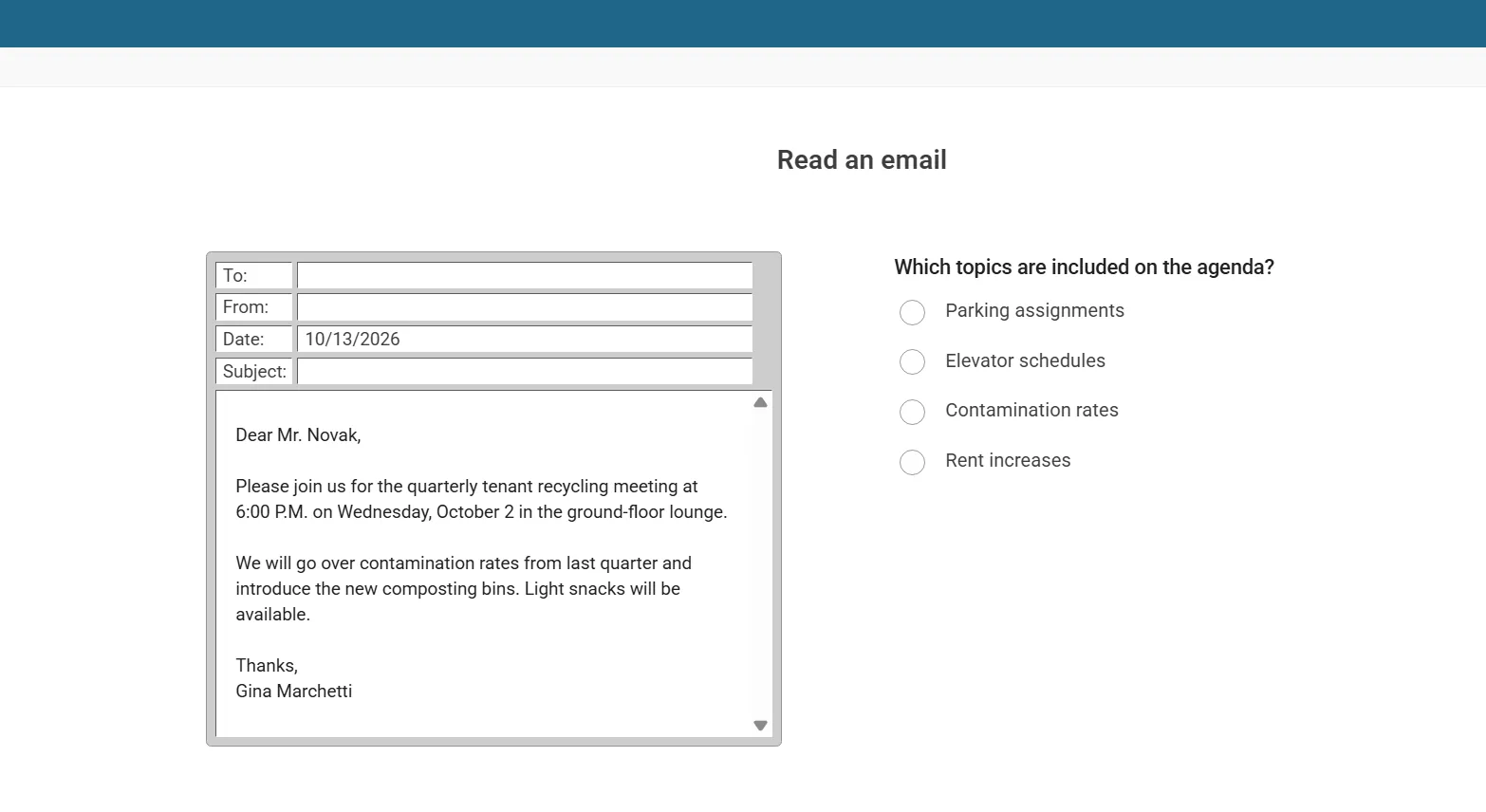
Upcoming Billing Cycle and Payment Reminders
Important Dates for July 2025 Billing Cycle
The monthly billing cycle for all SecureBank credit accounts will close on July 24, 2025, with automatic payments processed on July 25, 2025 for enrolled customers. To avoid payment failure or late fees, make sure sufficient funds are available in your linked account by 5:00 P.M. on July 24. Customers not enrolled in automatic payments are encouraged to submit their payment manually through our online banking platform, mobile app, or at any branch before the due date.
To review your billing statement, sign in at www.securebank.com. For questions or updates to your payment settings, contact us at billing@securebank.com or call (800) 555-0123.
Thank you for choosing SecureBank.
- To announce a new account policy
- To remind all customers of the upcoming billing cycle
- To confirm individual payments
- To promote mobile banking features
- Update their credit limit
- Disable payment alerts
- Ensure funds are available by July 24
- Close their accounts
-
spellcheck Answers
1. Answer: B
(B) The correct answer is to remind all customers of the upcoming billing cycle. In paragraph 1 and the heading, "Upcoming Billing Cycle and Payment Reminders," the notice explains that "The monthly billing cycle for all SecureBank credit accounts will close on July 24, 2025, with automatic payments processed on July 25, 2025" and provides instructions about avoiding late fees. These details confirm that the notice’s main purpose is to alert every customer about the upcoming billing cycle and associated payment dates.
(A) "To announce a new account policy" is incorrect since no new or revised policies are introduced; the text only reiterates existing billing dates and procedures.
(C) "To confirm individual payments" is incorrect because the notice does not acknowledge receipt of any specific payment; instead, it speaks prospectively about what customers should do before the billing cycle ends.
(D) "To promote mobile banking features" is incorrect; although the notice mentions the mobile app as one payment option, the document’s focus is not marketing the app but reminding customers of billing deadlines.
2. Answer: C
(C) The correct answer is ensure funds are available by July 24. In paragraph 1, the notice states, "To avoid payment failure or late fees, make sure sufficient funds are available in your linked account by 5:00 P.M. on July 24." This directive is specifically aimed at customers whose automatic payments will be processed the next day, indicating the recommended action.
(A) "Update their credit limit" is incorrect because the notice never advises changing credit limits; it only addresses payment timing and fund availability.
(B) "Disable payment alerts" is incorrect as the notice does not mention disabling alerts; instead, it emphasizes keeping automatic payments active and funded.
(D) "Close their accounts" is incorrect since the text nowhere suggests that customers should close their accounts; it focuses on maintaining payments.

Gist Purpose
Learn how to answer question 1 in a step-by-step interactive exercise
Gist Purpose
主旨目的題問的是通知、公告或電子郵件中作者的主要目的。它問的不是文中後段的小細節。你要選出一個字母:A、B、C 或 D。
先預覽題目,然後點擊「下一步」繼續。
預覽題目
- To announce a new account policy
- To remind all customers of the upcoming billing cycle
- To confirm individual payments
- To promote mobile banking features
要回答主旨目的題,你首先需要掌握文章的主旨。在通知、公告和電子郵件中,作者會一開始就說出重點,所以開頭的幾個句子通常就帶出了主旨。這些開頭句子會說明這篇文字的用途,並補充最初的支持細節。後面的句子通常補充的資訊雖然正確,但範圍太小,無法成為目的。
選出揭示主要目的的句子。
開頭幾句(開場吸引句)
選出揭示主要目的的句子。
Important Dates for July 2025 Billing Cycle
The monthly billing cycle for all SecureBank credit accounts will close on July 24, 2025, with automatic payments processed on July 25, 2025 for enrolled customers. To avoid payment failure or late fees, make sure sufficient funds are available in your linked account by 5:00 P.M. on July 24. Customers not enrolled in automatic payments are encouraged to submit their payment manually through our online banking platform, mobile app, or at any branch before the due date.
To review your billing statement, sign in at www.securebank.com. For questions or updates to your payment settings, contact us at billing@securebank.com or call (800) 555-0123.
在比較剩下的選項之前,先刪掉任何明顯錯誤的答案。明顯錯誤的選項不是違背文章所說的內容,就是提到文中完全沒有提到的事物。提出文中真實細節的選項不算明顯錯誤,先保留。
記住,只有在卡住的時候才使用刪去法。你通常會直接找到答案,或在思考時自然排除錯誤的選項。只有在難以判斷正確答案時,才專心刪去選項。
至少刪掉一個明顯錯誤的答案。
刪去法(選做)
Important Dates for July 2025 Billing Cycle
The monthly billing cycle for all SecureBank credit accounts will close on July 24, 2025, with automatic payments processed on July 25, 2025 for enrolled customers. To avoid payment failure or late fees, make sure sufficient funds are available in your linked account by 5:00 P.M. on July 24. Customers not enrolled in automatic payments are encouraged to submit their payment manually through our online banking platform, mobile app, or at any branch before the due date.
To review your billing statement, sign in at www.securebank.com. For questions or updates to your payment settings, contact us at billing@securebank.com or call (800) 555-0123.
至少刪掉一個明顯錯誤的答案。
- To announce a new account policy
- To remind all customers of the upcoming billing cycle
- To confirm individual payments
- To promote mobile banking features
你已經有了開頭句子,以及縮減後的選項清單。正確答案很少重複文章的用字,它會用同義詞或不同的字詞重述目的,所以不要只因為某個選項含有你在文章中看過的字詞就選它。
選出重述主要目的的字母。
Important Dates for July 2025 Billing Cycle
The monthly billing cycle for all SecureBank credit accounts will close on July 24, 2025, with automatic payments processed on July 25, 2025 for enrolled customers. To avoid payment failure or late fees, make sure sufficient funds are available in your linked account by 5:00 P.M. on July 24. Customers not enrolled in automatic payments are encouraged to submit their payment manually through our online banking platform, mobile app, or at any branch before the due date.
To review your billing statement, sign in at www.securebank.com. For questions or updates to your payment settings, contact us at billing@securebank.com or call (800) 555-0123.
回答題目
- To announce a new account policy
- To remind all customers of the upcoming billing cycle
- To confirm individual payments
- To promote mobile banking features
Read an Academic Passage
This is the one familiar task, but much shorter than before. The passage is 150 to 400 words on an academic topic, followed by about 5 questions on vocabulary, details, inference, and the passage's purpose. Tip: skim the passage once for its main idea, then go back to the exact sentence each question points to.
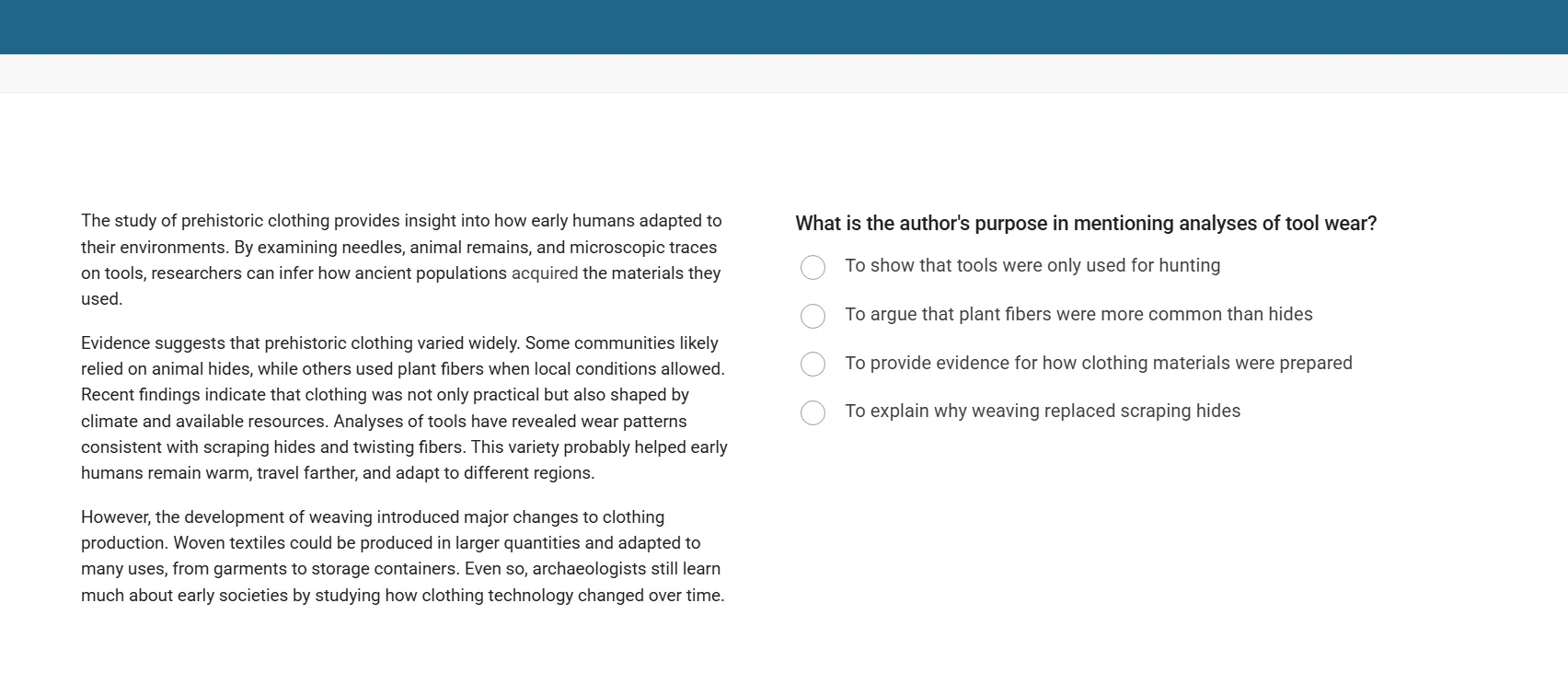
The development of windmills marked an important step in the history of mechanical power. Historical evidence suggests that early wind-driven machines were used for grinding grain, pumping water, and supporting agricultural communities. These devices were especially valuable in regions where flowing water was limited.
Some of the earliest windmills were simple in design. [A] Builders often used wooden frames and cloth sails to catch moving air. [B] However, not all early windmills remained rudimentary. [C] Over time, engineers developed improved gears and stronger towers that allowed mills to work more reliably. [D] These advances increased the range of tasks windmills could perform.
The shift from simple wind-powered structures to more refined machines suggests advances in design, planning, and local engineering knowledge. Better windmills allowed communities to process food more efficiently and manage water with less labor. Recent discoveries have also shown that windmill technology may have spread between regions in more complex ways than researchers once believed.
- basic
- decorative
- fragile
- imported
- They could help grind grain.
- Some used cloth sails.
- They were always highly complex from the beginning.
- They were valuable where flowing water was limited.
- They made windmills more reliable and useful for more tasks.
- They removed the need for sails entirely.
- They prevented windmills from spreading between regions.
- They made wind power less efficient than before.
- It spread between regions in more complex ways than once believed.
- It was used only for decorative buildings.
- It depended entirely on metal sails.
- It appeared only after steam engines were invented.
There are four locations [▪] in the passage that indicate where the following sentence could be added.
Where would the sentence best fit? Select a location [▪] to add the sentence to the passage.
Some mills could be turned so their sails faced changing wind directions more effectively.
- [A]
- [B]
- [C]
- [D]
-
spellcheck Answers
1. Answer: A
(A) The correct answer is basic. In the passage, "The development of windmills marked an important step in the history of mechanical power." shows that the word is closest in meaning to "basic".
(B) decorative is incorrect because that meaning does not fit the way the word is used in the sentence
(C) fragile is incorrect because that meaning does not fit the way the word is used in the sentence
(D) imported is incorrect because that meaning does not fit the way the word is used in the sentence
2. Answer: C
(C) The correct answer is They were always highly complex from the beginning. This question asks for the choice that is NOT mentioned or supported. The passage gives support for They could help grind grain.; Some used cloth sails.; They were valuable where flowing water was limited., but it does not support "They were always highly complex from the beginning."
(A) They could help grind grain. is incorrect because the passage does mention this point; However, not all early windmills remained rudimentary.
(B) Some used cloth sails. is incorrect because the passage does mention this point; However, not all early windmills remained rudimentary.
(D) They were valuable where flowing water was limited. is incorrect because the passage does mention this point; These devices were especially valuable in regions where flowing water was limited.
3. Answer: A
(A) The correct answer is They made windmills more reliable and useful for more tasks. In the passage, "Some of the earliest windmills were simple in design." supports the inference that "They made windmills more reliable and useful for more tasks."
(B) They removed the need for sails entirely. is incorrect because it is not supported by what the passage implies
(C) They prevented windmills from spreading between regions. is incorrect because it goes beyond what the passage suggests; the support points instead to Some of the earliest windmills were simple in design.
(D) They made wind power less efficient than before. is incorrect because it is not supported by what the passage implies
4. Answer: A
(A) The correct answer is It spread between regions in more complex ways than once believed. In the passage, "Recent discoveries have also shown that windmill technology may have spread between regions in more complex ways than researchers once believed." directly supports "It spread between regions in more complex ways than once believed."
(B) It was used only for decorative buildings. is incorrect because the passage does not support that detail
(C) It depended entirely on metal sails. is incorrect because the passage does not support that detail
(D) It appeared only after steam engines were invented. is incorrect because the passage does not support that detail
5. Answer: C
(C) The correct answer is Position C. This position follows the sentence “However, not all early windmills remained rudimentary,” which clearly introduces a shift toward technological improvements. The added sentence fits perfectly here as a specific example of that improvement, and it smoothly leads into the next sentence about improved gears and stronger towers. The structure becomes: contrast → example → further developments.
(A) Position A. Too early—this part describes simple windmills. The sentence adds an advanced feature, which contradicts that idea.
(B) Position B. It comes before “However,” which introduces improvement. Adding the sentence here makes the contrast unclear or repetitive.
(D) Position D. Too late—the paragraph is summarizing. Adding a specific detail here breaks the general flow.

Vocabulary
Learn how to answer question 1 in a step-by-step interactive exercise
Vocabulary
在這一步,你會學到同義詞線索。同義詞線索是附近一個意思相近的字,出現在同一句或下一句。
作者不喜歡重複用同一個字。他們常常換一個字,把同一個意思再說一次,可能在同一句,也可能在前一句或後一句。找找看有沒有字和反白單字並列在一起,或作者是不是換了一個新字來指同一件事。
正確選項不是線索字本身,而是另一個意思相同的字。所以要用線索來判斷反白單字的意思。
點選線索字詞,然後選出反白單字的意思。
同義詞線索
點選線索字詞,然後選出反白單字的意思。
Some of the earliest windmills were simple in design. Builders often used wooden frames and cloth sails to catch moving air. However, not all early windmills remained rudimentary. Over time, engineers developed improved gears and stronger towers that allowed mills to work more reliably.
現在選出反白單字的意思。
- basic
- decorative
- fragile
- imported
For more sample questions and reading tips, see our TOEFL Reading test guide and the TOEFL reading question types.
TOEFL Listening Changes in 2026
The Listening section now has 47 questions in about 29 minutes, and the long lectures of the old test are replaced by shorter recordings. The section is adaptive: everyone starts with an 18-minute first stage, then gets a second stage of about 7 or 11 minutes, depending on how well the first stage went. Every recording plays only once, and each question has its own timer of 20 or 30 seconds, so you cannot save time for later questions.
Listen and Choose a Response
You hear one short sentence or question from a speaker, then choose the best reply from four options. It feels like a quick exchange with a classmate or a staff member. Tip: listen for the purpose of what is said (a request, a complaint, an offer), because the right reply answers that purpose, not just the words.
In the Choose a Response task, you'll listen to a short question or statement and choose the most appropriate response.

- It is required for my degree.
- Language apps are popular.
- Let us practice together sometime.
- Have you tried that Spanish restaurant?
-
spellcheck Answer
Answer: A
(A) The correct answer is It is required for my degree. This is the only choice that gives a reason for learning Spanish.
(B) Language apps are popular. is incorrect because it is unrelated to the speaker's reason.
(C) Let us practice together sometime. is incorrect because it is a suggestion, not the reason for learning the language.
(D) Have you tried that Spanish restaurant? is incorrect because it is unrelated.
Transcript
Why are you learning Spanish?

- Yes, I can help you with it.
- The keyboard is new.
- It is in the top drawer.
- That is very expensive.
-
spellcheck Answer
Answer: A
(A) The correct answer is Yes, I can help you with it. This is the direct positive response that fits "Can you show me how to use this app?".
(B) The keyboard is new. is incorrect because it is unrelated.
(C) It is in the top drawer. is incorrect because it gives a location, not help with the app.
(D) That is very expensive. is incorrect because it is unrelated.
Transcript
Can you show me how to use this app?

- On the rack.
- It is thirty-five dollars.
- The fabric is soft.
- Very little time.
-
spellcheck Answer
Answer: B
(B) The correct answer is It is thirty-five dollars. This is the only choice that answers the price question in "What is the price of this sweater?".
(A) On the rack. is incorrect because it gives a location, not a price.
(C) The fabric is soft. is incorrect because it describes the sweater, not the cost.
(D) Very little time. is incorrect because it is unrelated.
Transcript
What is the price of this sweater?
Listen to a Conversation
You hear a short everyday conversation between two people, for example two students or a student and an employee, and answer questions about it. Questions ask about the main topic, details, and why a speaker does or says something. Tip: note the problem the speakers discuss and the solution they reach.
In the Listen to a Conversation task, you'll listen to a short conversation and answer 2 questions.

- They listed the wrong meeting room
- The printer produced only six copies
- The posters curled beside an open window
- The first print run failed the margin check.
- It contains money for the printing
- The woman will bring it from the library
- The cash is stored in a closet.
- The treasurer will place it on the table
-
spellcheck Answers
1. Answer: D
(D) The first print run failed the margin check. is correct because the woman states, "The copy center sent the first batch back. They said the scan code was sitting right on the border." The first print run failed the margin check.
(A) They listed the wrong meeting room is incorrect because the ecology lab is only the meeting place. She does not say the posters had the wrong room.
(B) The printer produced only six copies is incorrect because six is what her student card can pay for now, not why the first batch came back.
(C) The posters curled beside an open window is incorrect because that happened to last week's posters and is why he will bring clips.
2. Answer: C
(C) The cash is stored in a closet. is correct because the man states, "The treasurer left it in the closet with the extra paper, so I will grab it when I set up." The cash box is stored in a closet.
(A) It contains money for the printing is incorrect because he says six copies are fine for the posters. The money box is for the sign up table, not her printing.
(B) The woman will bring it from the library is incorrect because she is coming over after printing. He will grab the money box when he sets up.
(D) The treasurer will place it on the table is incorrect because the treasurer already left it in the closet, and the man will grab it.
Transcript
Man: Can you still make the sustainability club meeting later?
Woman: I think so, but I need to reprint the posters. The copy center sent the first batch back. They said the scan code was sitting right on the border.
Man: We are gathering at 5:45 in the ecology lab. I can bring table clips. Last week's posters curled near the open window.
Woman: Great. The library color printer is quick, but my student card has enough credit for only six copies. Do we need the club cash tonight?
Man: Six is fine for the posters. I still need the money box at the sign up table. The treasurer left it in the closet with the extra paper, so I will grab it when I set up.
Woman: Perfect. I will come over as soon as the printing finishes.

Reason for action
Learn how to answer question 1 in a step-by-step interactive exercise
Reason for action
理由常常先以問題的形式出現,接著才是作為回應的行為。把問題和行為連結起來,而不是抓住你聽到的第一個事實。
同一段對話中後來出現的細節,通常不是原因。重複其中某個細節、卻改變了意思的選項是陷阱。
點擊播放,聆聽音檔
Listen to an Announcement
You hear a short announcement, such as a message from a professor or a notice on campus, and answer questions about its purpose and key details. Tip: pay attention to dates, changes, and instructions, because announcements often tell listeners what to do differently.
In the Listen to an Announcement task, you'll listen to a short announcement and answer 2 questions.

- To list the topics that will be covered in the workshop
- To explain the eligibility requirements for attending
- To describe outcomes achieved by previous workshop attendees
- To advertise new funding opportunities for the semester
- To announce deadline changes for current grant applications
- To describe a new graduate admissions requirement
- To invite students to a grant writing workshop
- To introduce a visiting professor's research seminar
-
spellcheck Answers
1. Answer: C
(C) The correct answer is To describe outcomes achieved by previous workshop attendees.. In the announcement, "Attendees from previous workshops have gone on to secure funding for independent research projects and conference travel." shows why the author or speaker mentions that detail, so "To describe outcomes achieved by previous workshop attendees." is the best explanation of its function.
(A) To list the topics that will be covered in the workshop. is incorrect because the author or speaker mentions the detail to support a different purpose, not this one
(B) To explain the eligibility requirements for attending. is incorrect because the author or speaker mentions the detail to support a different purpose, not this one
(D) To advertise new funding opportunities for the semester. is incorrect because the author or speaker mentions the detail to support a different purpose, not this one
2. Answer: C
(C) The correct answer is To invite students to a grant writing workshop.. The announcement as a whole conveys this purpose, as supported by "The graduate school is presenting a grant writing workshop this Wednesday.".
(A) To announce deadline changes for current grant applications. is incorrect because the overall purpose of the announcement is different from what this choice describes.
(B) To describe a new graduate admissions requirement. is incorrect because the overall purpose of the announcement is different from what this choice describes.
(D) To introduce a visiting professor's research seminar. is incorrect because the overall purpose of the announcement is different from what this choice describes.
Transcript
Listen to an announcement at a student center.
Attention all students! The graduate school is presenting a grant writing workshop this Wednesday at two p.m. in the student center conference room. A panel of funded researchers will walk you through the process of writing competitive grant proposals, from identifying funding sources to structuring a persuasive narrative. Attendees from previous workshops have gone on to secure funding for independent research projects and conference travel. All students considering graduate-level research are strongly encouraged to attend.

Function
Learn how to answer question 1 in a step-by-step interactive exercise
Function
功能題考的不是這些字在字典裡的意思,而是這句話在對話或談話中發揮的作用。被引用那句話的前後幾句,會透露出這個作用。另一位說話者接下來說的話,常能顯示這句話是怎麼被理解的。
點擊播放,聆聽音檔
Listen to an Academic Talk
You hear a short talk on an academic subject, up to about 250 words, much like a brief part of a class. Questions ask about the main idea, important details, and how the speaker organizes the ideas. Tip: take short notes on the main point and each example, since you hear the talk only once.
In the Listen to an Academic Talk task, you'll listen to a short academic talk and answer 4 questions.

- They only process numerical data, not text or images
- They learn patterns from data rather than following developer-written rules
- They require government certification for every application
- They process data faster than any other computing system available today
- To describe the physical hardware used in neural network laboratories
- To illustrate how neural networks learn patterns from examples rather than explicit rules
- To suggest that students should study animal biology before computer science
- To explain why printed textbooks are more reliable than digital learning tools
- Why traditional programming is more reliable than all machine learning systems
- The complete history of computing from the 1940s to today
- Brain-inspired computing systems, their key concepts, and their potential despite challenges
- How to build a neural network for personal investment decisions
- Deep learning proves that neural networks are too complex for any real-world use
- Multi-layered processing enables applications like self-driving cars that interpret complex visual information
- Deep learning requires more programmers than traditional software development does
- Deep learning shows that neural networks only work for image recognition tasks
-
spellcheck Answers
1. Answer: B
(B) The correct answer is They learn patterns from data rather than following developer-written rules. The speaker contrasts data-driven learning with explicit rule-writing.
(A) is incorrect because neural networks process multiple data types. (C) is incorrect because government certification isn't required. (D) is incorrect because processing speed isn't the distinguishing feature.
2. Answer: B
(B) The correct answer is To illustrate how neural networks learn patterns from examples rather than explicit rules. The child-learning analogy explains the training process.
(A) is incorrect because physical hardware isn't described by this analogy. (C) is incorrect because biology study advice isn't the purpose. (D) is incorrect because textbook reliability isn't argued.
3. Answer: C
(C) The correct answer is Brain-inspired computing systems, their key concepts, and their potential despite challenges. The talk covers training, deep learning, applications, and black-box concerns.
(A) is incorrect because traditional programming superiority isn't argued. (B) is incorrect because the full history of computing isn't the scope. (D) is incorrect because personal investment isn't discussed.
4. Answer: B
(B) The correct answer is Multi-layered processing enables applications like self-driving cars that interpret complex visual information. The speaker links deep layers to real-time object recognition in autonomous vehicles.
(A) is incorrect because deep learning demonstrates real capability. (C) is incorrect because programmer requirements aren't the main point. (D) is incorrect because applications extend beyond image recognition.
Transcript
Listen to a talk in a class about artificial neural networks.
Today, we're going to explore artificial neural networks, which are basically computing systems inspired by the human brain that could change how we solve problems in everything from medicine to transportation. Unlike traditional programs, where a developer writes explicit rules for every decision, neural networks learn patterns from data on their own. This makes them fundamentally different from the rule-based software most industries have relied on for decades.
Take the concept of training, for instance. Training means feeding a neural network massive amounts of data—images, text, numbers—and letting it adjust its internal connections until it can make accurate predictions or classifications. It's like teaching a child to recognize animals by showing them thousands of photos—you don't give them a list of rules about what makes a dog a dog; they just figure out the patterns by seeing enough examples. This pattern-learning ability is what makes neural networks powerful at tasks like image recognition and language translation.
Another crucial concept is deep learning. Deep learning uses neural networks with many layers—sometimes hundreds—each of which extracts increasingly complex features from the data. The first layers might detect simple edges in an image, while deeper layers combine those edges into shapes, and even deeper layers recognize entire objects. This layered processing is what allows systems like self-driving cars to identify pedestrians, traffic signs, and road markings in real time.
The potential applications are enormous—medical imaging diagnosis, fraud detection, personalized recommendations, autonomous vehicles. However, neural networks are often called black boxes because it's difficult to understand exactly how they reach their conclusions. The massive computational resources required for training, combined with concerns about bias in training data and lack of explainability, make regulation and transparency critical. Despite these challenges, neural networks remain one of the most transformative technologies in modern computing.
Detail - Academic Talk
Learn how to answer question 1 in a step-by-step interactive exercise
Detail - Academic Talk
有些講座細節題會問教授對某個人、物品、理論、過程或想法說了什麼。聽到題目中提到的主題時,注意聽教授對它提出的重點。
主題周圍的背景資訊不是答案,關於這個主題的具體重點才是。
點擊播放,聆聽音檔
For more sample questions with audio, see our TOEFL Listening test guide and the TOEFL listening question types.
TOEFL Speaking Changes in 2026
Speaking changed the most. The four old tasks and their 17 minutes are gone. The new section has 11 questions in about 8 minutes, split into two parts, and it comes last in the test. There is no reading or note-taking before you speak.
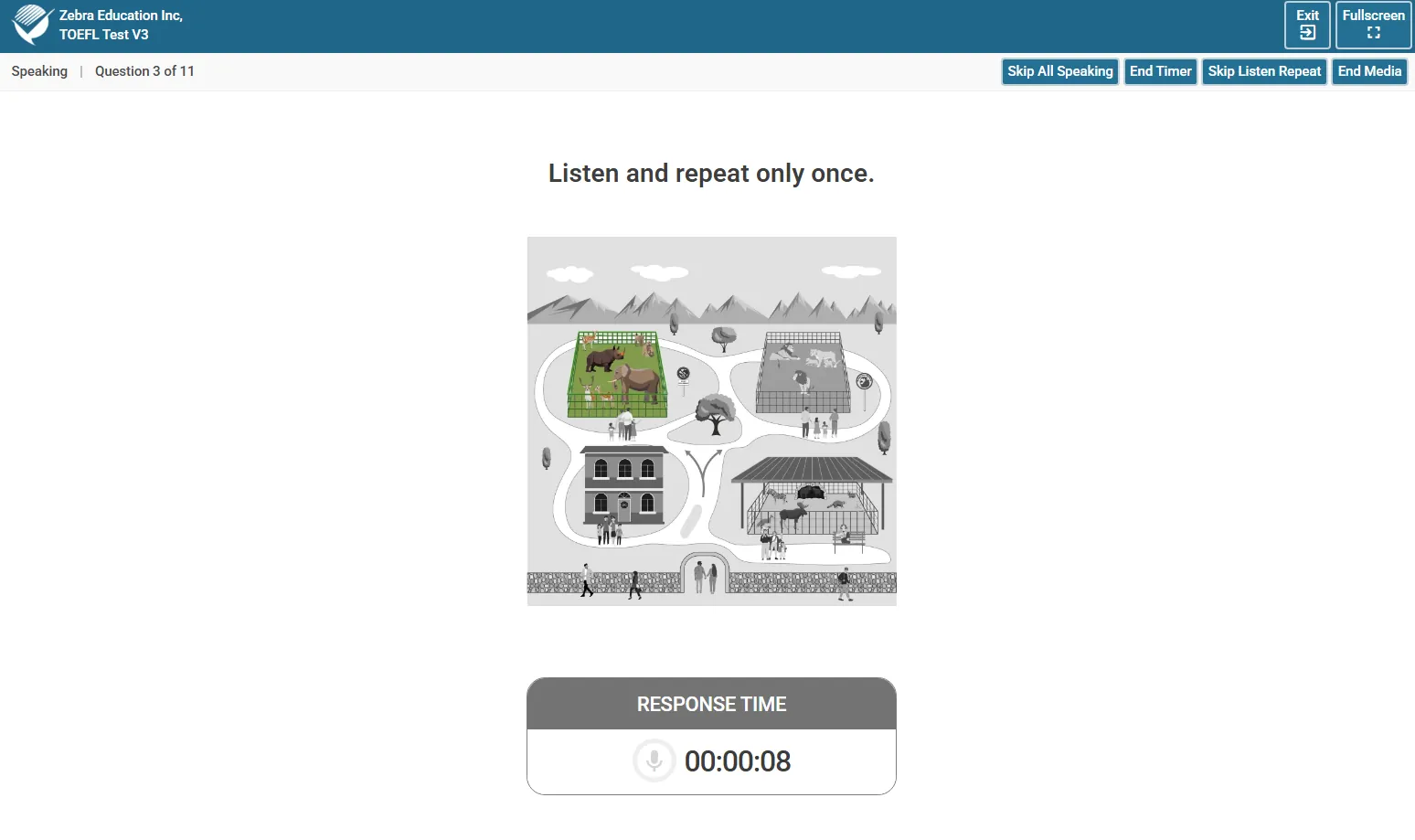
Listen and Repeat
You hear 7 sentences, one at a time, and say each one back exactly as you heard it. The sentences start short and get longer. This task checks pronunciation, rhythm, and how well you hold a sentence in memory. Tip: repeat in meaningful word groups instead of single words, and keep the speaker's stress and intonation.
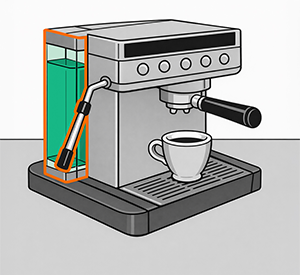
You are learning to use a coffee machine. Listen to your trainer and repeat what he says. Repeat only once.
-
spellcheck AnswerBegin by filling the water chamber with clean water.
Listen to the audio, then click to record what you just heard.
Practice speaking questions in our app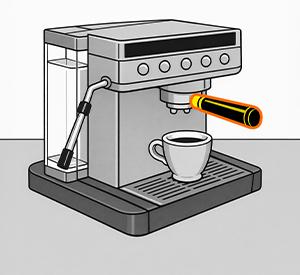
-
spellcheck AnswerInsert a coffee filter into the holder.
Listen to the audio, then click to record what you just heard.
Practice speaking questions in our app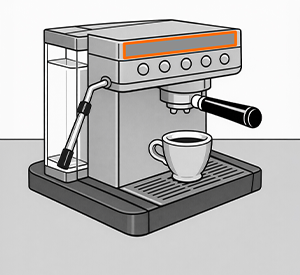
-
spellcheck AnswerSet the timer if you want coffee ready before morning.
Listen to the audio, then click to record what you just heard.
Practice speaking questions in our app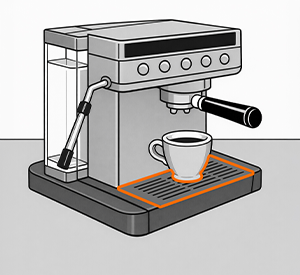
-
spellcheck AnswerPlace your mug on the drip tray before brewing starts.
Listen to the audio, then click to record what you just heard.
Practice speaking questions in our app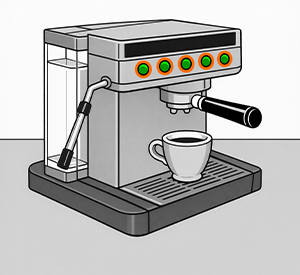
-
spellcheck AnswerChoose the drink strength you want on the control panel.
Listen to the audio, then click to record what you just heard.
Practice speaking questions in our app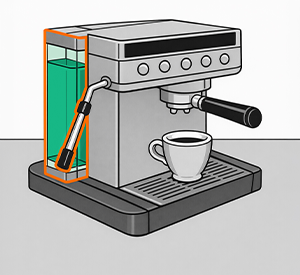
-
spellcheck AnswerAvoid spills by keeping the water tank below the top line.
Listen to the audio, then click to record what you just heard.
Practice speaking questions in our app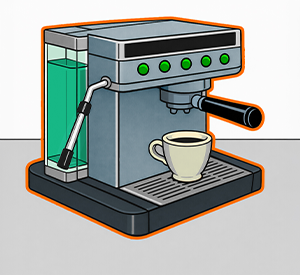
-
spellcheck AnswerClean the coffee maker at least monthly for the best results.
Listen to the audio, then click to record what you just heard.
Practice speaking questions in our appTake an Interview
An interviewer asks you 4 questions on one theme, and you answer each one for 45 seconds. There is no preparation time, so you start speaking right after the question. Tip: give a direct answer in your first sentence, then support it with one reason and one example from your own life.
You have agreed to take part in a research study about cooking at home. You will have a short online interview with a researcher. The researcher will ask you some questions.
Question 1
-
spellcheck TranscriptThank you for participating. Today I'd like to ask about cooking when your schedule changes every week. How do you decide whether a given evening is a cook-at-home night or an eat-out night?
-
Sample ResponseWell, on weeks when my schedule keeps shifting, I try to make the decision during my mid afternoon coffee break. First, I quickly look at my calendar and ask myself how much mental energy I still have after work. If I see an evening meeting or a late gym session, I quietly tell myself that takeout is perfectly fine, and I move on. Conversely, when I notice a free block, I get excited about using up the vegetables in the fridge. In either case, I text my partner so we stay on the same page.
Watch the video question, then click to record your answer.
Practice speaking questions in our appQuestion 2
-
spellcheck TranscriptGreat. If you had to cut your grocery budget by twenty percent, would you buy cheaper staples, smaller portions of protein, or fewer specialty items first? Why?
-
Sample ResponseHonestly, if I suddenly needed to shave twenty percent off the grocery bill, I would attack the specialty items first because they are the biggest silent wallet drain. For example, fancy cheeses, imported sauces, and single purpose spices look innocent, but they add up quickly. After trimming those, I would compare unit prices on staples and reach for store brands, though I would still keep whole grains and fresh produce. I would try to leave protein portions almost unchanged since they keep me full and stop me from snacking on more expensive convenience foods later.
Watch the video question, then click to record your answer.
Practice speaking questions in our appQuestion 3
-
spellcheck TranscriptInteresting. Some people film every meal they make; others never share food online. What effect, positive or negative, do you think food content on social media has on how people cook?
-
Sample ResponseRight, so when I think about food videos flooding my feeds, I see a double edged situation. On the positive side, short recipe clips give busy home cooks quick inspiration and demonstrate techniques that used to feel intimidating, like folding dumplings or tempering chocolate. As a result, many people cook more often and waste fewer ingredients. On the negative side, the constant parade of perfectly lit dishes sets unrealistic standards. Some viewers start believing every meal must look restaurant level, which can create guilt and push them toward costly gadgets or unnecessary ingredients.
Watch the video question, then click to record your answer.
Practice speaking questions in our appQuestion 4
-
spellcheck TranscriptGood points. One last question. Should high schools require at least one hands-on cooking course, or is that a poor use of limited class time?
-
Sample ResponsePersonally, I think every high school student should experience at least one practical cooking class. For one thing, many teenagers will move out within a few years, and knowing how to plan meals and handle raw food safely is as important as balancing a budget. Moreover, cooking lessons can reinforce biology and chemistry concepts in a tasty way, so the time is not really lost. Admittedly, schedules are crowded, yet a single semester elective or a week long workshop could fit without displacing core academics, and the lifelong benefits would justify the effort.
Watch the video question, then click to record your answer.
Practice speaking questions in our app
Task Fulfillment
Learn how to answer these questions in a step-by-step interactive exercise
Task Fulfillment
回答 TOEFL 口說訪談題目的第一步,是辨認出問題模式。一旦認出模式,你就能很快在腦中套用對應的回答結構。
這樣你就清楚知道接下來要說什麼,幾乎可以馬上開口,讓回答持續進行,不會出現長時間的停頓。不要試圖在開口前就規劃好整個答案,只要一步一步照著結構走就好。
在這個步驟中,你會學到7 種常見的問題模式,以及每一種的回答結構。點選每個模式分頁,了解它怎麼運作。
我們來練習第 1 題。
首先,辨認問題模式。問問自己:這道題目要我做什麼?認出模式後,就用對應的回答結構來引導你的答案。
這道題目的模式是Personal Background,所以請照著這個結構:
Direct Answer → Background → What You Did → Specific Detail → Current Situation → Extra Detail
說話時,可以使用有技巧的填充語,例如 Well、Actually、For example、What I mean by that is 和 So overall。這些片語能讓你的回答聽起來更流暢,如果你一時忘了接下來要說什麼,也能多爭取一點思考時間。要自然地使用,不要每句都用。以下是有技巧的填充語列表。
Thank you for participating. Today I'd like to ask about cooking when your schedule changes every week. How do you decide whether a given evening is a cook-at-home night or an eat-out night?
我們來練習第 2 題。
首先,辨認問題模式。問問自己:這道題目要我做什麼?認出模式後,就用對應的回答結構來引導你的答案。
這道題目的模式是Opinion / Preference,所以請照著這個結構:
Answer + Reason → Explain → Example → Details or Result → Second Reason or Contrast → Details → Conclusion
說話時,可以使用有技巧的填充語,例如 Well、Actually、For example、What I mean by that is 和 So overall。這些片語能讓你的回答聽起來更流暢,如果你一時忘了接下來要說什麼,也能多爭取一點思考時間。要自然地使用,不要每句都用。以下是有技巧的填充語列表。
Great. If you had to cut your grocery budget by twenty percent, would you buy cheaper staples, smaller portions of protein, or fewer specialty items first? Why?
我們來練習第 3 題。
首先,辨認問題模式。問問自己:這道題目要我做什麼?認出模式後,就用對應的回答結構來引導你的答案。
這道題目的模式是Advantages / Disadvantages,所以請照著這個結構:
Main Advantage → Explain → Example or Result → Main Disadvantage → Explain → Example or Result → Conclusion
說話時,可以使用有技巧的填充語,例如 Well、Actually、For example、What I mean by that is 和 So overall。這些片語能讓你的回答聽起來更流暢,如果你一時忘了接下來要說什麼,也能多爭取一點思考時間。要自然地使用,不要每句都用。以下是有技巧的填充語列表。
Interesting. Some people film every meal they make; others never share food online. What effect, positive or negative, do you think food content on social media has on how people cook?
我們來練習第 4 題。
首先,辨認問題模式。問問自己:這道題目要我做什麼?認出模式後,就用對應的回答結構來引導你的答案。
這道題目的模式是Opinion / Preference,所以請照著這個結構:
Answer + Reason → Explain → Example → Details or Result → Second Reason or Contrast → Details → Conclusion
說話時,可以使用有技巧的填充語,例如 Well、Actually、For example、What I mean by that is 和 So overall。這些片語能讓你的回答聽起來更流暢,如果你一時忘了接下來要說什麼,也能多爭取一點思考時間。要自然地使用,不要每句都用。以下是有技巧的填充語列表。
Good points. One last question. Should high schools require at least one hands-on cooking course, or is that a poor use of limited class time?
For more sample questions and scoring advice, see our TOEFL Speaking test guide and the TOEFL speaking rubric.
TOEFL Writing Changes in 2026
The Writing section now has 12 questions in about 23 minutes. The integrated writing task, where you summarized a reading and a lecture, is removed. Two new tasks join the Academic Discussion task, which is the only task kept from the previous test.
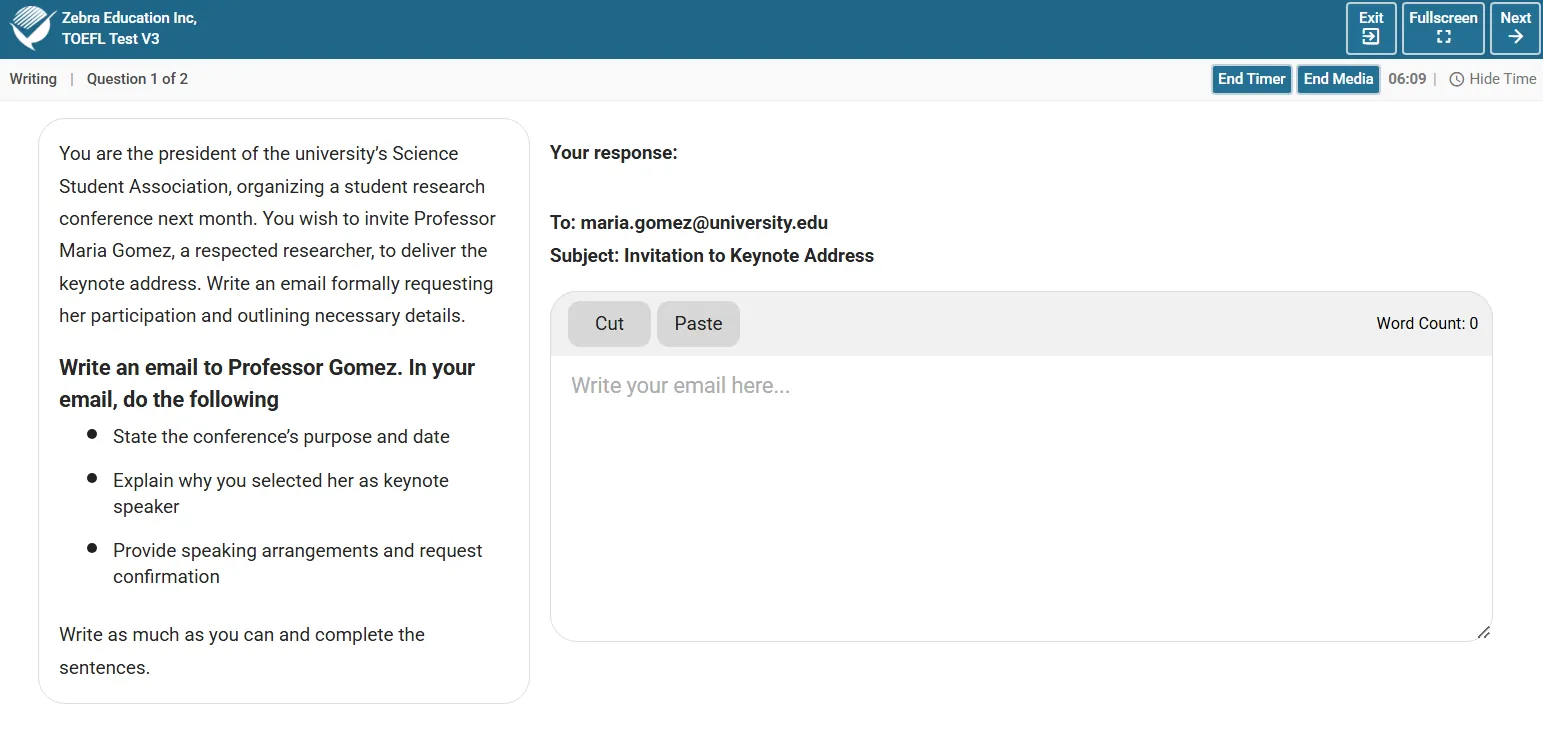
Build a Sentence
You see a short exchange where the reply is missing, plus a set of word chunks. You put the chunks in the right order to build a correct reply. There are 10 items in about 6 minutes, and one chunk may not be needed. Tip: find the subject and the main verb first, then place the question words and helpers around them.
 I'm thinking about starting a weekly strength routine.
 it ?
it ?
-
spellcheck AnswersWill it include any new exercises?

Build a Sentence
Learn how to answer this question in a step-by-step interactive exercise
Build a Sentence
組合句子題會給你一位說話者說的一句話,以及一句字詞順序被打亂的回應。你要把這些字詞移進空位,組成一句合乎文法、又符合這段對話的回應。有時回應中有幾個字已經直接印在頁面上。
在這個練習中,你要從左到右一次填一個空位,每個空位大約只有5 秒。這麼短的時間能訓練你快速做決定。
開始之前,先讀第一句話,也讀回應中已經給出的字。它們會告訴你是誰在說話、對話發生的時間,以及句子要往哪個方向走。
先預覽題目,然後點擊「下一步」繼續。
預覽題目
 I'm thinking about starting a weekly strength routine.
 it
?
it
?
這個回應是問句,所以不會以主詞開頭。是非問句以助動詞開頭,例如「should」、「would」、「could」或「did」。詢問資訊的問句以疑問詞開頭,例如「what」、「where」或「how」。
讀第一句話,看看回應在問什麼,然後在字庫中找出唯一一個能當問句開頭的片段。
選出作為問句開頭的片段。
空位後面的字是 it,它已經給出了。這個片段必須能直接接上它。
空位 1
I'm thinking about starting a weekly strength routine.
it
?
現在你有了主詞 it。主詞後面通常接它的動詞。情態助動詞或助動詞可以先出現(we can、she has),never 或 already 這類字也可以。
動詞必須和主詞一致(she works、they work),時態也必須符合這段對話的時間。在問句中,開頭的助動詞決定動詞的形式:Could we move...?
用這些可能性逐一測試字庫中的片段。
空位 2
I'm thinking about starting a weekly strength routine.
Will
it
?
現在你有了動詞 include,我們需要在動詞後面補上內容。動詞後面通常接受詞:名詞、代名詞或名詞片語(the report、a new plan)。也可能改接不定詞(to + 動詞)、-ing 形式,或名詞子句(that / what / where + 主詞 + 動詞)。在 be 或 seem 這類連綴動詞後面,可以接形容詞(is ready)。
每個動詞只能接其中幾種。想想 include 平常怎麼用:是 want to go,但是 enjoy going;是 think that,但是 ask if。
用這些可能性逐一測試字庫中的片段。
空位 3
I'm thinking about starting a weekly strength routine.
Will
it
include
?
現在你有了限定詞 any。限定詞是名詞片語的開頭,所以後面接名詞(the bus),或先接形容詞再接名詞(the early bus)。動詞、to 或代名詞都不能接在它後面。
也要檢查名詞的形式。A 和 an 接單數(a ticket),these 和 those 接複數(these tickets)。
用這些可能性逐一測試字庫中的片段。
空位 4
I'm thinking about starting a weekly strength routine.
Will
it
include
any
?
Write an Email
You read a short situation and write an email that covers each point you are given, for example to explain a problem and ask for help. You have 7 minutes. Tip: answer every point in its own short paragraph, and use a polite tone that fits the person you write to.
Write an email to your coworkers. In your email, do the following:
- Explain what still needs to be organized for the wellness day.
- Suggest a suitable location for the event.
- Ask for volunteers to support planning and event-day tasks.
Write as much as you can and complete the sentences.
Dear All Employees,
I am writing because we have started preparing next month's employee wellness day, and there are several details that still need to be organized. We need help confirming a venue, arranging healthy refreshments, and planning short activity stations such as stretching, stress-management, and team games.
I would like to suggest using the Riverside Activity Center. It has both indoor and outdoor space, enough seating for group sessions, and convenient parking for staff from different office locations.
If you are interested in helping, please let me know. Even volunteering for one part of the event, such as registration or activity support, would be very helpful.
Thank you, and I hope many of you can join the planning team.
Best regards,
Jordan Kim
Task Fulfillment — Email
Learn how to answer this question in a step-by-step interactive exercise
Task Fulfillment — Email
電子郵件題會給你一個情境、一位收件人,以及一份你的郵件必須涵蓋的編號要點清單。涵蓋每一個要點,比寫得長更重要。
規劃任何內容之前,先數一數必要的要點有幾個。一封回答了所有要點的短郵件,比一封漏掉一點的長郵件更好。
先預覽題目,然後點擊「下一步」繼續。
預覽題目
Write an email to your coworkers. In your email, do the following:
1. Explain what still needs to be organized for the wellness day.
2. Suggest a suitable location for the event.
3. Ask for volunteers to support planning and event-day tasks.
動筆之前,先回答三個規劃問題:收件人是誰、你為什麼寫信,以及題目要求你寫進什麼內容。
收件人決定你的用語要多正式,編號要點決定正文必須出現什麼。題目已經包含這三個答案,所以這些都不需要猜。
把每個規劃問題配對到題目中回答它的部分。
理解題目要求
把每個規劃問題配對到題目中回答它的部分。
開頭稱呼和結尾敬語會讓讀者看出你的郵件有多正式,所以兩者的正式程度要一致。
這道題目的收件人是同學或其他同儕,所以用名字打招呼的親切稱呼,加上「Best,」或「See you soon,」這類輕鬆的結尾敬語,才是正確的選擇。在這裡用正式頭銜會顯得冷淡又疏遠,就像在正式郵件中用隨便的開頭一樣,會在語氣上被扣分。
選擇適合這位收件人的開頭稱呼和結尾敬語。
選擇開頭稱呼與結尾敬語
Choose a greeting
- Dear All Employees,
- Hi everyone,
- Dear Sir or Madam,
- Hey guys,
- Dear Manager,
Choose a closing
- Best regards,
- Thanks,
- Cheers,
- Yours faithfully,
- Love,
正文要依照題目列出的順序,一次寫一個必要要點。從第一個必要要點開始。
句子開頭語會用友善自然的語氣帶出句子,再由你自己把想法寫完。可以用「I'm」和「can't」這類縮寫,但要寫完整的句子,不要寫成傳簡訊那樣的零碎片段。加上一個你自己的細節,讓這個句子真正回應要點,而不是重複要點。
為第一個必要要點選擇一個句子開頭語,然後用自己的話完成句子。
寫必要重點 1
Explain what still needs to be organized
接著寫第二個必要要點,讓它自成一句。保持你在開頭稱呼中建立的友善語氣。
你可以像傳訊息給朋友那樣直接問,但要清楚說出你想要什麼,因為讀者還是得能夠回覆你。
為第二個必要要點選擇一個句子開頭語,然後用自己的話完成句子。
寫必要重點 2
Suggest a suitable location
用最後一個必要要點完成正文。每個要點都有一句話之後,這道題目就完成了,不需要再多寫。
離開這一步之前,再讀一次題目中的編號清單。漏掉一個要點,比答案寫得短損失更大。
為最後一個必要要點選擇一個句子開頭語,然後用自己的話完成句子。
寫必要重點 3
Ask for volunteers
你在每一步寫的句子,現在合在一起成為一封郵件。讀完整封郵件,檢查這道題目評量的三件事:每個必要要點都有回應、語氣符合收件人,以及開頭稱呼和結尾敬語完整包住整封郵件。
然後把你的用字和範例比較。範例只是一個好答案,不是唯一的答案。
讀完你完整的郵件,然後和範例比較。
檢查你完整的電子郵件
怎麼寫
電子郵件題會給你一個情境、一位讀者,以及一份編號清單,列出你的信必須涵蓋的重點。評分者會檢查每個重點是否都有回應,以及你的用語是否適合讀者。
按照固定順序寫作,才不會漏掉任何必要重點。
- 理解題目要求. 確認讀者是誰、你為什麼寫信,以及題目要求你寫進哪些內容。
- 選擇開頭稱呼與結尾敬語. 依照讀者需要的正式程度,選擇開頭稱呼和結尾敬語。
- 寫出每個必要重點. 清單中的每個重點各用一個句子回應,順序依照題目,並加上一個你自己的細節。
- 檢查你完整的電子郵件. 把整封信讀一遍,確認每個重點都有回應。
動筆之前,先數一數有幾個必要重點。回應所有重點的簡短電子郵件,分數會比漏掉一個重點的長信更高,因為漏掉的重點是評分者最先注意到的地方。
規劃
規劃電子郵件時要問三個問題:讀者是誰、你為什麼寫信,以及題目要求你寫進哪些內容。讀者決定正式程度,編號的重點決定正文的內容。
語氣
開頭稱呼和結尾敬語會讓讀者知道這封信有多正式,所以兩者要保持同樣的程度。先看清楚讀者是誰。寫給教授、院長或辦公室,要使用頭銜和正式的結尾敬語,而且不用縮寫。寫給指導老師、助教或協調人員,要用禮貌、專業的語氣,並稱呼對方的姓名。寫給同學或隊友,直接叫名字,結尾可以輕鬆一點。不論太正式或太隨便,程度不對都會在語氣上被扣分。
必要重點
依照題目列出的順序回應各個重點,每個重點各用一個句子。每個句子最後都要加上一個你自己的細節,因為只重複重點的句子並沒有真正回應它。
Write for an Academic Discussion
You read a professor's question on a class discussion board and two student replies, then write your own post with your opinion. You have 10 minutes. Tip: state your view clearly, add a new reason the other students did not give, and support it with an example.
In your response you should:
- express and support your opinion
- make a contribution to the discussion
An effective response will contain at least 100 words.
In my opinion, society should move toward mostly digital payment, but it should not remove cash completely. Electronic payment is useful because it leaves a clear trail for taxes and makes it easier for small shops to sell online or at street events without keeping many coins. However, a country also needs a back-up plan. During a power cut, a storm, or a problem with a payment company, people still need to buy food, medicine, and bus tickets. Cash also gives people some privacy for simple daily purchases. For this reason, I support a mixed system: digital payment as the normal choice, with cash protected for emergencies and basic public services.
Task Fulfillment — Discussion
Learn how to answer this question in a step-by-step interactive exercise
Task Fulfillment — Discussion
學術討論題會給你一個教授提出的問題,以及兩位學生的簡短貼文。你要在十分鐘內寫出一篇自己的貼文。
規劃任何內容之前,先讀完兩位學生的貼文。他們的理由和例子已經出現在討論中,所以你的貼文必須補充他們沒說過的內容。
先預覽討論內容,然後點擊「下一步」繼續。
預覽題目
每篇好的貼文都以清楚的立場開頭。讀者必須從第一句就知道你的想法,所以不要用一句關於主題的籠統評論開頭。
你可以同意或不同意其中一位同學,也可以提出自己的立場。不論選哪一種,你提出的理由都必須是你自己的,而不是他們的。只要支持得好,任何立場都能拿高分,所以選你能最快解釋清楚的那一個。立場只用一句話說完,理由留到下一步。
選擇你的立場,然後用自己的話改寫主題句。
選擇立場並寫出主題句
主旨是一個說明你的立場為什麼正確的理由。在十分鐘內,兩個理由是穩妥的規劃。只是換個說法重複立場的句子不算理由,而從其中一位學生那裡照抄的理由,對討論沒有任何貢獻。
每個理由寫成一個完整的句子,並使用你自己的詞彙,而不是題目的用字。解釋和例子會在接下來的步驟中加入。
把每個主旨改寫成一個清楚、能支持你立場的句子。
發展兩個主旨
Digital payment helps with taxes and small shops.
Cash is a back-up when payment systems fail.
只有理由本身並沒有說服力。加上解釋或具體例子,讓讀者看到這個理由在現實生活中如何成立。
具體例子會點出一個情境、一個人或一個結果。一到兩句就夠了,因為你的第二個主旨和結論還需要時間。
寫一到兩句話,為你的第一個主旨提供解釋或例子。
為主旨 1 提供解釋或例子
25
給第二個理由和第一個理由同樣的支持。如果一篇貼文把一個想法發展得很好,另一個卻空空的,看起來會不平衡,讀者也只會看到一個理由。
這裡要用不同的解釋或例子。重複你已經寫過的支持內容,只會增加長度,不會增加新內容。
寫一到兩句話,為你的第二個主旨提供解釋或例子。
為主旨 2 提供解釋或例子
25
簡短的結論能告訴讀者這篇貼文已經結束。一句話就夠了:用新的說法重述你的立場,並呼應你的理由。
不要逐字照抄你的開頭句,也不要提出新的想法。最後才出現的想法,已經沒有時間去支持了。
寫一句結論句,重述你的立場。
寫結論
15
你在每一步寫的句子,現在合在一起成為一篇貼文。讀完整篇貼文,檢查一篇好貼文需要的三件事:清楚的立場、兩個你自己的理由,以及每個理由背後的具體解釋或例子。
然後把你的用字和範例比較。範例只是一個好答案,不是唯一的答案。
讀完你完整的回答,然後和範例比較。
檢查你完整的回答
怎麼寫
學術討論題要你針對教授的問題提出自己的意見,在十分鐘內寫成一篇簡短的貼文。評分者要的是一個有支持的明確立場,而不是一篇長文。
按照固定順序寫作,才不會在解釋完理由之前就沒有時間。
- 選擇立場並寫出主題句. 用一句話說出你的想法。你可以同意或不同意某位學生,但理由必須是你自己的。
- 發展兩個主旨. 寫出兩個理由,說明為什麼你的立場是對的。
- 為每個主旨提供解釋或例子. 在每個理由下面加上一到兩句解釋,或一個具體例子。
- 寫結論. 用一句話重述你的立場,並呼應你的理由。
- 檢查你完整的回答. 把整篇貼文讀一遍,確認每個句子都支持你的立場,而且沒有重複任何學生已經說過的內容。
用你自己的意見回答教授的問題。你可以同意或不同意其他學生中的一位,但你的理由和例子必須是你自己的。重複其他學生說過的話的貼文,對討論沒有任何貢獻。
立場
你的立場就是你對教授問題的回答。把它放在第一句,讓讀者不必猜你的想法。選哪一邊都能拿高分,所以選你最快能支持的那一邊。
主旨
主旨是說明你的立場為什麼正確的理由。十分鐘內,兩個理由就夠了。每個理由都要用完整的句子、用你自己的詞彙寫出來,不要重複題目的用字。
支持
解釋是說明這個理由如何成立。例子則指出一個情境、一個人或一個結果。每個主旨都給一到兩句支持句,而且每個主旨用不同的支持內容。
結論
用一句話結束這篇貼文就夠了。用新的說法重述你的立場,並呼應你的理由。不要提出你沒有時間支持的新概念。
For more sample questions and answer structures, see our TOEFL Writing test guide and the TOEFL writing rubric.
What Is the New TOEFL Multistage Adaptive Testing?
The TOEFL Reading and Listening sections use a multistage adaptive format, which means the test adapts to your performance as you go:
- First stage: every test taker starts with the same set of questions.
- Second stage: based on your first-stage results, you get either a harder or an easier set of questions. Strong performers see more challenging questions, while others see questions closer to their level.
This approach gives a more accurate measure of your English, because the test fits your skill level.
Benefits of the Adaptive Format
- Personalized assessment: question difficulty matches your level, so the score reflects your real skills.
- Shorter test: fewer questions are needed to measure your English accurately.
- Improved fairness: the content focuses on real-world academic and everyday English, so test takers of every background have an equal chance.
These changes are part of ETS's plan to keep the TOEFL iBT relevant for today's international students.
New Simplified TOEFL Scores: 1-6 Band Scale
Since January 2026, TOEFL iBT scores are reported on a simple 1-6 band scale, along with the familiar 0-120 scale. The band scale lines up with the Common European Framework of Reference for Languages (CEFR), so universities and students can read a score more easily. ETS provides training materials to help schools adjust to the new scores.
Faster TOEFL Score Delivery Within 72 Hours
Other improvements include score delivery within 72 hours, better test-center audio with headphones designed by Koss, new official preparation resources, and a redesigned registration process. Together they are ETS's largest investment in the TOEFL iBT so far.
ETS to Enhance Fairness and Accessibility
Another major part of the TOEFL changes in 2026 is a focus on academic authenticity and cultural neutrality. ETS has revised the test content to reflect real academic and everyday situations while reducing cultural bias, so students from every background have a fair chance to succeed.
For more details, read the official announcement: ETS Press Release
How to Prepare for the New TOEFL Format
Preparing effectively for the new TOEFL requires more than reviewing English skills with older study materials. You need to become comfortable with the updated task types, the short timer for each Listening question, the adaptive Reading and Listening sections, and the demands of completing the 90-minute test without a break. Practicing in the current format from the beginning helps you build the right skills, pacing, and confidence for test day.
BestMyTest gives you that experience. All lessons, practice questions, and simulation tests follow the new TOEFL format, including the adaptive Reading and Listening sections. Instead of being surprised by the test, you can learn how it works, identify what is limiting your score, and improve through focused practice.
play_circle_outlineStart New TOEFL Sample Test
A strong study plan follows a simple cycle: test, review, improve, and retest. Begin with a practice test to establish your TOEFL band score in each section. Review the results to find the question types and English skills that need the most attention, spend the next 5 to 7 days improving those areas, and then take another test to measure your progress. Repeating this cycle turns every practice test into a clear plan for what to study next.
For a complete preparation schedule, see our guide to choosing and using an online TOEFL preparation course.
Tip 1: Practice Every 2026 TOEFL Question Type
Practice every updated Reading, Listening, Speaking, and Writing task until the instructions and response formats feel familiar. Materials created for the current test help you develop relevant strategies and avoid spending valuable study time on question types that no longer appear.
Tip 2: Review Mistakes and Use AI Tutor
Do not stop after checking whether an answer was right or wrong. Look for the skill behind each recurring mistake—such as vocabulary, grammar, comprehension, or pronunciation—then use targeted AI Tutor exercises to strengthen that skill. Apply what you learn to new TOEFL questions so the same weakness does not continue to lower your score.
Tip 3: Use Speaking and Writing Feedback
Use detailed feedback to understand exactly what is holding back your Speaking and Writing scores. Focus on specific areas such as pronunciation, fluency, grammar, vocabulary, organization, and supporting details. After working on those skills, submit another response and compare the feedback to confirm that your performance is improving.
Tip 4: Use Full-Length Adaptive Practice Tests
Full-length adaptive simulations prepare you for challenges that isolated questions cannot reproduce. They help you learn the testing interface, manage your time, maintain concentration for 90 minutes, and experience how Reading and Listening change after the first stage. Review each score report before taking another test so every simulation guides your next round of study.
Tip 5: Build English Skills With Lessons
Test strategies are useful, but they cannot replace strong English skills. Combine TOEFL practice with lessons in grammar, comprehension, vocabulary, pronunciation, speaking fluency, and writing organization. A stronger foundation makes it easier to respond accurately even when the topic or wording is unfamiliar.
Tip 6: Focus Your Schedule on Weak Areas
Avoid dividing your study time equally when your scores show that some areas need more attention than others. Prioritize the sections and skills with the greatest potential for improvement, then use later practice tests to confirm your progress and refine your schedule. This focused approach helps you make better use of every study session.