
歡迎來到IELTS 寫作測驗指南, 在這邊你可以找到所有關於雅思寫作測驗考試的內容、考題資訊、 以及超過1000題的雅思寫作題庫。 本頁面中列出20回完整雅思寫作測驗以及本站所有的寫作模擬試題,想練習的同學請瀏覽並點擊下方的考題。
點下方連結即可使用免費的雅思寫作測驗跟獲得高分範文。
| 雅思一般題組 (General) 寫作測驗 | 雅思學術題組 (Academic) 寫作測驗 |
|---|---|
下方列出是我們完整的 IELTS 寫作題庫與答案。 你可以隨時免費練習。
IELTS 一般題組寫作第一部分練習題 1 - 44
Informal, formal, & semi-formal letters
IELTS 學術題組寫作第一部分練習題 1 - 52
Line graphs, bar charts, pie charts, tables, maps, flow charts, & multiple charts
IELTS 寫作第二部分練習題 1 - 96
Opinion, discussion, advantages & disadvantages, problem & solution, cause & effect, & two-part questions
文章目錄
IELTS 寫作測驗資訊
IELTS 寫作測驗一共有兩個寫作任務(Task 1 與 Task 2),你會有 總共 60 分鐘的作答時間。兩個任務可以依照你喜歡的順序完成,只要確保時間分配合理, 大約20 分鐘用在 IELTS Writing Task 1, 以及40 分鐘用在 IELTS Writing Task 2 即可。
IELTS 學術模組寫作與一般模組寫作
IELTS 提供兩種版本的考試。學術模組 (Academic) 版本主要提供給想申請高等教育的人士; 一般模組 (General Training) 版本則多用於移民或申請較低學歷課程。 兩種版本各自有更詳細的適用條件,請向 IELTS 客服諮詢,以確認哪一種考試最適合你。
那麼,哪一種測驗比較難呢? 一般來說,Academic 版本比 General Training 版本更有難度。 兩者之間最大的差異在於 Writing Task 1 的難易度,IELTS Writing Task 2 在兩種版本中是相同的。 下面的表格幫你整理了這兩種寫作測驗的差別。
| 測驗類型 | Task 1 | Task 2 |
|---|---|---|
| 學術模組 (Academic Writing) |
IELTS Academic Writing Task 1
在 IELTS Academic Writing Task 1 中,你會看到一個圖表、表格、曲線圖或示意圖, 必須用自己的話來描述、整理或說明這些資料。 |
IELTS Writing Task 2 在 IELTS Writing Task 2 中,你需要依照題目所給的問題寫一篇傳統形式的論說文。 文章字數必須至少 250 字。 |
| 一般模組 (General Writing) |
IELTS General Writing Task 1
在 IELTS General Writing Task 1 中,你會根據題目提供的情境寫一封信。 這封信可能是下列三種類型之一: - 正式書信(Formal:寫給不認識或沒有私交的人) - 半正式書信(Semi-formal:寫給認識但不熟的人) - 非正式書信(Informal:寫給很熟悉的人,例如朋友) |
雅思學術模組寫作影片介紹
雅思一般模組寫作影片介紹
敬請期待!
IELTS 寫作的評分方式
在 IELTS 寫作測驗中,你的寫作成績會依照四個評分面向來評定,分別是
Task Achievement / Task Response、Coherence and Cohesion、Lexical Resource、Grammatical Range and Accuracy。
你可以參考以下由 IELTS 官方提供的寫作評分標準說明(Band Descriptors):
- IELTS Writing Task 1 Band Descriptors
- IELTS Writing Task 2 Band Descriptors
兩個寫作任務在評分時都會考量以下幾個面向:
- Task Achievement / Task Response - 你是否完整回答了題目要求?是否有充分展開與支持你的論點?
- Coherence and Cohesion - 你的論點或分析是否清楚、有邏輯?段落與句子之間是否銜接自然、結構完整?
- Lexical Resource – 你是否使用了足夠多樣、準確且自然的字彙,並保持適當的正式書面語氣?
- Grammatical Range and Accuracy – 你的文章是否幾乎沒有語法錯誤?是否展現出多樣的文法結構並正確使用?
IELTS Writing Task 1 和 Task 2 的分數比重一樣嗎?
基本上,就像你會花兩倍的時間在 Task 2 上一樣,
Task 2 的分數比重也大約是 Task 1 的兩倍(實際比重略有不同)。
另一種理解方式是:計算總分時,Task 2 的分數會被算兩次。
例如,若 Task 1 的分數是 7,Task 2 的分數是 4,
可以用以下公式來估算你的 IELTS 寫作分數:
(7 + (4 × 2)) / 3 = 5
因此,整體 IELTS 寫作分數大約會落在 4.5~6 分之間。
之所以說「大約」,是因為 IELTS 官方並沒有公開精確的計算公式,
不過這裡提供的估算方式,大致上與實際成績的誤差通常不超過 0.5 分。
19,000 篇已評分的 IELTS 作文揭示的現象
2020 年至 2026 年間,BestMyTest 導師為約 9,400 篇 IELTS 寫作作業評分,我們的 AI 批改系統另外批改了 9,614 篇作文。有三個現象特別突出。
- 文法決定分數級距。在 91% 的 Task 2 作文、84% 的學術組 Task 1 報告和 94% 的一般訓練組書信中,文法多樣性與準確性(Grammatical Range and Accuracy)是四項評分標準中得分最低的一項。導師給予 Task 2 的平均分數:文法 5.5、詞彙資源(Lexical Resource)6.0、連貫性與銜接性(Coherence and Cohesion)6.1、題目回應(Task Response)6.1。學術組 Task 1:文法 5.5、連貫性 5.8、任務達成度(Task Achievement)5.8、詞彙資源 5.8。一般訓練組 Task 1:文法 5.3、詞彙資源 5.9、連貫性 6.0、任務達成度 6.2。
- 篇幅不足會被扣分。17% 的 Task 2 作文未達 250 個單字的最低要求,這些作文的題目回應平均得分為 4.9,而達到 250 個單字的作文則為 6.1。13% 的學術組 Task 1 報告和 16% 的一般訓練組書信少於 150 個單字。我們的學員在 Task 2 平均寫 285 個單字,在 Task 1 則約寫 175 個單字。
- 錯誤細小且反覆出現。一篇 Task 2 作文約有 21 處需要修正。標點符號問題最多(占修正項目的 17%),其次是冠詞(11%)、拼字(10%)、名詞單複數(9%)、主詞與動詞一致性(7%)和介系詞(6%)。三分之二的 Task 2 作文有冠詞錯誤,58% 有主詞與動詞一致性錯誤。在學術組 Task 1 中,描述數據的詞彙會帶來額外的錯誤:"male" 改為 "males"、"increase" 改為 "increased"、"compare" 改為 "compared"。在一般訓練組書信中,大小寫(占修正項目的 9%)和動詞時態(6%)比在其他寫作任務中更需要注意。
- 我們的批改系統最常做的修正:"this" 改為 "these"、"is" 改為 "are"、"have" 改為 "has"、"in" 改為 "on"、"of" 改為 "for"、"amount" 改為 "number"、"then" 改為 "than"、"that" 改為 "who"、"goverment" 改為 "government"、"belive" 改為 "believe"、"accomodation" 改為 "accommodation"。
數據來自截至 2026 年 10 月的 BestMyTest 模擬測驗與批改資料。題型百分比為所有作答紀錄的答對率;各評分標準的數據則依標示為導師或 AI 給予的分數。最後更新日期:2026 年 10 月 5 日。
IELTS 學術題組寫作第一部分 (Academic Writing Task 1)
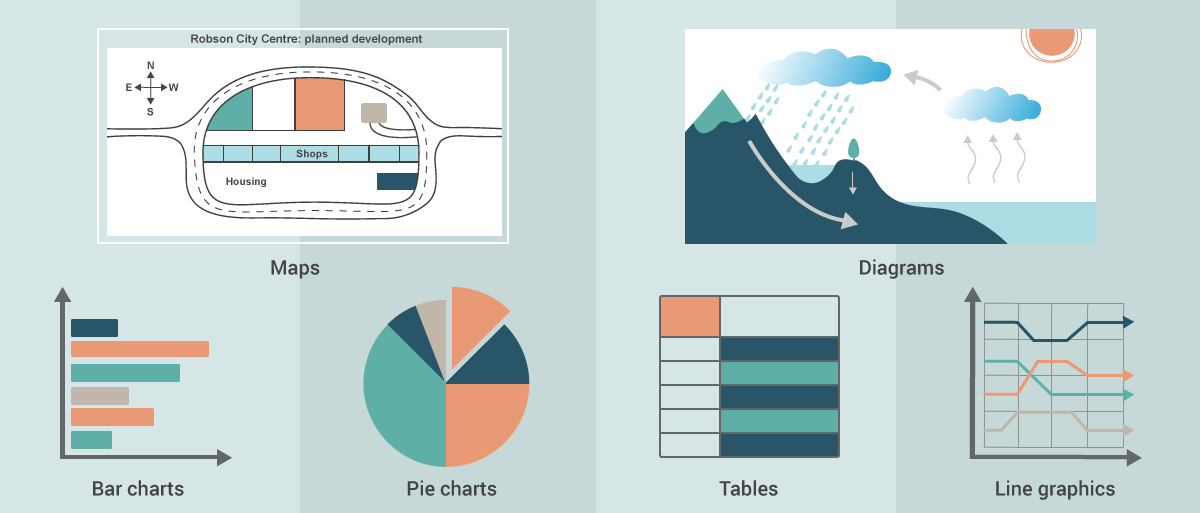
在 IELTS 學術題組寫作第一部分 (Academic Writing Task 1) 中,你會看到一個圖表、表格、曲線圖或示意圖, 並被要求以自己的文字描述、整理或解釋這些資訊。 題目可能會要求你描述並說明數據、解釋某個流程的階段、說明某項事物的運作方式, 或描述某個物體或事件。
無論題目呈現哪種類型的視覺資料,你的主要任務都是撰寫視覺資訊的摘要, 並描述主要趨勢、整體差異、變化重點、系統的主要組成部分,或流程的重要階段。 你的文章必須至少 150 字,建議花約 20 分鐘完成這一部分的寫作。 以下是推薦的寫作架構:
- Introduction:改寫題目
- Overview:描述整體趨勢或主要群組的總覽
- Body Paragraph 1:邏輯清楚地詳細描述第一個群組
- Body Paragraph 2:邏輯清楚地詳細描述第二個群組
這個任務的寫作步驟其實非常簡單:
- 分析圖表內容,並規劃資訊如何分組
- 依照建議的文章架構撰寫文章
- 校對文章
以下是你在 IELTS 寫作測驗中可能遇到的各種類型圖表與示意圖:
折線圖(Line Graphs)
在這種類型的題目中,你會拿到一個或多個折線圖。每個折線圖可能會包含 1 到 8 條線,顯示數值隨時間變化的情況。 時間範圍可能是過去、現在、未來,或三者的組合。你的任務是撰寫摘要,涵蓋最重要的重點,並用數據來支持你的描述。
The chart illustrates average CO2 emissions per person in four European countries between 1975 and 2015.
Summarise the information by selecting and reporting the main features, and make comparisons where relevant.
- Write at least 150 words.
- You should spend around 20 minutes on this task.
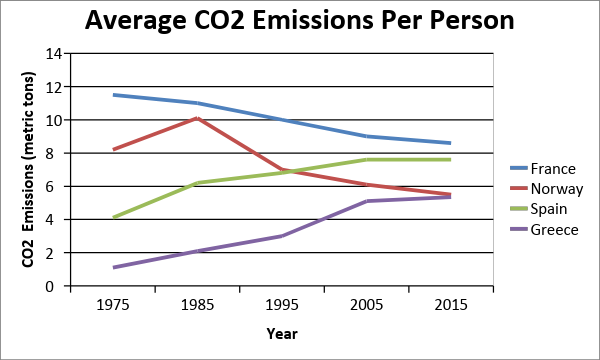
The line graph depicts the average Carbon dioxide emission for each individual residing in four countries, namely France, Norway, Spain, and Greece, over 40 years.
Overall, although CO2 production in France and Norway declined, it increased significantly in Spain and Greece over the period. Norway improved the most to become the most environmentally friendly, whereas Greece had the highest increase of all in that time.
Throughout the period, France produced the most CO2, though production declined overall from 11 tonnes per individual in 1975 to around 8.5 tonnes by 2015. In turn, except for a spike in emissions in 1985, Norway’s production of CO2 fell from 8 to under 6 tonnes forty years later.
On the contrary, CO2 release in Spain and Greece saw a more upward turn. In Spain, production doubled from 4 tonnes in 1975, overtaking Norway by 1995, to a final figure of just under 8 metric tonnes per head of population. Similarly, emissions in Greece, which were the lowest in 1975, increased five times to equal those of Norway in 2015.

Line Chart
Learn how to answer this question in a step-by-step interactive exercise
Line Chart
在 IELTS 學術組第一題中,你要描述圖形呈現的內容。你不提出意見,也不解釋數字為什麼會這樣。
折線圖呈現數值如何隨時間變化,常常同時有好幾條線,所以這份報告要描述變化,並比較各條線。
先預覽題目,然後點擊「下一步」繼續。
預覽題目
Summarise the information by selecting and reporting the main features, and make comparisons where relevant.
Write at least 150 words.
動筆前先解讀圖形。檢查標題、橫軸上的時間範圍、縱軸上的單位,以及標示每條線名稱的圖例。
接著找出實測資料結束、預測開始的那個時間點。這個點會劃分你的時態:已經測得的年份用過去式,還沒到來的年份則用 is expected to、is predicted to 和 is set to 這類形式。
回答關於圖形的問題。
解讀圖表
引言要用你自己的話說明圖形呈現什麼。同義改寫題目:換掉用字、保留意思,並保留主題、各條線測量的內容和時間範圍。
照抄題目的句子拿不到分數,數字也不屬於這裡。把所有數字留到主體段落。
寫一到兩句同義改寫題目的句子。
寫引言
題目
The chart illustrates average CO2 emissions per person in four European countries between 1975 and 2015.
Summarise the information by selecting and reporting the main features, and make comparisons where relevant.
Write at least 150 words.
第一題的報告需要每一組線各一個主體段落,而折線圖的線通常比組多。把朝相同方向變動的線歸為一組:上升的線、下降的線,以及持平的線。所有線都朝同一方向變動,就寫成一段;三種各有一條,就寫成三段。
每條線各寫一段,或把時間範圍切成兩半各寫一段,都會破壞題目要求的比較。只按數值高低分組,可能會把一條上升的線和一條下降的線放在同一段。
選出讓每一段都只有一個清楚規律的分組方式。
進行分組
選出讓每一段都只有一個清楚規律的分組方式。
- Group 1: Norway, Spain, Greece. Group 2: France.
- Group 1: Greece. Group 2: France, Norway, Spain.
- Group 1: Norway, Greece. Group 2: France, Spain.
- Group 1: France, Norway. Group 2: Spain, Greece.
概述是整張圖形中最大的規律,由主要特徵組成。首先:每一組在整段期間的整體方向是什麼?接著:有兩組以上時,第一組和最後一組相距多遠?這個差距是擴大、縮小,還是互換位置?
把這些特徵組合起來,就是你的概述。這裡不要加入個別年份或數字,把它們留到主體段落。
找出主要特徵,建構你的概述。
找出整體趨勢
現在把這兩個主要特徵寫成一到兩句。概述是考官最先尋找的部分,所以要在任何細節之前寫出來,並保持概括。
時態要配合圖形,並描述圖形呈現什麼,而不是為什麼。不要寫數字,也不要加入意見。
寫一到兩句概括的句子,說明最大的規律。
寫你的概述
主體段落 1 只談你的第一組線在整段期間的變化,數字就寫在這裡。
描述每條線的形狀,而不是線上的每一個點:起始值、方向、任何方向的轉變,以及最終值或預測值。使用描述隨時間變化的語言,例如 rise steadily、fluctuate、level off 和 peak,並在每個數字旁註明年份。
如果你不確定某個重點要怎麼寫,點選那個重點,就會有一個範例句加到你的寫作區。
寫三到四句關於第一組的句子,並附上數字。
寫主體段落 1
主體段落 2 只談你的第二組線。用同樣的方式處理:寫出每條線的形狀,並以數字支持。
不要重複主體段落 1 的內容。兩組之間有值得指出的差異時,用 in contrast 和 far lower than 這類片語把它們連起來。
如果你不確定某個重點要怎麼寫,點選那個重點,就會有一個範例句加到你的寫作區。
寫三到四句關於第二組的句子,並附上數字。
寫主體段落 2
你的報告規劃完成了。一篇完整的第一題答案依序包含這些部分:同義改寫題目的引言、說明最大規律的概述,以及每組一個主體段落,用挑選過的數字支持這個規律。
把各部分放在一起讀,並檢查三件事:概述和細節一致、時態符合實測和預測的數值,以及每個數字都帶有單位和年份。
檢視你的報告規劃,然後和範文比較。
完整報告規劃
如何判斷
IELTS 學術組第一題的折線圖呈現數值如何隨時間變化,常常同時有好幾條線。你要描述這些變化並比較各條線,不需要寫出每條線上的每一個點。
按照固定的順序作答,在寫下第一句之前就先規劃好整篇報告。
- 解讀圖表. 檢查標題、時間範圍、單位、圖例,以及實際數據在哪裡結束、預測從哪裡開始。
- 寫引言. 同義改寫題目,並說明圖形呈現的內容。
- 進行分組. 把變化相似的線條分在同一組,讓每個主體段落都有一個清楚的重點。
- 找出整體趨勢. 先決定整張圖形最大的規律,再去看個別數值。
- 分階段寫報告. 先寫概述,再為每一組各寫一個主體段落並挑選數據,最後檢查整份規劃。
先把線條分組,再描述它們。線條很多的圖形,只要相似的線條共用一段,就能寫成一篇簡短的報告,而分組正是題目所說的「挑選主要特徵」。
解讀圖形
先看座標軸。橫軸是時間範圍,縱軸是單位,圖例標出每條線的名稱。找出實際數據結束的那一點,因為之後的內容都是預測,需要用表示未來的形式。
引言
引言用一到兩句話,以不同於題目的字詞說明圖形呈現的內容。保留主題、線條測量的項目和時間範圍,不要寫數據和趨勢。
組別
第一題的報告中,每一組線條寫一個主體段落。把走向相同的線條分在同一組:上升的線、下降的線,以及持平的線。所有線條走向都一樣就寫成一段;三種走向各有一條就寫成三段。
整體趨勢
整體趨勢是圖形中最大的規律:每一組在整段期間大致的走向,以及各組之間保持多大的差距。這是概括性的陳述,所以不寫任何數據。
若想學會如何應對 IELTS Academic Writing Task 1 的折線圖題型,請參考課程:IELTS Academic Writing Task - Line Graphs。
7 天免費試用長條圖(Bar Charts)
在這種類型的題目中,你會看到一個或多個長條圖。長條圖可能顯示隨時間變化的數據(動態資料)、某一時間點不同數值之間的比較(靜態資料),或是問卷/調查結果。 這些資訊可能是過去、現在或未來的情況,或三者的組合。 你的任務是撰寫一段摘要,涵蓋最重要的重點,並用具體數據來支持你的描述。
The chart below shows the proportion of males and females in Malaysia who commonly do physical activity in 2010.
Summarise the information by selecting and reporting the main features, and make comparisons where necessary.
- Write at least 150 words.
- You should spend around 20 minutes on this task.
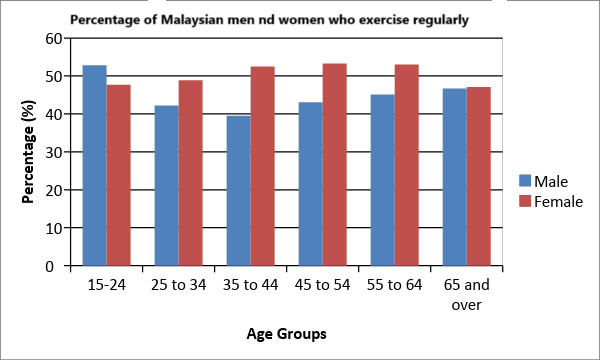
The bar chart compares the proportion of male and females of differing age groups who frequently undertook physical activity in 2010.
Overall, while the Malaysian population keeps fit in general, a higher proportion of women than men exercised in 2010, with some further differences between age groups. Middle-aged females were the most likely to work out, while for men, those aged 15 to 24 tended to do the most physical activity.
In terms of men’s exercise habits, younger men were much more likely to exercise than older men with 52.8% of those aged under 24 exercising as opposed to only around 40% of older age groups
By contrast, around half of all women in all age groups reported keeping fit, especially those aged between 35 and 64 at around 53%. The exception was the youngest age group in which only 47.7 percent of women exercised compared to 52.8% of men. Similarly, for people 65 and over, just approximately 47% of both sexes were recorded regularly working out.
Bar Chart
Learn how to answer this question in a step-by-step interactive exercise
Bar Chart
在 IELTS 學術組第一題中,你要描述圖表呈現的內容。你不提出意見,也不解釋數字為什麼會這樣。
長條圖是在一組類別中比較不同的組別,所以這份報告建立在比較上,而不是隨時間的變化。
先預覽題目,然後點擊「下一步」繼續。
預覽題目
Summarise the information by selecting and reporting the main features, and make comparisons where necessary.
Write at least 150 words
動筆前先解讀圖表。檢查標題、橫軸上的類別、縱軸上的單位,以及標示每組長條名稱的圖例。
單位決定你的用字。人數、百分比和金額是不同的東西,即使句子其他部分都正確,單位寫錯一樣會扣分。
回答關於圖表的問題。
解讀圖表
引言要用你自己的話說明圖表呈現什麼。同義改寫題目:換掉用字、保留意思,並保留主題、比較的組別,以及題目有提供的地點或時間。
照抄題目的句子拿不到分數,數字也不屬於這裡。把所有數字留到主體段落。
寫一到兩句同義改寫題目的句子。
寫引言
題目
The chart below shows the proportion of males and females in Malaysia who commonly do physical activity in 2010.
Summarise the information by selecting and reporting the main features, and make comparisons where necessary.
Write at least 150 words
第一題的報告需要每一組各一個主體段落,所以要及早決定怎麼劃分資料。把圖例中表現相似的數列歸為一組:數值高低相近,或在相同類別中一起較高、一起較低的數列,放在同一段。表現不同的數列則自成一段。這樣每一段都只有一個清楚的重點。
如果只是把高數值和低數值分開,或讓每個類別各自成段,你就會一直重複自己。
選出讓每一段都只有一個清楚重點的分組方式。
進行分組
選出讓每一段都只有一個清楚重點的分組方式。
- Group 1: Female. Group 2: Male.
- One group: Male and Female.
概述是整張圖表中最大的規律,最多由三個主要特徵組成。哪一組在大多數類別中較高?哪一組在大多數類別中最低?各類別之間的差距大致相同,還是有一個類別和其他類別差很多?
不是每張圖表都會呈現這三個特徵,所以這一步只問與這張圖表有關的特徵。把它們組合起來,就是你的概述。這裡不要加入個別數字,把它們留到主體段落。
找出主要特徵,建構你的概述。
找出整體趨勢
現在把你找到的主要特徵寫成一到兩句。概述是考官最先尋找的部分,所以要在任何細節之前寫出來,並保持概括。
描述圖表呈現什麼,而不是為什麼會這樣。不要寫數字,也不要加入意見。
寫一到兩句概括的句子,說明最大的規律。
寫你的概述
主體段落 1 只談你的第一組,數字就寫在這裡。
挑出重要的比較:最高值、最低值,以及任何表現與其他類別不同的類別。因為長條圖比較的是同一時期的各組,所以要用比較的語言,例如 higher than、twice as many as 和 the largest of all the categories。
如果你不確定某個重點要怎麼寫,點選那個重點,就會有一個範例句加到你的寫作區。
寫三到四句關於第一組的句子,並附上數字。
寫主體段落 1
主體段落 2 只談你的第二組。用和第一組相同的方式處理:寫出最清楚的比較,並以數字支持。
不要重複主體段落 1 的內容。兩組之間有值得指出的差異時,用 in contrast 和 compared with 這類片語把它們連起來。
如果你不確定某個重點要怎麼寫,點選那個重點,就會有一個範例句加到你的寫作區。
寫三到四句關於第二組的句子,並附上數字。
寫主體段落 2
你的報告規劃完成了。一篇完整的第一題答案依序包含這些部分:同義改寫題目的引言、說明最大規律的概述,以及每組一個主體段落,用挑選過的數字支持這個規律。
把各部分放在一起讀,並檢查三件事:概述和細節一致、每個數字都帶有單位,以及你只描述圖表而沒有解釋它。
檢視你的報告規劃,然後和範文比較。
完整報告規劃
如何判斷
IELTS 學術組第一題的長條圖要你描述圖表呈現的內容,並比較其中的各組。你不需要寫出每個數字,只需要寫出重要的比較。
按照固定的順序作答,在寫下第一句之前就先規劃好整篇報告。
- 解讀圖表. 動筆之前,先檢查標題、類別、單位和圖例。
- 寫引言. 同義改寫題目,並說明圖表呈現的內容。
- 進行分組. 把數據分組,讓每個主體段落都有一個清楚的重點。
- 找出整體趨勢. 先決定整張圖表最大的規律,再去看個別數值。
- 分階段寫報告. 先寫概述,再為每一組各寫一個主體段落並挑選數據,最後檢查整份規劃。
清楚的概述比多寫幾個數字更有價值。題目要你挑選主要特徵,所以一句概括性的陳述加上幾個有力的比較,得分會比列出每一個數值更高。
解讀圖表
先看座標軸。橫軸是比較的項目,縱軸是單位,圖例標出每一組長條的名稱。報告如果寫錯單位,每一句的意思都會跟著改變。
引言
引言用一到兩句話,以不同於題目的字詞說明圖表呈現的內容。保留主題、比較的組別,以及地點或時間,不要寫數據和趨勢。
組別
第一題的報告中,每一組寫一個主體段落。把圖例中表現相似的系列分在同一組:數值水準相近的系列,或在相同類別中一起偏高、一起偏低的系列。這樣每一段只有一個重點,你也不會重複自己的內容。
整體趨勢
整體趨勢是圖表中最大的規律:哪一組在多數類別中較高、哪一組在多數類別中最低,以及差距是在每個類別都差不多,還是某個類別特別不同。一張圖表可能呈現其中一項、兩項或全部三項。這是概括性的陳述,所以不寫任何數據。
長條圖在 IELTS Academic Writing Task 1 中非常常見,主要有三種常見情境:
- 以類別作為 X 軸的長條圖
- 以日期或年份作為 X 軸的長條圖(功能類似折線圖)
- 兩個長條圖同時呈現的題目
每一種情境在寫作上都有些不同的處理方式。註冊 7 天免費試用即可查看以下長條圖教學課程:
- IELTS Academic Writing Task - Bar Charts Part 1 lesson.
- IELTS Academic Writing Task - Bar Charts Part 2 lesson.
- IELTS Academic Writing Task - Bar Charts Part 3 lesson.
圓餅圖(Pie Charts)
在這類題目中,你會看到一個、兩個或三個圓餅圖。圓餅圖通常顯示某一總量的百分比分布。 若只有一個圓餅圖,通常代表的是單一時間點的靜態資料; 若有兩個或以上圓餅圖,則可能顯示比例在不同時間的變化,或不同國家/族群之間的比較。 你的任務是撰寫摘要,涵蓋最重要的重點,並用具體數據支持說明。
The charts below show the percentage of water used for different purposes in six areas of the world. Summarise the information by selecting and reporting the main features, and make comparisons where relevant.
- Write at least 150 words.
- You should spend around 20 minutes on this task.
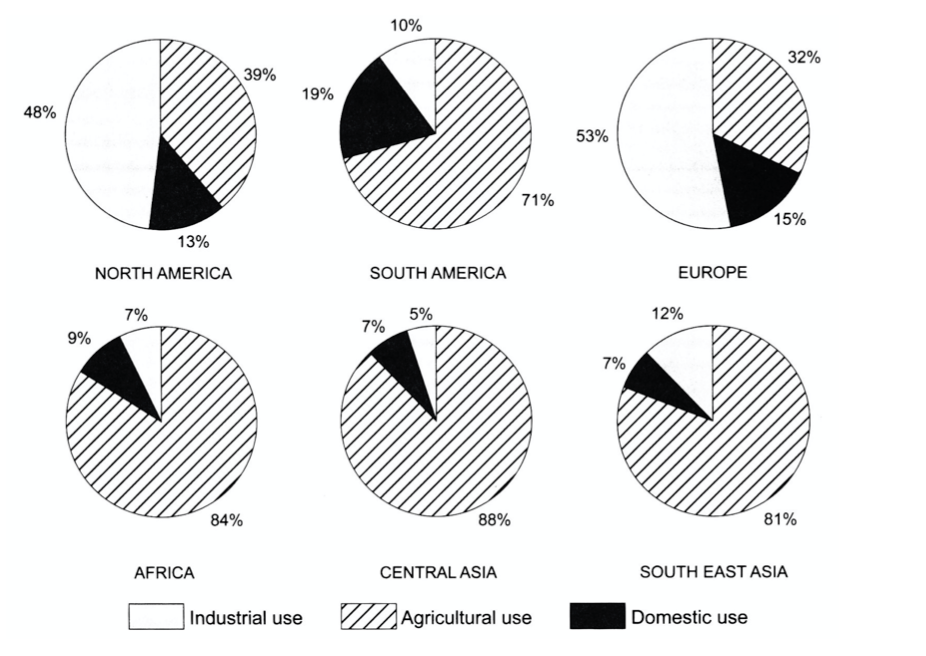
The pie charts provide information regarding the proportions of water used for industrial, agriculture, and domestic use in six regions.
In general, water serves mostly an industrial purpose in North America and Europe, whereas it is predominantly used for agriculture in South America, Africa, Central Asia, and South-East Asia.
Regarding industrial and domestic use, North America and Europe consume an average of approximately 50 percent of water for industrial purposes. However, these two regions report much less water consumption for domestic purposes, utilizing 13 percent and 15 percent, respectively. Out of all six regions, South America dedicates the highest percentage of water consumption for domestic use, but uses only 10 percent for industrial reasons. Both industrial and domestic use remain the least popular choices in Africa, Central Asia, and South-East Asia, where their combined use makes up less than 20 percent of the overall water consumption in each of the three regions.
Agricultural use, on the other hand, accounts for 71 percent of water consumption in South America and over three-fourths of water use in Africa, South-East Asia, and Central Asia, where it is nearly 90 percent. North America and Europe consume less than 40 percent of water for agricultural purposes.
想學習如何處理圓餅圖題型,可註冊 7 天免費試用並觀看:IELTS Academic Writing Task - Pie Charts 課程。
7 天免費試用表格(Tables)
在這種類型的題目中,你會拿到一個資料表。表格裡的資料可能是 隨時間變化的動態數據,或是某一時間點的靜態比較。 通常資訊量很多,你不可能把所有細節都寫出來。 你的任務是抓出最重要的重點,撰寫摘要,並用數據支持你的描述。
The table below gives the average time spent and distance traveled by UK commuters in one year. Time and distance are given in minutes and miles accordingly.
Summarise the information by selecting and reporting the main features, and make comparisons where relevant.
Commuting Habits of different regions of the UK in a year
UK Region | Average Commuting Time (minutes) | Average Commuting Distance (miles) |
London | 54 | 14 |
South East | 78 | 20 |
Scotland | 45 | 19 |
West Midlands | 39 | 18 |
North West | 36 | 18 |
Northern Ireland | 36 | 15 |
Yorkshire & Humberside | 36 | 14 |
South West | 34 | 16 |
East Anglia | 33 | 15 |
North East | 32 | 19 |
East Midlands | 32 | 15 |
Wales | 27 | 14 |
- Write at least 150 words.
- You should spend around 20 minutes on this task.
The table shows data on the average commuting time (minutes) and distance (miles) completed by UK citizens in 12 different regions in one year.
Overall, with the exception of London, the further people travel, the more time they need to reach work people. Commuters in the south east region spend the longest time commuting over the greatest distance, whereas people in Wales spend the least.
Regarding the top three UK regions, on average, people in the south east travel both the farthest and longest at 20 miles over 78 minutes. Likewise inhabitants of Scotland journey a similar distance to work, yet spend almost half the time doing so at 45 minutes to get there, while those living in London spend the second-longest time travelling (54 minutes) over just 14 miles.
Of the other regions, people in the West Midlands spent the most time travelling at 39 minutes whereas those in Wales recorded the lowest time at 27 minutes. With regard to distance, residents of the North East, West Midlands and North West recorded the greatest mileage at 19, 18 and 18 miles respectively, while people in Yorkshire and Humberside as well as Wales both travelled the shortest distance to work of all at 14 miles.
想學習如何處理表格題型,可註冊 7 天免費試用並觀看以下課程:
- IELTS Academic Writing Task - Tables Part 1 lesson.
- IELTS Academic Writing Task - Tables Part 2 lesson.
流程圖(Process Diagrams)
在這類題目中,你會得到一張示意圖,說明某個東西如何運作。 圖中可能顯示的是機器、系統或自然現象。 通常幾乎沒有數據,或只有極少量的數字。 你的任務是總結示意圖中的流程與階段,清楚說明整個程序。
The diagram below shows the water cycle, which is the continuous movement of water on, above and below the surface of the Earth.
Summarise the information by selecting and reporting the main features.
- Write at least 150 words.
- You should spend around 20 minutes on this task.
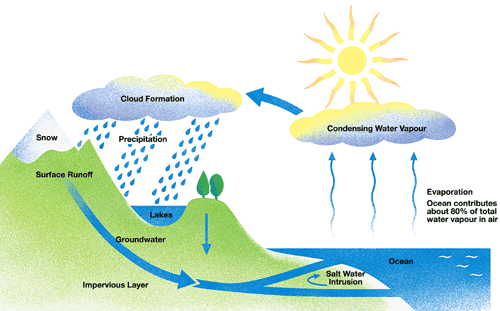
The diagram illustrates the hydrological cycle by which water moves through our natural environment. Overall, there are several stages to the process involving evaporation, precipitation and the final return of water to the ocean where the process begins over.
Since 80% of all water begins in the ocean, most water originates from this source. Initially sea water is warmed by the sun, causing it to evaporate into the air becoming water vapor. This then rises to condense into clouds at a higher elevation, which are then then pushed by the wind over land where it condenses further and precipitation occurs, falling as either snow or rain.
After precipitation on land, water then takes one of three routes. Some of it may fall into lakes or return to the ocean as surface runoff. Still further water percolates underground to an impermeable layer where it again flows back to the sea. Salt water also intrudes from the ocean into the land in coastal areas.

Process Diagram
Learn how to answer this question in a step-by-step interactive exercise
Process Diagram
IELTS 學術組寫作第一題的流程示意圖題目,會一步一步呈現某樣東西如何製作,或某個系統如何運作。你要依照圖中的順序報告各個階段,不要提出原因或意見。
先預覽題目,然後點擊「下一步」繼續。
預覽題目
Summarise the information by selecting and reporting the main features.
Write at least 150 words.
動筆之前,先確定你看懂了這張圖。數一數有幾個步驟,並順著箭頭看清楚流程從哪裡開始、在哪裡結束。如果最後一個箭頭回到第一個階段,這個流程就是一個循環,沒有最終產品。
回答關於這張圖的問題。
解讀圖表
引言告訴讀者這張圖呈現了什麼。用自己的話同義改寫題目,不要照抄,並說出這是什麼流程。這裡不要描述任何步驟。
寫一到兩個句子作為你的引言。
寫引言
題目
The diagram below shows the water cycle, which is the continuous movement of water on, above and below the surface of the Earth.
Summarise the information by selecting and reporting the main features.
Write at least 150 words.
IELTS 第一題的報告需要每一組階段寫一個主體段落。不要每個步驟各寫一段。在流程的自然轉折點切分,也就是地點、材料或目的改變的地方,讓每一組都是一連串前後相接的階段。大多數流程會分成兩組;較短的流程可能只有一組,較長的可能有三組。
選出分組方式。
進行分組
選出分組方式。
- Group 1: stages 1 to 2 (Evaporation to Condensing Water Vapour). Group 2: stages 3 to 4 (Cloud Formation to Precipitation). Group 3: stages 5 to 6 (Surface Runoff to Groundwater).
- Group 1: stages 1 to 3 (Evaporation to Cloud Formation). Group 2: stages 4 to 5 (Precipitation to Surface Runoff). Group 3: stage 6 (Groundwater).
- Group 1: stages 1 to 3 (Evaporation to Cloud Formation). Group 2: stages 4 to 6 (Precipitation to Groundwater).
- Group 1: stages 1 to 2 (Evaporation to Condensing Water Vapour). Group 2: stages 3 to 5 (Cloud Formation to Surface Runoff). Group 3: stage 6 (Groundwater).
概述讓人一眼看懂整個流程。問問自己總共有幾個步驟,以及從頭到尾主要階段有哪些。流程很少拿來和其他東西比較,所以要描述流程的整體樣貌,而不是去找上升或下降。
回答問題,找出整體趨勢。
找出整體趨勢
運用你在上一步的筆記。概述要說出步驟的數量和主要階段,並說明流程最後是產出一項產品,還是像循環一樣不斷重複。設備、時間和溫度留到主體段落再寫,也不要提出原因或意見。
寫一到兩個句子作為你的概述。
寫你的概述
主體段落 1 依照箭頭的順序,一步一步描述第一組階段。使用被動語態,例如 is heated、is mixed 和 is poured,因為圖中很少說明是誰在做這些工作。用順序詞把步驟串起來,例如 first、then 和 after that。
為主體段落 1 寫三到四個句子。
寫主體段落 1
主體段落 2 描述你的第二組階段。它要從主體段落 1 停下的地方接著寫,讓順序不會中斷。繼續使用被動語態,並用 once 和 after this 等片語連接各組。如果這是最後一段,就用 in the final stage 或 finally 標示結尾;如果流程是一個循環,要說明最後一步會回到第一步。
為主體段落 2 寫三到四個句子。
寫主體段落 2
你寫的各部分現在組成了一篇完整的報告:引言、概述,以及每組階段各一個主體段落。把它們放在一起讀,檢查各階段是否仍然依序排列、被動語態是否正確,以及報告的長度是否足夠。
讀完你的完整報告規劃,然後點擊「下一步」,和範例報告比較。
完整報告規劃
如何判斷
流程示意圖題呈現某樣東西如何一步步製作出來,或某個系統如何運作。示意圖有固定的順序,所以報告要依照這個順序,從第一個階段寫到最後一個階段。
按照固定的順序作答,讓各階段保持先後次序,不漏掉任何步驟。
- 解讀圖表. 數一數有幾個步驟,並順著箭頭看流程從哪裡開始、在哪裡結束。
- 寫引言. 同義改寫題目,並點出這個流程,不寫任何細節。
- 進行分組. 在流程自然的轉折點把各階段分組,每組一個主體段落。
- 找出整體趨勢. 判斷總共有幾個步驟,以及從頭到尾的主要階段是什麼。
- 寫概述和主體段落. 先概括流程的整體樣貌,再依序描述各步驟。
- 完整報告規劃. 把你寫的各部分放在一起讀,並和範例報告比較。
流程報告要用被動式來寫。示意圖很少說明是誰在做這些工作,所以要用「is heated」、「is mixed」和「is stored」這類形式,並用「first」、「after that」和「finally」這類表示順序的字詞連接各步驟。
閱讀
流程示意圖呈現由箭頭連接的各個階段。數一數有幾個步驟,並順著箭頭確認流程從哪裡開始、在哪裡結束。如果最後一個箭頭回到第一個階段,這個流程就是循環,沒有最終產品。
引言
引言說明示意圖呈現的內容。用你自己的話同義改寫題目,不要照抄,並點出這個流程。這幾句話不要寫個別的步驟。
組別
第一題的報告中,每一組階段要寫一個主體段落。不要每個步驟各寫一段。在流程自然的轉折點把它切開,也就是地點、材料或目的改變的地方,讓每一組都是一連串前後相接的階段。大多數流程可以分成兩組;較短的流程可能只有一組,較長的則可能有三組。
趨勢
概述讓人一眼看懂整個流程:總共有幾個步驟,以及主要階段是什麼。流程很少和其他東西比較,所以要描述流程的整體樣貌,而不是去找上升或下降。
動筆寫
概述放在最前面,而且保持概括,不寫設備、時間或溫度。接著每個主體段落依照箭頭的順序描述其中的步驟。使用被動式,例如「is heated」和「is poured」,並用表示順序的字詞連接各步驟,例如「first」、「next」、「after that」和「finally」。
想學習如何解題流程圖題型,可註冊 7 天免費試用並觀看:IELTS Academic Writing Task - Process Diagrams 課程。
7 天免費試用地圖(Maps)
在地圖題中,你會得到一張、兩張或三張地圖。這些地圖可能顯示的是城鎮、城市、小島或其他地理區域。 地圖通常用來呈現某段時間內該地區的變化。 這些變化可以是建設(例如:為觀光開發某地區),也可以是破壞(例如:地震等天災造成的影響)。 你的任務是總結該地區發生的變化,並突出最重要的重點。
The maps below show the centre of a small town called Islip as it is now, and plans for its development. Summarise the information by selecting and reporting the main features, and make comparisons where relevant.
- Write at least 150 words.
- You should spend around 20 minutes on this task.
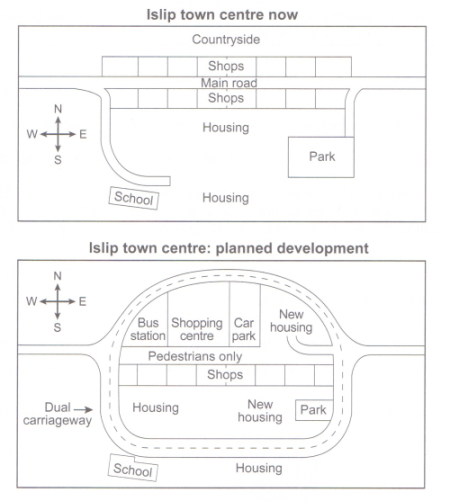
The diagrams illustrate some proposed changes to the central area of the town of Islip.
Overall, the principal change to the town will be the construction of a ring road around the centre. Various other developments with regard to shops and housing will accompany the building of this road.
As the first map reveals, lslip town center now is relatively small. There is a main road from the west to the east with shops on both sides. The northern area is rarely countryside, while the southern area is filled with houses with a school at the end of the fork road in the southwest corner and a park in the southeast area.
In the future, the main road is expected to reform into a dual carriageway as a round containing all the new buildings. The shops along the north side of the new pedestrian street will be demolished to make way for a bus station, shopping centre, car parks and new housing area. The shops along the south side of the street will remain, but it seems that the town's park will be reduced in size so that more new houses can be built within the ring road.
Map
Learn how to answer this question in a step-by-step interactive exercise
Map
IELTS 學術組第一題的地圖題會給你同一個地方在不同時間的兩張以上平面圖,通常是兩張。你要寫一份至少 150 字的報告,描述這個地方如何改變,而且不提出意見或原因。
先預覽題目,然後點擊「下一步」繼續。
預覽題目
Write at least 150 words.
先從解讀地圖開始,而不是直接動筆。檢查地圖呈現的地點、比較的時間點,以及共有幾張地圖。接著找出哪些是新出現的、哪些消失了,以及哪些現在改作其他用途。
回答關於地圖的問題。
解讀圖表
引言要用你自己的話同義改寫題目。說出地圖呈現什麼以及涵蓋的期間,並改變題目的用字,而不是照抄。細節、位置用語和描述變化的動詞留到後面再寫。
寫一到兩句同義改寫題目的句子。
寫引言
題目
The maps below show the centre of a small town called Islip as it is now, and plans for its development. Summarise the information by selecting and reporting the main features, and make comparisons where relevant.
Write at least 150 words.
第一題的報告需要每一組地圖各一個主體段落。通常每張地圖自成一組:較早的地圖寫在第一段,較晚的地圖寫在第二段,因為這樣能把不同的時間點分開。兩張最適合一起描述的地圖可以歸為一組,三張地圖通常寫成三段。
每個特徵各寫一段,或地圖的兩半各寫一段,都會破壞時間點之間的比較。
選出能寫出清楚主體段落的分組方式。
進行分組
選出能寫出清楚主體段落的分組方式。
- One group: now and planned development.
- Group 1: now. Group 2: planned development.
概述要說明整段期間最大的變化。問問自己:這個地方是擴大還是縮小了?哪些土地用途出現或消失了?個別特徵和確切位置不要寫進概述。
選出描述整體變化的答案。
找出整體趨勢
現在運用上一步的筆記,用你自己的話寫出概述。一到兩句就夠了。描述這個地方的整體發展,並省略確切位置、個別特徵,以及任何變化的原因。
用一到兩句寫出你的概述。
寫你的概述
第一個主體段落詳細描述你第一組中的一張或多張地圖。已經結束的狀態用過去式,並使用「to the north of」、「beside」和「on the edge of」這類位置用語,讓讀者能找到每個特徵的位置。描述特徵,而不是原因。
為主體段落 1 寫三到四句。
寫主體段落 1
第二個主體段落描述你第二組中的一張或多張地圖,以及自較早的地圖以來的變化。描述被建造、拆除或取代的事物時,用被動式,例如「was built」、「had been cleared」和「has been converted」,因為地圖沒有說明是誰做的。位置用語仍然要說明每項變化發生在哪裡。
為主體段落 2 寫三到四句。
寫主體段落 2
你的各個部分現在組成了一份報告:引言、概述,以及每組地圖各一個主體段落。依序閱讀,並確認概述說明了整體情況,而主體段落承載細節。
閱讀你的報告規劃,然後和範例報告比較。
完整報告規劃
如何判斷
地圖題會給你同一個地方在不同時間的兩張以上平面圖。你不用描述每一個標示,而是報告這個地方在不同時間點之間有什麼變化。
按照固定的順序作答,讓報告先交代整體情況,再寫細節。
- 解讀圖表. 規劃之前,先檢查地點、時間點,以及每張地圖上的主要特徵。
- 進行分組. 把資訊分成幾組地圖,每組一個主體段落,通常先寫較早的地圖,再寫較晚的地圖。
- 找出整體趨勢. 決定整段期間最大的變化,例如擴張、衰退,或土地有了新用途。
- 分階段寫報告. 先寫引言,再寫概述,然後為每一組各寫一個主體段落。
- 完整報告規劃. 把各部分放在一起讀,並和範例報告比較。
地圖報告靠方位用語和被動式撐起來。像「to the north of」和「beside the river」這樣的片語能標出每個特徵的位置,而像「was built」或「had been removed」這樣的形式,能在不說出是誰做的情況下報告變化。
閱讀
規劃之前,先確認地圖呈現的內容:地點、時間點,以及每張地圖上的主要特徵。接著找出哪些是新出現的、哪些消失了、哪些現在改作其他用途。這個閱讀階段能避免你只描述其中一張地圖。
組別
IELTS 第一題的報告中,每一組地圖要寫一個主體段落。通常每張地圖各自成為一組,先寫較早的地圖,再寫較晚的地圖。兩張最適合放在一起描述的地圖可以合成一組,而三張地圖通常寫成三段。動筆前先決定怎麼分組,因為這會決定整篇報告的順序。
概述
概述要寫出整段期間最大的變化,而不是小細節。問問自己:這個地方是擴大了還是縮小了?哪些類型的土地用途出現了或消失了?個別特徵和確切位置應該放在主體段落。
動筆寫
報告分成幾個簡短的階段來寫。引言同義改寫題目,概述寫出主要變化,每個主體段落描述一組。已經結束的狀態用過去式,變化用被動式,例如「was built」或「had been cleared」,並用方位用語說明每個特徵的位置。
想學習如何處理地圖題,可註冊 7 天免費試用並觀看:IELTS Academic Writing Task - Maps 課程。
7 天免費試用混合資料(Mixed Data)
在這種類型的題目中,你會同時看到兩組資料。 這兩組資料的形式會不同。例如,一組呈現隨時間變化的趨勢,另一組則是單一時間點的靜態比較; 或者,一組顯示百分比,另一組顯示實際數字。 你也可能會同時看到一張圖像(如流程圖或地圖)加上一組統計圖表(如長條圖、折線圖、圓餅圖或表格)。 你的任務是同時整理並總結這兩組資料的重點,並作出適當比較。
The pie graph depicts the main reasons for the productivity loss of agricultural land worldwide. The table shows how these causes influenced three world regions during the 2000s.
Summarise the information by selecting and reporting the main features, and make comparisons where relevant.
Causes of Land Degradation by Region (%) | ||||
Region: | Deforestation | Over-cultivation | Over-grazing | Total land degraded |
North America | 0.3 | 3.4 | 1.7 | 5.4 |
Asia | 9.8 | 7.8 | 5.7 | 23.3 |
Australia & Oceania | 1.6 | 0.3 | 11 | 12.9 |
- Write at least 150 words.
- You should spend around 20 minutes on this task.
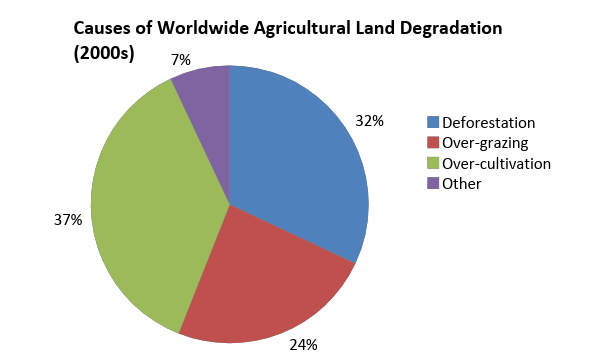
The pie chart shows the four main causes of farmland degradation in the world today, while the table presents the amount of land surface area affected by each one in three separate global regions during the 2000s.
Overall, Asia suffered more from the deterioration of farmland than other regions owing to deforestation and over-cultivation which were also the primary reasons for agricultural land loss worldwide.
Globally, 69% of degraded land is attributed to excessive cultivation and tree clearance, constituting 37% and 32% respectively. A further quarter of global land loss is due to over cultivation of crops. Other causes made up only 7% collectively.
In the 2000s, these causes affected regions of our planet differently. Asia was the worst affected where the top two causes of global land loss, deforestation and over-cultivation, resulted in 9.8% and 7.8% of degraded land there. The impact on Australia and Oceania was less severe though over-grazing was the predominant cause of land deterioration at eleven percent. The least affected of all was North America where only 5.4% of land was diminished, principally because of over-cultivation at 3.4%.
Mixed Charts
Learn how to answer this question in a step-by-step interactive exercise
Mixed Charts
IELTS 學術組第一題的混合圖表題會給你同一主題、不同類型的兩個以上圖表。你要寫一份至少 150 字的報告,說明主要特徵並連結各個圖表,而且不提出意見或原因。
先預覽題目,然後點擊「下一步」繼續。
預覽題目
Summarise the information by selecting and reporting the main features, and make comparisons where relevant.
Write at least 150 words.
先從解讀圖表開始,而不是直接動筆。檢查每一個圖表呈現什麼,並在規劃前讀過每一個座標軸標籤和單位。不同類型的圖表常常測量不同的東西,所以要記下它們的共同點,例如同一群人或同一段期間。
回答關於圖表的問題。
解讀圖表
引言要用你自己的話同義改寫題目。清楚說明每個圖表呈現什麼、涵蓋哪一群人和哪段期間,並改變題目的用字,而不是照抄。數字和圖表之間的連結留到後面再寫。
寫一到兩句同義改寫題目的句子。
寫引言
題目
The pie graph depicts the main reasons for the productivity loss of agricultural land worldwide. The table shows how these causes influenced three world regions during the 2000s.
Summarise the information by selecting and reporting the main features, and make comparisons where relevant.
Write at least 150 words.
第一題的報告需要每一組圖表各一個主體段落,而一組混合圖表會分成一到三組。同一類型或同一主題的圖表應該放在一起,因為混合兩種測量的段落很難讀懂。兩個測量同一件事的圓餅圖放在同一段,而測量不同項目的折線圖則自成一段。
每個圖表各寫一段,可能會把應該放在一起的內容拆開;把所有圖表寫成一段,則會混合不同的測量。按年份或按最高、最低數字來劃分,都會破壞題目要求的比較。
選出讓每一段都只有一種清楚測量的分組方式。
進行分組
選出讓每一段都只有一種清楚測量的分組方式。
- Group 1: the pie chart. Group 2: the table.
- One group: the pie chart and the table.
概述要說明所有圖表中最大的規律,而且要寫在任何細節之前。找出每個圖表的主要變動,再判斷一個圖表是否支持或解釋了另一個圖表。確切數字不要寫進概述。
選出描述主要規律的答案。
找出整體趨勢
現在運用上一步的筆記,用你自己的話寫出概述。一到兩句就夠了。說明主要規律和圖表之間的連結,並省略確切數字,以及任何造成這個規律的原因。
用一到兩句寫出你的概述。
寫你的概述
第一個主體段落詳細描述第一組。報告重要的比較,例如最高點、最低點和最明顯的變化,並用幾個挑選過的數字支持每一項。不要列出每個數字,也不要在這裡描述其他組。
為主體段落 1 寫三到四句。
寫主體段落 1
第二個主體段落描述第二組,並把它和第一組連結起來。把應該放在一起的比較歸為一組,而不是逐一描述每個類別,並用連接片語指出各圖表一致的地方。報告資料呈現什麼,而不是為什麼。
為主體段落 2 寫三到四句。
寫主體段落 2
你的各個部分現在組成了一份報告:引言、概述,以及每組圖表各一個主體段落。依序閱讀,並確認概述說明了整體情況,而主體段落承載細節。
閱讀你的報告規劃,然後和範例報告比較。
完整報告規劃
如何判斷
混合圖表題會給你同一主題、不同類型的兩個以上圖表。你不用為每個圖表各寫一篇報告,而是報告每個圖表的主要特徵,並在數據有關聯的地方把它們連結起來。
按照固定的順序作答,讓報告先交代整體情況,再寫細節。
- 解讀圖表. 規劃之前,先檢查每個圖表呈現的內容,並看清楚每個座標軸、標示和單位。
- 進行分組. 把圖表分成一到三組,每組一個主體段落,通常每組是一種圖表類型或一個主題。
- 找出整體趨勢. 決定所有圖表整體最大的規律,並留意它們之間的關聯。
- 分階段寫報告. 先寫引言,再寫概述,然後為每一組各寫一個主體段落。
- 完整報告規劃. 把各部分放在一起讀,並和範例報告比較。
把重要的比較歸納在一起,不要列出每個數字。挑選幾個能支持某個規律的數據,得分會比一長串只是重複圖表內容的數字更高。
閱讀
不同類型的圖表測量不同的東西,所以先逐一單獨閱讀。檢查標題、座標軸標示、單位和時間範圍,再留意這些圖表的共同點,例如同一群人或同一段時期。圓餅圖中的時間比例和折線圖中的總數,並不是同一種測量。
組別
IELTS 第一題的報告中,每一組圖表要寫一個主體段落,所以這些圖表必須分成一組、兩組或三組。同一類型或同一主題的圖表放在一起,測量不同項目的圖表則單獨寫一段。動筆前先決定怎麼分組,因為這會決定整篇報告的順序。
概述
概述用一到兩句話寫出所有圖表整體最大的規律。先找出每個圖表的主要變化,再判斷某個圖表是否支持或解釋了另一個圖表。確切數據和單一類別應該放在主體段落。
動筆寫
報告分成幾個簡短的階段來寫。引言同義改寫題目,概述寫出主要規律,每個主體段落描述一組。在主體段落中,把相關的比較歸納在一起,並用幾個挑選過的數據支持每一個比較,而不是列出每個數字。
想學習如何解題 IELTS Academic Writing Task 1 的混合資料題型,請註冊 7 天免費試用以觀看 IELTS Academic Writing Task - Mixed Data 課程。
7 天免費試用IELTS Academic Writing Task 1 常用字彙
想在這個題型中拿到高分,你必須會使用適當的字詞來描述與呈現圖表中的資料 (例如圓餅圖、長條圖、折線圖或混合圖表)。我們建議你註冊 7 天免費試用並完成以下課程:
IELTS 一般模組寫作第一部分 (General Writing Task 1)
在 IELTS 一般模組寫作第一部分 (General Writing Task 1) 中,你會看到一個情境,並需要根據該情境寫一封至少 150 字的信件,形式可能是非正式、半正式或正式信件。 所要求書寫的情境屬於常見的日常生活,例如:
- 寫信給學校住宿管理員,回報住宿問題,
- 寫信給新雇主,說明你的時間管理困難,
- 寫信給當地報社,表達對擴建機場計畫的意見,
- 寫信給房屋仲介,請求協助修理房子的暖氣系統。
題目會提供三個必須在信中提到的要點(bullet points)。你可能需要請求或提供資訊、或解釋某個情況。為此,你可能需要:
- 詢問或提供一般事實性資訊,
- 表達需求、想法、喜好或不滿,
- 提出意見或抱怨,
- 提出要求、建議或推薦方案。
IELTS General Writing 的寫作風格
寫作風格取決於你要寫信的對象(audience)及你們的關係親疏。 必須使用符合對象的語氣,並有助於你達成寫信目的,例如: 寫給朋友=非正式;寫給主管或陌生人=半正式或正式。 信件開頭不需要寫任何地址。
如何避免在 IELTS General Writing Task 1 中失分
如前所述,你不應該花超過 20 分鐘在這題,並且至少寫 150 字,否則會被扣分。 雖然寫超過 150 字不會扣分,但寫太長可能會壓縮你在 Task 2(分數佔比更高)的作答時間。
如果信件偏題、未完整回應 bullet points,或未以段落形式撰寫(例如使用條列式、筆記格式),會被扣分。 抄襲(從任何來源直接複製)則會受到嚴重扣分。
Last weekend, your cousin celebrated her 50th birthday, but you couldn't attend and you forgot to cancel.
Write a letter to your cousin. In your letter:
- Apologize for missing the birthday celebration
- Explain why you missed it and why you hadn't let her know
- Describe how you will make it up to her
You do NOT need to write any addresses.
Begin your letter as follows:
Dear ___,
- Write at least 150 words.
- You should spend around 20 minutes on this task.
Dear Marnie,
Happy belated birthday! I hope you're doing well and that you had a great 50th birthday party.
I'm so sorry that I wasn't at your party to celebrate with you. It's been such a long time since we've been able to catch up and see each other.
To be completely honest, I've been swamped with work lately, and I was asked to go on a last-minute business trip a few days before your birthday. I was so busy that I had completely forgotten about your party, and it didn't occur to me to call you and cancel.
My busy schedule is absolutely not an excuse for missing your 50th birthday, though, and I would love to make it up to you. I've reserved a table for two next Friday night at the new sushi restaurant in town. Can I please treat you to a luxurious birthday dinner?
I hope we can celebrate together next Friday!
Speak to you soon,
Jessica
Total Word Count: 162 words

Task Achievement — Letter
Learn how to answer this question in a step-by-step interactive exercise
Task Achievement — Letter
在 IELTS 一般訓練組寫作第一題中,你要針對一個情境寫一封信。任務達成度取決於你是否涵蓋題目中的每個條列重點,因為一封寫得很好的信只要漏掉一點,還是會被扣分。
讀清楚情境、條列重點,以及題目提供的開頭句(如果有的話)。
先預覽題目,然後點擊「下一步」繼續。
預覽題目
Write a letter to your cousin. In your letter:
- Apologize for missing the birthday celebration
- Explain why you missed it and why you hadn't let her know
- Describe how you will make it up to her
Write at least 150 words. You do NOT need to write any addresses.
Begin your letter as follows:
Dear ___,
動筆之前,先回答三個問題來規劃這封信。你寫信給誰?為什麼寫這封信?信中必須包含什麼?
讀信的人決定語言要多正式,寫信目的決定你怎麼開頭,條列重點決定信的內容。每個答案都已經在題目裡。
把每個規劃問題配對到題目中回答它的部分。
理解題目要求
把每個規劃問題配對到題目中回答它的部分。
稱呼語和結尾敬語會告訴讀者這封信有多正式,所以必須配合你寫信的對象。寫給陌生人或經理的信是正式的,寫給朋友的信是非正式的。
信的開頭和結尾要保持同樣的正式程度。正式的稱呼語搭配隨意的結尾,會讓讀者感到困惑。
選擇適合讀信對象的稱呼語和結尾敬語。
選擇開頭稱呼與結尾敬語
Confirm the greeting
- Dear ___,
- Dear Sir or Madam,
- Dear Ms. Smith,
- Hey you,
Choose a closing
- Speak to you soon,
- Lots of love,
- Best wishes,
- Yours faithfully,
- Yours sincerely,
第一個條列重點要獨立成一段。任務達成度看的是每個條列重點是否都有涵蓋並加以發展,而不只是提到而已。
題目提供了句子開頭,讓你起個頭。用自己的話把想法寫完,語氣要和稱呼語保持一致。
寫一段涵蓋第一個條列重點的段落。
寫條列重點 1
Apologise for missing the birthday celebration
第二個條列重點也需要獨立成一段。給它和第一段一樣的長度和細節,因為只回答一半的重點還是會被扣分。
先用一個句子開頭起頭,再補上讀信人在這個情境中真正需要的細節。
寫一段涵蓋第二個條列重點的段落。
寫條列重點 2
Explain why you missed it and did not let her know
用第三個條列重點完成信的主體。三個重點都用完整句子涵蓋之後,這個任務就完成了。
語氣要從頭到尾保持一致,並檢查這一段確實回答了條列重點真正的要求。
寫一段涵蓋第三個條列重點的段落。
寫條列重點 3
Describe how you will make it up to her
你的段落現在組成了一封完整的信,稱呼語和結尾敬語也都已就位。把它當作一篇完整的文章來讀,檢查每個條列重點是否都有涵蓋到。
把你的用字和範例書信比較,注意它的語氣如何從稱呼語到結尾敬語都保持一致。
檢查你的信,然後點擊「下一步」繼續。
檢查你完整的書信
如何判斷
第一題的書信要回應一個情境,並涵蓋一組條列重點。任務達成度取決於是否涵蓋每一個條列重點,以及語氣是否符合讀信的人。
按照固定的順序作答,就不會漏掉任何條列重點,正式程度也能從頭到尾保持一致。
- 理解題目要求. 弄清楚你寫信給誰、為什麼寫,以及信中必須包含什麼。
- 選擇開頭稱呼與結尾敬語. 讓開頭和結尾符合讀信的人,並讓兩者保持相同的正式程度。
- 寫出各個條列重點. 每個條列重點各寫一段,並用具體的細節加以發展。
- 檢查你完整的書信. 把各段放在一起讀,檢查每一個條列重點都有涵蓋到。
每個條列重點各寫一段。這個簡單的規劃讓你幾乎不可能漏掉任何條列重點,而漏掉條列重點正是在任務達成度上失分最快的原因。
規劃
用三個問題規劃整封信:你要寫信給誰?為什麼寫這封信?信中必須包含哪些內容?每個答案都已經寫在題目裡了。
語氣
開頭的稱呼和結尾的問候語會讓讀者知道這封信有多正式。寫給陌生人或主管的信要正式,寫給朋友的信則是非正式的,而且信的開頭和結尾必須維持同樣的正式程度。
條列重點
每個條列重點都有自己的段落。用完整的句子把它寫清楚,提供讀信的人真正需要的細節,並讓各段長度相近,這樣就不會有某個重點看起來寫得很倉促。
想了解更多 IELTS General Writing Task 1 的技巧與範例,請參考: The Ultimate Guide for the IELTS General Writing Task 1
IELTS 寫作第二部分 (Writing Task 2)
在 IELTS 寫作第二部分 (Writing Task 2) 中,你需要根據題目寫一篇傳統的論說文。 你必須至少寫滿 250 字,未達 250 字會被扣分。 Task 2 一共有 6 種題型,下面我們會逐一看看各種題型的範例題目與範文。
原因與結果題(Causes and effects)
在這種題型中,題目會給你一個問題或現象,你的任務是說明造成這種情況的原因, 並分析這種情況帶來的影響或結果。
It is observed that in many countries not enough students are choosing to study science at university. What are the causes? And what will be the effects on society?
- Write at least 250 words.
- You should spend around 40 minutes on this task.
It is a fact that many students globally are avoiding science in favor of other subjects at university. Such a trend is largely due to how science is perceived, which may be having a detrimental effect on a nation’s development.
The primary reason for the drop in enrollment in science-based courses is that many undergraduates are put off by their difficulty. While many high school students enjoy science, they soon find themselves facing a lot of theory and research based courses once in college. For example according to a recent poll of UK universities, many students stated that while science was interesting in high school, there was too much theory learnt in classes, and not enough application in the lab to make it interesting. Furthermore, there are plenty of easier alternatives such as humanities for students to choose from these days. As a result, most choose a more appealing humanities degree over a science one.
Countries with the lowest science enrollment rates are affected the most competitively and economically. Fewer science graduates mean a shortage of skilled researchers in science-related fields like bio-engineering which reduces a countries competitiveness in attracting foreign investment. In other words foreign companies are usually unwilling to invest in nations with a low pool of skilled workers. In addition, a low number of skilled workers mean fewer technological developments for such countries, which may cause their economies to suffer from lost business in being the first to market with new products. For example, evidence shows that the number of patents filed by Chinese corporations is beginning to threaten the number credited to American ones.
In conclusion, there is a direct correlation between the perceived difficulty of science degrees and limited economic growth. Only by changing this attitude will countries reverse this trend.
Task Achievement — Task 2
Learn how to answer this question in a step-by-step interactive exercise
Task Achievement — Task 2
在 IELTS 寫作第二題中,你要寫一篇回答題目每個部分的文章。仔細閱讀題目敘述和指示句,注意題目要你討論什麼。
一篇文章就算沒有離題,只要沒有回答題目真正問的問題,就拿不到高分。
先預覽題目,然後點擊「下一步」繼續。
預覽題目
我們用兩個句子來寫引言,總共約 25 到 35 個字。第一句先用自己的話改寫題目。用你自己的用字和同義詞來同義改寫題目,這能確保你的文章不離題,也能展現你豐富的詞彙。第二句介紹你會在主體段落中討論的具體主題。
寫一段引言。
寫引言
每個主體段落都需要一個主題句來介紹它的重點。以這個長度的文章來說,兩個主體段落就夠了。
每一段寫一個清楚的句子。每句控制在 12 到 20 個字,解釋和例子留到接下來的步驟再寫。
為每個主體段落寫一個主題句。
寫出兩個主題句
science courses are seen as too hard
fewer scientists hurt the economy
主題句要有支持才能得分。用兩個論點來發展第一個主體段落。每個論點都寫出一個解釋和一個具體的例子。
每個主體段落大約 4–5 個句子,也就是 60 到 80 個字。點出具體情境,會比籠統的敘述更有力。
寫完第一個主體段落的其餘部分。
發展主體段落 1
60
第二個主體段落要和第一段一樣有深度。使用兩個論點,每個論點都用一個解釋和一個例子來支持。
每個主體段落大約 4–5 個句子,也就是 60 到 80 個字。不要只是換個說法重複第一段。
寫完第二個主體段落的其餘部分。
發展主體段落 2
60
結論為整篇文章收尾。先用兩個句子總結主要論點,再加上一到兩個句子說明這個主題為什麼重要。
不要照抄引言,也不要加入新的論點。整段結論控制在 35 到 50 個字。
寫一段 3–4 句的結論。
寫結論
35
你的引言、主題句、主體段落和結論現在組成了一篇完整的文章。把它當作一篇完整的作品來讀,檢查它是否回答了題目的每個部分。
把你的用字和範文比較,注意每一段各自發揮什麼作用。
檢查你的文章,然後點擊「下一步」繼續。
檢查你完整的作文
如何判斷
第二題的文章要回答題目的每一個部分。任務達成度取決於是否涵蓋題目要求的內容,以及是否用解釋和例子支持每一個主要論點。
按照固定的順序作答:引言、兩個主題句、兩個充分發展的主體段落,最後是結論。
- 寫引言.
一般來說,這一段需要兩個句子。用你自己的話和同義詞改寫題目,這能確保你的文章不離題,也能展現豐富的詞彙。第二句介紹你將在主體段落中討論的具體主題。因此,你的引言應該包含:
- 改寫後的題目
- 介紹具體主題
- 寫出兩個主題句. 為每個主體段落各寫一個主題句。
- 發展主體段落. 每個主體段落用兩個論點支持,每個論點都要有解釋和例子。每個主體段落大約 4–5 句。
- 寫結論. 總結主要論點,再說明這個主題為什麼重要。
- 檢查你完整的作文. 把各部分放在一起讀,檢查題目的每一個部分都有回答到。
兩個充分發展的段落,得分比四個沒有展開的論點更高。考官看重的是支持,所以與其再加一個論點,不如為現有的論點加上解釋和例子。
引言
一般來說,這一段需要兩個句子。用你自己的話和同義詞改寫題目,這能確保你的文章不離題,也能展現豐富的詞彙。第二句介紹你將在主體段落中討論的具體主題。因此,你的引言應該包含:
- 改寫後的題目
- 介紹具體主題
主題句
為每個主體段落各寫一個主題句。每個句子要用 12 到 20 個英文單字介紹那一段的重點,例子留到下一個階段。
支持
主題句要有支持才能得分。解釋這個論點為什麼成立,舉出具體的例子,並讓兩個主體段落的支持份量一樣多。每個主體段落大約 4–5 句。
結論
結論用兩句話總結主要論點,再加上一到兩句說明這個主題為什麼重要。不要照抄引言,也不要加入新的論點。
討論雙方觀點並給出自己意見(Discuss both views and give your own opinion)
在這種題型中,題目會給你兩個相反或對立的觀點。通常這兩個觀點會用 like “however” 之類的轉折連接,顯示立場不同。你的任務是寫一篇議論文, 比較與對比這兩種看法,並清楚表達你自己的立場。
Some people argue that the public should be allowed to have guns. Others do not agree. Discuss both points of view and give your opinion.
- Write at least 250 words.
- You should spend around 40 minutes on this task.
Gun ownership is a controversial topic with some people arguing that the public should have the choice to own them, while others disagree wholeheartedly with the idea. In my opinion, I believe that the public should only be entitled to own guns after having proper training.
The benefits of gun ownership are touted in some countries more than others. In countries where owning one is a civic right, like the United States, it is legal to use one in self-defense is legal. With muggings, murder and burglary rising in many countries, there may be some truth to the claim that owing a gun gives the owner increased security. Furthermore, in remote or dangerous areas, guns may be a necessity rather than an option. Without police nearby, properly stored, guns may be a great asset in deterring criminals from breaking and entering a remote property.
However, rather than deter violence, guns tend to escalate it in areas where they are widely available. Research shows that violent crime increases dramatically when guns are prevalent in society. When the public is armed, criminals and the police become so too, creating a situation in which guns beget more guns and eventually death. Additionally, greater ease of access is dangerous for children. Having a gun easily accessible may tempt children to abuse them as evidenced by the almost weekly school shootings in the US. There is further a proven link between increased suicide rates when guns are present.
It is my belief that the general public should be barred from owning guns of any kind. Also, guns should be restricted to specialists with a proven need for a firearm such as soldiers or hunters. While there are certain circumstances where owning a gun is an advantage, in the vast majority of situations there is no place for a gun in modern society.
Task Achievement — Task 2
Learn how to answer this question in a step-by-step interactive exercise
Task Achievement — Task 2
在 IELTS 寫作第二題中,你要寫一篇回答題目每個部分的文章。仔細閱讀題目敘述和指示句,注意題目要你討論什麼。
一篇文章就算沒有離題,只要沒有回答題目真正問的問題,就拿不到高分。
先預覽題目,然後點擊「下一步」繼續。
預覽題目
我們用兩個句子來寫引言,總共約 25 到 35 個字。第一句先用自己的話改寫題目。用你自己的用字和同義詞來同義改寫題目,這能確保你的文章不離題,也能展現你豐富的詞彙。第二句介紹你會在主體段落中討論的具體主題。
寫一段引言。
寫引言
每個主體段落都需要一個主題句來介紹它的重點。以這個長度的文章來說,兩個主體段落就夠了。
每一段寫一個清楚的句子。每句控制在 12 到 20 個字,解釋和例子留到接下來的步驟再寫。
為每個主體段落寫一個主題句。
寫出兩個主題句
guns help people defend themselves
more guns lead to more violence
主題句要有支持才能得分。用兩個論點來發展第一個主體段落。每個論點都寫出一個解釋和一個具體的例子。
每個主體段落大約 4–5 個句子,也就是 60 到 80 個字。點出具體情境,會比籠統的敘述更有力。
寫完第一個主體段落的其餘部分。
發展主體段落 1
60
第二個主體段落要和第一段一樣有深度。使用兩個論點,每個論點都用一個解釋和一個例子來支持。
每個主體段落大約 4–5 個句子,也就是 60 到 80 個字。不要只是換個說法重複第一段。
寫完第二個主體段落的其餘部分。
發展主體段落 2
60
結論為整篇文章收尾。先用兩個句子總結主要論點,再加上一到兩個句子說明這個主題為什麼重要。
不要照抄引言,也不要加入新的論點。整段結論控制在 35 到 50 個字。
寫一段 3–4 句的結論。
寫結論
35
你的引言、主題句、主體段落和結論現在組成了一篇完整的文章。把它當作一篇完整的作品來讀,檢查它是否回答了題目的每個部分。
把你的用字和範文比較,注意每一段各自發揮什麼作用。
檢查你的文章,然後點擊「下一步」繼續。
檢查你完整的作文
如何判斷
第二題的文章要回答題目的每一個部分。任務達成度取決於是否涵蓋題目要求的內容,以及是否用解釋和例子支持每一個主要論點。
按照固定的順序作答:引言、兩個主題句、兩個充分發展的主體段落,最後是結論。
- 寫引言.
一般來說,這一段需要兩個句子。用你自己的話和同義詞改寫題目,這能確保你的文章不離題,也能展現豐富的詞彙。第二句介紹你將在主體段落中討論的具體主題。因此,你的引言應該包含:
- 改寫後的題目
- 介紹具體主題
- 寫出兩個主題句. 為每個主體段落各寫一個主題句。
- 發展主體段落. 每個主體段落用兩個論點支持,每個論點都要有解釋和例子。每個主體段落大約 4–5 句。
- 寫結論. 總結主要論點,再說明這個主題為什麼重要。
- 檢查你完整的作文. 把各部分放在一起讀,檢查題目的每一個部分都有回答到。
兩個充分發展的段落,得分比四個沒有展開的論點更高。考官看重的是支持,所以與其再加一個論點,不如為現有的論點加上解釋和例子。
引言
一般來說,這一段需要兩個句子。用你自己的話和同義詞改寫題目,這能確保你的文章不離題,也能展現豐富的詞彙。第二句介紹你將在主體段落中討論的具體主題。因此,你的引言應該包含:
- 改寫後的題目
- 介紹具體主題
主題句
為每個主體段落各寫一個主題句。每個句子要用 12 到 20 個英文單字介紹那一段的重點,例子留到下一個階段。
支持
主題句要有支持才能得分。解釋這個論點為什麼成立,舉出具體的例子,並讓兩個主體段落的支持份量一樣多。每個主體段落大約 4–5 句。
結論
結論用兩句話總結主要論點,再加上一到兩句說明這個主題為什麼重要。不要照抄引言,也不要加入新的論點。
優缺點題(Advantages and disadvantages)
在這種題型中,題目會要你討論某個現象、做法或趨勢的優點與缺點。 有些題目還會要求你表明:你覺得哪一邊比較重要或比較有說服力。
In some countries, governments are encouraging industries and businesses to move to regional areas outside the big cities. Do the advantages of this trend outweigh the disadvantages?
- Write at least 250 words.
- You should spend around 40 minutes on this task.
There is a movement among some countries to promote regional areas away from cities as attractive to business and industry. In my opinion, I consider relocation of business to bring about more drawbacks than benefits over the long term.
There are several attractive benefits to businesses moving to regional areas. For businesses rural locations mean lower land prices. Cheaper land allows large or small business equal prospects to become established cheaply with additional room to expand. As an example, the average size of a business in UK cities is currently 25 square meters while those in the rural locales average around 50m2. Additionally, countries benefits principally from the direct investment in underperforming parts of the country. Having companies operating in less urbanized areas, creates jobs, attracts talent and increases immigration which brings greater wealth.
On the other hand, relocation is not without its drawbacks. For one thing, locations away from population centers may mean a greater distance to market for goods. As a result, cost savings from cheaper land may be mitigated by the increased transportation costs of shipping products to customers. For another thing, there are often fewer skilled workers in regional areas. It may not be easy to attract employees to work in out-of-the-way places, which would mean longer commutes for staff from nearby cities at the expense of the company coffers. Lastly, increased business in country areas, disturbs the life of local residents. Country roads are not built for heavy trucks or traffic which may cause increased noise, congestions and inconvenience to those living nearby.
To sum up, while regional settings may be well suited to certain internet-based businesses, for more traditional companies, the distance from the city presents many challenges to overcome.
Task Achievement — Task 2
Learn how to answer this question in a step-by-step interactive exercise
Task Achievement — Task 2
在 IELTS 寫作第二題中,你要寫一篇回答題目每個部分的文章。仔細閱讀題目敘述和指示句,注意題目要你討論什麼。
一篇文章就算沒有離題,只要沒有回答題目真正問的問題,就拿不到高分。
先預覽題目,然後點擊「下一步」繼續。
預覽題目
我們用兩個句子來寫引言,總共約 25 到 35 個字。第一句先用自己的話改寫題目。用你自己的用字和同義詞來同義改寫題目,這能確保你的文章不離題,也能展現你豐富的詞彙。第二句介紹你會在主體段落中討論的具體主題。
寫一段引言。
寫引言
每個主體段落都需要一個主題句來介紹它的重點。以這個長度的文章來說,兩個主體段落就夠了。
每一段寫一個清楚的句子。每句控制在 12 到 20 個字,解釋和例子留到接下來的步驟再寫。
為每個主體段落寫一個主題句。
寫出兩個主題句
cheaper land and new jobs in the regions
higher transport costs and fewer skilled workers
主題句要有支持才能得分。用兩個論點來發展第一個主體段落。每個論點都寫出一個解釋和一個具體的例子。
每個主體段落大約 4–5 個句子,也就是 60 到 80 個字。點出具體情境,會比籠統的敘述更有力。
寫完第一個主體段落的其餘部分。
發展主體段落 1
60
第二個主體段落要和第一段一樣有深度。使用兩個論點,每個論點都用一個解釋和一個例子來支持。
每個主體段落大約 4–5 個句子,也就是 60 到 80 個字。不要只是換個說法重複第一段。
寫完第二個主體段落的其餘部分。
發展主體段落 2
60
結論為整篇文章收尾。先用兩個句子總結主要論點,再加上一到兩個句子說明這個主題為什麼重要。
不要照抄引言,也不要加入新的論點。整段結論控制在 35 到 50 個字。
寫一段 3–4 句的結論。
寫結論
35
你的引言、主題句、主體段落和結論現在組成了一篇完整的文章。把它當作一篇完整的作品來讀,檢查它是否回答了題目的每個部分。
把你的用字和範文比較,注意每一段各自發揮什麼作用。
檢查你的文章,然後點擊「下一步」繼續。
檢查你完整的作文
如何判斷
第二題的文章要回答題目的每一個部分。任務達成度取決於是否涵蓋題目要求的內容,以及是否用解釋和例子支持每一個主要論點。
按照固定的順序作答:引言、兩個主題句、兩個充分發展的主體段落,最後是結論。
- 寫引言.
一般來說,這一段需要兩個句子。用你自己的話和同義詞改寫題目,這能確保你的文章不離題,也能展現豐富的詞彙。第二句介紹你將在主體段落中討論的具體主題。因此,你的引言應該包含:
- 改寫後的題目
- 介紹具體主題
- 寫出兩個主題句. 為每個主體段落各寫一個主題句。
- 發展主體段落. 每個主體段落用兩個論點支持,每個論點都要有解釋和例子。每個主體段落大約 4–5 句。
- 寫結論. 總結主要論點,再說明這個主題為什麼重要。
- 檢查你完整的作文. 把各部分放在一起讀,檢查題目的每一個部分都有回答到。
兩個充分發展的段落,得分比四個沒有展開的論點更高。考官看重的是支持,所以與其再加一個論點,不如為現有的論點加上解釋和例子。
引言
一般來說,這一段需要兩個句子。用你自己的話和同義詞改寫題目,這能確保你的文章不離題,也能展現豐富的詞彙。第二句介紹你將在主體段落中討論的具體主題。因此,你的引言應該包含:
- 改寫後的題目
- 介紹具體主題
主題句
為每個主體段落各寫一個主題句。每個句子要用 12 到 20 個英文單字介紹那一段的重點,例子留到下一個階段。
支持
主題句要有支持才能得分。解釋這個論點為什麼成立,舉出具體的例子,並讓兩個主體段落的支持份量一樣多。每個主體段落大約 4–5 句。
結論
結論用兩句話總結主要論點,再加上一到兩句說明這個主題為什麼重要。不要照抄引言,也不要加入新的論點。
問題與解決方案(Problems and solutions)
在這種題型中,題目會給你一個問題或現象,你的任務是說明造成此問題的原因,並提出可行的解決方法。 題目有時會問一般性的解決方案(例如:How could this problem be solved?), 也可能會針對特定對象發問(例如:What steps can governments and individuals take to address the problem?)。 關於影響(effects),只需要簡短帶到,不必長篇描述。
More and more wild animals are on the verge of extinction and others are on the endangered list. What are the reasons for this? What can be done to solve this problem?
- Write at least 250 words.
- You should spend around 40 minutes on this task.
The number of critically endangered animals is growing significantly, while a disturbing number of other species have become threatened. This worrying trend stems from several causes, though solutions exist where the will to implement them is present.
Regarding species on the critically endangered list, outmoded beliefs in Eastern medicine that endangered animal parts have medicinal qualities is driving demand for them, particularly in China. Animals are needlessly killed to cure ailments from infertility to arthritis, and China’s increasing affluence mean demand is expected to increase even further. Despite this, limited action by governments has proven ineffective at stopping such a trade. Many species threatened with extinction live in national parks, typically in developing countries. However, chronic underfunding means officials there are powerless to catch poachers, and corruption means the ones who are caught, often get away.
Where political will is available, several solutions may help. To begin with, developed countries could help fund budgets to protect endangered species in poorer countries. While this doesn’t solve the issue of corruption, it would increase deterrence and hopefully reduce the number of animals needlessly killed. More meaningfully, in countries where animal parts are bought and sold, laws should be more strictly enforced and punishments massively increased to discourage both sellers and buyers alike. A concerted education campaign should also be effected to stamp out the perception that animal parts have any curative properties to reduce the market for such ‘goods’ once and for all.
In conclusion, removing the market for animal parts, and better protecting the endangered animals that remain may help preserve the world’s natural heritage before it is too late.
Further reasons to consider:
Development destroying their habitat and food sourceGrowing cities and farmland encroach on habitatMany animals cannot find the place to raise their youngFurther solutions to consider:
Increase government budgets to protect animalsFor example, the panda is now rebounding in Southern China due to concerted government efforts to protect it.Task Achievement — Task 2
Learn how to answer this question in a step-by-step interactive exercise
Task Achievement — Task 2
在 IELTS 寫作第二題中,你要寫一篇回答題目每個部分的文章。仔細閱讀題目敘述和指示句,注意題目要你討論什麼。
一篇文章就算沒有離題,只要沒有回答題目真正問的問題,就拿不到高分。
先預覽題目,然後點擊「下一步」繼續。
預覽題目
我們用兩個句子來寫引言,總共約 25 到 35 個字。第一句先用自己的話改寫題目。用你自己的用字和同義詞來同義改寫題目,這能確保你的文章不離題,也能展現你豐富的詞彙。第二句介紹你會在主體段落中討論的具體主題。
寫一段引言。
寫引言
每個主體段落都需要一個主題句來介紹它的重點。以這個長度的文章來說,兩個主體段落就夠了。
每一段寫一個清楚的句子。每句控制在 12 到 20 個字,解釋和例子留到接下來的步驟再寫。
為每個主體段落寫一個主題句。
寫出兩個主題句
animals are killed for traditional medicine
more funding, stricter laws and education
主題句要有支持才能得分。用兩個論點來發展第一個主體段落。每個論點都寫出一個解釋和一個具體的例子。
每個主體段落大約 4–5 個句子,也就是 60 到 80 個字。點出具體情境,會比籠統的敘述更有力。
寫完第一個主體段落的其餘部分。
發展主體段落 1
60
第二個主體段落要和第一段一樣有深度。使用兩個論點,每個論點都用一個解釋和一個例子來支持。
每個主體段落大約 4–5 個句子,也就是 60 到 80 個字。不要只是換個說法重複第一段。
寫完第二個主體段落的其餘部分。
發展主體段落 2
60
結論為整篇文章收尾。先用兩個句子總結主要論點,再加上一到兩個句子說明這個主題為什麼重要。
不要照抄引言,也不要加入新的論點。整段結論控制在 35 到 50 個字。
寫一段 3–4 句的結論。
寫結論
35
你的引言、主題句、主體段落和結論現在組成了一篇完整的文章。把它當作一篇完整的作品來讀,檢查它是否回答了題目的每個部分。
把你的用字和範文比較,注意每一段各自發揮什麼作用。
檢查你的文章,然後點擊「下一步」繼續。
檢查你完整的作文
如何判斷
第二題的文章要回答題目的每一個部分。任務達成度取決於是否涵蓋題目要求的內容,以及是否用解釋和例子支持每一個主要論點。
按照固定的順序作答:引言、兩個主題句、兩個充分發展的主體段落,最後是結論。
- 寫引言.
一般來說,這一段需要兩個句子。用你自己的話和同義詞改寫題目,這能確保你的文章不離題,也能展現豐富的詞彙。第二句介紹你將在主體段落中討論的具體主題。因此,你的引言應該包含:
- 改寫後的題目
- 介紹具體主題
- 寫出兩個主題句. 為每個主體段落各寫一個主題句。
- 發展主體段落. 每個主體段落用兩個論點支持,每個論點都要有解釋和例子。每個主體段落大約 4–5 句。
- 寫結論. 總結主要論點,再說明這個主題為什麼重要。
- 檢查你完整的作文. 把各部分放在一起讀,檢查題目的每一個部分都有回答到。
兩個充分發展的段落,得分比四個沒有展開的論點更高。考官看重的是支持,所以與其再加一個論點,不如為現有的論點加上解釋和例子。
引言
一般來說,這一段需要兩個句子。用你自己的話和同義詞改寫題目,這能確保你的文章不離題,也能展現豐富的詞彙。第二句介紹你將在主體段落中討論的具體主題。因此,你的引言應該包含:
- 改寫後的題目
- 介紹具體主題
主題句
為每個主體段落各寫一個主題句。每個句子要用 12 到 20 個英文單字介紹那一段的重點,例子留到下一個階段。
支持
主題句要有支持才能得分。解釋這個論點為什麼成立,舉出具體的例子,並讓兩個主體段落的支持份量一樣多。每個主體段落大約 4–5 句。
結論
結論用兩句話總結主要論點,再加上一到兩句說明這個主題為什麼重要。不要照抄引言,也不要加入新的論點。
雙問題題型(Two-part question)
在這種題型中,題目會給你兩個問題,而你必須兩題都確實回答。 這兩個問題通常角度不同,例如:先問一個觀念的重要性(How important is it?), 再問你是否同意某說法(Do you agree or disagree?)等等。
News editors decide what to broadcast on television and what to print in newspapers. What factors do you think influence these decisions? Do you think that there is too much emphasis on bad news these days?
- Write at least 250 words.
- You should spend around 40 minutes on this task.
In the news business, editors have the final say in what makes it to air, or what makes it to print in newspapers. There are a variety of factors that affect their decision making; however, in my opinion, the public is inundated with negative news content, and more positive news would be beneficial to all.
Regarding news stories worth focusing on, editors must weigh up a number of aspects. For one thing, timing is a major factor in choosing stories to inform the public, especially ones that affect many people. Stories that happen right away are classified as newsworthy, however, if the same story happens again, it’s no longer interesting. For another, proximity to a story is important. Stories that happen closer to home become more newsworthy than those far away, so domestic news stories become more noteworthy than international ones. Finally, human interest stories always garner attention since they don’t date quickly, and often offer an emotion connection with the audience.
However, to my mind most news shared with the public is of a negative slant. Through TV, print and online media, society is inundated with stories of crime, disasters, and war to the point that the good news becomes exceptional. As a result, people have become accustomed to this trend and become more anxious about the state of the world. For this reason, I believe having a greater proportion of positive news in the media would benefit everyone. Stories of human interest, scientific discovery or human achievement help everyone understand the world around them, and make better decisions. That way, society can better understand the world rather than simply view it as a dangerous place.
In conclusion, although news editors face a lot of challenges in choosing newsworthy stories, I believe a more optimistic approach would add further value to the news profession.
Task Achievement — Task 2
Learn how to answer this question in a step-by-step interactive exercise
Task Achievement — Task 2
在 IELTS 寫作第二題中,你要寫一篇回答題目每個部分的文章。仔細閱讀題目敘述和指示句,注意題目要你討論什麼。
一篇文章就算沒有離題,只要沒有回答題目真正問的問題,就拿不到高分。
先預覽題目,然後點擊「下一步」繼續。
預覽題目
我們用兩個句子來寫引言,總共約 25 到 35 個字。第一句先用自己的話改寫題目。用你自己的用字和同義詞來同義改寫題目,這能確保你的文章不離題,也能展現你豐富的詞彙。第二句介紹你會在主體段落中討論的具體主題。
寫一段引言。
寫引言
每個主體段落都需要一個主題句來介紹它的重點。以這個長度的文章來說,兩個主體段落就夠了。
每一段寫一個清楚的句子。每句控制在 12 到 20 個字,解釋和例子留到接下來的步驟再寫。
為每個主體段落寫一個主題句。
寫出兩個主題句
timing, distance and human interest
too much bad news makes people anxious
主題句要有支持才能得分。用兩個論點來發展第一個主體段落。每個論點都寫出一個解釋和一個具體的例子。
每個主體段落大約 4–5 個句子,也就是 60 到 80 個字。點出具體情境,會比籠統的敘述更有力。
寫完第一個主體段落的其餘部分。
發展主體段落 1
60
第二個主體段落要和第一段一樣有深度。使用兩個論點,每個論點都用一個解釋和一個例子來支持。
每個主體段落大約 4–5 個句子,也就是 60 到 80 個字。不要只是換個說法重複第一段。
寫完第二個主體段落的其餘部分。
發展主體段落 2
60
結論為整篇文章收尾。先用兩個句子總結主要論點,再加上一到兩個句子說明這個主題為什麼重要。
不要照抄引言,也不要加入新的論點。整段結論控制在 35 到 50 個字。
寫一段 3–4 句的結論。
寫結論
35
你的引言、主題句、主體段落和結論現在組成了一篇完整的文章。把它當作一篇完整的作品來讀,檢查它是否回答了題目的每個部分。
把你的用字和範文比較,注意每一段各自發揮什麼作用。
檢查你的文章,然後點擊「下一步」繼續。
檢查你完整的作文
如何判斷
第二題的文章要回答題目的每一個部分。任務達成度取決於是否涵蓋題目要求的內容,以及是否用解釋和例子支持每一個主要論點。
按照固定的順序作答:引言、兩個主題句、兩個充分發展的主體段落,最後是結論。
- 寫引言.
一般來說,這一段需要兩個句子。用你自己的話和同義詞改寫題目,這能確保你的文章不離題,也能展現豐富的詞彙。第二句介紹你將在主體段落中討論的具體主題。因此,你的引言應該包含:
- 改寫後的題目
- 介紹具體主題
- 寫出兩個主題句. 為每個主體段落各寫一個主題句。
- 發展主體段落. 每個主體段落用兩個論點支持,每個論點都要有解釋和例子。每個主體段落大約 4–5 句。
- 寫結論. 總結主要論點,再說明這個主題為什麼重要。
- 檢查你完整的作文. 把各部分放在一起讀,檢查題目的每一個部分都有回答到。
兩個充分發展的段落,得分比四個沒有展開的論點更高。考官看重的是支持,所以與其再加一個論點,不如為現有的論點加上解釋和例子。
引言
一般來說,這一段需要兩個句子。用你自己的話和同義詞改寫題目,這能確保你的文章不離題,也能展現豐富的詞彙。第二句介紹你將在主體段落中討論的具體主題。因此,你的引言應該包含:
- 改寫後的題目
- 介紹具體主題
主題句
為每個主體段落各寫一個主題句。每個句子要用 12 到 20 個英文單字介紹那一段的重點,例子留到下一個階段。
支持
主題句要有支持才能得分。解釋這個論點為什麼成立,舉出具體的例子,並讓兩個主體段落的支持份量一樣多。每個主體段落大約 4–5 句。
結論
結論用兩句話總結主要論點,再加上一到兩句說明這個主題為什麼重要。不要照抄引言,也不要加入新的論點。
觀點題(Opinion)
在這種題型中,題目通常會給出一個明確的觀點或主張, 你的任務是寫一篇文章回應這個觀點。這類題目常見的問法是 「你在多大程度上同意或不同意?」(To what extent do you agree or disagree?) 或是直接問 Do you agree or disagree?
Some people are concerned that children spend too much time on computers – playing games, chatting and watching videos. But all this time is actually good preparation for children, who will have to spend many hours working on computers throughout their education and their working lives.To what extent do you agree or disagree with this statement?
- Write at least 250 words.
- You should spend around 40 minutes on this task.
With all the time that children spend engaged in various activities on computers, some people believe this is good preparation for a future in which many will work on computers full time through school and at work. I completely oppose this belief for several reasons.
To begin with, time on computers learning computer skills cannot be equated with that spent playing games or chatting online. While there may be some truth that videos games increase problem solving and analytical skills, there is no evidence to suggest that they improve other workplace skills. The skills children really need in a future work place are coding, designing, and software skills to name a few. The only way to ensure they learn these is for adults to be on hand to teach and supervise such learning.
Furthermore, spending too much time online may further have negative consequences to a child’s mental health. Unsupervised time on computers can result in children encountering inappropriate content online. Children have an extremely short attention span so are easily distracted by what they see or encounter online. There’s also the very real risk that children become addicted to the video games they play. Video game addiction is a proven disorder and affects many children in the US today. The quick-reward based system of such games is attractive and negatively affects how children learn and are motivated.
In conclusion, unless a child wishes to be a video game designer, increased computer time not only has little value to them beyond entertainment, it may even negatively affect a child’s development in the long term. Children should be supervised by adults when using computers to ensure they learn what they’re supposed to.
Task Achievement — Task 2
Learn how to answer this question in a step-by-step interactive exercise
Task Achievement — Task 2
在 IELTS 寫作第二題中,你要寫一篇回答題目每個部分的文章。仔細閱讀題目敘述和指示句,注意題目要你討論什麼。
一篇文章就算沒有離題,只要沒有回答題目真正問的問題,就拿不到高分。
先預覽題目,然後點擊「下一步」繼續。
預覽題目
我們用兩個句子來寫引言,總共約 25 到 35 個字。第一句先用自己的話改寫題目。用你自己的用字和同義詞來同義改寫題目,這能確保你的文章不離題,也能展現你豐富的詞彙。第二句介紹你會在主體段落中討論的具體主題。
寫一段引言。
寫引言
每個主體段落都需要一個主題句來介紹它的重點。以這個長度的文章來說,兩個主體段落就夠了。
每一段寫一個清楚的句子。每句控制在 12 到 20 個字,解釋和例子留到接下來的步驟再寫。
為每個主體段落寫一個主題句。
寫出兩個主題句
games do not teach work skills
too much screen time harms children
主題句要有支持才能得分。用兩個論點來發展第一個主體段落。每個論點都寫出一個解釋和一個具體的例子。
每個主體段落大約 4–5 個句子,也就是 60 到 80 個字。點出具體情境,會比籠統的敘述更有力。
寫完第一個主體段落的其餘部分。
發展主體段落 1
60
第二個主體段落要和第一段一樣有深度。使用兩個論點,每個論點都用一個解釋和一個例子來支持。
每個主體段落大約 4–5 個句子,也就是 60 到 80 個字。不要只是換個說法重複第一段。
寫完第二個主體段落的其餘部分。
發展主體段落 2
60
結論為整篇文章收尾。先用兩個句子總結主要論點,再加上一到兩個句子說明這個主題為什麼重要。
不要照抄引言,也不要加入新的論點。整段結論控制在 35 到 50 個字。
寫一段 3–4 句的結論。
寫結論
35
你的引言、主題句、主體段落和結論現在組成了一篇完整的文章。把它當作一篇完整的作品來讀,檢查它是否回答了題目的每個部分。
把你的用字和範文比較,注意每一段各自發揮什麼作用。
檢查你的文章,然後點擊「下一步」繼續。
檢查你完整的作文
如何判斷
第二題的文章要回答題目的每一個部分。任務達成度取決於是否涵蓋題目要求的內容,以及是否用解釋和例子支持每一個主要論點。
按照固定的順序作答:引言、兩個主題句、兩個充分發展的主體段落,最後是結論。
- 寫引言.
一般來說,這一段需要兩個句子。用你自己的話和同義詞改寫題目,這能確保你的文章不離題,也能展現豐富的詞彙。第二句介紹你將在主體段落中討論的具體主題。因此,你的引言應該包含:
- 改寫後的題目
- 介紹具體主題
- 寫出兩個主題句. 為每個主體段落各寫一個主題句。
- 發展主體段落. 每個主體段落用兩個論點支持,每個論點都要有解釋和例子。每個主體段落大約 4–5 句。
- 寫結論. 總結主要論點,再說明這個主題為什麼重要。
- 檢查你完整的作文. 把各部分放在一起讀,檢查題目的每一個部分都有回答到。
兩個充分發展的段落,得分比四個沒有展開的論點更高。考官看重的是支持,所以與其再加一個論點,不如為現有的論點加上解釋和例子。
引言
一般來說,這一段需要兩個句子。用你自己的話和同義詞改寫題目,這能確保你的文章不離題,也能展現豐富的詞彙。第二句介紹你將在主體段落中討論的具體主題。因此,你的引言應該包含:
- 改寫後的題目
- 介紹具體主題
主題句
為每個主體段落各寫一個主題句。每個句子要用 12 到 20 個英文單字介紹那一段的重點,例子留到下一個階段。
支持
主題句要有支持才能得分。解釋這個論點為什麼成立,舉出具體的例子,並讓兩個主體段落的支持份量一樣多。每個主體段落大約 4–5 句。
結論
結論用兩句話總結主要論點,再加上一到兩句說明這個主題為什麼重要。不要照抄引言,也不要加入新的論點。
IELTS Writing Task 2 的解題策略與範例
整體來說,完成 IELTS Writing Task 2 可以分成四個步驟:
1. 閱讀並理解題目 – 雖然這看似簡單,但許多考生因為緊張而沒有真正讀懂題目。 因此第一步就是完整理解題意,並畫出關鍵字。 此外,你也要思考以下兩點:
- 我需要寫哪種類型的作文? (例如:Problem and Solution)
- 我對這個主題熟悉嗎? (這點會影響你選擇的作文架構與論述方式)
2. 規劃文章大綱 – 當你理解題目後,就可以開始規劃大綱。 千萬不要跳過這一步! 大綱只需要花 2–3 分鐘,但它會讓你後續寫作順利許多。 而且不同題型的大綱規劃方式也不同。若想深入學習如何分析題目與規劃大綱,可以參考 IELTS writing task 2 lessons
3. 撰寫大綱筆記(Outline Notes) – 決定好大綱後,使用「關鍵字」在大綱中標示每段的主要句子。 這會幫助你快速掌握整篇文章的走向,就像在腦中「預覽」你的作文一樣。
4. 開始寫作 – 完成準備後,就可以從引言開始寫作,依序完成所有段落。 記得全篇保持正式語氣: 不使用縮寫(例如 don’t)、10 以下的數字用英文拼寫(例如 three), 並且每段開頭要縮排。
以下文章教你如何處理每種題型,並提供超過 100 題 IELTS Writing Task 2 練習題與範文,非常適合用來備考:
- How to Answer Opinion Question Types in IELTS Writing Task 2
- How to Answer Discussion Question Types in IELTS Writing Task 2
- How to Answer Advantage & Disadvantage Question Types in IELTS Writing Task 2
- How to Answer Problem and Solution Question Types in IELTS Writing Task 2
- How to Answer Cause and Effect Question Types in IELTS Writing Task 2
- How to Answer Two-part Question Types in IELTS Writing Task 2