
W tym przewodniku nauczysz się pisać wysoko punktowane wypracowania na IELTS writing task 1 oraz IELTS writing task 2. Niezależnie od tego, który test zdajesz — academic czy general training — masz wszystko, czego potrzebujesz: przewodnik zawiera przykładowe prace IELTS, tematy oraz szczegółowe lekcje dla general writing task 1 i 2 oraz academic writing task 1 i 2.
Po ukończeniu testu ćwiczeniowego IELTS Writing otrzymaj darmowe przykładowe odpowiedzi IELTS Writing.
| Test IELTS General Writing | Test IELTS Academic Writing |
|---|---|
Poniżej znajduje się pełna lista naszych pytań IELTS Writing z przykładowymi esejami. Uwaga: czerwone linki to nasze najpopularniejsze i najbardziej polecane pytania writing oceniane przez naszych uczniów, które możesz ćwiczyć za darmo w dowolnym momencie.
IELTS General Writing Task 1 Samples 1 - 44
Informal, formal, & semi-formal letters
IELTS Academic Writing Task 1 Samples 1 - 52
Line graphs, bar charts, pie charts, tables, maps, flow charts, & multiple charts
IELTS Writing Task 2 Samples 1 - 96
Opinion, discussion, advantages & disadvantages, problem & solution, cause & effect, & two-part questions
Spis treści
Informacje o teście IELTS Writing
Test pisania składa się z 2 zadań pisemnych, na wykonanie obu masz łącznie 60 minut. Możesz wykonywać zadania w dowolnej kolejności, upewnij się tylko, że dobrze gospodarujesz czasem i poświęć około 20 minut na IELTS writing task 1 oraz 40 minut na IELTS writing task 2.
IELTS Academic Writing Task vs IELTS General Writing Task
IELTS oferuje dwie wersje testu. Wersja Academic jest przeznaczona dla osób poszukujących wykształcenia wyższego, podczas gdy wersja General Training jest dla tych, którzy chcą jedynie emigrować lub uzyskać niższy poziom wykształcenia. Istnieje więcej kryteriów dla obu wersji, dlatego skontaktuj się z obsługą IELTS, aby dowiedzieć się, który test jest dla Ciebie odpowiedni.
Który zatem test jest trudniejszy? Test akademicki, jak można się domyślić, jest trudniejszy niż test general training. Różnica między nimi polega na trudności IELTS writing task 1. Na szczęście różni się jedynie Writing Task 1. IELTS writing task 2 jest taki sam dla obu wersji testu. Tabela poniżej podsumowuje oba rodzaje testu IELTS writing.
| Rodzaj testu | Task 1 | Task 2 |
|---|---|---|
| Academic Writing | IELTS Academic Writing Task 1
W IELTS academic writing task 1 otrzymasz wykres, tabelę, diagram lub schemat i zostaniesz poproszony o opisanie, podsumowanie lub wyjaśnienie informacji własnymi słowami. |
IELTS Writing Task 2 W IELTS writing task 2 musisz napisać esej w tradycyjnym stylu w odpowiedzi na pytanie. Musisz napisać co najmniej 250 słów |
| General Writing |
IELTS General Writing Task 1
W IELTS General Writing Task 1 zostaniesz poproszony o napisanie listu dotyczącego danej sytuacji. List będzie jednym z następujących typów: - Formalny (Formalne listy są wysyłane do osób, których nie znamy lub nigdy nie spotkaliśmy.) - Półformalny (Półformalne listy są wysyłane do osób, które nie znamy zbyt dobrze.) - Nieformalny (Nieformalne listy są wysyłane do osób, które dobrze znamy, takich jak nasi przyjaciele) |
Wideoprzegląd IELTS Academic Writing Task
Wideoprzegląd IELTS General Writing Task
Wkrótce!
Jak punktowany jest test IELTS Writing
W teście IELTS writing Twoja punktacja będzie oceniana na podstawie czterech kategorii. Są one znane jako
Task Achievement/Task Response, Coherence and Cohesion, Lexical Resource oraz Grammatical Range and Accuracy.
Zapoznaj się z poniższymi opisami pasm punktowych, których egzaminatorzy IELTS używają do oceny sekcji pisemnej testu:
- Opisy pasm IELTS Writing Task 1
- Opisy pasm IELTS Writing Task 2
Zauważ, że kryteria punktacji dla obu zadań obejmują:
- Task Achievement/Task Response - Czy w pełni odpowiedziałeś na pytanie i przedstawiłeś w pełni rozwiniętą odpowiedź?
- Coherence and Cohesion - Czy Twój argument lub analiza ma sens? Czy jest dobrze przemyślany i przedstawiony w pełnej formie?
- Lexical Resource – Czy używałeś szerokiego zakresu słownictwa w naturalnym, formalnym tonie?
- Grammatical Range and Accuracy – Czy Twój esej jest praktycznie wolny od błędów? Czy udało Ci się użyć szerokiego zakresu konstrukcji gramatycznych?
Czy IELTS Writing Task 1 i IELTS Writing Task 2 są warte tej samej liczby punktów?
Tak jak spędzisz dwa razy więcej czasu pisząc IELTS writing task 2,
jest on również wart około dwa razy więcej punktów. Nie jest to dokładnie dwa razy.
Innym sposobem patrzenia na to jest dodanie punktów za writing task 2 dwukrotnie. Weź więc
band score 7 za task one i 4 za task two, a otrzymasz następującą
formułę do obliczenia Twojej punktacji IELTS writing:
(7 + (4 x 2))/3 = 5.
W związku z tym ogólny band score IELTS writing wynosi około 4.5 - 6. Jak widać, nie możemy podać dokładnej liczby,
ponieważ IELTS nie udostępnił publicznie swojej formuły punktacji, ale przedstawiona tutaj formuła
jest wystarczająco dokładna z różnicą około 0,5 pasma.
Co pokazuje 19 000 ocenionych wypracowań IELTS
W latach 2020–2026 nauczyciele BestMyTest ocenili około 9 400 prac pisemnych IELTS, a nasz system oceny oparty na AI poprawił kolejne 9 614 wypracowań. Trzy rzeczy wyróżniają się szczególnie.
- Gramatyka decyduje o wyniku. Zakres i poprawność gramatyczna były najniżej ocenianym z czterech kryteriów w 91% wypracowań w Task 2, 84% raportów w Academic Task 1 i 94% listów w General Training. Średnie oceny nauczycieli za Task 2: gramatyka 5.5, zasób słownictwa 6.0, spójność i logiczne powiązanie tekstu 6.1, odpowiedź na polecenie 6.1. W Academic Task 1: gramatyka 5.5, spójność 5.8, realizacja zadania 5.8, zasób słownictwa 5.8. W General Training Task 1: gramatyka 5.3, zasób słownictwa 5.9, spójność 6.0, realizacja zadania 6.2.
- Zbyt krótkie wypracowania otrzymują niższe oceny. 17% wypracowań w Task 2 nie osiągnęło wymaganego minimum 250 słów, a ich średnia ocena za odpowiedź na polecenie wyniosła 4.9, w porównaniu z 6.1 dla wypracowań liczących co najmniej 250 słów. 13% raportów w Academic Task 1 i 16% listów w General Training miało mniej niż 150 słów. Nasi uczniowie piszą średnio 285 słów w Task 2 i około 175 słów w Task 1.
- Błędy są drobne i powtarzalne. W jednym wypracowaniu w Task 2 wprowadza się około 21 poprawek. Najwięcej dotyczy interpunkcji (17% poprawek), następnie przedimków (11%), pisowni (10%), liczby pojedynczej i mnogiej rzeczowników (9%), zgodności podmiotu z orzeczeniem (7%) oraz przyimków (6%). Dwie trzecie wypracowań w Task 2 zawierało błąd w użyciu przedimka, a 58% — błąd zgodności podmiotu z orzeczeniem. W Academic Task 1 słownictwo służące do opisywania danych powoduje dodatkowe pomyłki: "male" na "males", "increase" na "increased", "compare" na "compared". W listach w General Training użycie wielkich liter (9% poprawek) i czasów gramatycznych (6%) ma większe znaczenie niż w pozostałych zadaniach.
- Poprawki najczęściej wprowadzane przez nasz system oceny: "this" na "these", "is" na "are", "have" na "has", "in" na "on", "of" na "for", "amount" na "number", "then" na "than", "that" na "who", "goverment" na "government", "belive" na "believe", "accomodation" na "accommodation".
Liczby pochodzą z danych BestMyTest dotyczących testów próbnych i ocen prac, zebranych do października 2026. Wartości procentowe dla typów pytań oznaczają odsetek poprawnych odpowiedzi we wszystkich podejściach; wyniki dla kryteriów to oceny nauczycieli lub AI, zgodnie z oznaczeniem. Ostatnia aktualizacja: 5 października 2026.
IELTS Academic Writing Task 1
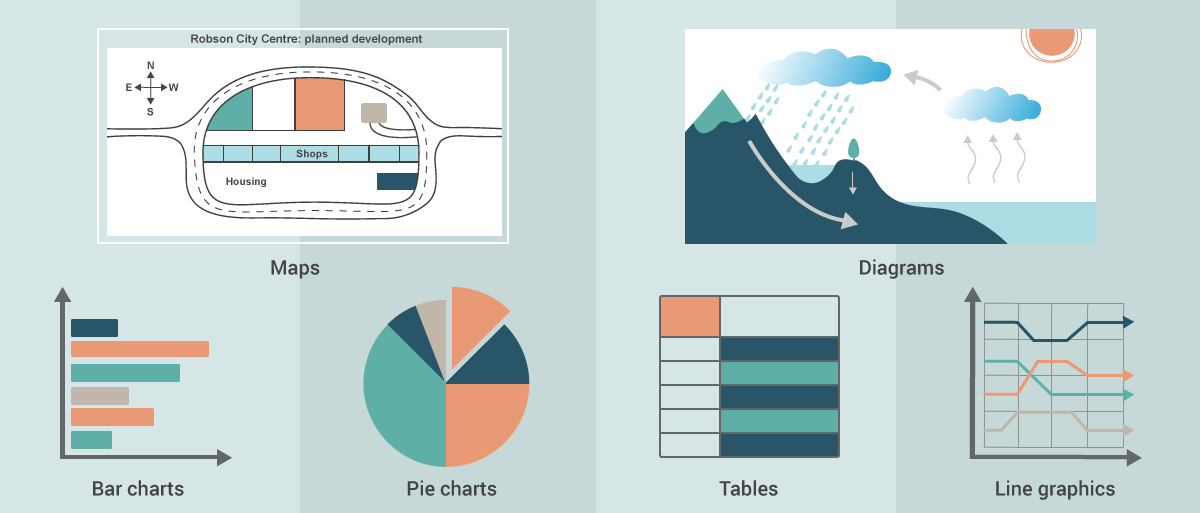
W IELTS academic writing task 1 otrzymasz wykres, tabelę, diagram lub schemat i zostaniesz poproszony o opisanie, podsumowanie lub wyjaśnienie informacji własnymi słowami. Możesz zostać poproszony o opisanie i wyjaśnienie danych, opisanie etapów procesu, jak coś działa, lub opisanie obiektu lub wydarzenia.
Niezależnie od tego, jakie informacje wizualne zostaną Ci przedstawione, Twoim zadaniem jest napisanie podsumowania informacji wizualnej i opisanie głównych trendów, ogólnych różnic, głównych zmian lub głównych komponentów systemu, lub głównych etapów procesu. Musisz napisać 150 słów lub więcej i powinieneś poświęcić około 20 minut na tę część testu. Struktura pisania może być następująca:
- Wstęp: Sparafrazuj pytanie
- Przegląd: Opisz ogólny trend lub napisz ogólny przegląd głównych grup
- Akapit główny 1: Napisz szczegółowo o pierwszej grupie w sposób logiczny
- Akapit główny 2: Napisz szczegółowo o drugiej grupie w sposób logiczny
Tak więc kroki napisania raportu w tym zadaniu są bardzo proste:
- Przeanalizuj diagram(y) i zaplanuj, jak pogrupować informacje
- Napisz esej, używając zalecanej struktury eseju
- Sprawdź esej
Przyjrzyjmy się każdemu z możliwych typów wykresów wizualnych, tabel, diagramów i schematów, z którymi możesz się spotkać na teście IELTS writing:
Wykresy liniowe
W tym typie zadania otrzymasz jeden lub więcej wykresów liniowych. Każdy wykres liniowy będzie miał 1-8 linii pokazujących, jak wartości zmieniają się w czasie. Okres czasu może być przeszły, teraźniejszy lub przyszły, lub kombinacja wszystkich trzech. Twoim zadaniem jest napisanie podsumowania, obejmując najważniejsze punkty i wspierając swój opis, włączając dane.
The chart illustrates average CO2 emissions per person in four European countries between 1975 and 2015.
Summarise the information by selecting and reporting the main features, and make comparisons where relevant.
- Write at least 150 words.
- You should spend around 20 minutes on this task.
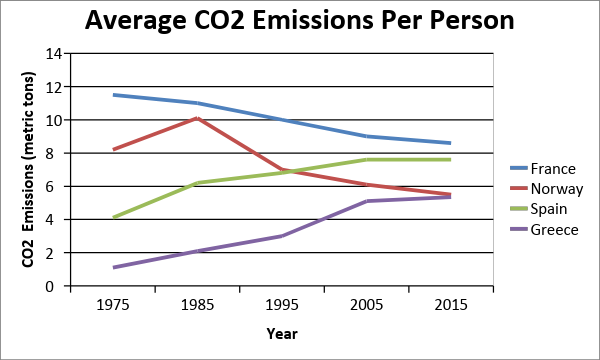
The line graph depicts the average Carbon dioxide emission for each individual residing in four countries, namely France, Norway, Spain, and Greece, over 40 years.
Overall, although CO2 production in France and Norway declined, it increased significantly in Spain and Greece over the period. Norway improved the most to become the most environmentally friendly, whereas Greece had the highest increase of all in that time.
Throughout the period, France produced the most CO2, though production declined overall from 11 tonnes per individual in 1975 to around 8.5 tonnes by 2015. In turn, except for a spike in emissions in 1985, Norway’s production of CO2 fell from 8 to under 6 tonnes forty years later.
On the contrary, CO2 release in Spain and Greece saw a more upward turn. In Spain, production doubled from 4 tonnes in 1975, overtaking Norway by 1995, to a final figure of just under 8 metric tonnes per head of population. Similarly, emissions in Greece, which were the lowest in 1975, increased five times to equal those of Norway in 2015.

Line Chart
Learn how to answer this question in a step-by-step interactive exercise
Line Chart
W IELTS Academic Task 1 opisujesz, co przedstawia wykres. Nie wyrażasz opinii i nie wyjaśniasz, dlaczego liczby wyglądają tak, a nie inaczej.
Wykres liniowy pokazuje, jak wartości zmieniają się w czasie, często dla kilku linii naraz, więc ten raport opisuje zmiany i porównuje linie.
Przejrzyj zadanie, a następnie kliknij Dalej, aby kontynuować.
Przejrzyj pytanie
Summarise the information by selecting and reporting the main features, and make comparisons where relevant.
Write at least 150 words.
Zanim zaczniesz pisać, odczytaj wykres. Sprawdź tytuł, okres na osi poziomej, jednostki na osi pionowej oraz legendę, która nazywa każdą linię.
Następnie znajdź punkt, w którym kończą się dane zmierzone, a zaczyna prognoza. Ten punkt dzieli czasy gramatyczne: formy przeszłe dla lat już zmierzonych oraz formy takie jak is expected to, is predicted to i is set to dla lat, które dopiero nadejdą.
Odpowiedz na pytania o wykres.
Odczytaj wykres
We wstępie piszesz własnymi słowami, co przedstawia wykres. Sparafrazuj polecenie: zmień sformułowania, ale zachowaj znaczenie, temat, to, co mierzą linie, oraz okres.
Przepisanie zdania z polecenia nie daje punktów, a liczby nie należą do wstępu. Zostaw wszystkie liczby na akapity rozwinięcia.
Napisz jedno lub dwa zdania, które parafrazują polecenie.
Napisz wstęp
Polecenie zadania
The chart illustrates average CO2 emissions per person in four European countries between 1975 and 2015.
Summarise the information by selecting and reporting the main features, and make comparisons where relevant.
Write at least 150 words.
Raport Task 1 potrzebuje jednego akapitu rozwinięcia dla każdej grupy linii, a wykres liniowy zwykle ma więcej linii niż grup. Pogrupuj linie, które zmieniają się w tym samym kierunku: linie rosnące, linie malejące i linie utrzymujące się na stałym poziomie. Jeśli wszystkie linie zmieniają się w ten sam sposób, powstaje jeden akapit, a jeśli jest po jednej linii każdego rodzaju, powstają trzy.
Osobny akapit dla każdej linii albo dla każdej połowy okresu rozbija porównanie, którego wymaga zadanie. Grupowanie wyłącznie według poziomu może umieścić linię rosnącą i malejącą w tym samym akapicie.
Wybierz podział, który daje każdemu akapitowi jeden jasny wzorzec.
Utwórz grupy
Wybierz podział, który daje każdemu akapitowi jeden jasny wzorzec.
- Group 1: Norway, Spain, Greece. Group 2: France.
- Group 1: Greece. Group 2: France, Norway, Spain.
- Group 1: Norway, Greece. Group 2: France, Spain.
- Group 1: France, Norway. Group 2: Spain, Greece.
Ogólne podsumowanie (overview) to najważniejszy wzorzec na całym wykresie. Składają się na nie główne cechy. Najpierw: jaki jest ogólny kierunek każdej grupy w całym okresie? Potem: jeśli są co najmniej dwie grupy, jak daleko od siebie są pierwsza i ostatnia grupa i czy ta różnica rośnie, maleje, czy grupy zamieniają się miejscami?
Połącz te cechy, a otrzymasz ogólne podsumowanie. Nie dodawaj tu pojedynczych lat ani liczb. Zostaw je na akapity rozwinięcia.
Znajdź główne cechy, aby zbudować ogólne podsumowanie.
Znajdź ogólny trend
Teraz zamień dwie główne cechy w jedno lub dwa zdania. Ogólne podsumowanie to część raportu, której egzaminator szuka w pierwszej kolejności, więc napisz je przed szczegółami i zachowaj ogólny charakter.
Dopasuj czas gramatyczny do wykresu i opisz, co pokazuje wykres, a nie dlaczego. Nie podawaj liczb i nie dodawaj opinii.
Napisz jedno lub dwa ogólne zdania o najważniejszym wzorcu.
Napisz ogólne podsumowanie
Akapit rozwinięcia 1 dotyczy tylko pierwszej grupy linii w całym okresie i to tutaj podajesz liczby.
Opisz kształt każdej linii, a nie każdy jej punkt: wartość początkową, kierunek, każdą zmianę kierunku oraz wartość końcową lub prognozowaną. Używaj języka opisującego zmiany w czasie, takiego jak rise steadily, fluctuate, level off i peak, a przy każdej liczbie podawaj rok.
Jeśli nie wiesz, jak sformułować dany punkt, kliknij go, a do Twojego pola tekstowego zostanie dodane przykładowe zdanie.
Napisz trzy lub cztery zdania o pierwszej grupie, z liczbami.
Napisz akapit rozwinięcia 1
Akapit rozwinięcia 2 dotyczy tylko drugiej grupy linii. Potraktuj go tak samo: opisz kształt każdej linii i poprzyj go liczbami.
Nie powtarzaj akapitu rozwinięcia 1. Połącz grupy tam, gdzie warto wskazać różnicę, używając zwrotów takich jak in contrast i far lower than.
Jeśli nie wiesz, jak sformułować dany punkt, kliknij go, a do Twojego pola tekstowego zostanie dodane przykładowe zdanie.
Napisz trzy lub cztery zdania o drugiej grupie, z liczbami.
Napisz akapit rozwinięcia 2
Plan raportu jest gotowy. Kompletna odpowiedź Task 1 ma te części w tej kolejności: wstęp, który parafrazuje polecenie, ogólne podsumowanie najważniejszego wzorca oraz po jednym akapicie rozwinięcia na każdą grupę, który popiera ten wzorzec wybranymi liczbami.
Przeczytaj wszystkie części razem i sprawdź trzy rzeczy: czy ogólne podsumowanie zgadza się ze szczegółami, czy czasy pasują do wartości zmierzonych i prognozowanych oraz czy każda liczba ma jednostkę i rok.
Przejrzyj plan raportu, a potem porównaj go z wzorcowym esejem.
Pełny plan raportu
Jak zdecydować
Wykres liniowy w IELTS Academic Task 1 pokazuje, jak wartości zmieniają się w czasie, często dla kilku linii naraz. Opisujesz te zmiany i porównujesz linie. Nie potrzebujesz każdego punktu na każdej linii.
Pracuj w stałej kolejności, aby raport był zaplanowany, zanim napiszesz pierwsze zdanie.
- Odczytaj wykres. Sprawdź tytuł, okres, jednostki, legendę oraz to, gdzie kończą się dane zmierzone i zaczyna ewentualna prognoza.
- Napisz wstęp. Sparafrazuj polecenie i nazwij, co pokazuje wykres.
- Utwórz grupy. Zgrupuj linie, które zachowują się podobnie, aby każdy akapit rozwinięcia miał jedną jasną myśl.
- Znajdź ogólny trend. Ustal najważniejszą prawidłowość na całym wykresie, zanim spojrzysz na pojedyncze wartości.
- Pisz raport etapami. Najpierw napisz ogólne podsumowanie, potem jeden akapit rozwinięcia dla każdej grupy z wybranymi danymi liczbowymi, a na koniec przejrzyj cały plan.
Zgrupuj linie, zanim je opiszesz. Wykres z wieloma liniami staje się krótkim raportem, gdy podobne linie trafiają do jednego akapitu, a właśnie grupowanie oznacza w poleceniu wybieranie najważniejszych cech.
Odczytaj wykres
Zacznij od osi. Oś pozioma podaje okres, oś pionowa jednostki, a legenda nazywa każdą linię. Znajdź punkt, w którym kończą się dane zmierzone, bo wszystko po nim jest prognozą i wymaga form czasu przyszłego.
Wstęp
Wstęp to jedno lub dwa zdania, które mówią innymi słowami niż polecenie, co pokazuje wykres. Zachowaj temat, to, co mierzą linie, oraz okres. Pomiń dane liczbowe i trendy.
Grupy
Raport w Task 1 ma jeden akapit rozwinięcia na każdą grupę linii. Zgrupuj linie, które zmieniają się w tym samym kierunku: linie, które rosną, linie, które spadają, i linie, które pozostają na stałym poziomie. Jeśli wszystkie linie zmieniają się tak samo, powstaje jeden akapit; jeśli jest po jednej linii każdego rodzaju, powstają trzy.
Ogólny trend
Ogólny trend to najważniejsza prawidłowość na wykresie: ogólny kierunek każdej grupy w całym okresie i to, jak daleko od siebie pozostają grupy. To ogólne stwierdzenie, więc nie zawiera danych liczbowych.
Aby nauczyć się radzić sobie z wykresami liniowymi IELTS Academic Writing Task 1, zapoznaj się z naszą lekcją IELTS Academic Writing Task - Line Graphs.
7-dniowa bezpłatna wersja próbnaWykresy słupkowe
W tym typie zadania otrzymasz jeden lub więcej wykresów słupkowych. Wykresy słupkowe mogą pokazywać jak wartości zmieniają się w czasie (dane dynamiczne), różnice między wartościami w jednym momencie czasu (dane statyczne) lub wyniki ankiety lub kwestionariusza. Informacje mogą dotyczyć sytuacji w przeszłości, teraźniejszości lub przyszłości, lub kombinacji wszystkich trzech. Twoim zadaniem jest napisanie podsumowania, obejmując najważniejsze punkty i wspierając swój opis, włączając dane.
The chart below shows the proportion of males and females in Malaysia who commonly do physical activity in 2010.
Summarise the information by selecting and reporting the main features, and make comparisons where necessary.
- Write at least 150 words.
- You should spend around 20 minutes on this task.
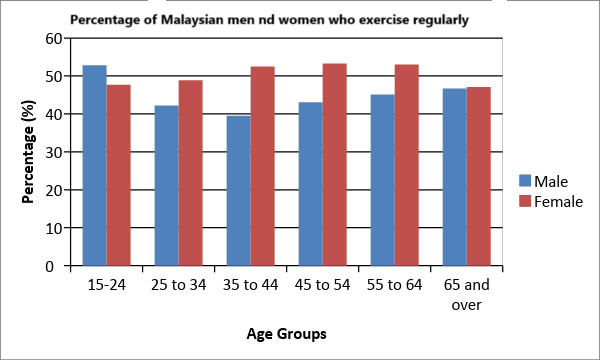
The bar chart compares the proportion of male and females of differing age groups who frequently undertook physical activity in 2010.
Overall, while the Malaysian population keeps fit in general, a higher proportion of women than men exercised in 2010, with some further differences between age groups. Middle-aged females were the most likely to work out, while for men, those aged 15 to 24 tended to do the most physical activity.
In terms of men’s exercise habits, younger men were much more likely to exercise than older men with 52.8% of those aged under 24 exercising as opposed to only around 40% of older age groups
By contrast, around half of all women in all age groups reported keeping fit, especially those aged between 35 and 64 at around 53%. The exception was the youngest age group in which only 47.7 percent of women exercised compared to 52.8% of men. Similarly, for people 65 and over, just approximately 47% of both sexes were recorded regularly working out.
Bar Chart
Learn how to answer this question in a step-by-step interactive exercise
Bar Chart
W IELTS Academic Task 1 opisujesz, co przedstawia wykres. Nie wyrażasz opinii i nie wyjaśniasz, dlaczego liczby wyglądają tak, a nie inaczej.
Wykres słupkowy porównuje grupy w kilku kategoriach, więc ten raport opiera się na porównaniach, a nie na zmianach w czasie.
Przejrzyj zadanie, a następnie kliknij Dalej, aby kontynuować.
Przejrzyj pytanie
Summarise the information by selecting and reporting the main features, and make comparisons where necessary.
Write at least 150 words
Zanim zaczniesz pisać, odczytaj wykres. Sprawdź tytuł, kategorie na osi poziomej, jednostki na osi pionowej oraz legendę, która nazywa każdą grupę słupków.
Od jednostek zależą Twoje sformułowania. Liczba osób, procenty i kwoty pieniędzy to nie to samo, a podanie złej jednostki kosztuje punkty, nawet jeśli reszta zdania jest poprawna.
Odpowiedz na pytania o wykres.
Odczytaj wykres
We wstępie piszesz własnymi słowami, co przedstawia wykres. Sparafrazuj polecenie: zmień sformułowania, ale zachowaj znaczenie, temat, porównywane grupy oraz miejsce lub czas, jeśli polecenie je podaje.
Przepisanie zdania z polecenia nie daje punktów, a liczby nie należą do wstępu. Zostaw wszystkie liczby na akapity rozwinięcia.
Napisz jedno lub dwa zdania, które parafrazują polecenie.
Napisz wstęp
Polecenie zadania
The chart below shows the proportion of males and females in Malaysia who commonly do physical activity in 2010.
Summarise the information by selecting and reporting the main features, and make comparisons where necessary.
Write at least 150 words
Raport Task 1 potrzebuje jednego akapitu rozwinięcia dla każdej grupy, więc wcześnie zdecyduj, jak podzielisz dane. Pogrupuj serie z legendy, które zachowują się podobnie: serie na podobnym poziomie albo wyższe i niższe w tych samych kategoriach trafiają do jednego akapitu. Serie, które zachowują się inaczej, dostają własny akapit. Wtedy każdy akapit zawiera jedną jasną myśl.
Podział, który tylko oddziela wysokie wartości od niskich albo daje każdej kategorii osobny akapit, sprawia, że zaczynasz się powtarzać.
Wybierz podział, który daje każdemu akapitowi jedną jasną myśl.
Utwórz grupy
Wybierz podział, który daje każdemu akapitowi jedną jasną myśl.
- Group 1: Female. Group 2: Male.
- One group: Male and Female.
Ogólne podsumowanie (overview) to najważniejszy wzorzec na całym wykresie. Składają się na nie maksymalnie trzy główne cechy. Która grupa jest wyższa w większości kategorii? Która grupa jest najniższa w większości kategorii? Czy różnica jest mniej więcej taka sama w każdej kategorii, czy jedna kategoria wyraźnie odstaje od pozostałych?
Nie każdy wykres pokazuje wszystkie trzy, więc w tym kroku pytamy tylko o cechy ważne dla tego wykresu. Połącz je, a otrzymasz ogólne podsumowanie. Nie dodawaj tu pojedynczych liczb. Zostaw je na akapity rozwinięcia.
Znajdź główne cechy, aby zbudować ogólne podsumowanie.
Znajdź ogólny trend
Teraz zamień znalezione główne cechy w jedno lub dwa zdania. Ogólne podsumowanie to część raportu, której egzaminator szuka w pierwszej kolejności, więc napisz je przed szczegółami i zachowaj ogólny charakter.
Opisz, co pokazuje wykres, a nie dlaczego tak wygląda. Nie podawaj liczb i nie dodawaj opinii.
Napisz jedno lub dwa ogólne zdania o najważniejszym wzorcu.
Napisz ogólne podsumowanie
Akapit rozwinięcia 1 dotyczy tylko pierwszej grupy i to tutaj podajesz liczby.
Wybierz ważne porównania: najwyższą wartość, najniższą wartość i każdą kategorię, która zachowuje się inaczej niż pozostałe. Wykres słupkowy porównuje grupy w tym samym okresie, więc używaj języka porównań, takiego jak higher than, twice as many as i the largest of all the categories.
Jeśli nie wiesz, jak sformułować dany punkt, kliknij go, a do Twojego pola tekstowego zostanie dodane przykładowe zdanie.
Napisz trzy lub cztery zdania o pierwszej grupie, z liczbami.
Napisz akapit rozwinięcia 1
Akapit rozwinięcia 2 dotyczy tylko drugiej grupy. Potraktuj go tak samo jak pierwszy: najwyraźniejsze porównania poparte liczbami.
Nie powtarzaj akapitu rozwinięcia 1. Połącz grupy tam, gdzie warto wskazać różnicę, używając zwrotów takich jak in contrast i compared with.
Jeśli nie wiesz, jak sformułować dany punkt, kliknij go, a do Twojego pola tekstowego zostanie dodane przykładowe zdanie.
Napisz trzy lub cztery zdania o drugiej grupie, z liczbami.
Napisz akapit rozwinięcia 2
Plan raportu jest gotowy. Kompletna odpowiedź Task 1 ma te części w tej kolejności: wstęp, który parafrazuje polecenie, ogólne podsumowanie najważniejszego wzorca oraz po jednym akapicie rozwinięcia na każdą grupę, który popiera ten wzorzec wybranymi liczbami.
Przeczytaj wszystkie części razem i sprawdź trzy rzeczy: czy ogólne podsumowanie zgadza się ze szczegółami, czy każda liczba ma jednostkę i czy opisujesz wykres, a nie go wyjaśniasz.
Przejrzyj plan raportu, a potem porównaj go z wzorcowym esejem.
Pełny plan raportu
Jak zdecydować
Wykres słupkowy w IELTS Academic Task 1 wymaga opisania, co pokazuje wykres, i porównania grup, które się na nim znajdują. Nie potrzebujesz każdej liczby. Potrzebujesz porównań, które mają znaczenie.
Pracuj w stałej kolejności, aby raport był zaplanowany, zanim napiszesz pierwsze zdanie.
- Odczytaj wykres. Zanim cokolwiek napiszesz, sprawdź tytuł, kategorie, jednostki i legendę.
- Napisz wstęp. Sparafrazuj polecenie i nazwij, co pokazuje wykres.
- Utwórz grupy. Podziel dane tak, aby każdy akapit rozwinięcia miał jedną jasną myśl.
- Znajdź ogólny trend. Ustal najważniejszą prawidłowość na całym wykresie, zanim spojrzysz na pojedyncze wartości.
- Pisz raport etapami. Najpierw napisz ogólne podsumowanie, potem jeden akapit rozwinięcia dla każdej grupy z wybranymi danymi liczbowymi, a na koniec przejrzyj cały plan.
Jasne ogólne podsumowanie jest warte więcej niż dodatkowe liczby. Polecenie wymaga wybrania najważniejszych cech, więc ogólne stwierdzenie i kilka mocnych porównań da wyższy wynik niż lista wszystkich wartości.
Odczytaj wykres
Zacznij od osi. Oś pozioma nazywa to, co jest porównywane, oś pionowa podaje jednostki, a legenda nazywa każdą grupę słupków. Raport, w którym podano złą jednostkę, zmienia znaczenie każdego zdania.
Wstęp
Wstęp to jedno lub dwa zdania, które mówią innymi słowami niż polecenie, co pokazuje wykres. Zachowaj temat, porównywane grupy oraz miejsce lub czas. Pomiń dane liczbowe i trendy.
Grupy
Raport w Task 1 ma jeden akapit rozwinięcia na każdą grupę. Zgrupuj serie z legendy, które zachowują się podobnie: serie na podobnym poziomie albo serie, które są wyżej i niżej w tych samych kategoriach. Wtedy każdy akapit zawiera jedną myśl i nigdy się nie powtarzasz.
Ogólny trend
Ogólny trend to najważniejsza prawidłowość na wykresie: która grupa jest najwyżej w większości kategorii, która jest najniżej w większości kategorii oraz czy różnica jest podobna w każdej kategorii, czy jedna kategoria wyraźnie się wyróżnia. Wykres może pokazywać jedną, dwie albo wszystkie trzy z tych rzeczy. To ogólne stwierdzenie, więc nie zawiera danych liczbowych.
Wykresy słupkowe są dość powszechne w IELTS writing task 1 academic. Istnieją trzy różne scenariusze, z którymi możesz się spotkać w zadaniu z wykresem słupkowym:
- Wykres słupkowy z kategoriami na osi x
- Wykres słupkowy z datami lub latami na osi (działa jak wykres liniowy)
- Podane są dwa wykresy słupkowe
Każdy scenariusz wymaga napisania raportu w inny sposób. Zarejestruj się na 7-dniową bezpłatną wersję próbną, aby uzyskać dostęp do następujących lekcji o wykresach słupkowych:
- IELTS Academic Writing Task - Bar Charts Part 1 lekcja.
- IELTS Academic Writing Task - Bar Charts Part 2 lekcja.
- IELTS Academic Writing Task - Bar Charts Part 3 lekcja.
Wykresy kołowe
W tym typie zadania otrzymasz jeden, dwa lub trzy wykresy kołowe. Wykresy kołowe mogą pokazywać procenty z całkowitej liczby. Jeśli masz jeden wykres kołowy, będzie on przedstawiał jeden moment w czasie (dane statyczne). Jeśli masz dwa lub więcej wykresów kołowych, mogą one przedstawiać jak procenty zmieniają się w czasie lub porównywać różne kraje lub grupy. Twoim zadaniem jest napisanie podsumowania, obejmując najważniejsze punkty i wspierając swój opis, włączając dane.
The charts below show the percentage of water used for different purposes in six areas of the world. Summarise the information by selecting and reporting the main features, and make comparisons where relevant.
- Write at least 150 words.
- You should spend around 20 minutes on this task.
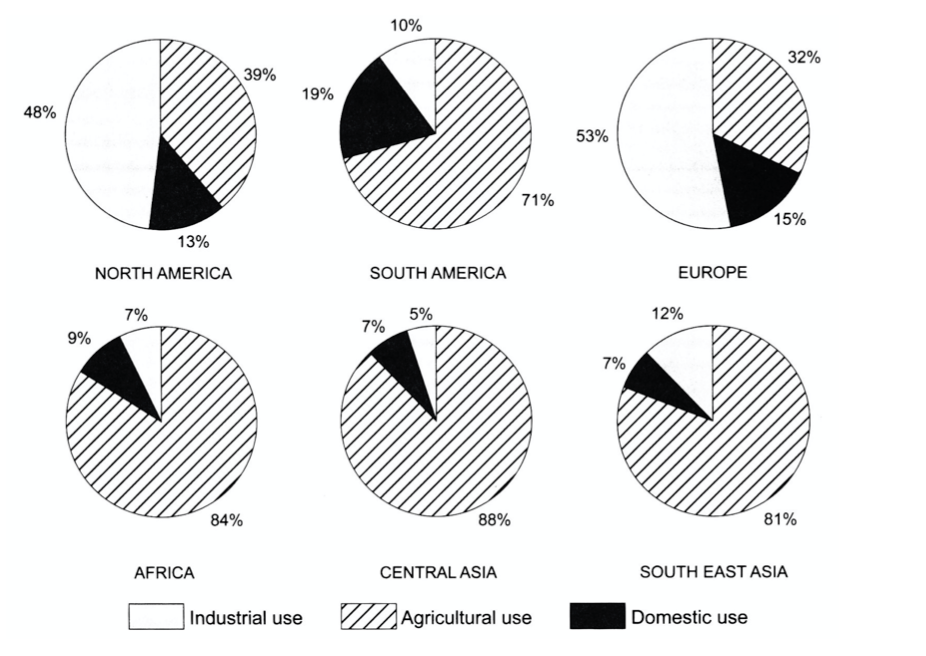
The pie charts provide information regarding the proportions of water used for industrial, agriculture, and domestic use in six regions.
In general, water serves mostly an industrial purpose in North America and Europe, whereas it is predominantly used for agriculture in South America, Africa, Central Asia, and South-East Asia.
Regarding industrial and domestic use, North America and Europe consume an average of approximately 50 percent of water for industrial purposes. However, these two regions report much less water consumption for domestic purposes, utilizing 13 percent and 15 percent, respectively. Out of all six regions, South America dedicates the highest percentage of water consumption for domestic use, but uses only 10 percent for industrial reasons. Both industrial and domestic use remain the least popular choices in Africa, Central Asia, and South-East Asia, where their combined use makes up less than 20 percent of the overall water consumption in each of the three regions.
Agricultural use, on the other hand, accounts for 71 percent of water consumption in South America and over three-fourths of water use in Africa, South-East Asia, and Central Asia, where it is nearly 90 percent. North America and Europe consume less than 40 percent of water for agricultural purposes.
Aby nauczyć się radzić sobie z wykresami kołowymi IELTS Academic Writing Task 1, zarejestruj się na 7-dniową bezpłatną wersję próbną, aby uzyskać dostęp do lekcji IELTS Academic Writing Task - Pie Charts.
7-dniowa bezpłatna wersja próbnaTabele
W tym typie zadania otrzymujesz tabelę zawierającą dane. Może pokazywać liczby dynamiczne, które zmieniają się w czasie, lub dane statyczne w jednym momencie czasu. Często jest zbyt wiele informacji, abyś mógł uwzględnić każdy szczegół. Twoim zadaniem jest napisanie podsumowania, obejmując najważniejsze punkty i wspierając swój opis, włączając dane.
The table below gives the average time spent and distance traveled by UK commuters in one year. Time and distance are given in minutes and miles accordingly.
Summarise the information by selecting and reporting the main features, and make comparisons where relevant.
Commuting Habits of different regions of the UK in a year
UK Region | Average Commuting Time (minutes) | Average Commuting Distance (miles) |
London | 54 | 14 |
South East | 78 | 20 |
Scotland | 45 | 19 |
West Midlands | 39 | 18 |
North West | 36 | 18 |
Northern Ireland | 36 | 15 |
Yorkshire & Humberside | 36 | 14 |
South West | 34 | 16 |
East Anglia | 33 | 15 |
North East | 32 | 19 |
East Midlands | 32 | 15 |
Wales | 27 | 14 |
- Write at least 150 words.
- You should spend around 20 minutes on this task.
The table shows data on the average commuting time (minutes) and distance (miles) completed by UK citizens in 12 different regions in one year.
Overall, with the exception of London, the further people travel, the more time they need to reach work people. Commuters in the south east region spend the longest time commuting over the greatest distance, whereas people in Wales spend the least.
Regarding the top three UK regions, on average, people in the south east travel both the farthest and longest at 20 miles over 78 minutes. Likewise inhabitants of Scotland journey a similar distance to work, yet spend almost half the time doing so at 45 minutes to get there, while those living in London spend the second-longest time travelling (54 minutes) over just 14 miles.
Of the other regions, people in the West Midlands spent the most time travelling at 39 minutes whereas those in Wales recorded the lowest time at 27 minutes. With regard to distance, residents of the North East, West Midlands and North West recorded the greatest mileage at 19, 18 and 18 miles respectively, while people in Yorkshire and Humberside as well as Wales both travelled the shortest distance to work of all at 14 miles.
Aby nauczyć się radzić sobie z tabelami IELTS Academic Writing Task 1, zarejestruj się na 7-dniową bezpłatną wersję próbną, aby uzyskać dostęp do następujących lekcji:
- IELTS Academic Writing Task - Tables Part 1 lekcja.
- IELTS Academic Writing Task - Tables Part 2 lekcja.
Diagramy procesów
W przypadku tego typu pytania otrzymasz diagram pokazujący, jak coś działa.
Diagram może pokazywać maszynę, system lub naturalne zjawisko.
Często nie ma żadnych lub jest mało danych.
Twoim zadaniem jest podsumowanie informacji pokazanych na diagramie.
The diagram below shows the water cycle, which is the continuous movement of water on, above and below the surface of the Earth.
Summarise the information by selecting and reporting the main features.
- Write at least 150 words.
- You should spend around 20 minutes on this task.
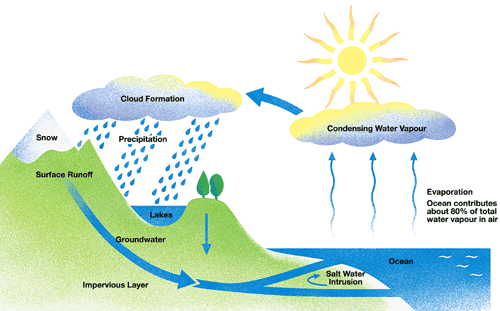
The diagram illustrates the hydrological cycle by which water moves through our natural environment. Overall, there are several stages to the process involving evaporation, precipitation and the final return of water to the ocean where the process begins over.
Since 80% of all water begins in the ocean, most water originates from this source. Initially sea water is warmed by the sun, causing it to evaporate into the air becoming water vapor. This then rises to condense into clouds at a higher elevation, which are then then pushed by the wind over land where it condenses further and precipitation occurs, falling as either snow or rain.
After precipitation on land, water then takes one of three routes. Some of it may fall into lakes or return to the ocean as surface runoff. Still further water percolates underground to an impermeable layer where it again flows back to the sea. Salt water also intrudes from the ocean into the land in coastal areas.

Process Diagram
Learn how to answer this question in a step-by-step interactive exercise
Process Diagram
Zadanie z diagramem procesu w IELTS Academic Task 1 pokazuje krok po kroku, jak coś powstaje albo jak działa jakiś system. Przedstawiasz etapy w kolejności pokazanej na diagramie i nie podajesz przyczyn ani opinii.
Przejrzyj polecenie zadania, a następnie kliknij Dalej, aby kontynuować.
Przejrzyj pytanie
Summarise the information by selecting and reporting the main features.
Write at least 150 words.
Zanim cokolwiek napiszesz, upewnij się, że rozumiesz diagram. Policz kroki i podążaj za strzałkami, aby zobaczyć, gdzie proces się zaczyna i gdzie się kończy. Jeśli ostatnia strzałka wraca do pierwszego etapu, proces jest cyklem i nie ma produktu końcowego.
Odpowiedz na pytania o diagram.
Odczytaj wykres
Wstęp mówi czytelnikowi, co pokazuje diagram. Sparafrazuj polecenie zadania własnymi słowami, zamiast je przepisywać, i nazwij proces. Nie opisuj tu żadnego z kroków.
Napisz jedno lub dwa zdania wstępu.
Napisz wstęp
Polecenie zadania
The diagram below shows the water cycle, which is the continuous movement of water on, above and below the surface of the Earth.
Summarise the information by selecting and reporting the main features.
Write at least 150 words.
Raport IELTS Task 1 potrzebuje jednego akapitu rozwinięcia dla każdej grupy etapów. Nie pisz osobnego akapitu dla każdego kroku. Podziel proces w jego naturalnych punktach, tam gdzie zmienia się miejsce, materiał lub cel, tak aby każda grupa była ciągiem następujących po sobie etapów. Większość procesów daje dwie grupy; krótki proces może dać jedną, a długi trzy.
Wybierz grupy.
Utwórz grupy
Wybierz grupy.
- Group 1: stages 1 to 2 (Evaporation to Condensing Water Vapour). Group 2: stages 3 to 4 (Cloud Formation to Precipitation). Group 3: stages 5 to 6 (Surface Runoff to Groundwater).
- Group 1: stages 1 to 3 (Evaporation to Cloud Formation). Group 2: stages 4 to 5 (Precipitation to Surface Runoff). Group 3: stage 6 (Groundwater).
- Group 1: stages 1 to 3 (Evaporation to Cloud Formation). Group 2: stages 4 to 6 (Precipitation to Groundwater).
- Group 1: stages 1 to 2 (Evaporation to Condensing Water Vapour). Group 2: stages 3 to 5 (Cloud Formation to Surface Runoff). Group 3: stage 6 (Groundwater).
Ogólne podsumowanie (overview) streszcza cały proces w skrócie. Zastanów się, ile jest kroków i jakie są główne etapy od początku do końca. Procesu rzadko się z czymś porównuje, więc opisz kształt procesu, zamiast szukać wzrostu lub spadku.
Odpowiedz na pytania, aby znaleźć ogólny trend.
Znajdź ogólny trend
Skorzystaj z notatek z poprzedniego kroku. Ogólne podsumowanie podaje liczbę kroków i główne etapy oraz mówi, czy proces kończy się produktem, czy powtarza się jako cykl. Urządzenia, czasy i temperatury zostaw na akapity rozwinięcia i nie podawaj przyczyn ani opinii.
Napisz jedno lub dwa zdania ogólnego podsumowania.
Napisz ogólne podsumowanie
Akapit rozwinięcia 1 opisuje pierwszą grupę etapów, krok po kroku, w kolejności wskazanej przez strzałki. Używaj strony biernej, np. is heated, is mixed i is poured, bo diagram rzadko mówi, kto wykonuje pracę. Łącz kroki słowami określającymi kolejność, takimi jak first, then i after that.
Napisz trzy lub cztery zdania do akapitu rozwinięcia 1.
Napisz akapit rozwinięcia 1
Akapit rozwinięcia 2 opisuje drugą grupę etapów. Zaczyna się w miejscu, w którym skończył się akapit rozwinięcia 1, więc ciąg etapów nigdy się nie urywa. Nadal używaj strony biernej i łącz grupy zwrotami takimi jak once i after this. Jeśli to ostatni akapit, zaznacz koniec słowami in the final stage lub finally, a jeśli proces jest cyklem, napisz, że ostatni krok prowadzi z powrotem do pierwszego.
Napisz trzy lub cztery zdania do akapitu rozwinięcia 2.
Napisz akapit rozwinięcia 2
Twoje części tworzą teraz jeden raport: wstęp, ogólne podsumowanie i po jednym akapicie rozwinięcia dla każdej grupy etapów. Przeczytaj je razem i sprawdź, czy etapy nadal są we właściwej kolejności, czy formy strony biernej są poprawne i czy raport jest wystarczająco długi.
Przeczytaj cały plan raportu, a potem kliknij Dalej, aby porównać go z wzorcowym raportem.
Pełny plan raportu
Jak zdecydować
Zadanie z diagramem procesu pokazuje krok po kroku, jak coś powstaje albo jak działa jakiś system. Diagram ma stałą kolejność, więc raport podąża za nią od pierwszego etapu do ostatniego.
Pracuj w stałej kolejności, aby etapy pozostały we właściwym porządku i żaden krok nie został pominięty.
- Odczytaj wykres. Policz kroki i podążaj za strzałkami, aby zobaczyć, gdzie proces się zaczyna i gdzie kończy.
- Napisz wstęp. Sparafrazuj polecenie zadania i nazwij proces, bez żadnych szczegółów.
- Utwórz grupy. Podziel etapy na grupy w naturalnych miejscach procesu, po jednym akapicie rozwinięcia na grupę.
- Znajdź ogólny trend. Ustal, ile jest kroków i jakie są główne etapy od początku do końca.
- Napisz ogólne podsumowanie i akapity rozwinięcia. Najpierw podsumuj ogólny przebieg procesu, a potem opisz kroki po kolei.
- Pełny plan raportu. Przeczytaj wszystkie swoje części razem i porównaj je z wzorcowym raportem.
Raport o procesie pisze się w stronie biernej. Diagram rzadko mówi, kto wykonuje pracę, więc używaj form takich jak „is heated”, „is mixed” i „is stored”, a kroki łącz słowami określającymi kolejność, takimi jak „first”, „after that” i „finally”.
Czytaj
Diagram procesu pokazuje etapy połączone strzałkami. Policz kroki i podążaj za strzałkami, aby sprawdzić, gdzie proces się zaczyna i gdzie kończy. Jeśli ostatnia strzałka wraca do pierwszego etapu, proces jest cyklem i nie ma produktu końcowego.
Wstęp
Wstęp mówi, co pokazuje diagram. Sparafrazuj polecenie zadania własnymi słowami, zamiast je przepisywać, i nazwij proces. W tych zdaniach nie opisuj poszczególnych kroków.
Grupy
Raport w Task 1 potrzebuje jednego akapitu rozwinięcia na każdą grupę etapów. Nie pisz osobnego akapitu dla każdego kroku. Podziel proces w naturalnych miejscach, tam gdzie zmienia się miejsce, materiał albo cel, tak aby każda grupa była ciągiem następujących po sobie etapów. Większość procesów daje dwie grupy; krótki proces może dać jedną, a długi trzy.
Trend
Ogólne podsumowanie streszcza cały proces w skrócie: ile jest kroków i jakie są główne etapy. Procesu rzadko porównuje się z czymkolwiek innym, więc opisz jego ogólny przebieg, zamiast szukać wzrostu lub spadku.
Napisz
Ogólne podsumowanie jest pierwsze i pozostaje ogólne, bez urządzeń, czasów i temperatur. Każdy akapit rozwinięcia opisuje potem swoje kroki w kolejności wskazanej przez strzałki. Używaj strony biernej, na przykład „is heated” i „is poured”, i łącz kroki słowami określającymi kolejność, takimi jak „first”, „next”, „after that” i „finally”.
Aby nauczyć się radzić sobie z diagramami procesów IELTS Academic Writing Task 1, zarejestruj się na 7-dniową bezpłatną wersję próbną, aby uzyskać dostęp do lekcji IELTS Academic Writing Task - Process Diagrams.
7-dniowa bezpłatna wersja próbnaMapy
W przypadku tego typu pytania otrzymasz jedną, dwie lub trzy mapy.
Mapy mogą pokazywać miasto, wyspę lub inny obszar geograficzny.
Mapy zwykle pokazują zmiany, które miały miejsce na obszarze w danym okresie czasu.
Zmiany mogą dotyczyć budowy (np. rozwój obszaru turystycznego)
lub zniszczenia (np. jak obszar został dotknięty katastrofą naturalną, taką jak trzęsienie ziemi)
Twoim zadaniem jest napisanie podsumowania zmian, które miały miejsce, i objęcie najważniejszych punktów.
The maps below show the centre of a small town called Islip as it is now, and plans for its development. Summarise the information by selecting and reporting the main features, and make comparisons where relevant.
- Write at least 150 words.
- You should spend around 20 minutes on this task.
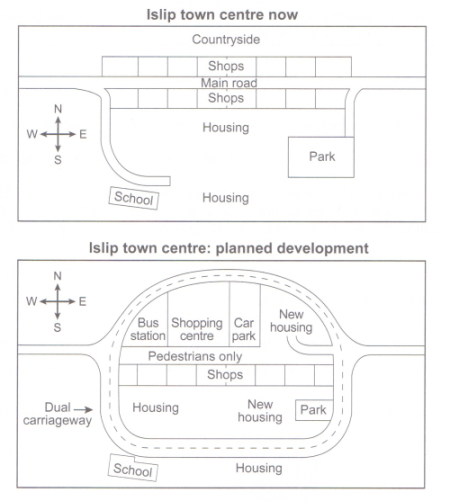
The diagrams illustrate some proposed changes to the central area of the town of Islip.
Overall, the principal change to the town will be the construction of a ring road around the centre. Various other developments with regard to shops and housing will accompany the building of this road.
As the first map reveals, lslip town center now is relatively small. There is a main road from the west to the east with shops on both sides. The northern area is rarely countryside, while the southern area is filled with houses with a school at the end of the fork road in the southwest corner and a park in the southeast area.
In the future, the main road is expected to reform into a dual carriageway as a round containing all the new buildings. The shops along the north side of the new pedestrian street will be demolished to make way for a bus station, shopping centre, car parks and new housing area. The shops along the south side of the street will remain, but it seems that the town's park will be reduced in size so that more new houses can be built within the ring road.
Map
Learn how to answer this question in a step-by-step interactive exercise
Map
Zadanie z mapą w IELTS Academic Task 1 pokazuje dwa lub więcej planów tego samego miejsca w różnych momentach, zwykle dwa. Piszesz raport liczący co najmniej 150 słów, który opisuje, jak zmieniło się to miejsce, i nie podajesz opinii ani przyczyn.
Przejrzyj zadanie, a następnie kliknij Dalej, aby kontynuować.
Przejrzyj pytanie
Write at least 150 words.
Zacznij od odczytania map, a nie od pisania. Sprawdź, jakie miejsce jest pokazane, jakie momenty w czasie są porównywane i ile masz map. Następnie poszukaj tego, co jest nowe, co zniknęło i co teraz służy do czegoś innego.
Odpowiedz na pytania o mapy.
Odczytaj wykres
Wstęp parafrazuje polecenie Twoimi własnymi słowami. Podaj, co przedstawiają mapy i jakiego okresu dotyczą, i zmień sformułowania polecenia, zamiast je przepisywać. Szczegóły, określenia położenia i czasowniki opisujące zmiany pojawią się później.
Napisz jedno lub dwa zdania, które parafrazują polecenie.
Napisz wstęp
Polecenie zadania
The maps below show the centre of a small town called Islip as it is now, and plans for its development. Summarise the information by selecting and reporting the main features, and make comparisons where relevant.
Write at least 150 words.
Raport Task 1 potrzebuje jednego akapitu rozwinięcia dla każdej grupy map. Zwykle każda mapa to osobna grupa: wcześniejsza mapa w pierwszym akapicie, a późniejsza w drugim, bo dzięki temu momenty w czasie są od siebie oddzielone. Dwie mapy, które najlepiej opisać razem, mogą tworzyć jedną grupę, a trzy mapy zwykle dają trzy akapity.
Osobny akapit dla każdego obiektu albo dla każdej połowy mapy rozbija porównanie między momentami w czasie.
Wybierz podział, który daje przejrzyste akapity rozwinięcia.
Utwórz grupy
Wybierz podział, który daje przejrzyste akapity rozwinięcia.
- One group: now and planned development.
- Group 1: now. Group 2: planned development.
Ogólne podsumowanie podaje największą zmianę w całym okresie. Zastanów się, czy miejsce się rozrosło, czy zmniejszyło, i jakie sposoby zagospodarowania terenu się pojawiły lub zniknęły. Pojedyncze obiekty i dokładne położenie nie należą do ogólnego podsumowania.
Wybierz odpowiedzi, które opisują ogólną zmianę.
Znajdź ogólny trend
Teraz napisz ogólne podsumowanie własnymi słowami, korzystając z notatek z poprzedniego kroku. Wystarczą jedno lub dwa zdania. Opisz ogólny rozwój miejsca i pomiń dokładne położenie, pojedyncze obiekty oraz przyczyny zmiany.
Napisz ogólne podsumowanie w jednym lub dwóch zdaniach.
Napisz ogólne podsumowanie
Pierwszy akapit rozwinięcia szczegółowo opisuje mapę lub mapy z pierwszej grupy. Używaj form przeszłych dla stanu, który już się skończył, i określeń położenia takich jak „to the north of”, „beside” i „on the edge of”, aby czytelnik mógł umiejscowić każdy obiekt. Opisuj obiekty, a nie przyczyny.
Napisz trzy lub cztery zdania do akapitu rozwinięcia 1.
Napisz akapit rozwinięcia 1
Drugi akapit rozwinięcia opisuje mapę lub mapy z drugiej grupy oraz zmiany od czasu wcześniejszej mapy. Używaj strony biernej dla tego, co zbudowano, usunięto lub zastąpiono, np. „was built”, „had been cleared” i „has been converted”, bo mapy nie mówią, kto wykonał prace. Określenia położenia nadal pokazują, gdzie zaszła każda zmiana.
Napisz trzy lub cztery zdania do akapitu rozwinięcia 2.
Napisz akapit rozwinięcia 2
Twoje części tworzą teraz jeden raport: wstęp, ogólne podsumowanie i po jednym akapicie rozwinięcia dla każdej grupy map. Przeczytaj je po kolei i sprawdź, czy ogólne podsumowanie przedstawia ogólny obraz, a akapity rozwinięcia zawierają szczegóły.
Przeczytaj plan raportu, a potem porównaj go z wzorcowym raportem.
Pełny plan raportu
Jak zdecydować
Zadanie z mapą przedstawia dwa lub więcej planów tego samego miejsca w różnych momentach. Nie opisujesz każdego podpisu. Relacjonujesz, jak miejsce zmieniło się między tymi momentami.
Pracuj w stałej kolejności, aby raport przedstawiał ogólny obraz przed szczegółami.
- Odczytaj wykres. Zanim zaczniesz planować, sprawdź miejsce, momenty w czasie i główne elementy na każdej mapie.
- Utwórz grupy. Podziel informacje na grupy map, po jednym akapicie rozwinięcia na grupę, zwykle najpierw wcześniejsza mapa, a potem późniejsza.
- Znajdź ogólny trend. Ustal największą zmianę w całym okresie, na przykład rozwój, upadek albo nowe przeznaczenie terenu.
- Pisz raport etapami. Napisz wstęp, potem ogólne podsumowanie, a potem jeden akapit rozwinięcia dla każdej grupy.
- Pełny plan raportu. Przeczytaj wszystkie części razem i porównaj je z wzorcowym raportem.
Raport o mapie opiera się na określeniach położenia i stronie biernej. Zwroty takie jak „to the north of” i „beside the river” umiejscawiają każdy element, a formy takie jak „was built” czy „had been removed” opisują zmianę bez wskazywania, kto ją przeprowadził.
Czytaj
Zanim zaczniesz planować, sprawdź, co pokazują mapy: miejsce, momenty w czasie i główne elementy na każdej mapie. Potem poszukaj tego, co jest nowe, co zniknęło i co ma teraz inne przeznaczenie. Ten etap czytania chroni Cię przed opisaniem tylko jednej z map.
Grupy
Raport w IELTS Task 1 potrzebuje jednego akapitu rozwinięcia na każdą grupę map. Zwykle każda mapa jest osobną grupą: najpierw wcześniejsza mapa, potem późniejsza. Dwie mapy, które najlepiej opisać razem, mogą tworzyć jedną grupę, a trzy mapy zwykle dają trzy akapity. Ustal podział, zanim zaczniesz pisać, bo wyznacza on kolejność całego raportu.
Ogólne podsumowanie
Ogólne podsumowanie przedstawia największą zmianę w całym okresie, a nie drobny szczegół. Zastanów się, czy miejsce się rozrosło, czy zmniejszyło, i jakie rodzaje zagospodarowania terenu pojawiły się lub zniknęły. Pojedyncze elementy i dokładne położenie należą do akapitów rozwinięcia.
Napisz
Raport powstaje w krótkich etapach. Wstęp parafrazuje polecenie, ogólne podsumowanie przedstawia główną zmianę, a każdy akapit rozwinięcia opisuje jedną grupę. Używaj czasów przeszłych dla stanu, który się zakończył, strony biernej, na przykład „was built” albo „had been cleared”, dla zmian, oraz określeń położenia, aby pokazać, gdzie znajduje się każdy element.
Aby nauczyć się radzić sobie z mapami IELTS Academic Writing Task 1, zarejestruj się na 7-dniową bezpłatną wersję próbną, aby uzyskać dostęp do lekcji IELTS Academic Writing Task - Maps.
7-dniowa bezpłatna wersja próbnaDane mieszane
W tym typie zadania otrzymasz dwa zestawy danych.
Dane będą różnych typów. Na przykład jeden zestaw może być zmianą w czasie, a drugi statyczny.
Alternatywnie, jeden zestaw danych może pokazywać procent, podczas gdy drugi zestaw pokazuje liczby.
Możesz również otrzymać ilustrację (np. diagram lub mapę) i zestaw danych (np. wykres słupkowy, wykres liniowy, wykres kołowy lub tabelę)
Twoim zadaniem jest podsumowanie obu zestawów danych.
The pie graph depicts the main reasons for the productivity loss of agricultural land worldwide. The table shows how these causes influenced three world regions during the 2000s.
Summarise the information by selecting and reporting the main features, and make comparisons where relevant.
Causes of Land Degradation by Region (%) | ||||
Region: | Deforestation | Over-cultivation | Over-grazing | Total land degraded |
North America | 0.3 | 3.4 | 1.7 | 5.4 |
Asia | 9.8 | 7.8 | 5.7 | 23.3 |
Australia & Oceania | 1.6 | 0.3 | 11 | 12.9 |
- Write at least 150 words.
- You should spend around 20 minutes on this task.
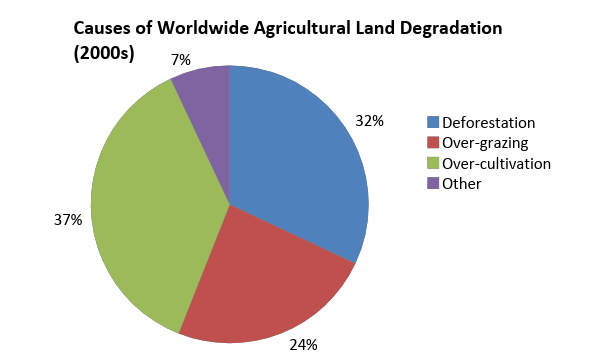
The pie chart shows the four main causes of farmland degradation in the world today, while the table presents the amount of land surface area affected by each one in three separate global regions during the 2000s.
Overall, Asia suffered more from the deterioration of farmland than other regions owing to deforestation and over-cultivation which were also the primary reasons for agricultural land loss worldwide.
Globally, 69% of degraded land is attributed to excessive cultivation and tree clearance, constituting 37% and 32% respectively. A further quarter of global land loss is due to over cultivation of crops. Other causes made up only 7% collectively.
In the 2000s, these causes affected regions of our planet differently. Asia was the worst affected where the top two causes of global land loss, deforestation and over-cultivation, resulted in 9.8% and 7.8% of degraded land there. The impact on Australia and Oceania was less severe though over-grazing was the predominant cause of land deterioration at eleven percent. The least affected of all was North America where only 5.4% of land was diminished, principally because of over-cultivation at 3.4%.
Mixed Charts
Learn how to answer this question in a step-by-step interactive exercise
Mixed Charts
Zadanie z wykresami mieszanymi w IELTS Academic Task 1 pokazuje dwie lub więcej grafik różnego typu na jeden temat. Piszesz raport liczący co najmniej 150 słów, który przedstawia główne cechy i łączy ze sobą grafiki, i nie podajesz opinii ani przyczyn.
Przejrzyj zadanie, a następnie kliknij Dalej, aby kontynuować.
Przejrzyj pytanie
Summarise the information by selecting and reporting the main features, and make comparisons where relevant.
Write at least 150 words.
Zacznij od odczytania grafik, a nie od pisania. Sprawdź, co pokazuje każda grafika, i przeczytaj wszystkie opisy osi i jednostki, zanim zaczniesz planować. Grafiki różnego typu często mierzą różne rzeczy, więc zanotuj, co je łączy, np. ta sama grupa ludzi albo ten sam okres.
Odpowiedz na pytania o grafiki.
Odczytaj wykres
Wstęp parafrazuje polecenie Twoimi własnymi słowami. Jasno napisz, co pokazuje każda grafika oraz jakiej grupy i okresu dotyczy, i zmień sformułowania polecenia, zamiast je przepisywać. Liczby i powiązania między grafikami pojawią się później.
Napisz jedno lub dwa zdania, które parafrazują polecenie.
Napisz wstęp
Polecenie zadania
The pie graph depicts the main reasons for the productivity loss of agricultural land worldwide. The table shows how these causes influenced three world regions during the 2000s.
Summarise the information by selecting and reporting the main features, and make comparisons where relevant.
Write at least 150 words.
Raport Task 1 potrzebuje jednego akapitu rozwinięcia dla każdej grupy grafik, a zestaw różnych grafik daje od jednej do trzech grup. Grafiki jednego typu lub na jeden temat należą do siebie, bo akapit, który miesza dwie miary, trudno śledzić. Dwa wykresy kołowe tego samego zjawiska trafiają do jednego akapitu, a wykres liniowy pokazujący inną miarę dostaje własny.
Osobny akapit dla każdej grafiki może rozdzielić to, co należy do siebie, a jeden akapit dla wszystkich grafik miesza miary. Podział według lat albo według najwyższych i najniższych liczb rozbija porównanie, którego wymaga zadanie.
Wybierz podział, który daje każdemu akapitowi jedną jasną miarę.
Utwórz grupy
Wybierz podział, który daje każdemu akapitowi jedną jasną miarę.
- Group 1: the pie chart. Group 2: the table.
- One group: the pie chart and the table.
Ogólne podsumowanie podaje najważniejszy wzorzec we wszystkich grafikach i pojawia się przed szczegółami. Znajdź główną zmianę na każdej grafice, a potem zdecyduj, czy jedna grafika potwierdza lub wyjaśnia drugą. Dokładne liczby nie należą do ogólnego podsumowania.
Wybierz odpowiedzi, które opisują główny wzorzec.
Znajdź ogólny trend
Teraz napisz ogólne podsumowanie własnymi słowami, korzystając z notatek z poprzedniego kroku. Wystarczą jedno lub dwa zdania. Podaj główny wzorzec i związek między grafikami, a pomiń dokładne liczby oraz przyczyny tego wzorca.
Napisz ogólne podsumowanie w jednym lub dwóch zdaniach.
Napisz ogólne podsumowanie
Pierwszy akapit rozwinięcia szczegółowo opisuje pierwszą grupę. Przedstaw istotne porównania, np. najwyższy punkt, najniższy punkt i najwyraźniejszą zmianę, i poprzyj każde z nich kilkoma wybranymi liczbami. Nie wymieniaj wszystkich liczb i nie opisuj tu pozostałych grup.
Napisz trzy lub cztery zdania do akapitu rozwinięcia 1.
Napisz akapit rozwinięcia 1
Drugi akapit rozwinięcia opisuje drugą grupę i łączy ją z pierwszą. Grupuj porównania, które do siebie pasują, zamiast omawiać kolejno każdą kategorię, i użyj zwrotu łączącego, aby pokazać, gdzie grafiki są zgodne. Przedstaw, co pokazują dane, a nie dlaczego.
Napisz trzy lub cztery zdania do akapitu rozwinięcia 2.
Napisz akapit rozwinięcia 2
Twoje części tworzą teraz jeden raport: wstęp, ogólne podsumowanie i po jednym akapicie rozwinięcia dla każdej grupy grafik. Przeczytaj je po kolei i sprawdź, czy ogólne podsumowanie przedstawia ogólny obraz, a akapity rozwinięcia zawierają szczegóły.
Przeczytaj plan raportu, a potem porównaj go z wzorcowym raportem.
Pełny plan raportu
Jak zdecydować
Zadanie z wykresami mieszanymi przedstawia dwa lub więcej materiałów graficznych różnego typu na jeden temat. Nie piszesz osobnego raportu dla każdego z nich. Relacjonujesz najważniejsze cechy każdego materiału i łączysz je tam, gdzie dane są ze sobą powiązane.
Pracuj w stałej kolejności, aby raport przedstawiał ogólny obraz przed szczegółami.
- Odczytaj wykres. Zanim zaczniesz planować, sprawdź, co pokazuje każdy materiał graficzny, i przeczytaj wszystkie osie, podpisy i jednostki.
- Utwórz grupy. Podziel materiały graficzne na od jednej do trzech grup, po jednym akapicie rozwinięcia na grupę, zwykle jeden typ wykresu lub jeden temat w każdej.
- Znajdź ogólny trend. Ustal najważniejszą prawidłowość we wszystkich materiałach graficznych i zanotuj powiązania między nimi.
- Pisz raport etapami. Napisz wstęp, potem ogólne podsumowanie, a potem jeden akapit rozwinięcia dla każdej grupy.
- Pełny plan raportu. Przeczytaj wszystkie części razem i porównaj je z wzorcowym raportem.
Grupuj istotne porównania, zamiast wymieniać każdą liczbę. Kilka wybranych danych liczbowych, które potwierdzają prawidłowość, daje więcej punktów niż długa lista, która tylko powtarza to, co już widać na wykresie.
Czytaj
Materiały graficzne różnego typu mierzą różne rzeczy, więc najpierw przeczytaj każdy z nich osobno. Sprawdź tytuł, opisy osi, jednostki i okres, a potem zanotuj, co mają wspólnego, na przykład tę samą grupę ludzi albo ten sam okres. Udział czasu na wykresie kołowym i suma na wykresie liniowym to nie ta sama miara.
Grupy
Raport w IELTS Task 1 potrzebuje jednego akapitu rozwinięcia na każdą grupę materiałów graficznych, więc muszą się one dzielić na jedną, dwie lub trzy grupy. Materiały tego samego typu lub na ten sam temat należą do siebie, a materiał dotyczący innej miary dostaje osobny akapit. Ustal podział, zanim zaczniesz pisać, bo wyznacza on kolejność całego raportu.
Ogólne podsumowanie
Ogólne podsumowanie przedstawia w jednym lub dwóch zdaniach najważniejszą prawidłowość we wszystkich materiałach graficznych. Znajdź główną zmianę na każdym z nich, a potem zdecyduj, czy jeden materiał potwierdza lub wyjaśnia drugi. Dokładne dane liczbowe i pojedyncze kategorie należą do akapitów rozwinięcia.
Napisz
Raport powstaje w krótkich etapach. Wstęp parafrazuje polecenie, ogólne podsumowanie przedstawia główną prawidłowość, a każdy akapit rozwinięcia opisuje jedną grupę. W akapitach rozwinięcia grupuj porównania, które do siebie pasują, i popieraj każde z nich kilkoma wybranymi danymi liczbowymi, zamiast wymieniać każdą liczbę.
Aby nauczyć się radzić sobie z danymi mieszanymi IELTS Academic Writing Task 1, zarejestruj się na 7-dniową bezpłatną wersję próbną, aby uzyskać dostęp do lekcji IELTS Academic Writing Task - Mixed Data.
7-dniowa bezpłatna wersja próbnaSłownictwo dla IELTS Academic Writing Task 1
Aby uzyskać wysoki wynik w tym zadaniu, musisz nauczyć się używać odpowiednich słów i zwrotów do prezentacji danych podanych na wykresie kołowym/słupkowym/liniowym/mieszanym. Sugerujemy zarejestrowanie się na 7-dniową bezpłatną wersję próbną i odbycie następujących lekcji:
- IELTS Academic Writing Task 1 Lesson - How to write about numbers
- IELTS Academic Writing Task 1 Lesson - How to write about percentages
- IELTS Academic Writing Task 1 Lesson - How to write about changes in data
Próbki IELTS Writing Task 1
Ta sekcja przedstawia listę próbek IELTS writing dla IELTS Academic Writing Task 1.
- IELTS Academic Writing Task 1 - Line Chart Questions
- IELTS Academic Writing Task 1 - Bar Chart Questions
- IELTS Academic Writing Task 1 - Pie Chart Questions
- IELTS Academic Writing Task 1 - Map Questions
- IELTS Academic Writing Task 1 - Process Diagram Questions
- IELTS Academic Writing Task 1 - Mixed Data Questions
IELTS General Writing Task 1
W IELTS general training writing task 1, zostanie Ci przedstawiona sytuacja, a Ty będziesz musiał napisać osobistą odpowiedź w formie nieformalnego, półformalnego lub formalnego listu o objętości co najmniej 150 słów. Sytuacje, o których jesteś proszony pisać, są zwyczajne, codzienne, takie jak:
- napisanie do pracownika ds. zakwaterowania w college'u o problemach z zakwaterowaniem,
- napisanie do nowego pracodawcy o problemach z zarządzaniem czasem,
- napisanie do lokalnej gazety o planach rozwoju lokalnego lotniska,
- napisanie do agencji wynajmu w celu rozwiązania problemów z systemem ogrzewania w domu.
W odniesieniu do sytuacji otrzymasz informacje w postaci trzech punktów, które musisz uwzględnić w swojej odpowiedzi. Możesz potrzebować poprosić o informacje lub je przekazać i/lub wyjaśnić sytuację. Aby to zrobić, możesz potrzebować zrobić jedno z poniższych:
- poprosić i/lub przekazać ogólne informacje faktyczne,
- wyrazić potrzeby, pragnienia, upodobania lub niechęci,
- wyrazić opinie lub skargi,
- złożyć prośby lub przedstawić sugestie/rekomendacje.
Styl IELTS General Writing
Styl pisania, którego będziesz używać, zależy od tego, do kogo jesteś proszony pisać (tj. odbiorców) i jak dobrze masz ich znać. Musisz pisać w stylu, który pasuje do Twoich odbiorców i pomoże Ci osiągnąć cel pisania, na przykład pisanie do przyjaciela (nieformalne) lub pisanie do menedżera (półformalne lub formalne). Nie musisz uwzględniać żadnych adresów na początku swoich listów.
Jak uniknąć utraty punktów w IELTS General Writing Task 1
Jak wspomniano wcześniej, nie spędzaj więcej niż 20 minut na tym zadaniu i upewnij się, że napiszesz co najmniej 150 słów, w przeciwnym razie zostaniesz ukarany. Chociaż nie zostaniesz ukarany za napisanie więcej niż 150 słów, powinieneś pamiętać, że dłuższa odpowiedź na task 1 może oznaczać, że masz mniej czasu na task 2, co stanowi dwukrotnie większy wkład w ogólny band score Writing.
Powinieneś również pamiętać, że zostaniesz ukarany za nieistotność, jeśli odpowiedź jest poza tematem lub nie jest napisana jako pełny, połączony tekst (np. używanie wypunktowań w jakiejkolwiek części odpowiedzi lub forma notatek itp.). Zostaniesz mocno ukarany za plagiat (tj. kopiowanie z innego źródła).
Last weekend, your cousin celebrated her 50th birthday, but you couldn't attend and you forgot to cancel.
Write a letter to your cousin. In your letter:
- Apologize for missing the birthday celebration
- Explain why you missed it and why you hadn't let her know
- Describe how you will make it up to her
You do NOT need to write any addresses.
Begin your letter as follows:
Dear ___,
- Write at least 150 words.
- You should spend around 20 minutes on this task.
Dear Marnie,
Happy belated birthday! I hope you're doing well and that you had a great 50th birthday party.
I'm so sorry that I wasn't at your party to celebrate with you. It's been such a long time since we've been able to catch up and see each other.
To be completely honest, I've been swamped with work lately, and I was asked to go on a last-minute business trip a few days before your birthday. I was so busy that I had completely forgotten about your party, and it didn't occur to me to call you and cancel.
My busy schedule is absolutely not an excuse for missing your 50th birthday, though, and I would love to make it up to you. I've reserved a table for two next Friday night at the new sushi restaurant in town. Can I please treat you to a luxurious birthday dinner?
I hope we can celebrate together next Friday!
Speak to you soon,
Jessica
Total Word Count: 162 words

Task Achievement — Letter
Learn how to answer this question in a step-by-step interactive exercise
Task Achievement — Letter
W IELTS General Training Task 1 piszesz list w odpowiedzi na określoną sytuację. Ocena w kryterium Task Achievement zależy od tego, czy omówisz każdy punkt polecenia, bo nawet dobry list, który pomija jeden z nich, traci punkty.
Przeczytaj opis sytuacji, punkty polecenia i początek listu, jeśli zadanie go podaje.
Przejrzyj zadanie, a następnie kliknij Dalej, aby kontynuować.
Przejrzyj pytanie
Write a letter to your cousin. In your letter:
- Apologize for missing the birthday celebration
- Explain why you missed it and why you hadn't let her know
- Describe how you will make it up to her
Write at least 150 words. You do NOT need to write any addresses.
Begin your letter as follows:
Dear ___,
Zanim zaczniesz pisać, zaplanuj list, odpowiadając na trzy pytania. Do kogo piszesz, dlaczego piszesz i co musi zawierać list?
Adresat decyduje o tym, jak formalny ma być język, cel decyduje o tym, jak zaczniesz, a punkty polecenia decydują o treści. Każda odpowiedź jest już gdzieś w poleceniu.
Dopasuj każde pytanie planujące do części polecenia, która na nie odpowiada.
Zrozum zadanie
Dopasuj każde pytanie planujące do części polecenia, która na nie odpowiada.
Powitanie i zakończenie pokazują czytelnikowi, jak formalny jest list, więc muszą pasować do adresata. List do nieznajomej osoby lub kierownika jest formalny, a list do przyjaciela nieformalny.
Utrzymaj początek i koniec listu na tym samym poziomie. Formalne powitanie, po którym następuje swobodne zakończenie, wprowadza czytelnika w błąd.
Wybierz powitanie i zakończenie, które pasują do adresata.
Wybierz powitanie i zakończenie
Confirm the greeting
- Dear ___,
- Dear Sir or Madam,
- Dear Ms. Smith,
- Hey you,
Choose a closing
- Speak to you soon,
- Lots of love,
- Best wishes,
- Yours faithfully,
- Yours sincerely,
Poświęć pierwszemu punktowi polecenia osobny akapit. W kryterium Task Achievement ocenia się, czy każdy punkt jest omówiony i rozwinięty, a nie tylko wspomniany.
Masz do dyspozycji początki zdań. Dokończ myśl własnymi słowami i zachowaj ten sam ton co w powitaniu.
Napisz akapit, który omawia pierwszy punkt polecenia.
Napisz punkt 1
Apologise for missing the birthday celebration
Drugi punkt polecenia także potrzebuje osobnego akapitu. Nadaj mu tę samą długość i szczegółowość co pierwszemu, bo punkt omówiony tylko w połowie też kosztuje punkty.
Zacznij od podanego początku zdania, a potem dodaj szczegóły, których adresat naprawdę potrzebowałby w tej sytuacji.
Napisz akapit, który omawia drugi punkt polecenia.
Napisz punkt 2
Explain why you missed it and did not let her know
Zakończ główną część listu trzecim punktem polecenia. Gdy wszystkie trzy punkty są omówione pełnymi zdaniami, zadanie jest wykonane.
Zachowaj spójny ton do samego końca i sprawdź, czy ten akapit odpowiada na to, o co naprawdę pytał punkt polecenia.
Napisz akapit, który omawia trzeci punkt polecenia.
Napisz punkt 3
Describe how you will make it up to her
Twoje akapity tworzą teraz jeden list, z powitaniem i zakończeniem na swoich miejscach. Przeczytaj go jako całość i sprawdź, czy każdy punkt polecenia jest omówiony.
Porównaj swoje sformułowania z przykładowym listem i zwróć uwagę, jak ton pozostaje taki sam od powitania aż do zakończenia.
Przejrzyj swój list, a następnie kliknij Dalej, aby kontynuować.
Przejrzyj cały list
Jak zdecydować
List w Task 1 odpowiada na opisaną sytuację i omawia podane punkty. Ocena w kryterium Task Achievement zależy od tego, czy omówisz każdy punkt i dopasujesz ton do adresata.
Pracuj w stałej kolejności, aby nie pominąć żadnego punktu, a poziom formalności był taki sam w całym liście.
- Zrozum zadanie. Ustal, do kogo piszesz, dlaczego piszesz i co musi zawierać list.
- Wybierz powitanie i zakończenie. Dopasuj początek i zakończenie do adresata i utrzymaj w obu ten sam poziom formalności.
- Napisz punkty. Każdemu punktowi daj osobny akapit i rozwiń go konkretnymi szczegółami.
- Przejrzyj cały list. Przeczytaj akapity razem i sprawdź, czy omówiono każdy punkt.
Napisz jeden akapit na każdy punkt. Ten prosty plan sprawia, że prawie nie da się pominąć punktu, a to najszybszy sposób na utratę punktów w kryterium Task Achievement.
Plan
Trzy pytania pozwalają zaplanować cały list. Do kogo piszesz, dlaczego piszesz i co musi zawierać list? Każda odpowiedź jest już gdzieś w poleceniu.
Ton
Powitanie i zakończenie pokazują adresatowi, jak formalny jest list. List do nieznajomego albo do kierownika jest formalny, list do przyjaciela jest nieformalny, a początek i koniec listu muszą być na tym samym poziomie.
Punkty
Każdy punkt dostaje osobny akapit. Omów go pełnymi zdaniami, podając szczegóły, których adresat naprawdę by potrzebował, i nadaj akapitom podobną długość, aby żaden punkt nie wyglądał na napisany w pośpiechu.
Aby uzyskać więcej informacji na temat IELTS General Writing Task 1, zapoznaj się z The Ultimate Guide for the IELTS General Writing Task 1
IELTS Writing Task 2
W IELTS writing task 2 musisz napisać esej w tradycyjnym stylu w odpowiedzi na pytanie. Musisz napisać co najmniej 250 słów. Jeśli nie napiszesz wystarczającej liczby słów, zostaniesz ukarany. W task 2 jest 6 różnych typów pytań. Przyjrzyjmy się przykładom pytań i przykładowym esejom dla każdego typu eseju.
Przyczyny i skutki
W tym typie pytania otrzymasz problem lub sytuację. Twoim zadaniem jest opisanie przyczyn sytuacji i niektórych skutków sytuacji.
It is observed that in many countries not enough students are choosing to study science at university. What are the causes? And what will be the effects on society?
- Write at least 250 words.
- You should spend around 40 minutes on this task.
It is a fact that many students globally are avoiding science in favor of other subjects at university. Such a trend is largely due to how science is perceived, which may be having a detrimental effect on a nation’s development.
The primary reason for the drop in enrollment in science-based courses is that many undergraduates are put off by their difficulty. While many high school students enjoy science, they soon find themselves facing a lot of theory and research based courses once in college. For example according to a recent poll of UK universities, many students stated that while science was interesting in high school, there was too much theory learnt in classes, and not enough application in the lab to make it interesting. Furthermore, there are plenty of easier alternatives such as humanities for students to choose from these days. As a result, most choose a more appealing humanities degree over a science one.
Countries with the lowest science enrollment rates are affected the most competitively and economically. Fewer science graduates mean a shortage of skilled researchers in science-related fields like bio-engineering which reduces a countries competitiveness in attracting foreign investment. In other words foreign companies are usually unwilling to invest in nations with a low pool of skilled workers. In addition, a low number of skilled workers mean fewer technological developments for such countries, which may cause their economies to suffer from lost business in being the first to market with new products. For example, evidence shows that the number of patents filed by Chinese corporations is beginning to threaten the number credited to American ones.
In conclusion, there is a direct correlation between the perceived difficulty of science degrees and limited economic growth. Only by changing this attitude will countries reverse this trend.
Task Achievement — Task 2
Learn how to answer this question in a step-by-step interactive exercise
Task Achievement — Task 2
W IELTS Writing Task 2 piszesz esej, który odpowiada na każdą część pytania. Uważnie przeczytaj stwierdzenie i polecenie i zwróć uwagę, co pytanie każe Ci omówić.
Esej, który trzyma się tematu, ale nigdy nie odpowiada na zadane pytanie, nie może uzyskać wysokiej oceny.
Przejrzyj pytanie, a następnie kliknij Dalej, aby kontynuować.
Przejrzyj pytanie
Napiszmy wstęp w dwóch zdaniach, w sumie około 25–35 słów. Najpierw przeformułuj pytanie własnymi słowami. Sparafrazuj pytanie, używając własnych słów i synonimów. Dzięki temu Twój esej pozostanie na temat, a Ty pokażesz szeroki zakres słownictwa. Drugie zdanie zapowiada konkretne tematy, które omówisz w akapitach rozwinięcia.
Napisz wstęp.
Napisz wstęp
Każdy akapit rozwinięcia potrzebuje zdania tematycznego, które wprowadza jego główną myśl. Przy eseju tej długości wystarczą dwa akapity rozwinięcia.
Napisz jedno jasne zdanie dla każdego akapitu. Każde zdanie powinno mieć 12–20 słów, a wyjaśnienia i przykłady zostaw na kolejne kroki.
Napisz jedno zdanie tematyczne dla każdego akapitu rozwinięcia.
Napisz dwa zdania tematyczne
science courses are seen as too hard
fewer scientists hurt the economy
Zdanie tematyczne daje punkty tylko wtedy, gdy jest uzasadnione. Rozwiń pierwszy akapit rozwinięcia za pomocą dwóch argumentów. Do każdego argumentu napisz wyjaśnienie i konkretny przykład.
Każdy akapit rozwinięcia powinien mieć około 4–5 zdań, czyli 60–80 słów. Konkretnie opisana sytuacja jest mocniejsza niż ogólne stwierdzenie.
Napisz resztę pierwszego akapitu rozwinięcia.
Rozbuduj akapit rozwinięcia 1
60
Rozwiń drugi akapit rozwinięcia tak samo dokładnie jak pierwszy. Użyj dwóch argumentów i poprzyj każdy z nich wyjaśnieniem i przykładem.
Każdy akapit rozwinięcia powinien mieć około 4–5 zdań, czyli 60–80 słów. Nie powtarzaj pierwszego akapitu innymi słowami.
Napisz resztę drugiego akapitu rozwinięcia.
Rozbuduj akapit rozwinięcia 2
60
Zakończenie podsumowuje esej. Napisz dwuzdaniowe podsumowanie głównych argumentów, a potem dodaj jedno lub dwa zdania o tym, dlaczego temat jest ważny.
Nie kopiuj wstępu i nie dodawaj nowego argumentu. Całe zakończenie powinno mieć 35–50 słów.
Napisz zakończenie z 3–4 zdań.
Napisz zakończenie
35
Twój wstęp, zdania tematyczne, akapity rozwinięcia i zakończenie tworzą teraz jeden esej. Przeczytaj go jako całość i sprawdź, czy odpowiada na każdą część pytania.
Porównaj swoje sformułowania z przykładowym esejem i zwróć uwagę, jak każdy akapit pełni inną funkcję.
Przejrzyj swój esej, a następnie kliknij Dalej, aby kontynuować.
Przejrzyj całe wypracowanie
Jak zdecydować
Wypracowanie w Task 2 odpowiada na każdą część pytania. Ocena w kryterium Task Achievement zależy od tego, czy omówisz to, o co pyta polecenie, i poprzesz każdy główny punkt wyjaśnieniem i przykładem.
Pracuj w stałej kolejności: wstęp, dwa zdania tematyczne, dwa rozbudowane akapity rozwinięcia, a potem zakończenie.
- Napisz wstęp.
Zwykle w tym akapicie potrzebujesz dwóch zdań. Sparafrazuj pytanie własnymi słowami, używając synonimów. Dzięki temu wypracowanie nie odbiega od tematu, a Ty możesz pokazać bogate słownictwo. Drugie zdanie zapowiada konkretne tematy, które omówisz w akapitach rozwinięcia. Dlatego wstęp powinien zawierać:
- Przeformułowane pytanie
- Zapowiedź konkretnych tematów
- Napisz dwa zdania tematyczne. Napisz jedno zdanie tematyczne dla każdego akapitu rozwinięcia.
- Rozbuduj akapity rozwinięcia. Popieraj każdy akapit rozwinięcia dwoma punktami i do każdego punktu dodaj wyjaśnienie i przykład. Każdy akapit rozwinięcia powinien mieć około 4–5 zdań.
- Napisz zakończenie. Podsumuj główne punkty, a potem powiedz, dlaczego temat jest ważny.
- Przejrzyj całe wypracowanie. Przeczytaj wszystkie części razem i sprawdź, czy odpowiedzi udzielono na każdą część pytania.
Dwa rozbudowane akapity dają wyższy wynik niż cztery nierozbudowane punkty. Egzaminatorzy nagradzają uzasadnienie, więc zamiast dodawać kolejny punkt, dodaj wyjaśnienie i przykład do punktu, który już masz.
Wstęp
Zwykle w tym akapicie potrzebujesz dwóch zdań. Sparafrazuj pytanie własnymi słowami, używając synonimów. Dzięki temu wypracowanie nie odbiega od tematu, a Ty możesz pokazać bogate słownictwo. Drugie zdanie zapowiada konkretne tematy, które omówisz w akapitach rozwinięcia. Dlatego wstęp powinien zawierać:
- Przeformułowane pytanie
- Zapowiedź konkretnych tematów
Zdania tematyczne
Napisz jedno zdanie tematyczne dla każdego akapitu rozwinięcia. Każde zdanie powinno w 12–20 słowach przedstawić najważniejszą myśl akapitu, a przykłady zostawić na następny etap.
Uzasadnienie
Zdanie tematyczne daje punkty dopiero wtedy, gdy jest uzasadnione. Wyjaśnij, dlaczego dana myśl jest prawdziwa, podaj konkretny przykład i daj obu akapitom rozwinięcia tyle samo uzasadnienia. Każdy akapit rozwinięcia powinien mieć około 4–5 zdań.
Zakończenie
Zakończenie podsumowuje główne punkty w dwóch zdaniach, a potem dodaje jedno lub dwa zdania o tym, dlaczego temat jest ważny. Nie przepisuj wstępu i nie dodawaj nowego argumentu.
Omów oba poglądy i podaj własną opinię
W tym typie pytania otrzymasz dwa przeciwstawne punkty widzenia związane z problemem. Zwykle dwa punkty widzenia będą w oddzielnych zdaniach, połączonych słowem przejściowym, takim jak "however", aby wskazać, że dwa punkty widzenia są ze sobą sprzeczne. Twoim zadaniem jest napisanie eseju dyskursywnego, przeciwstawiając obie strony problemu i podając własną opinię.
Some people argue that the public should be allowed to have guns. Others do not agree. Discuss both points of view and give your opinion.
- Write at least 250 words.
- You should spend around 40 minutes on this task.
Gun ownership is a controversial topic with some people arguing that the public should have the choice to own them, while others disagree wholeheartedly with the idea. In my opinion, I believe that the public should only be entitled to own guns after having proper training.
The benefits of gun ownership are touted in some countries more than others. In countries where owning one is a civic right, like the United States, it is legal to use one in self-defense is legal. With muggings, murder and burglary rising in many countries, there may be some truth to the claim that owing a gun gives the owner increased security. Furthermore, in remote or dangerous areas, guns may be a necessity rather than an option. Without police nearby, properly stored, guns may be a great asset in deterring criminals from breaking and entering a remote property.
However, rather than deter violence, guns tend to escalate it in areas where they are widely available. Research shows that violent crime increases dramatically when guns are prevalent in society. When the public is armed, criminals and the police become so too, creating a situation in which guns beget more guns and eventually death. Additionally, greater ease of access is dangerous for children. Having a gun easily accessible may tempt children to abuse them as evidenced by the almost weekly school shootings in the US. There is further a proven link between increased suicide rates when guns are present.
It is my belief that the general public should be barred from owning guns of any kind. Also, guns should be restricted to specialists with a proven need for a firearm such as soldiers or hunters. While there are certain circumstances where owning a gun is an advantage, in the vast majority of situations there is no place for a gun in modern society.
Task Achievement — Task 2
Learn how to answer this question in a step-by-step interactive exercise
Task Achievement — Task 2
W IELTS Writing Task 2 piszesz esej, który odpowiada na każdą część pytania. Uważnie przeczytaj stwierdzenie i polecenie i zwróć uwagę, co pytanie każe Ci omówić.
Esej, który trzyma się tematu, ale nigdy nie odpowiada na zadane pytanie, nie może uzyskać wysokiej oceny.
Przejrzyj pytanie, a następnie kliknij Dalej, aby kontynuować.
Przejrzyj pytanie
Napiszmy wstęp w dwóch zdaniach, w sumie około 25–35 słów. Najpierw przeformułuj pytanie własnymi słowami. Sparafrazuj pytanie, używając własnych słów i synonimów. Dzięki temu Twój esej pozostanie na temat, a Ty pokażesz szeroki zakres słownictwa. Drugie zdanie zapowiada konkretne tematy, które omówisz w akapitach rozwinięcia.
Napisz wstęp.
Napisz wstęp
Każdy akapit rozwinięcia potrzebuje zdania tematycznego, które wprowadza jego główną myśl. Przy eseju tej długości wystarczą dwa akapity rozwinięcia.
Napisz jedno jasne zdanie dla każdego akapitu. Każde zdanie powinno mieć 12–20 słów, a wyjaśnienia i przykłady zostaw na kolejne kroki.
Napisz jedno zdanie tematyczne dla każdego akapitu rozwinięcia.
Napisz dwa zdania tematyczne
guns help people defend themselves
more guns lead to more violence
Zdanie tematyczne daje punkty tylko wtedy, gdy jest uzasadnione. Rozwiń pierwszy akapit rozwinięcia za pomocą dwóch argumentów. Do każdego argumentu napisz wyjaśnienie i konkretny przykład.
Każdy akapit rozwinięcia powinien mieć około 4–5 zdań, czyli 60–80 słów. Konkretnie opisana sytuacja jest mocniejsza niż ogólne stwierdzenie.
Napisz resztę pierwszego akapitu rozwinięcia.
Rozbuduj akapit rozwinięcia 1
60
Rozwiń drugi akapit rozwinięcia tak samo dokładnie jak pierwszy. Użyj dwóch argumentów i poprzyj każdy z nich wyjaśnieniem i przykładem.
Każdy akapit rozwinięcia powinien mieć około 4–5 zdań, czyli 60–80 słów. Nie powtarzaj pierwszego akapitu innymi słowami.
Napisz resztę drugiego akapitu rozwinięcia.
Rozbuduj akapit rozwinięcia 2
60
Zakończenie podsumowuje esej. Napisz dwuzdaniowe podsumowanie głównych argumentów, a potem dodaj jedno lub dwa zdania o tym, dlaczego temat jest ważny.
Nie kopiuj wstępu i nie dodawaj nowego argumentu. Całe zakończenie powinno mieć 35–50 słów.
Napisz zakończenie z 3–4 zdań.
Napisz zakończenie
35
Twój wstęp, zdania tematyczne, akapity rozwinięcia i zakończenie tworzą teraz jeden esej. Przeczytaj go jako całość i sprawdź, czy odpowiada na każdą część pytania.
Porównaj swoje sformułowania z przykładowym esejem i zwróć uwagę, jak każdy akapit pełni inną funkcję.
Przejrzyj swój esej, a następnie kliknij Dalej, aby kontynuować.
Przejrzyj całe wypracowanie
Jak zdecydować
Wypracowanie w Task 2 odpowiada na każdą część pytania. Ocena w kryterium Task Achievement zależy od tego, czy omówisz to, o co pyta polecenie, i poprzesz każdy główny punkt wyjaśnieniem i przykładem.
Pracuj w stałej kolejności: wstęp, dwa zdania tematyczne, dwa rozbudowane akapity rozwinięcia, a potem zakończenie.
- Napisz wstęp.
Zwykle w tym akapicie potrzebujesz dwóch zdań. Sparafrazuj pytanie własnymi słowami, używając synonimów. Dzięki temu wypracowanie nie odbiega od tematu, a Ty możesz pokazać bogate słownictwo. Drugie zdanie zapowiada konkretne tematy, które omówisz w akapitach rozwinięcia. Dlatego wstęp powinien zawierać:
- Przeformułowane pytanie
- Zapowiedź konkretnych tematów
- Napisz dwa zdania tematyczne. Napisz jedno zdanie tematyczne dla każdego akapitu rozwinięcia.
- Rozbuduj akapity rozwinięcia. Popieraj każdy akapit rozwinięcia dwoma punktami i do każdego punktu dodaj wyjaśnienie i przykład. Każdy akapit rozwinięcia powinien mieć około 4–5 zdań.
- Napisz zakończenie. Podsumuj główne punkty, a potem powiedz, dlaczego temat jest ważny.
- Przejrzyj całe wypracowanie. Przeczytaj wszystkie części razem i sprawdź, czy odpowiedzi udzielono na każdą część pytania.
Dwa rozbudowane akapity dają wyższy wynik niż cztery nierozbudowane punkty. Egzaminatorzy nagradzają uzasadnienie, więc zamiast dodawać kolejny punkt, dodaj wyjaśnienie i przykład do punktu, który już masz.
Wstęp
Zwykle w tym akapicie potrzebujesz dwóch zdań. Sparafrazuj pytanie własnymi słowami, używając synonimów. Dzięki temu wypracowanie nie odbiega od tematu, a Ty możesz pokazać bogate słownictwo. Drugie zdanie zapowiada konkretne tematy, które omówisz w akapitach rozwinięcia. Dlatego wstęp powinien zawierać:
- Przeformułowane pytanie
- Zapowiedź konkretnych tematów
Zdania tematyczne
Napisz jedno zdanie tematyczne dla każdego akapitu rozwinięcia. Każde zdanie powinno w 12–20 słowach przedstawić najważniejszą myśl akapitu, a przykłady zostawić na następny etap.
Uzasadnienie
Zdanie tematyczne daje punkty dopiero wtedy, gdy jest uzasadnione. Wyjaśnij, dlaczego dana myśl jest prawdziwa, podaj konkretny przykład i daj obu akapitom rozwinięcia tyle samo uzasadnienia. Każdy akapit rozwinięcia powinien mieć około 4–5 zdań.
Zakończenie
Zakończenie podsumowuje główne punkty w dwóch zdaniach, a potem dodaje jedno lub dwa zdania o tym, dlaczego temat jest ważny. Nie przepisuj wstępu i nie dodawaj nowego argumentu.
Zalety i wady
W tym typie pytania zostaniesz poproszony o omówienie pozytywnych i negatywnych aspektów sytuacji, decyzji lub trendu. Możesz również zostać poproszony o podanie swojej opinii, którą stronę uważasz za ważniejszą.
In some countries, governments are encouraging industries and businesses to move to regional areas outside the big cities. Do the advantages of this trend outweigh the disadvantages?
- Write at least 250 words.
- You should spend around 40 minutes on this task.
There is a movement among some countries to promote regional areas away from cities as attractive to business and industry. In my opinion, I consider relocation of business to bring about more drawbacks than benefits over the long term.
There are several attractive benefits to businesses moving to regional areas. For businesses rural locations mean lower land prices. Cheaper land allows large or small business equal prospects to become established cheaply with additional room to expand. As an example, the average size of a business in UK cities is currently 25 square meters while those in the rural locales average around 50m2. Additionally, countries benefits principally from the direct investment in underperforming parts of the country. Having companies operating in less urbanized areas, creates jobs, attracts talent and increases immigration which brings greater wealth.
On the other hand, relocation is not without its drawbacks. For one thing, locations away from population centers may mean a greater distance to market for goods. As a result, cost savings from cheaper land may be mitigated by the increased transportation costs of shipping products to customers. For another thing, there are often fewer skilled workers in regional areas. It may not be easy to attract employees to work in out-of-the-way places, which would mean longer commutes for staff from nearby cities at the expense of the company coffers. Lastly, increased business in country areas, disturbs the life of local residents. Country roads are not built for heavy trucks or traffic which may cause increased noise, congestions and inconvenience to those living nearby.
To sum up, while regional settings may be well suited to certain internet-based businesses, for more traditional companies, the distance from the city presents many challenges to overcome.
Task Achievement — Task 2
Learn how to answer this question in a step-by-step interactive exercise
Task Achievement — Task 2
W IELTS Writing Task 2 piszesz esej, który odpowiada na każdą część pytania. Uważnie przeczytaj stwierdzenie i polecenie i zwróć uwagę, co pytanie każe Ci omówić.
Esej, który trzyma się tematu, ale nigdy nie odpowiada na zadane pytanie, nie może uzyskać wysokiej oceny.
Przejrzyj pytanie, a następnie kliknij Dalej, aby kontynuować.
Przejrzyj pytanie
Napiszmy wstęp w dwóch zdaniach, w sumie około 25–35 słów. Najpierw przeformułuj pytanie własnymi słowami. Sparafrazuj pytanie, używając własnych słów i synonimów. Dzięki temu Twój esej pozostanie na temat, a Ty pokażesz szeroki zakres słownictwa. Drugie zdanie zapowiada konkretne tematy, które omówisz w akapitach rozwinięcia.
Napisz wstęp.
Napisz wstęp
Każdy akapit rozwinięcia potrzebuje zdania tematycznego, które wprowadza jego główną myśl. Przy eseju tej długości wystarczą dwa akapity rozwinięcia.
Napisz jedno jasne zdanie dla każdego akapitu. Każde zdanie powinno mieć 12–20 słów, a wyjaśnienia i przykłady zostaw na kolejne kroki.
Napisz jedno zdanie tematyczne dla każdego akapitu rozwinięcia.
Napisz dwa zdania tematyczne
cheaper land and new jobs in the regions
higher transport costs and fewer skilled workers
Zdanie tematyczne daje punkty tylko wtedy, gdy jest uzasadnione. Rozwiń pierwszy akapit rozwinięcia za pomocą dwóch argumentów. Do każdego argumentu napisz wyjaśnienie i konkretny przykład.
Każdy akapit rozwinięcia powinien mieć około 4–5 zdań, czyli 60–80 słów. Konkretnie opisana sytuacja jest mocniejsza niż ogólne stwierdzenie.
Napisz resztę pierwszego akapitu rozwinięcia.
Rozbuduj akapit rozwinięcia 1
60
Rozwiń drugi akapit rozwinięcia tak samo dokładnie jak pierwszy. Użyj dwóch argumentów i poprzyj każdy z nich wyjaśnieniem i przykładem.
Każdy akapit rozwinięcia powinien mieć około 4–5 zdań, czyli 60–80 słów. Nie powtarzaj pierwszego akapitu innymi słowami.
Napisz resztę drugiego akapitu rozwinięcia.
Rozbuduj akapit rozwinięcia 2
60
Zakończenie podsumowuje esej. Napisz dwuzdaniowe podsumowanie głównych argumentów, a potem dodaj jedno lub dwa zdania o tym, dlaczego temat jest ważny.
Nie kopiuj wstępu i nie dodawaj nowego argumentu. Całe zakończenie powinno mieć 35–50 słów.
Napisz zakończenie z 3–4 zdań.
Napisz zakończenie
35
Twój wstęp, zdania tematyczne, akapity rozwinięcia i zakończenie tworzą teraz jeden esej. Przeczytaj go jako całość i sprawdź, czy odpowiada na każdą część pytania.
Porównaj swoje sformułowania z przykładowym esejem i zwróć uwagę, jak każdy akapit pełni inną funkcję.
Przejrzyj swój esej, a następnie kliknij Dalej, aby kontynuować.
Przejrzyj całe wypracowanie
Jak zdecydować
Wypracowanie w Task 2 odpowiada na każdą część pytania. Ocena w kryterium Task Achievement zależy od tego, czy omówisz to, o co pyta polecenie, i poprzesz każdy główny punkt wyjaśnieniem i przykładem.
Pracuj w stałej kolejności: wstęp, dwa zdania tematyczne, dwa rozbudowane akapity rozwinięcia, a potem zakończenie.
- Napisz wstęp.
Zwykle w tym akapicie potrzebujesz dwóch zdań. Sparafrazuj pytanie własnymi słowami, używając synonimów. Dzięki temu wypracowanie nie odbiega od tematu, a Ty możesz pokazać bogate słownictwo. Drugie zdanie zapowiada konkretne tematy, które omówisz w akapitach rozwinięcia. Dlatego wstęp powinien zawierać:
- Przeformułowane pytanie
- Zapowiedź konkretnych tematów
- Napisz dwa zdania tematyczne. Napisz jedno zdanie tematyczne dla każdego akapitu rozwinięcia.
- Rozbuduj akapity rozwinięcia. Popieraj każdy akapit rozwinięcia dwoma punktami i do każdego punktu dodaj wyjaśnienie i przykład. Każdy akapit rozwinięcia powinien mieć około 4–5 zdań.
- Napisz zakończenie. Podsumuj główne punkty, a potem powiedz, dlaczego temat jest ważny.
- Przejrzyj całe wypracowanie. Przeczytaj wszystkie części razem i sprawdź, czy odpowiedzi udzielono na każdą część pytania.
Dwa rozbudowane akapity dają wyższy wynik niż cztery nierozbudowane punkty. Egzaminatorzy nagradzają uzasadnienie, więc zamiast dodawać kolejny punkt, dodaj wyjaśnienie i przykład do punktu, który już masz.
Wstęp
Zwykle w tym akapicie potrzebujesz dwóch zdań. Sparafrazuj pytanie własnymi słowami, używając synonimów. Dzięki temu wypracowanie nie odbiega od tematu, a Ty możesz pokazać bogate słownictwo. Drugie zdanie zapowiada konkretne tematy, które omówisz w akapitach rozwinięcia. Dlatego wstęp powinien zawierać:
- Przeformułowane pytanie
- Zapowiedź konkretnych tematów
Zdania tematyczne
Napisz jedno zdanie tematyczne dla każdego akapitu rozwinięcia. Każde zdanie powinno w 12–20 słowach przedstawić najważniejszą myśl akapitu, a przykłady zostawić na następny etap.
Uzasadnienie
Zdanie tematyczne daje punkty dopiero wtedy, gdy jest uzasadnione. Wyjaśnij, dlaczego dana myśl jest prawdziwa, podaj konkretny przykład i daj obu akapitom rozwinięcia tyle samo uzasadnienia. Każdy akapit rozwinięcia powinien mieć około 4–5 zdań.
Zakończenie
Zakończenie podsumowuje główne punkty w dwóch zdaniach, a potem dodaje jedno lub dwa zdania o tym, dlaczego temat jest ważny. Nie przepisuj wstępu i nie dodawaj nowego argumentu.
Problemy i rozwiązania
W tym typie pytania otrzymasz problem lub sytuację. Twoim zadaniem jest opisanie przyczyn sytuacji i niektórych rozwiązań problemu. Pytanie może wymagać ogólnych rozwiązań (np. jak ten problem mógłby zostać rozwiązany) lub zapytać, jak konkretne grupy mogą rozwiązać problem (np. jakie kroki mogą podjąć rządy i osoby, aby rozwiązać problem?). Nie musisz szczegółowo wspominać o skutkach, jedynie krótko.
More and more wild animals are on the verge of extinction and others are on the endangered list. What are the reasons for this? What can be done to solve this problem?
- Write at least 250 words.
- You should spend around 40 minutes on this task.
The number of critically endangered animals is growing significantly, while a disturbing number of other species have become threatened. This worrying trend stems from several causes, though solutions exist where the will to implement them is present.
Regarding species on the critically endangered list, outmoded beliefs in Eastern medicine that endangered animal parts have medicinal qualities is driving demand for them, particularly in China. Animals are needlessly killed to cure ailments from infertility to arthritis, and China’s increasing affluence mean demand is expected to increase even further. Despite this, limited action by governments has proven ineffective at stopping such a trade. Many species threatened with extinction live in national parks, typically in developing countries. However, chronic underfunding means officials there are powerless to catch poachers, and corruption means the ones who are caught, often get away.
Where political will is available, several solutions may help. To begin with, developed countries could help fund budgets to protect endangered species in poorer countries. While this doesn’t solve the issue of corruption, it would increase deterrence and hopefully reduce the number of animals needlessly killed. More meaningfully, in countries where animal parts are bought and sold, laws should be more strictly enforced and punishments massively increased to discourage both sellers and buyers alike. A concerted education campaign should also be effected to stamp out the perception that animal parts have any curative properties to reduce the market for such ‘goods’ once and for all.
In conclusion, removing the market for animal parts, and better protecting the endangered animals that remain may help preserve the world’s natural heritage before it is too late.
Further reasons to consider:
Development destroying their habitat and food sourceGrowing cities and farmland encroach on habitatMany animals cannot find the place to raise their youngFurther solutions to consider:
Increase government budgets to protect animalsFor example, the panda is now rebounding in Southern China due to concerted government efforts to protect it.Task Achievement — Task 2
Learn how to answer this question in a step-by-step interactive exercise
Task Achievement — Task 2
W IELTS Writing Task 2 piszesz esej, który odpowiada na każdą część pytania. Uważnie przeczytaj stwierdzenie i polecenie i zwróć uwagę, co pytanie każe Ci omówić.
Esej, który trzyma się tematu, ale nigdy nie odpowiada na zadane pytanie, nie może uzyskać wysokiej oceny.
Przejrzyj pytanie, a następnie kliknij Dalej, aby kontynuować.
Przejrzyj pytanie
Napiszmy wstęp w dwóch zdaniach, w sumie około 25–35 słów. Najpierw przeformułuj pytanie własnymi słowami. Sparafrazuj pytanie, używając własnych słów i synonimów. Dzięki temu Twój esej pozostanie na temat, a Ty pokażesz szeroki zakres słownictwa. Drugie zdanie zapowiada konkretne tematy, które omówisz w akapitach rozwinięcia.
Napisz wstęp.
Napisz wstęp
Każdy akapit rozwinięcia potrzebuje zdania tematycznego, które wprowadza jego główną myśl. Przy eseju tej długości wystarczą dwa akapity rozwinięcia.
Napisz jedno jasne zdanie dla każdego akapitu. Każde zdanie powinno mieć 12–20 słów, a wyjaśnienia i przykłady zostaw na kolejne kroki.
Napisz jedno zdanie tematyczne dla każdego akapitu rozwinięcia.
Napisz dwa zdania tematyczne
animals are killed for traditional medicine
more funding, stricter laws and education
Zdanie tematyczne daje punkty tylko wtedy, gdy jest uzasadnione. Rozwiń pierwszy akapit rozwinięcia za pomocą dwóch argumentów. Do każdego argumentu napisz wyjaśnienie i konkretny przykład.
Każdy akapit rozwinięcia powinien mieć około 4–5 zdań, czyli 60–80 słów. Konkretnie opisana sytuacja jest mocniejsza niż ogólne stwierdzenie.
Napisz resztę pierwszego akapitu rozwinięcia.
Rozbuduj akapit rozwinięcia 1
60
Rozwiń drugi akapit rozwinięcia tak samo dokładnie jak pierwszy. Użyj dwóch argumentów i poprzyj każdy z nich wyjaśnieniem i przykładem.
Każdy akapit rozwinięcia powinien mieć około 4–5 zdań, czyli 60–80 słów. Nie powtarzaj pierwszego akapitu innymi słowami.
Napisz resztę drugiego akapitu rozwinięcia.
Rozbuduj akapit rozwinięcia 2
60
Zakończenie podsumowuje esej. Napisz dwuzdaniowe podsumowanie głównych argumentów, a potem dodaj jedno lub dwa zdania o tym, dlaczego temat jest ważny.
Nie kopiuj wstępu i nie dodawaj nowego argumentu. Całe zakończenie powinno mieć 35–50 słów.
Napisz zakończenie z 3–4 zdań.
Napisz zakończenie
35
Twój wstęp, zdania tematyczne, akapity rozwinięcia i zakończenie tworzą teraz jeden esej. Przeczytaj go jako całość i sprawdź, czy odpowiada na każdą część pytania.
Porównaj swoje sformułowania z przykładowym esejem i zwróć uwagę, jak każdy akapit pełni inną funkcję.
Przejrzyj swój esej, a następnie kliknij Dalej, aby kontynuować.
Przejrzyj całe wypracowanie
Jak zdecydować
Wypracowanie w Task 2 odpowiada na każdą część pytania. Ocena w kryterium Task Achievement zależy od tego, czy omówisz to, o co pyta polecenie, i poprzesz każdy główny punkt wyjaśnieniem i przykładem.
Pracuj w stałej kolejności: wstęp, dwa zdania tematyczne, dwa rozbudowane akapity rozwinięcia, a potem zakończenie.
- Napisz wstęp.
Zwykle w tym akapicie potrzebujesz dwóch zdań. Sparafrazuj pytanie własnymi słowami, używając synonimów. Dzięki temu wypracowanie nie odbiega od tematu, a Ty możesz pokazać bogate słownictwo. Drugie zdanie zapowiada konkretne tematy, które omówisz w akapitach rozwinięcia. Dlatego wstęp powinien zawierać:
- Przeformułowane pytanie
- Zapowiedź konkretnych tematów
- Napisz dwa zdania tematyczne. Napisz jedno zdanie tematyczne dla każdego akapitu rozwinięcia.
- Rozbuduj akapity rozwinięcia. Popieraj każdy akapit rozwinięcia dwoma punktami i do każdego punktu dodaj wyjaśnienie i przykład. Każdy akapit rozwinięcia powinien mieć około 4–5 zdań.
- Napisz zakończenie. Podsumuj główne punkty, a potem powiedz, dlaczego temat jest ważny.
- Przejrzyj całe wypracowanie. Przeczytaj wszystkie części razem i sprawdź, czy odpowiedzi udzielono na każdą część pytania.
Dwa rozbudowane akapity dają wyższy wynik niż cztery nierozbudowane punkty. Egzaminatorzy nagradzają uzasadnienie, więc zamiast dodawać kolejny punkt, dodaj wyjaśnienie i przykład do punktu, który już masz.
Wstęp
Zwykle w tym akapicie potrzebujesz dwóch zdań. Sparafrazuj pytanie własnymi słowami, używając synonimów. Dzięki temu wypracowanie nie odbiega od tematu, a Ty możesz pokazać bogate słownictwo. Drugie zdanie zapowiada konkretne tematy, które omówisz w akapitach rozwinięcia. Dlatego wstęp powinien zawierać:
- Przeformułowane pytanie
- Zapowiedź konkretnych tematów
Zdania tematyczne
Napisz jedno zdanie tematyczne dla każdego akapitu rozwinięcia. Każde zdanie powinno w 12–20 słowach przedstawić najważniejszą myśl akapitu, a przykłady zostawić na następny etap.
Uzasadnienie
Zdanie tematyczne daje punkty dopiero wtedy, gdy jest uzasadnione. Wyjaśnij, dlaczego dana myśl jest prawdziwa, podaj konkretny przykład i daj obu akapitom rozwinięcia tyle samo uzasadnienia. Każdy akapit rozwinięcia powinien mieć około 4–5 zdań.
Zakończenie
Zakończenie podsumowuje główne punkty w dwóch zdaniach, a potem dodaje jedno lub dwa zdania o tym, dlaczego temat jest ważny. Nie przepisuj wstępu i nie dodawaj nowego argumentu.
Pytanie dwuczęściowe
W tym typie pytania otrzymasz dwa pytania i będziesz musiał odpowiedzieć na oba pytania. Te dwa pytania będą różne. Na przykład możesz potrzebować ocenić znaczenie idei lub działania (np. jak ważne jest to?) i powiedzieć, czy się zgadzasz, czy nie zgadzasz (np. czy się zgadzasz, czy nie zgadzasz?).
News editors decide what to broadcast on television and what to print in newspapers. What factors do you think influence these decisions? Do you think that there is too much emphasis on bad news these days?
- Write at least 250 words.
- You should spend around 40 minutes on this task.
In the news business, editors have the final say in what makes it to air, or what makes it to print in newspapers. There are a variety of factors that affect their decision making; however, in my opinion, the public is inundated with negative news content, and more positive news would be beneficial to all.
Regarding news stories worth focusing on, editors must weigh up a number of aspects. For one thing, timing is a major factor in choosing stories to inform the public, especially ones that affect many people. Stories that happen right away are classified as newsworthy, however, if the same story happens again, it’s no longer interesting. For another, proximity to a story is important. Stories that happen closer to home become more newsworthy than those far away, so domestic news stories become more noteworthy than international ones. Finally, human interest stories always garner attention since they don’t date quickly, and often offer an emotion connection with the audience.
However, to my mind most news shared with the public is of a negative slant. Through TV, print and online media, society is inundated with stories of crime, disasters, and war to the point that the good news becomes exceptional. As a result, people have become accustomed to this trend and become more anxious about the state of the world. For this reason, I believe having a greater proportion of positive news in the media would benefit everyone. Stories of human interest, scientific discovery or human achievement help everyone understand the world around them, and make better decisions. That way, society can better understand the world rather than simply view it as a dangerous place.
In conclusion, although news editors face a lot of challenges in choosing newsworthy stories, I believe a more optimistic approach would add further value to the news profession.
Task Achievement — Task 2
Learn how to answer this question in a step-by-step interactive exercise
Task Achievement — Task 2
W IELTS Writing Task 2 piszesz esej, który odpowiada na każdą część pytania. Uważnie przeczytaj stwierdzenie i polecenie i zwróć uwagę, co pytanie każe Ci omówić.
Esej, który trzyma się tematu, ale nigdy nie odpowiada na zadane pytanie, nie może uzyskać wysokiej oceny.
Przejrzyj pytanie, a następnie kliknij Dalej, aby kontynuować.
Przejrzyj pytanie
Napiszmy wstęp w dwóch zdaniach, w sumie około 25–35 słów. Najpierw przeformułuj pytanie własnymi słowami. Sparafrazuj pytanie, używając własnych słów i synonimów. Dzięki temu Twój esej pozostanie na temat, a Ty pokażesz szeroki zakres słownictwa. Drugie zdanie zapowiada konkretne tematy, które omówisz w akapitach rozwinięcia.
Napisz wstęp.
Napisz wstęp
Każdy akapit rozwinięcia potrzebuje zdania tematycznego, które wprowadza jego główną myśl. Przy eseju tej długości wystarczą dwa akapity rozwinięcia.
Napisz jedno jasne zdanie dla każdego akapitu. Każde zdanie powinno mieć 12–20 słów, a wyjaśnienia i przykłady zostaw na kolejne kroki.
Napisz jedno zdanie tematyczne dla każdego akapitu rozwinięcia.
Napisz dwa zdania tematyczne
timing, distance and human interest
too much bad news makes people anxious
Zdanie tematyczne daje punkty tylko wtedy, gdy jest uzasadnione. Rozwiń pierwszy akapit rozwinięcia za pomocą dwóch argumentów. Do każdego argumentu napisz wyjaśnienie i konkretny przykład.
Każdy akapit rozwinięcia powinien mieć około 4–5 zdań, czyli 60–80 słów. Konkretnie opisana sytuacja jest mocniejsza niż ogólne stwierdzenie.
Napisz resztę pierwszego akapitu rozwinięcia.
Rozbuduj akapit rozwinięcia 1
60
Rozwiń drugi akapit rozwinięcia tak samo dokładnie jak pierwszy. Użyj dwóch argumentów i poprzyj każdy z nich wyjaśnieniem i przykładem.
Każdy akapit rozwinięcia powinien mieć około 4–5 zdań, czyli 60–80 słów. Nie powtarzaj pierwszego akapitu innymi słowami.
Napisz resztę drugiego akapitu rozwinięcia.
Rozbuduj akapit rozwinięcia 2
60
Zakończenie podsumowuje esej. Napisz dwuzdaniowe podsumowanie głównych argumentów, a potem dodaj jedno lub dwa zdania o tym, dlaczego temat jest ważny.
Nie kopiuj wstępu i nie dodawaj nowego argumentu. Całe zakończenie powinno mieć 35–50 słów.
Napisz zakończenie z 3–4 zdań.
Napisz zakończenie
35
Twój wstęp, zdania tematyczne, akapity rozwinięcia i zakończenie tworzą teraz jeden esej. Przeczytaj go jako całość i sprawdź, czy odpowiada na każdą część pytania.
Porównaj swoje sformułowania z przykładowym esejem i zwróć uwagę, jak każdy akapit pełni inną funkcję.
Przejrzyj swój esej, a następnie kliknij Dalej, aby kontynuować.
Przejrzyj całe wypracowanie
Jak zdecydować
Wypracowanie w Task 2 odpowiada na każdą część pytania. Ocena w kryterium Task Achievement zależy od tego, czy omówisz to, o co pyta polecenie, i poprzesz każdy główny punkt wyjaśnieniem i przykładem.
Pracuj w stałej kolejności: wstęp, dwa zdania tematyczne, dwa rozbudowane akapity rozwinięcia, a potem zakończenie.
- Napisz wstęp.
Zwykle w tym akapicie potrzebujesz dwóch zdań. Sparafrazuj pytanie własnymi słowami, używając synonimów. Dzięki temu wypracowanie nie odbiega od tematu, a Ty możesz pokazać bogate słownictwo. Drugie zdanie zapowiada konkretne tematy, które omówisz w akapitach rozwinięcia. Dlatego wstęp powinien zawierać:
- Przeformułowane pytanie
- Zapowiedź konkretnych tematów
- Napisz dwa zdania tematyczne. Napisz jedno zdanie tematyczne dla każdego akapitu rozwinięcia.
- Rozbuduj akapity rozwinięcia. Popieraj każdy akapit rozwinięcia dwoma punktami i do każdego punktu dodaj wyjaśnienie i przykład. Każdy akapit rozwinięcia powinien mieć około 4–5 zdań.
- Napisz zakończenie. Podsumuj główne punkty, a potem powiedz, dlaczego temat jest ważny.
- Przejrzyj całe wypracowanie. Przeczytaj wszystkie części razem i sprawdź, czy odpowiedzi udzielono na każdą część pytania.
Dwa rozbudowane akapity dają wyższy wynik niż cztery nierozbudowane punkty. Egzaminatorzy nagradzają uzasadnienie, więc zamiast dodawać kolejny punkt, dodaj wyjaśnienie i przykład do punktu, który już masz.
Wstęp
Zwykle w tym akapicie potrzebujesz dwóch zdań. Sparafrazuj pytanie własnymi słowami, używając synonimów. Dzięki temu wypracowanie nie odbiega od tematu, a Ty możesz pokazać bogate słownictwo. Drugie zdanie zapowiada konkretne tematy, które omówisz w akapitach rozwinięcia. Dlatego wstęp powinien zawierać:
- Przeformułowane pytanie
- Zapowiedź konkretnych tematów
Zdania tematyczne
Napisz jedno zdanie tematyczne dla każdego akapitu rozwinięcia. Każde zdanie powinno w 12–20 słowach przedstawić najważniejszą myśl akapitu, a przykłady zostawić na następny etap.
Uzasadnienie
Zdanie tematyczne daje punkty dopiero wtedy, gdy jest uzasadnione. Wyjaśnij, dlaczego dana myśl jest prawdziwa, podaj konkretny przykład i daj obu akapitom rozwinięcia tyle samo uzasadnienia. Każdy akapit rozwinięcia powinien mieć około 4–5 zdań.
Zakończenie
Zakończenie podsumowuje główne punkty w dwóch zdaniach, a potem dodaje jedno lub dwa zdania o tym, dlaczego temat jest ważny. Nie przepisuj wstępu i nie dodawaj nowego argumentu.
Opinia
W tym typie pytania otrzymasz pytanie zawierające opinię. Twoim zadaniem jest napisanie eseju w odpowiedzi na opinię. Ten typ pytania często pyta, czy zgadzasz się, czy nie zgadzasz z opinią.
Some people are concerned that children spend too much time on computers – playing games, chatting and watching videos. But all this time is actually good preparation for children, who will have to spend many hours working on computers throughout their education and their working lives.To what extent do you agree or disagree with this statement?
- Write at least 250 words.
- You should spend around 40 minutes on this task.
With all the time that children spend engaged in various activities on computers, some people believe this is good preparation for a future in which many will work on computers full time through school and at work. I completely oppose this belief for several reasons.
To begin with, time on computers learning computer skills cannot be equated with that spent playing games or chatting online. While there may be some truth that videos games increase problem solving and analytical skills, there is no evidence to suggest that they improve other workplace skills. The skills children really need in a future work place are coding, designing, and software skills to name a few. The only way to ensure they learn these is for adults to be on hand to teach and supervise such learning.
Furthermore, spending too much time online may further have negative consequences to a child’s mental health. Unsupervised time on computers can result in children encountering inappropriate content online. Children have an extremely short attention span so are easily distracted by what they see or encounter online. There’s also the very real risk that children become addicted to the video games they play. Video game addiction is a proven disorder and affects many children in the US today. The quick-reward based system of such games is attractive and negatively affects how children learn and are motivated.
In conclusion, unless a child wishes to be a video game designer, increased computer time not only has little value to them beyond entertainment, it may even negatively affect a child’s development in the long term. Children should be supervised by adults when using computers to ensure they learn what they’re supposed to.
Task Achievement — Task 2
Learn how to answer this question in a step-by-step interactive exercise
Task Achievement — Task 2
W IELTS Writing Task 2 piszesz esej, który odpowiada na każdą część pytania. Uważnie przeczytaj stwierdzenie i polecenie i zwróć uwagę, co pytanie każe Ci omówić.
Esej, który trzyma się tematu, ale nigdy nie odpowiada na zadane pytanie, nie może uzyskać wysokiej oceny.
Przejrzyj pytanie, a następnie kliknij Dalej, aby kontynuować.
Przejrzyj pytanie
Napiszmy wstęp w dwóch zdaniach, w sumie około 25–35 słów. Najpierw przeformułuj pytanie własnymi słowami. Sparafrazuj pytanie, używając własnych słów i synonimów. Dzięki temu Twój esej pozostanie na temat, a Ty pokażesz szeroki zakres słownictwa. Drugie zdanie zapowiada konkretne tematy, które omówisz w akapitach rozwinięcia.
Napisz wstęp.
Napisz wstęp
Każdy akapit rozwinięcia potrzebuje zdania tematycznego, które wprowadza jego główną myśl. Przy eseju tej długości wystarczą dwa akapity rozwinięcia.
Napisz jedno jasne zdanie dla każdego akapitu. Każde zdanie powinno mieć 12–20 słów, a wyjaśnienia i przykłady zostaw na kolejne kroki.
Napisz jedno zdanie tematyczne dla każdego akapitu rozwinięcia.
Napisz dwa zdania tematyczne
games do not teach work skills
too much screen time harms children
Zdanie tematyczne daje punkty tylko wtedy, gdy jest uzasadnione. Rozwiń pierwszy akapit rozwinięcia za pomocą dwóch argumentów. Do każdego argumentu napisz wyjaśnienie i konkretny przykład.
Każdy akapit rozwinięcia powinien mieć około 4–5 zdań, czyli 60–80 słów. Konkretnie opisana sytuacja jest mocniejsza niż ogólne stwierdzenie.
Napisz resztę pierwszego akapitu rozwinięcia.
Rozbuduj akapit rozwinięcia 1
60
Rozwiń drugi akapit rozwinięcia tak samo dokładnie jak pierwszy. Użyj dwóch argumentów i poprzyj każdy z nich wyjaśnieniem i przykładem.
Każdy akapit rozwinięcia powinien mieć około 4–5 zdań, czyli 60–80 słów. Nie powtarzaj pierwszego akapitu innymi słowami.
Napisz resztę drugiego akapitu rozwinięcia.
Rozbuduj akapit rozwinięcia 2
60
Zakończenie podsumowuje esej. Napisz dwuzdaniowe podsumowanie głównych argumentów, a potem dodaj jedno lub dwa zdania o tym, dlaczego temat jest ważny.
Nie kopiuj wstępu i nie dodawaj nowego argumentu. Całe zakończenie powinno mieć 35–50 słów.
Napisz zakończenie z 3–4 zdań.
Napisz zakończenie
35
Twój wstęp, zdania tematyczne, akapity rozwinięcia i zakończenie tworzą teraz jeden esej. Przeczytaj go jako całość i sprawdź, czy odpowiada na każdą część pytania.
Porównaj swoje sformułowania z przykładowym esejem i zwróć uwagę, jak każdy akapit pełni inną funkcję.
Przejrzyj swój esej, a następnie kliknij Dalej, aby kontynuować.
Przejrzyj całe wypracowanie
Jak zdecydować
Wypracowanie w Task 2 odpowiada na każdą część pytania. Ocena w kryterium Task Achievement zależy od tego, czy omówisz to, o co pyta polecenie, i poprzesz każdy główny punkt wyjaśnieniem i przykładem.
Pracuj w stałej kolejności: wstęp, dwa zdania tematyczne, dwa rozbudowane akapity rozwinięcia, a potem zakończenie.
- Napisz wstęp.
Zwykle w tym akapicie potrzebujesz dwóch zdań. Sparafrazuj pytanie własnymi słowami, używając synonimów. Dzięki temu wypracowanie nie odbiega od tematu, a Ty możesz pokazać bogate słownictwo. Drugie zdanie zapowiada konkretne tematy, które omówisz w akapitach rozwinięcia. Dlatego wstęp powinien zawierać:
- Przeformułowane pytanie
- Zapowiedź konkretnych tematów
- Napisz dwa zdania tematyczne. Napisz jedno zdanie tematyczne dla każdego akapitu rozwinięcia.
- Rozbuduj akapity rozwinięcia. Popieraj każdy akapit rozwinięcia dwoma punktami i do każdego punktu dodaj wyjaśnienie i przykład. Każdy akapit rozwinięcia powinien mieć około 4–5 zdań.
- Napisz zakończenie. Podsumuj główne punkty, a potem powiedz, dlaczego temat jest ważny.
- Przejrzyj całe wypracowanie. Przeczytaj wszystkie części razem i sprawdź, czy odpowiedzi udzielono na każdą część pytania.
Dwa rozbudowane akapity dają wyższy wynik niż cztery nierozbudowane punkty. Egzaminatorzy nagradzają uzasadnienie, więc zamiast dodawać kolejny punkt, dodaj wyjaśnienie i przykład do punktu, który już masz.
Wstęp
Zwykle w tym akapicie potrzebujesz dwóch zdań. Sparafrazuj pytanie własnymi słowami, używając synonimów. Dzięki temu wypracowanie nie odbiega od tematu, a Ty możesz pokazać bogate słownictwo. Drugie zdanie zapowiada konkretne tematy, które omówisz w akapitach rozwinięcia. Dlatego wstęp powinien zawierać:
- Przeformułowane pytanie
- Zapowiedź konkretnych tematów
Zdania tematyczne
Napisz jedno zdanie tematyczne dla każdego akapitu rozwinięcia. Każde zdanie powinno w 12–20 słowach przedstawić najważniejszą myśl akapitu, a przykłady zostawić na następny etap.
Uzasadnienie
Zdanie tematyczne daje punkty dopiero wtedy, gdy jest uzasadnione. Wyjaśnij, dlaczego dana myśl jest prawdziwa, podaj konkretny przykład i daj obu akapitom rozwinięcia tyle samo uzasadnienia. Każdy akapit rozwinięcia powinien mieć około 4–5 zdań.
Zakończenie
Zakończenie podsumowuje główne punkty w dwóch zdaniach, a potem dodaje jedno lub dwa zdania o tym, dlaczego temat jest ważny. Nie przepisuj wstępu i nie dodawaj nowego argumentu.
Próbki IELTS Writing i strategie dla IELTS Writing Task 2
Ogólnie rzecz biorąc, są 4 kroki podejścia do IELTS Writing Task 2:
1. Czytaj i rozumiej - Chociaż ten krok może wydawać się oczywisty, wielu zdających pozwala swoim nerwom wziąć górę i nie rozumie w pełni pytania. Dlatego pierwszą rzeczą, którą musisz zrobić podczas Writing Task 2, jest pełne zrozumienie pytania i podkreślenie kluczowych słów. Dodatkowo pomyśl o tych dwóch rzeczach:
- Jaki rodzaj eseju będę musiał napisać? (Na przykład może to być Problem and Solution).
- Jak bardzo jestem zaznajomiony z tym tematem? (To pytanie jest ważne, ponieważ może wpłynąć na strukturę, którą wybierzesz do użycia.
2. Zaplanuj swoją strukturę - Teraz, gdy zrozumiałeś, o co pyta pytanie, a także jaki rodzaj eseju będziesz musiał napisać, jesteś gotowy do nakreślenia swojej struktury. Nie pomijaj tego kroku. Powinno to zająć tylko 2 lub 3 minuty i posłuży jako odniesienie dla Ciebie w dalszej części. Również, w zależności od tego, jak zadane jest pytanie, struktura będzie się różnić. Aby nauczyć się analizować pytanie i planować strukturę dla każdego typu eseju, zapoznaj się z naszymi lekcjami IELTS writing task 2
3. Sporządź notatki strukturalne - Teraz, gdy wybrałeś i nakreśliłeś swoją strukturę, sporządź notatki w swojej strukturze, używając słów kluczowych zdań głównych każdego akapitu. To pomoże Ci "naszkicować" Twój esej i da Ci przegląd tego, jak będzie wyglądał. W tym momencie powinieneś już być w stanie zrozumieć główne tematy każdego akapitu.4. Zacznij pisać - Po zaplanowaniu swojej struktury, zacznij pisać od wstępu i kontynuuj stamtąd. Pamiętaj, aby używać formalnego tonu (nie używaj skrótów, wypisuj liczby mniejsze niż 10 itp.) i robić wcięcia po każdym akapicie.
Następujące posty na blogu nauczą Cię, jak radzić sobie z każdym typem pytania, i zawierają ponad 100 pytań IELTS writing task 2 i przykładowych esejów. Zachęcamy do korzystania z nich w przygotowaniu do IELTS.
- How to Answer Opinion Question Types in IELTS Writing Task 2
- How to Answer Discussion Question Types in IELTS Writing Task 2
- How to Answer Advantage & Disadvantage Question Types in IELTS Writing Task 2
- How to Answer Problem and Solution Question Types in IELTS Writing Task 2
- How to Answer Answer Cause and Effect Question Types in IELTS Writing Task 2
- How to Answer Two-part Question Types in IELTS Writing Task 2